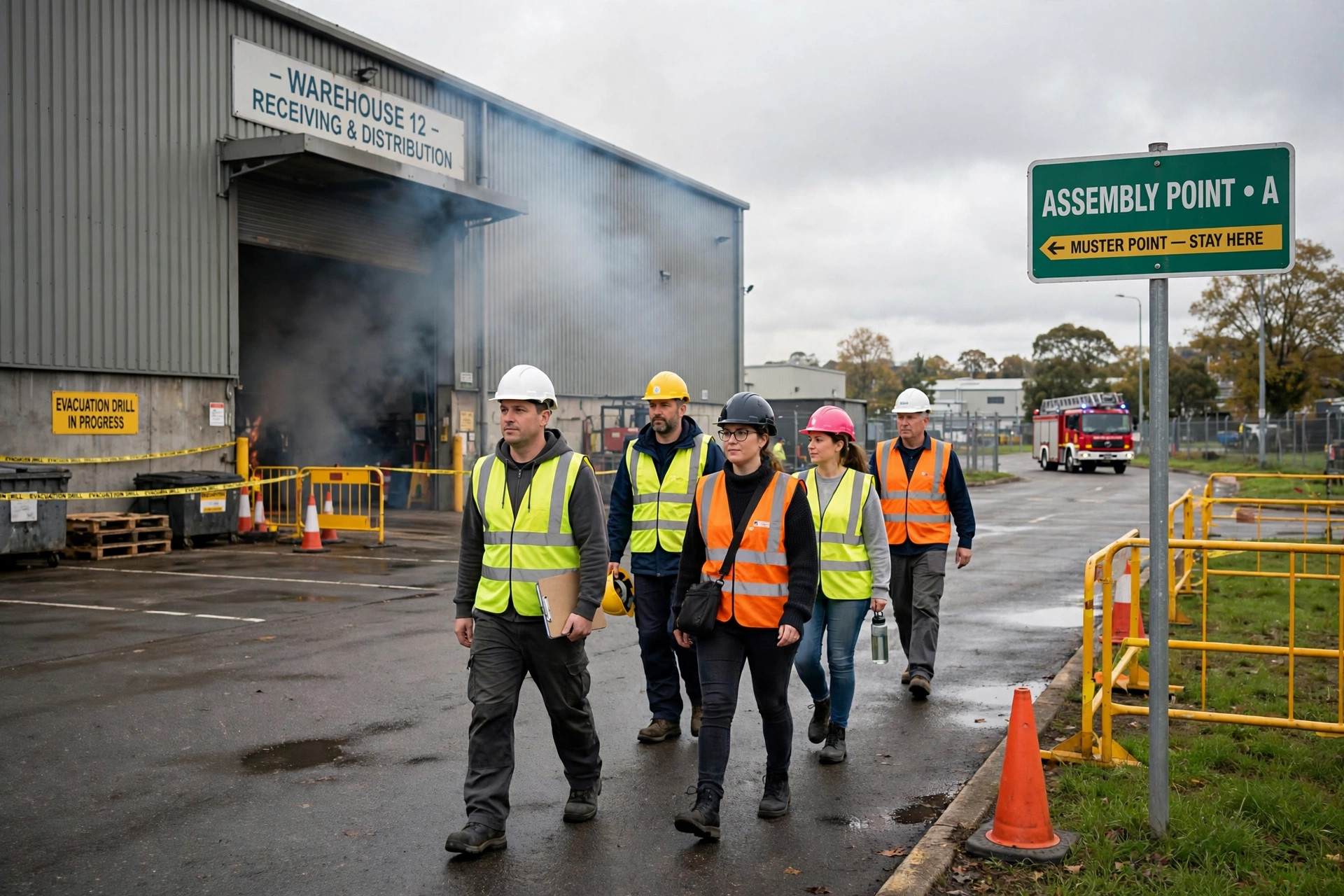
Last October, on a Tuesday morning, our fire alarm went off at 7:50 a.m.
It was only a drill. But the scene was a mess anyway: two office staff came down the stairs carrying their handbags, somebody walked back into the building against the flow to grab his phone, and we counted heads at the assembly point three times. 186 people. Four missing. We finally found two of them in the smoking area and two in the restroom. One was a temp who'd started the week before. The other three were veterans — guys with three years in this building, walking the evacuation route for the first time.
Honestly, guys, my back was covered in sweat that day. Not because the drill looked bad. Because it hit me all at once: if that had been a real fire, what happens to those four people?
Here's the counterintuitive part: OSHA doesn't tell you how often to drill
The day after the drill, I went and read the actual OSHA rules. And honestly, what I found scared me more — OSHA never says how many fire evacuation drills a warehouse must run per year.
What it does require (29 CFR 1910.38, Emergency Action Plans): every employee has to be walked through the emergency plan when they're hired, when their job changes, and when the plan changes. It doesn't count drills. It checks whether people actually know what to do.
The requirements that do come with real numbers are these two:
- Fire extinguishers (1910.157): anyone designated to use one gets trained on hire, then at least once a year after that.
- Chemical spill response (HAZWOPER, 1910.120): emergency responders get initial training, then annual refresher training.
Check the current text on OSHA's website yourself — I'm not going to paraphrase legal language for you here.
So who actually decides how many evacuation drills you run? Three parties: your local fire marshal (first question during an inspection), your insurance company (they look at drill records when pricing your policy), and your big-box customers' vendor audits (anyone doing retail compliance knows this dance). In 2024 our fire marshal walked in and the first thing out of his mouth was: "Show me your drill records for the past 12 months."
That's the real answer to "how often."
How our warehouse got dragged into taking fire drills seriously
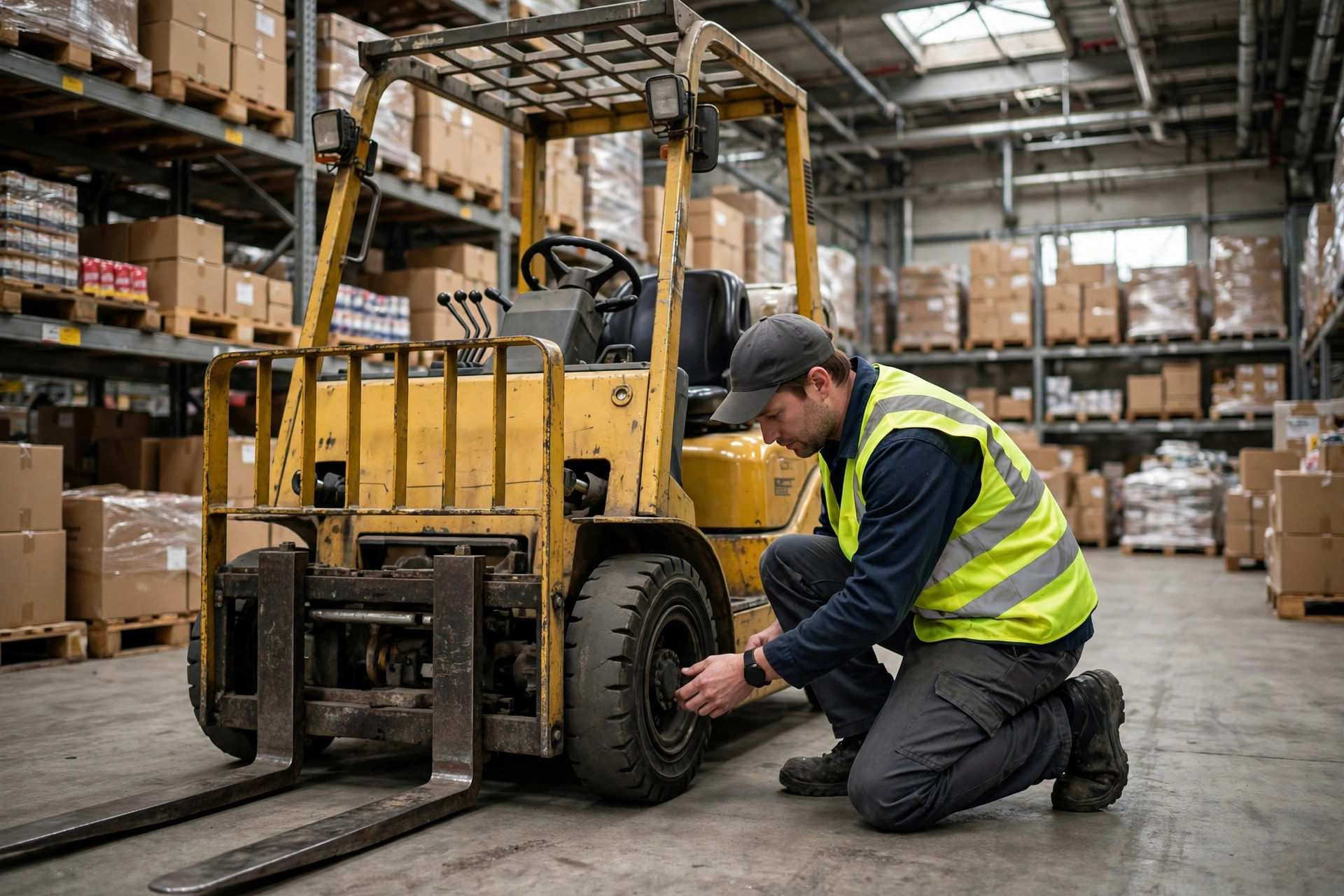
Fall 2023. Our building outside Ontario, California — about 120,000 square feet, three shifts, 180 to 200 people on a normal day. That September, a forklift's exhaust sparked a pile of pallet wood shavings in the battery charging area. Tiny fire. The shift lead knocked it out with an extinguisher in 30 seconds. No harm done.
But the debrief turned up three ugly problems:
- Night shift had 11 people. Only 3 knew the nearest extinguisher was behind the pillar in Zone B. The rest were guessing.
- The spill kit by the chemical storage area — we stock industrial cleaning agents for a client — still had its seal on. Somebody thought it was a mop cabinet.
- We asked 10 veterans where the assembly point was. Six said the parking lot, four said the front gate. We actually have two assembly points — A at the east end of the parking lot, B as backup. It's in the manual. Nobody had read it.
After that, the boss made the call: drills can't run on "whenever we remember" anymore.
What we tried for a year, and what stuck
Here's our false start, guys. Early 2024 we set "one full evacuation drill every month." By month three, the alarm would go off and pickers would finish their current order before walking out. Somebody just sat by the conveyor waiting for "the drill to end." The drills became theater — worse than no drills at all.
So we flipped to "fewer big drills, more small reps." This is what we run now:
| Drill | Frequency | Who | How long |
|---|---|---|---|
| Full fire evacuation | Quarterly | Everyone on shift | ~40 min |
| Extinguisher hands-on | Yearly (bundled with the OSHA annual training) | Designated staff + volunteers | Half day |
| Spill tabletop exercise | Twice a year | Shift leads + chemical-area staff | 1 hour |
| Spill hands-on drill | Yearly | Emergency response team | Half day |
| New-hire walkthrough | First week for every batch of new hires | Newbies + their veteran buddy | 1 hour |
| Night-shift-only evacuation | Twice a year | Full night crew | 30 min |

A few things we learned the hard way:
Night shift has to drill on its own. Day shift is 180 people, night shift is 40. Our first night drill, the day-shift lead who was supposed to run the headcount had already clocked out. Forty people stood in the parking lot for 15 minutes with nobody counting. Now night shift has its own evacuation lead roster, posted on the break room wall.
New hires walk the route in week one. Remember the temp we found in the restroom? His onboarding was a 10-minute video. Now the rule is: in the first week, a veteran walks the newbie through the whole route — shows them the extinguishers, the spill kits, the assembly points — and both sign the record sheet.
For chemical spills, don't just practice running — practice containing. Fire means get out. A spill means contain first, then get out. In one tabletop exercise we posed a scenario: a 20-gallon drum of cleaning agent tips over. Asked seven shift leads what they'd do first — four said "run." Wrong. First step is evacuate upwind and set a perimeter. Second step is berm it with absorbent socks so it doesn't reach the drains. Get that order backwards and a spill becomes an environmental violation, and the EPA fines for that make fire fines look friendly.
Do the math: are emergency drills actually expensive?
People always tell me drills cost too much downtime. Fine, let's do the math.
One quarterly evacuation at our place: 40 minutes, about 180 people on shift. Multiply headcount × 40 minutes × average hourly wage — your numbers will differ from ours. But here's the other side of the ledger:
When we renewed our policy in 2024, our broker said it straight: warehouses with complete drill records get a better property rate; warehouses with nothing on file get priced as high risk. The difference in premium would pay for a decade of our drills. Drills aren't a cost. They're leverage in the insurance negotiation.
And the hidden line item: one small real fire, OSHA shows up, and you have zero drill records — a General Duty Clause citation, and the amount is not small. Records are scrap paper on a normal day and a shield on the worst day.
So our formula: 4 full evacuations a year as the floor, plus the two OSHA-required trainings (the annual extinguisher training and the spill refresher), no exceptions. Go below that, and you'll answer to the fire marshal, the insurer, or the audit team — pick your poison.
A few reminders for fellow managers
- Document everything. Every drill: date and time, headcount, how long the count took, problems found, fixes made. We use a one-page form. The lead signs it, I file it. In 2024 the fire marshal flipped straight to those.
- Don't drill on a predictable schedule. Ours are random now — sometimes Tuesday morning, sometimes Thursday afternoon. Predictable drills train performance. Random drills train reflexes.
- Fix what the drill finds within 48 hours. Expired extinguisher, fallen assembly-point sign, spill kit short on absorbent socks — somebody owns the fix the same day. One drill caught a Zone B extinguisher with the gauge in the red. Thank god it was a drill — imagine grabbing that in a real fire and getting nothing.
- Cover every shift and every kind of worker. Drivers, temps, visitors are the ones who get left behind. Our rule now: every visitor gets a 30-second briefing at the front desk — evacuation route, glance at the wall map.
Here's the honest truth, guys. Drills look like the most useless thing on a normal day. Management thinks they kill productivity, workers think it's theater. But everyone in this business knows: in 120,000 square feet of racked product, a real fire gives you minutes. It depends on whether, during all those drills, somebody actually walked that route for real.
That's how we do it in our warehouse. Four full evacuations a year as the floor, plus the two OSHA-required trainings, no exceptions. When was your last drill? Do you remember?
By Chen Feng, Warehouse Operations Manager