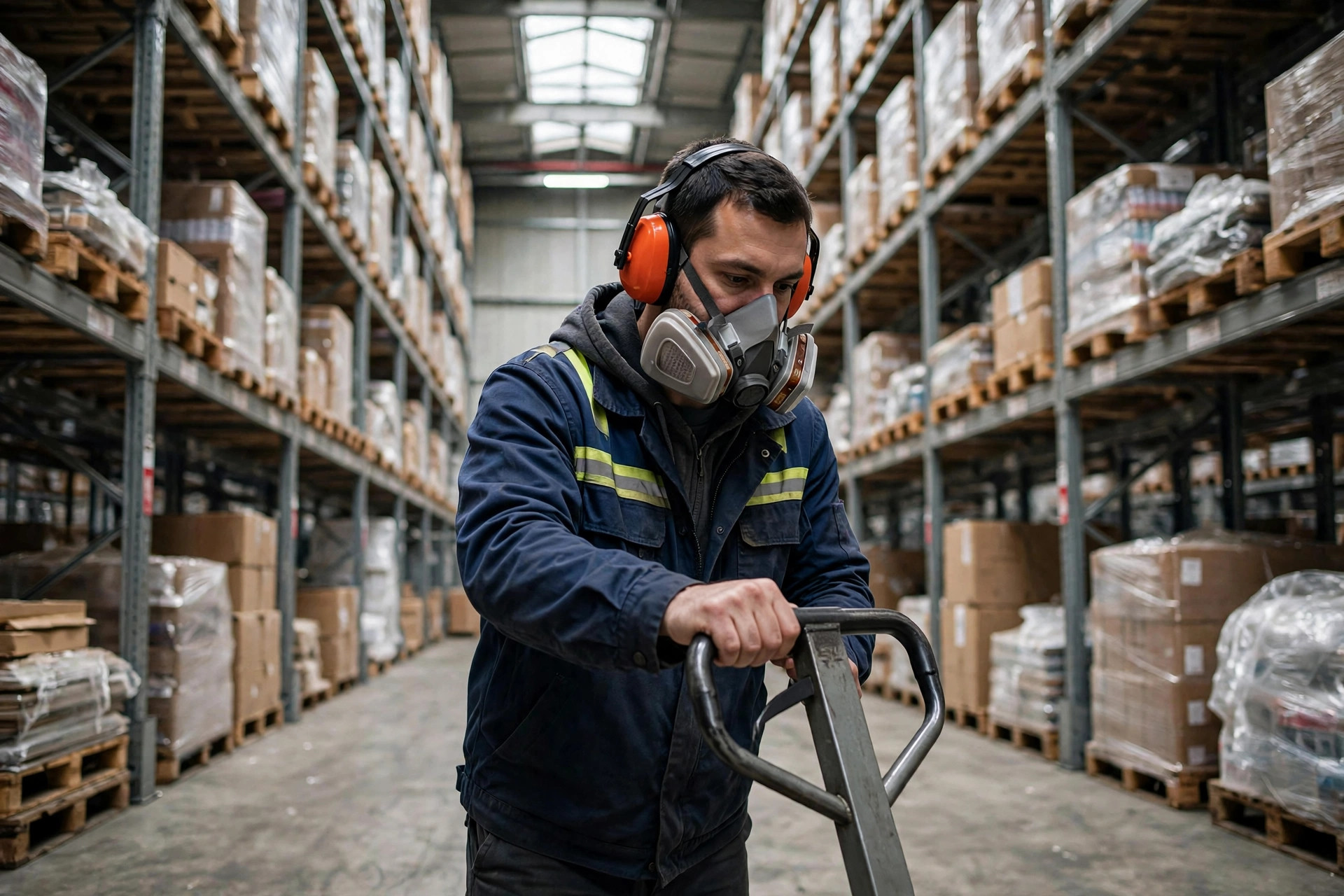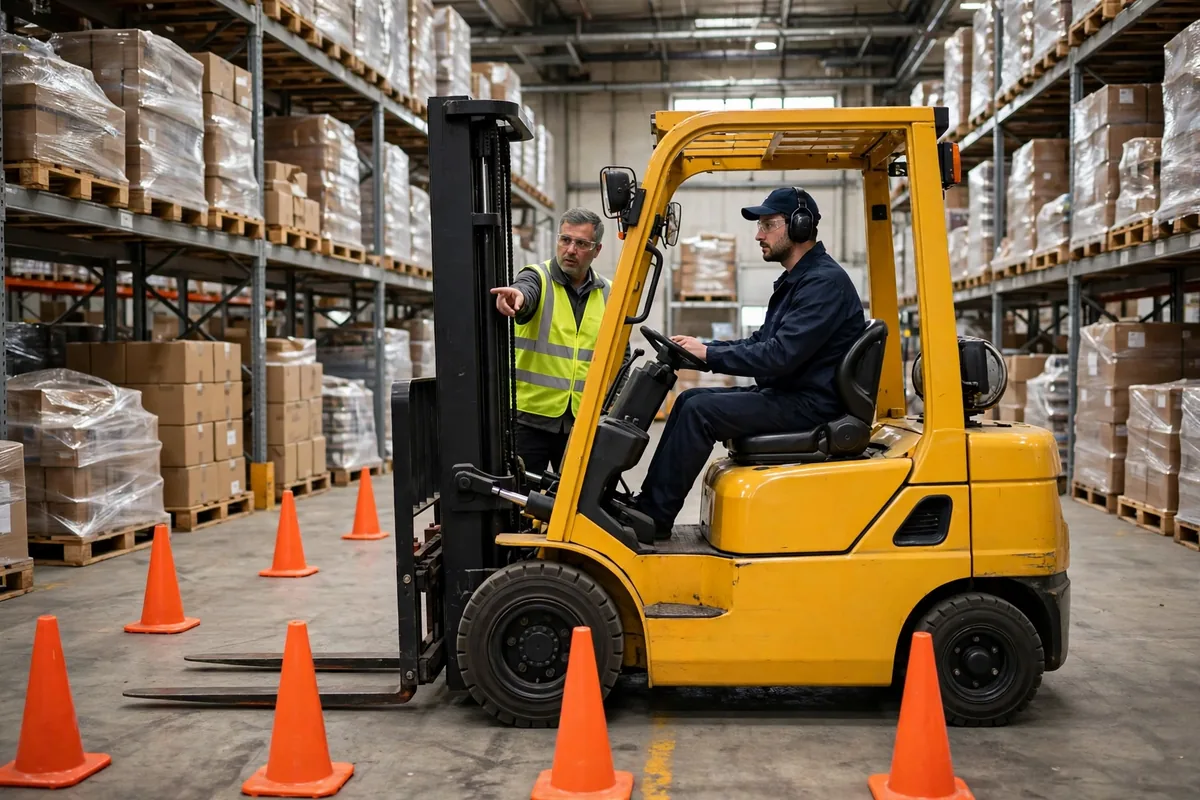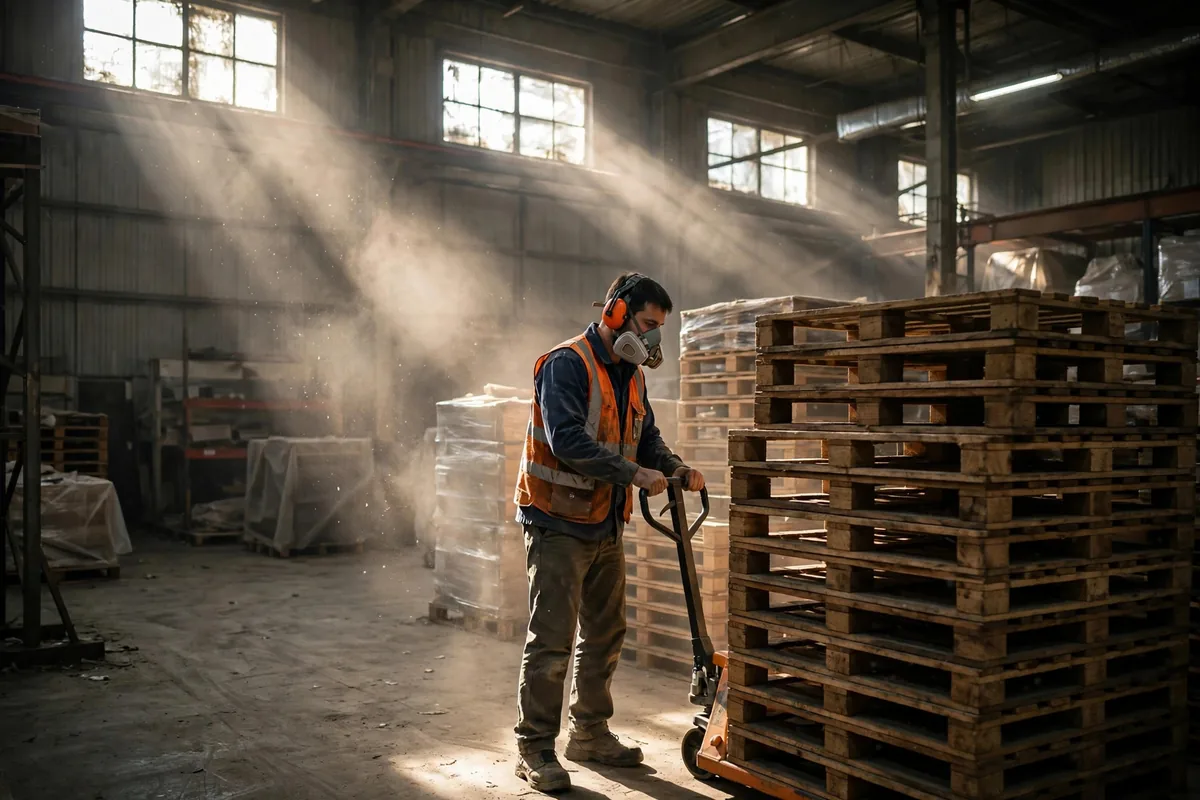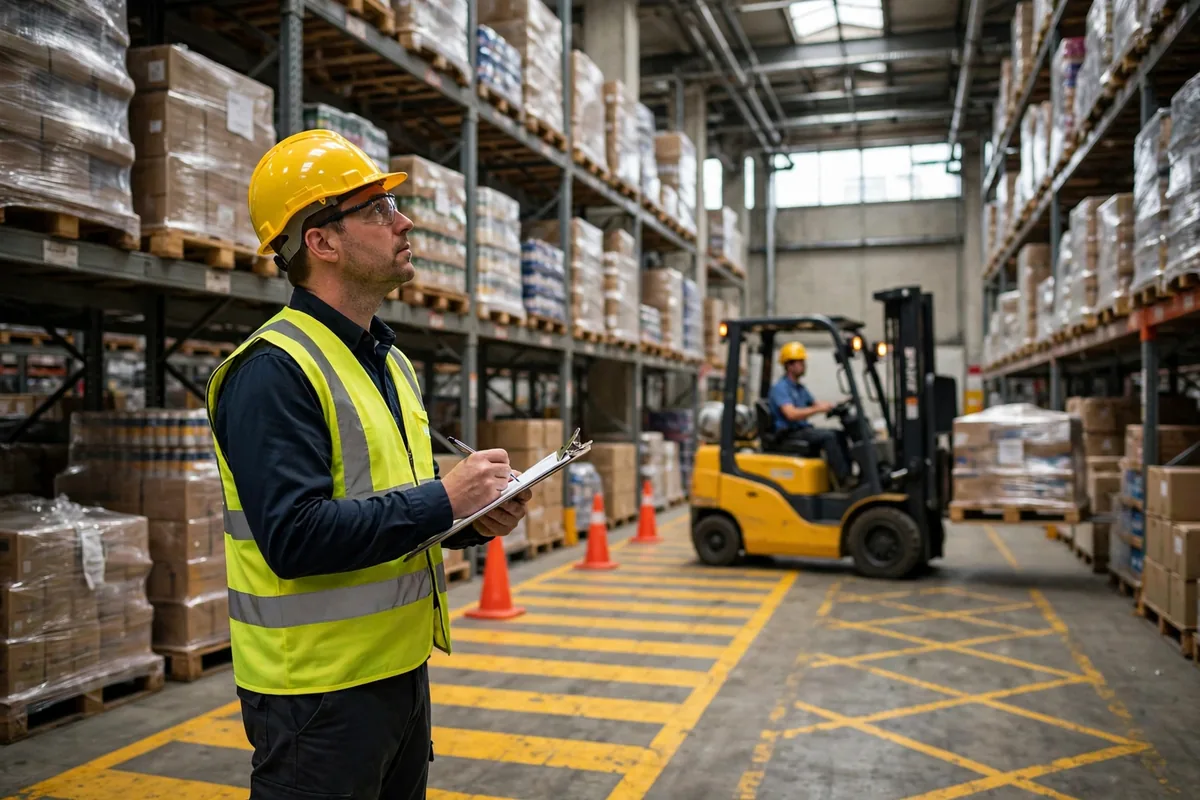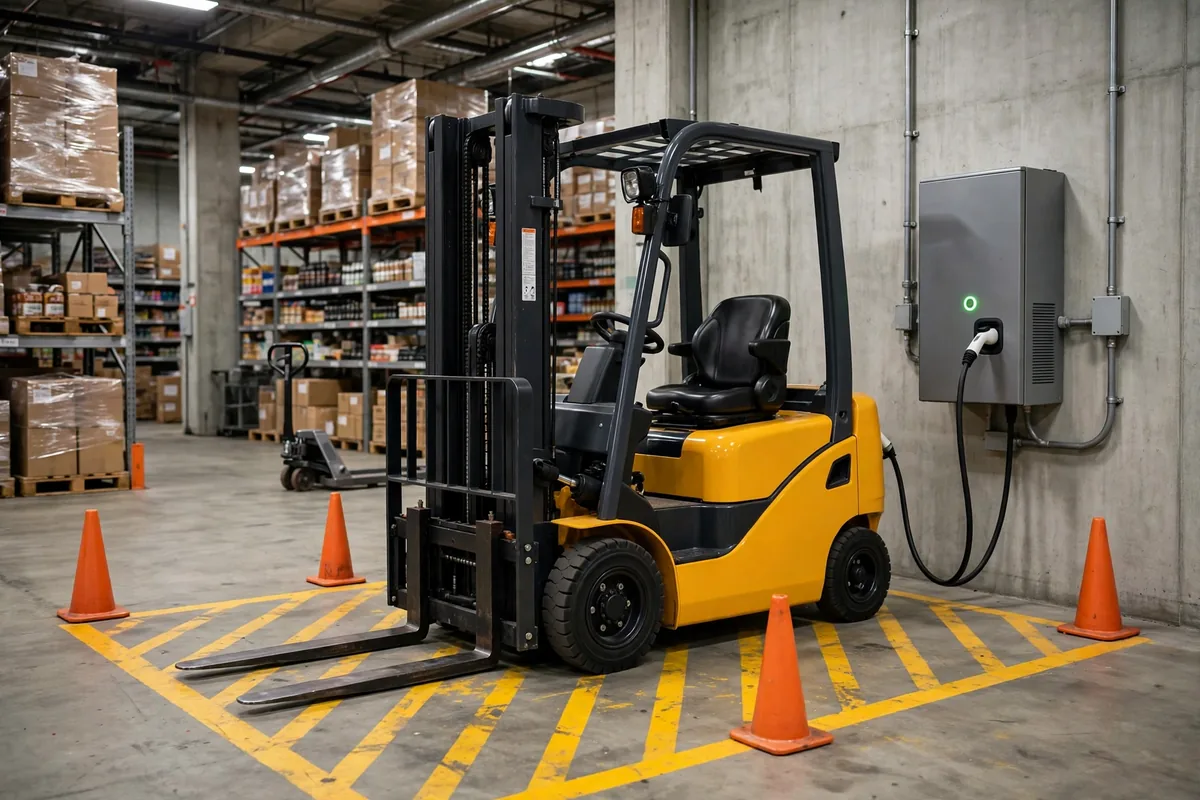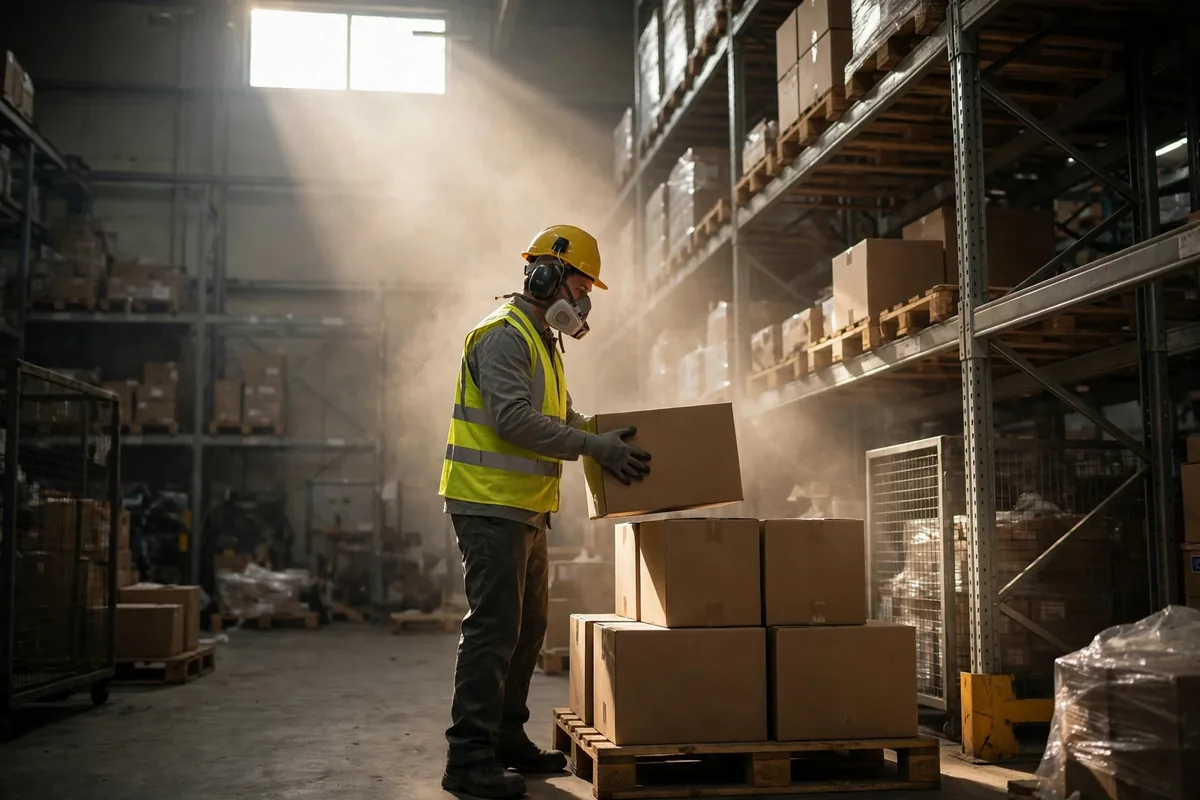
Let me tell you something. After fifteen years driving a truck, I have been in more warehouses than I can count — well over a thousand, easy. Some of them, you walk in and there is a layer of dust hanging in the air; a forklift goes by and the whole cloud lifts up again, and the workers inside are not wearing masks. Others, you walk in and the conveyors and the packing machines are roaring so loud you have to shout into somebody's ear to be heard. Over the years I picked up a habit: when I pull into a warehouse, I do not look at the freight first. I look at the people — whether they are wearing masks, whether they are wearing ear protection. That tells you everything. Ten minutes is enough to know whether a warehouse looks after its workers' bodies or not.
A couple of autumns ago, I was delivering to a warehouse outside Houston that handled building materials — bags of cement, sheets of drywall stacked everywhere, a layer of dust on the floor. I waited two hours for unloading and got talking to one of the young guys on the dock. He told me he had been there about six months, his throat never felt right, he coughed at night, and the first thing he spat up every morning was grey. I asked him what his pre-employment medical check had covered. Blood pressure, a blood draw — nobody had ever checked his lungs. I went back to that warehouse twice more after that, and the young man was already gone. That is what warehouse dust and noise occupational health checks are really about. A person walks into a warehouse healthy, and after a few years of working there, their body should not be wrecked by the place.
What a Health Check Actually Checks
Let me be practical about this. A health check is not a form and it is not a walk-through. It has three parts. The first part is the environment — how much dust is actually in the air, and how loud it actually is at a worker's ear. Dust gets sampled, noise gets measured in decibels, and what matters is what a worker breathes in and listens to across a whole shift, not a quick reading taken standing by the door. The second part is the people — medical exams for the workers, with lung function and hearing as the two big ones. Dust damages lungs, noise damages hearing, and both kinds of damage are permanent. Catch it early and a worker can move to a different job; catch it late and there is nothing left to do. The third part is the protection — whether masks and ear protection were handed out, whether workers actually wear them, and whether they wear them correctly. Plenty of warehouses do the first two parts and fall apart on the third, and then the whole check was for nothing.
Here is something a lot of people get wrong: an occupational health check is not a one-time thing you do when someone gets hired. The pre-employment exam is only the starting point. On a dusty, noisy job, checks have to happen regularly. How often, and which tests — that depends on the latest official policy and on how much exposure the job actually involves, not on somebody's gut feeling. I have seen warehouses where the hiring medical looked impressive, and then nobody mentioned a check again for three years. That is like buying a truck and never servicing it. Sooner or later something breaks.
Dust and Noise: Where the Limits Sit
On the numbers, I will only tell you what I have verified. On noise, the U.S. Occupational Safety and Health Administration sets the limit at 90 decibels as an 8-hour time-weighted average. At 85 decibels, the employer has to start a hearing conservation program — regular noise monitoring, hearing tests for workers, and hearing protection provided. So 85 is the line where you must start acting, and 90 is the line you must not cross. How your warehouse applies that in detail, check the latest official policy.
On dust, the general rule for dust with no substance-specific standard is a limit of 5 milligrams per cubic meter for the respirable fraction and 15 milligrams per cubic meter for total dust, both as 8-hour time-weighted averages. But pay attention — that is the general line. Dusts with their own specific standards, like crystalline silica, have much stricter limits, and for those you go by the latest official policy. Never apply the general line to a special dust. Get that wrong and the check passes while the workers still get hurt.
| What is checked | What it measures | Key limits (verified) |
|---|---|---|
| Noise | What a worker is actually exposed to over 8 hours | 90 dBA ceiling; hearing conservation starts at 85 dBA |
| Dust | Respirable dust and total dust in the air | Respirable 5 mg/m³, total dust 15 mg/m³ |
| Medical exams | Lung function and hearing | Done regularly, problems caught early |
How to use that table: measure the environment first, then look at the people. If the environment is over the limit, bring it down first — ventilation, water to keep dust down, covers on the noisy machines. Only when you genuinely cannot bring it down do you lean on protective gear. Never reverse that order. Using masks and earmuffs to cover for an environment that is several times over the limit is asking workers' bodies to pay for a management failure.
And here is the counterintuitive part: with dust and noise, the most dangerous moment is when workers say they have "gotten used to it." Dust you breathe in without coughing is not harmless — fine particles settle deep in the lungs without any feeling at all. Noise works the same way: once your ears go numb from the roar, everything starts to feel "fine," and by the time you notice you cannot hear people talking, your hearing is already gone for good. That is the whole point of occupational health checks. Human feeling lies to you. Instruments and medical exams do not.
Three Things That Get Faked Most Often
The first is protective gear that gets handed out and then ignored. Masks get distributed, workers find them stuffy and do not wear them, and the supervisor sees it and says nothing. That is the same as never handing them out at all. The right way is for the supervisor to check every morning before the shift starts — mask on, ear protection on — the same way you take attendance. Handing gear out is only the beginning. Wearing it is what counts.
The second is a check that finds problems and fixes nothing. Some warehouses run the check every year, find the same problems every year, and change nothing. Dust over the limit, and the report says "recommend improved ventilation," and next year's report says the same sentence. The point of a check is not the report; it is the fix. Finding a problem and leaving it there is worse than never checking at all — at least then nobody can say you knew and did nothing.
The third is checking the permanent staff and skipping the new hires and the temp workers. The temps do the dirtiest, loudest jobs, leave after three months, and never know who to blame when their health goes wrong. I have seen it over and over on the road: if you want to know how good a warehouse's occupational health really is, do not look at how thick the medical file is for its permanent staff. Look at whether the temp workers get the same treatment. That might not be a comfortable thing to hear, but it is true.
After all these years on the road, I believe one thing: a truck needs servicing, and a person needs it even more. A truck can be repaired when it breaks. A person cannot. Warehouse dust and noise occupational health checks are just regular servicing for people — measure the environment, check the body, wear the protection. Do all three properly and the workers can work without worry, and the boss can sleep at night. Whether a warehouse lasts, do not judge it by how many orders it ships in a day. Judge it by whether its people are still healthy after five or ten years on the job.
By Shifu Zhao, Trucking Veteran (15 yrs)