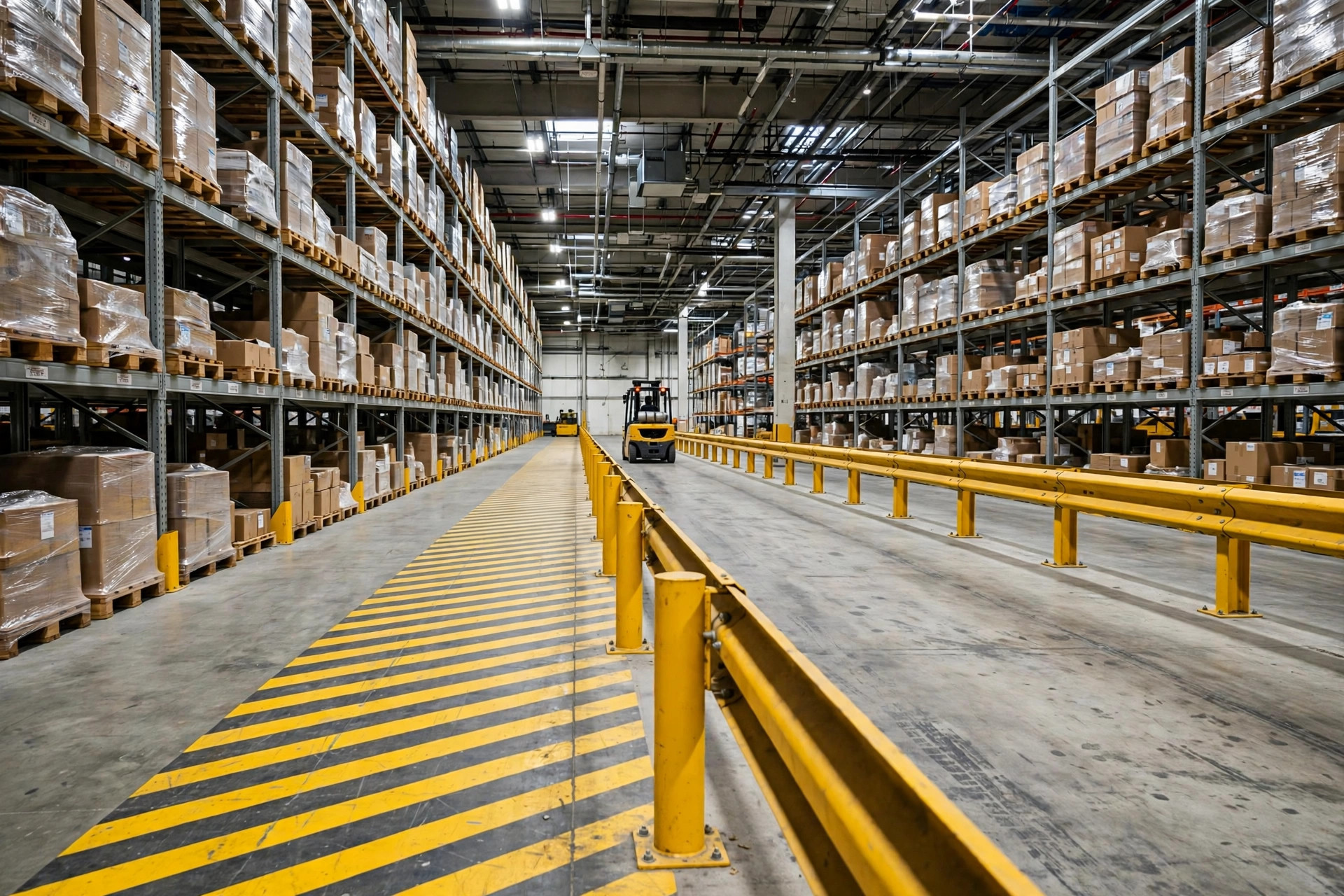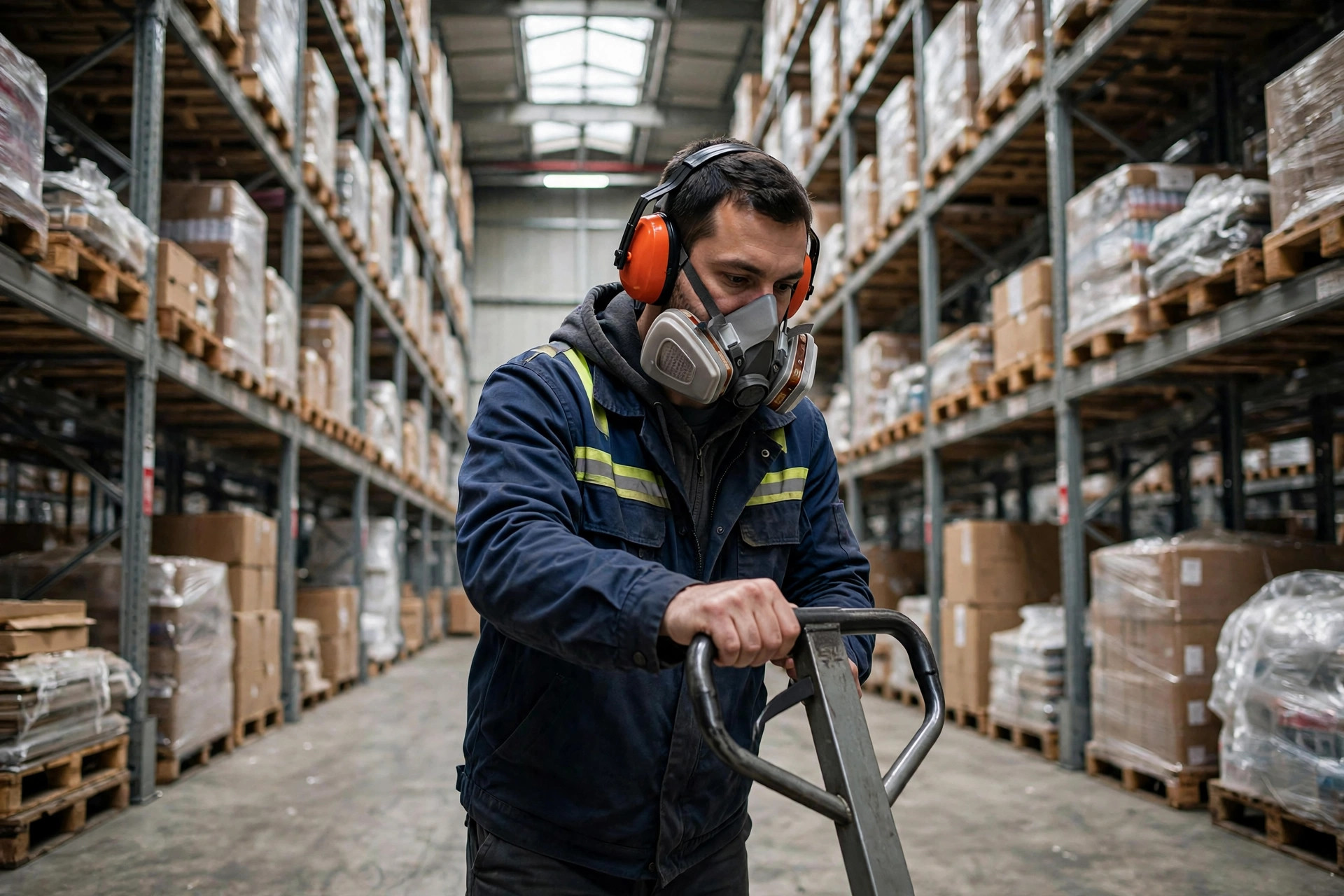
90 dBA. Most warehouse owners have never heard this number. It's OSHA's permissible exposure limit for noise in general industry: workers' noise exposure, averaged over eight hours, cannot exceed 90 decibels on the A-weighted scale. There's a lower line too — 85 dBA, called the action level. Hit that line and the employer must launch a full hearing conservation program: noise monitoring, audiometric testing, free hearing protection, annual training, and recordkeeping. Twenty years in this business, and I'll be honest: nine out of ten warehouses I've seen have never measured their own noise levels. Not because they don't care — they don't know the requirement exists. And when OSHA shows up with a citation, it's usually not for exceeding the limit. It's for never having measured at all.
Dust is even more invisible. Warehouses aren't factories; there's no obvious smoke, so most people assume there's nothing in the air. But paper dust from opening cartons, wood fibers from worn pallets, fine grit kicked up off the floor — pickers and packers breathe it in all day, every day. OSHA's limit for "particulates not otherwise regulated" (PNOR) is 15 mg/m³ for total dust and 5 mg/m³ for the respirable fraction, as an eight-hour average. Those numbers aren't punishing; a normally managed warehouse rarely exceeds them. But nobody has measured, so nobody knows.
With noise, everything hinges on two numbers
Noise first, because it's the easiest thing to get cited for — and the easiest to fix. OSHA's noise standard, 29 CFR 1910.95, runs on simple logic: two lines, 90 and 85. An eight-hour average of 90 dBA is the legal red line; you must bring it down with engineering or administrative controls. At 85 dBA, the action level, you must start a hearing conservation program. Plenty of employers get this backwards. They assume anything under 90 is fine, and then an OSHA inspector walks in, finds 87 dBA with no monitoring records and no audiometric testing on file, and writes the citation. Not for exceeding the limit — for missing the program.
Plenty of warehouse areas sit above 85: pneumatic carton sealers and stretch-wrap machines at pack stations, dock doors and backup alarms, refrigeration units in cold storage, forklift reverse beepers going off all shift. A mid-size pack area commonly measures 85–88 dBA. My first step is always the same: rent a noise dosimeter for a few hundred dollars, or bring in a third-party firm for a half-day walkthrough survey. It's the best money in the whole compliance chain. Come in under the lines and you hold documented proof that you checked. Come in over and you finally know where to act.
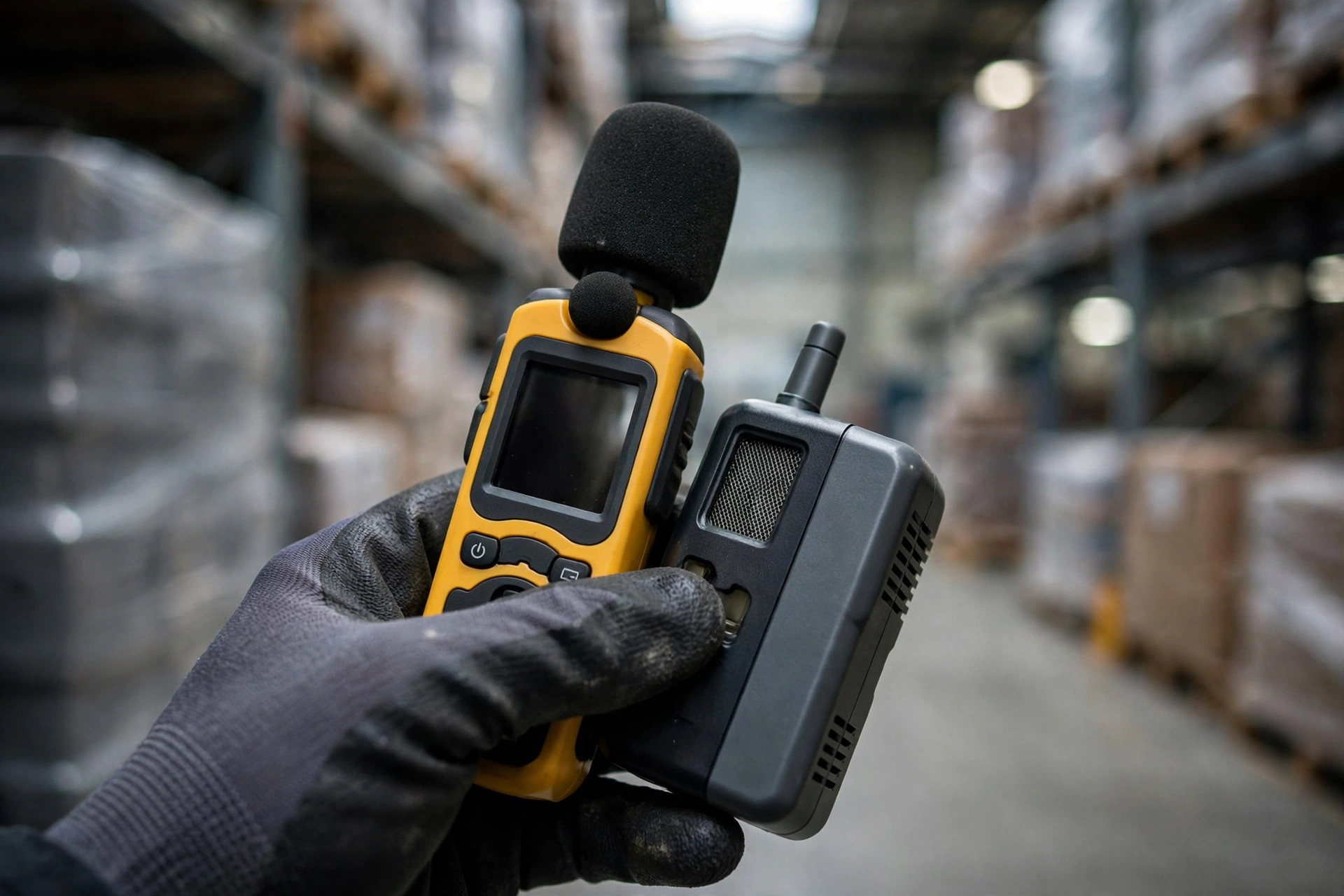
If you're over 85, work through the hearing conservation program in order: free hearing protection for exposed positions (foam earplugs are fine — the hard part is making sure people wear them); baseline audiograms for new hires within six months of first exposure, then annual tests compared against the baseline to catch a standard threshold shift; annual training on what noise does and how to wear protectors properly. None of this is expensive. What's expensive is not knowing. I know a 3PL that got cited for a missing noise program — the penalty ran five figures, while building the whole program would have cost a fraction of that. Do that math early.
One more thing: NIOSH, the research institute behind the recommendations, is stricter than OSHA. NIOSH treats 85 dBA as the eight-hour ceiling. OSHA is the legal floor; NIOSH is the health advice. Aiming stricter than the law never hurts.
Nobody inspects dust — which doesn't mean it's fine
Dust compliance works like noise but leans harder on housekeeping. The PNOR limits (15 total, 5 respirable, in mg/m³) cover general dust, not toxic stuff like silica or lead. Ordinary paper and wood dust in a ventilated warehouse rarely exceeds them. The real risk concentrates in a few spots: carton-opening areas run the highest concentrations; floors that never get properly cleaned throw up dust every time a forklift passes; and the habit of blowing dust off with compressed air is a red flag — it spikes respirable dust instantly, and OSHA specifically discourages it.
The low-cost fixes work here too: ventilation or at least real airflow in breakdown areas; regular cleaning with a HEPA-filtered industrial vacuum, never compressed air; dust masks available at the dusty positions. As for formal air sampling, my rule is simple: if you can see dust hanging in the air, or if workers mention scratchy throats or itchy eyes, pay an industrial hygiene firm for a round of sampling. It usually costs a few thousand dollars and buys you exact numbers plus a direction for fixes. Use a qualified firm, sample in the workers' actual breathing zone, pick the right locations — otherwise the data won't hold up. Without numbers, "I think we're fine" doesn't survive an inspector's visit.
One more thing people miss: records. Noise survey results, audiometric files, training sign-in sheets — OSHA requires you to keep them, and the first thing an inspector asks for is paperwork. Plenty of small warehouses did the work but kept no trace. Assign someone to own the EHS file part-time. One folder, reports and sign-in sheets filed by year. If an inspection ever comes, that's your hardest evidence.
At the end of the day, occupational health screening isn't complicated. Measure once, keep a file, fix what exceeds the lines. Three things you can do next week: first, rent a noise dosimeter and run it for a full shift at the pack area and the dock, and line the results up against the 85 and 90 lines. Second, walk the breakdown area and the main aisles — look for visible dust in the air and anyone blowing it around with compressed air, and stop it. Third, start an EHS folder and file every survey and training record there from now on. None of this costs much. But once it's done, you'll have numbers about your building's occupational health for the first time — instead of a feeling.