Here is the conclusion up front: before you sign a warehouse lease, spend 20 minutes measuring the dock height with a tape measure, and find out the trailer floor height of the trucks you actually run. Skip those two steps and you will pay for a few inches of difference every single day after move-in — shimming plates, dock levelers screaming at their travel limits, forklifts dropping pallets on the slope. I have seen this pit three times, and all three times it surfaced the week before go-live, when the WMS was fully configured and the physical world simply refused to cooperate.
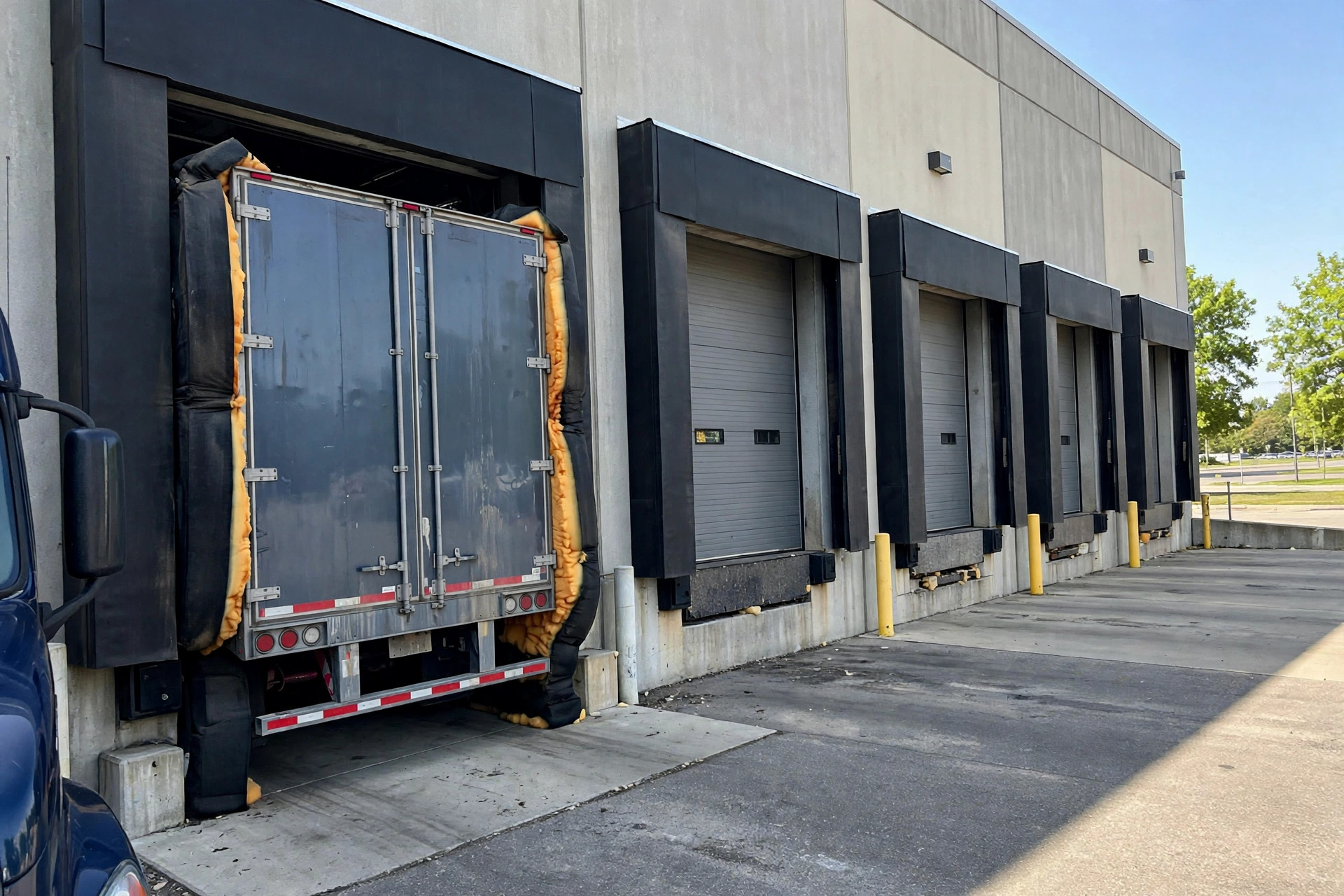
The industry standard dock height is 48 to 52 inches (roughly 1.22 to 1.32 meters). Four inches sounds like nothing. But your fleet is not a standard part: 53-foot dry vans, reefers, intermodal container chassis, and city box trucks all sit at different floor heights. Put the wrong dock against the wrong truck and every one of your few hundred pallets a day has to cross a speed bump.
Why a Systems Consultant Cares About a Concrete Slab
I implement WMS for a living — 30-plus go-lives. I can reproduce any software problem in a test environment. But this one I cannot reproduce, because it is a physics problem and no software fixes physics. UAT passed with flying colors, then on day one the first trailer backed in, the leveler dropped onto a slope too steep to use, and the forklift driver refused the door. The whole receiving process froze. The project manager asked me how to fix it in the system. I told him it was not a system problem — nobody measured the dock before signing the lease.
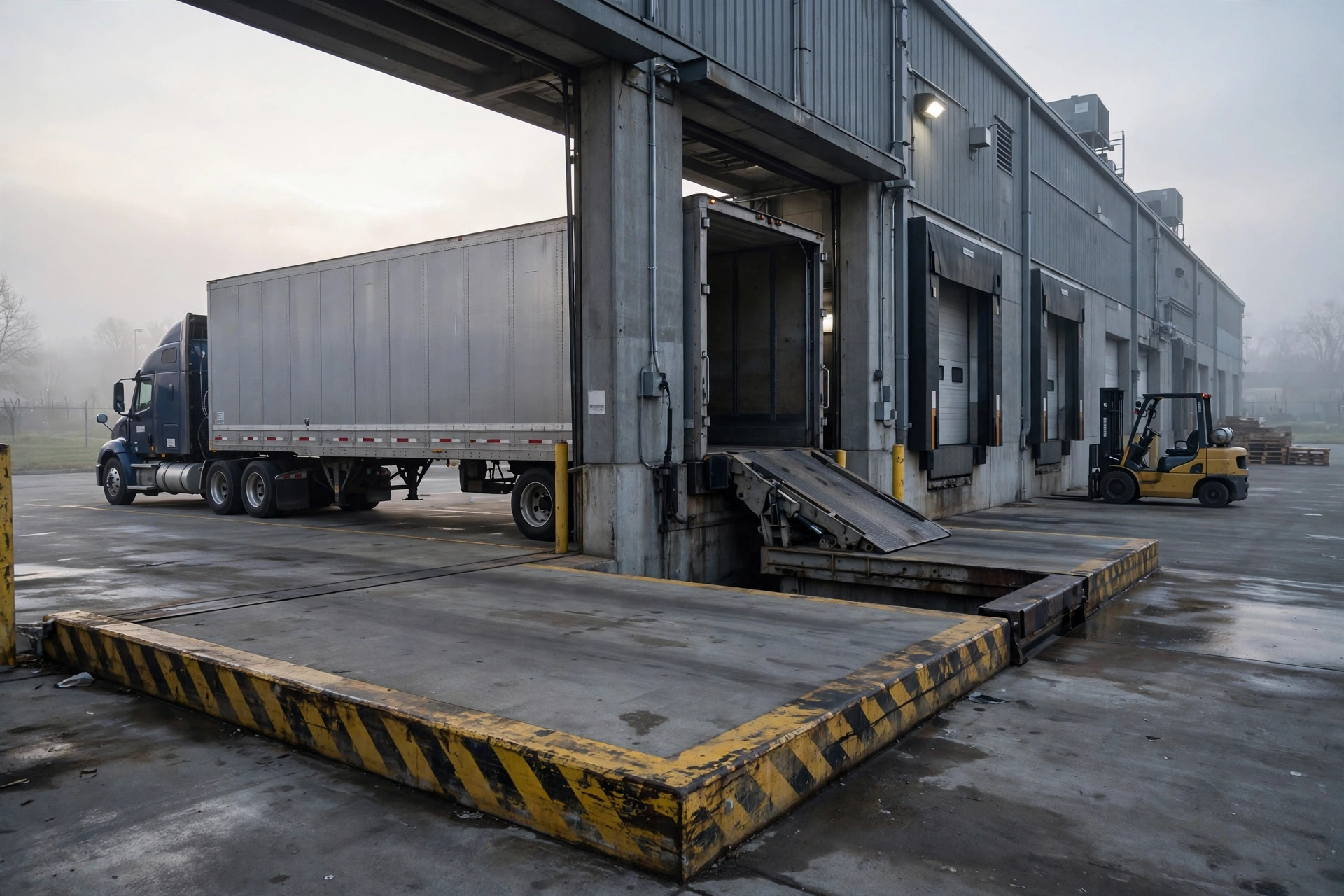
Here is the counterintuitive part, so let me put it early: taller is not better. Plenty of people think a 52-inch dock looks impressive, like you are loading from above. Wrong. A dock is only good when it matches your fleet. A 52-inch dock against low-floor reefers means every load rolls downhill into the trailer with the leveler pinned at maximum downward travel. A 48-inch dock against high container chassis means every load climbs uphill, the hydraulic leveler works at its limit all day, and breakdowns multiply. You are not picking a number. You are picking a dance partner.
Three Projects, Same Script
Number one: 2019, Ontario, California — a food-distribution 3PL. They leased a sharp-looking building with 52-inch docks, twelve doors. The broker said "standard dock height, don't worry." After move-in they discovered their fleet was mostly reefers, whose floors sat noticeably lower than the dock. A hundred-plus pallets a day, levelers cranked to maximum downward angle, forklifts rolling downhill into the trailers — drivers simply stopped working the doors when the ground iced over in winter. They ended up retrofitting four doors with hydraulic lift tables, and a single door's retrofit cost several months of rent. Go-live slipped three weeks waiting for the construction to finish.
Number two: 2022, Dallas, Texas — an e-commerce oversize-goods client. The building had 48-inch docks, and the landlord called it "the universal standard." Half their freight arrived as ocean containers stripped off chassis, and a container on a chassis sits well above a 48-inch dock. The leveler created a steep uphill ramp; any pallet stacked over chest height wobbled on the climb, and devanning productivity fell off a cliff. Worse, they had signed a five-year lease — no moving. The fix: a row of portable yard ramps dragged into position by forklift every morning. One physics problem became a daily half-hour alignment ritual, for five years.
Number three: 2023, outside Los Angeles — a same-day delivery operation. Fifty-two-inch docks, but the fleet was small and mid-size box trucks with floors in the low 40s — nearly a 10-inch gap. The levelers could not reach at all, so three of their six doors were decorative. The client asked if I could "configure around it" in the WMS. I said no — this is a concrete-and-steel problem, not a configuration problem. They installed scissor lifts in front of those three doors, blew the project budget, and the CEO said in the post-mortem: "We could have hired someone to measure for two hundred bucks before signing."
Three times, same script: nobody measured at signing, everybody paid after move-in.
One Table: Match Your Trucks to Your Dock
| Your main truck type | Typical trailer floor height | Against a 48-inch dock | Against a 52-inch dock |
|---|---|---|---|
| 53-ft dry van | 48–52 in | Roughly flush | Roughly flush |
| Reefer (low floor) | 48–50 in | Flush or slightly low | Dock sits high, downhill into trailer |
| Container on chassis | High, often above 52 in | Dock sits low, steep uphill | Close or slightly low |
| City box truck | Low 40s | Big gap | Bigger gap, basically unusable |
Read that table once and the lesson is obvious: there is no "correct" height, only "correct for your fleet." Signing a lease before you know your truck mix is buying shoes blindfolded.
A 6-Step Dock Height Checklist Before You Sign
Step 1: bring a tape measure to the site and measure it yourself. Do not trust the brochure's "standard dock" — measure every door, because in an older building different doors can sit at different heights. Photograph everything.
Step 2: write down your actual truck mix. What will haul your freight for the next three years? What share is dry van, reefer, container drayage, city box truck? Put the percentages on paper.
Step 3: get the floor height of each truck type. Ask your fleet manager, ask your carriers, or measure one truck yourself. Fill the numbers into the table above.
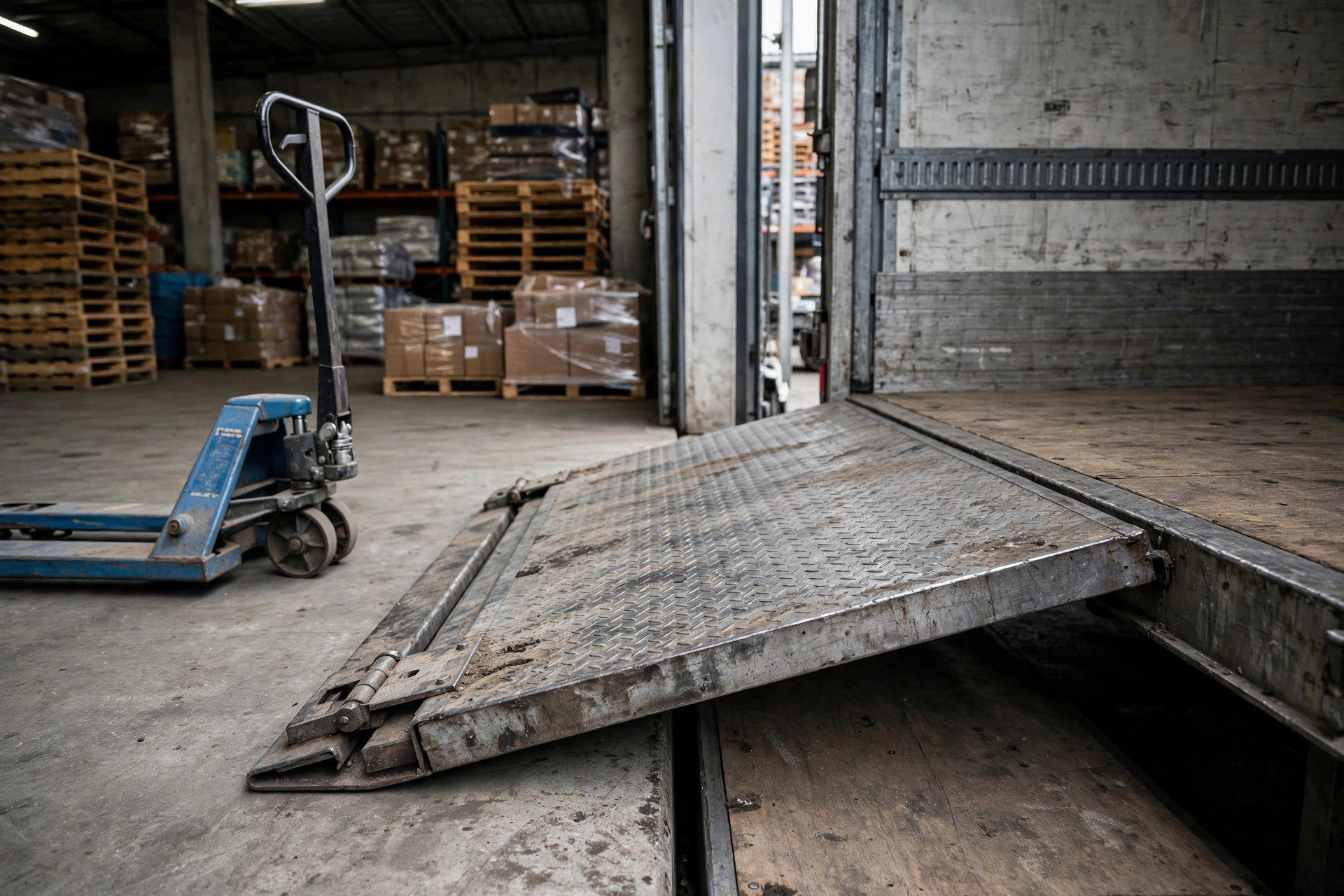
Step 4: check the leveler's travel spec. A hydraulic dock leveler only compensates a few inches up or down. If the gap exceeds its travel, that door is dead. Get the make and model from the landlord and look up the manual yourself.
Step 5: run a live test. If you can, bring one of your real trucks, back it in, drop the leveler, and drive a forklift across. Ten minutes of testing beats ten pages of spec sheets.
Step 6: write the dock height into the lease as an exhibit. The measured numbers, the truck types they serve, the leveler models — in black and white. If the landlord ever rebuilds the dock, you have something to point at.
The 4 Failure Points I See Most
- "The landlord says it's a standard dock" — standard means 48 to 52 inches, and that four-inch band is plenty to ruin your operation. Get the actual number.
- Measuring only one door — older buildings get expanded in phases, and doors from different eras can differ by two inches. Measure every single one.
- "The fleet will change later, we'll live with it for now" — the lease is five years and the fleet changes in year two. "For now" costs five years.
- Assuming the leveler fixes everything — a leveler compensates a few inches, it does not do magic. Beyond its travel, nothing saves you.
Go-Live Night Checklist: Dock Edition
- Every door's dock height measured and photographed
- Main truck floor heights confirmed, gaps within leveler travel
- At least one live back-in test completed
- Dock height numbers written into the lease exhibit
- Forklift drivers have seen the worst-gap door and signed off it is workable
Software can run your processes, your inventory, and your waves. It cannot run the few inches between a concrete slab and a trailer floor. Those inches take 20 minutes to measure before you sign — or five years of daily pain after. Do not let your WMS project lose to a slab of concrete nobody bothered to measure.
By Lin Xiao, WMS Implementation Consultant