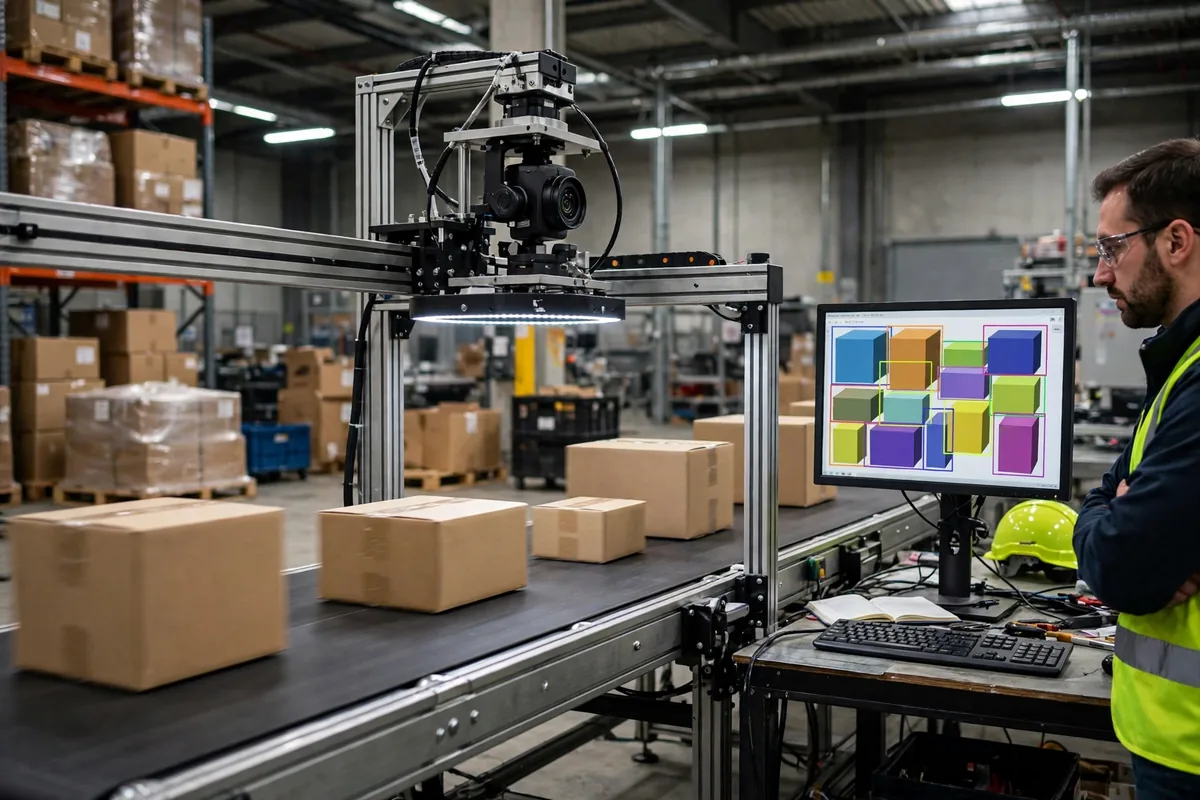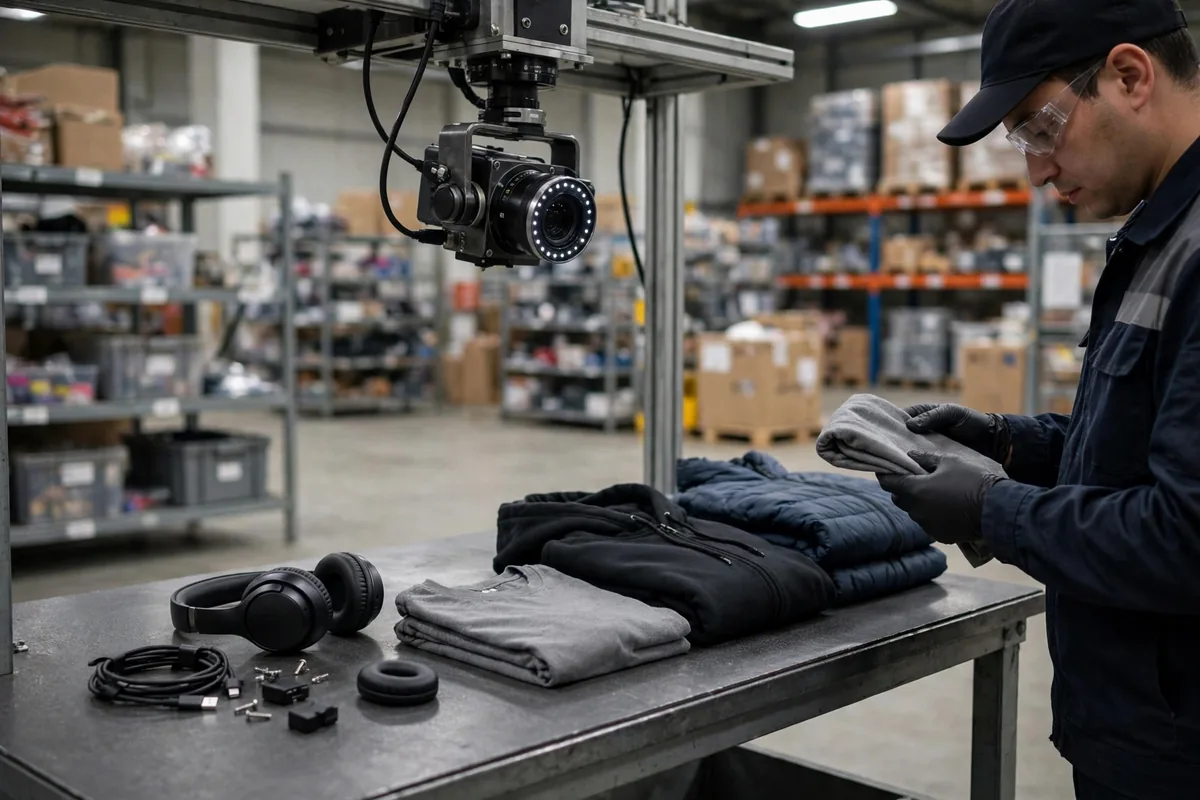
When a conveyor stops, warehouse conveyor predictive maintenance with AI stops being an abstract topic: the first thing that breaks down is rarely the machine itself. It is the schedule around it: people queue, orders wait, cut-off times slip, and a maintenance job that could have been planned becomes an emergency. According to published industry reports and vendor pilot summaries, that timing is precisely why unplanned downtime is so expensive, because it seldom happens during a quiet hour; it happens on a peak night, in the two hours before cut-off, or on the shift with the thinnest staffing. This raises a question that warehouse operators keep returning to: does a failing conveyor give any warning before it stops, and if so, can that warning be made reliable enough to act on? Warehouse conveyor predictive maintenance with AI offers a qualified answer, namely that warning signs usually do exist, but only if they are observed continuously, compared against the same equipment's own history, and judged by their cost rather than by their novelty.
The underlying logic is not mysterious. Motors, bearings, belts, and rollers do not normally jump from healthy to failed; they deteriorate along a curve, leaving traces first in vibration spectra, then in acoustic signatures, and often in temperature and current draw, long before a jam or a stopped line. In other words, failure is an observable process, not a sudden event, and AI turns it into something that can be quantified, ranked, and watched overnight. One qualification matters from the start. The phrase "two weeks early" in the title describes the stronger end of a pilot range, not a guarantee: in reported pilot experience, lead times typically fall somewhere between a few days and two weeks, and where any given installation lands depends on equipment type, sensor placement, how long baseline data has been collected, and operating conditions, so any precise accuracy claim quoted without those conditions should be treated with caution.
What Warehouse Conveyor Predictive Maintenance with AI Actually Monitors
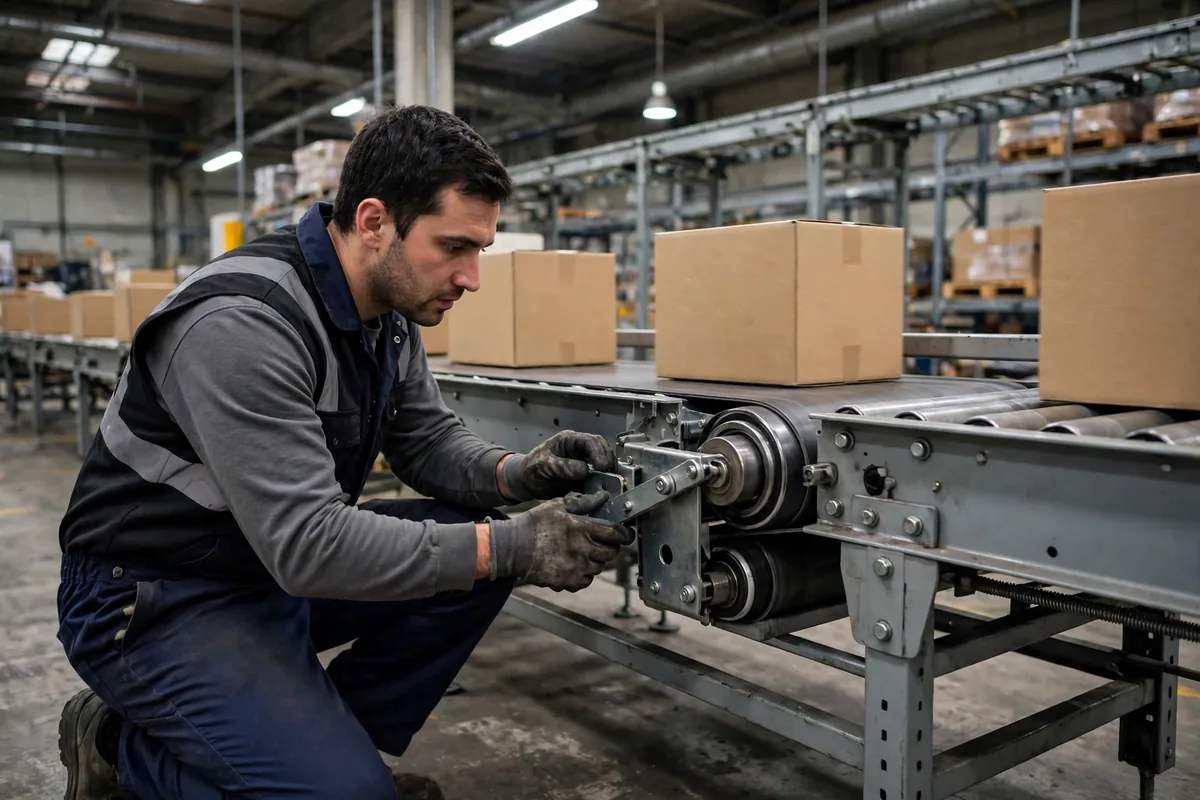
A case from May 2025 illustrates the point from the vibration side. In a cold-chain warehouse in northern China, a sorting conveyor running about sixteen hours a day showed a slow rise in vibration on one roller bearing section over two weeks. The rise was gradual rather than dramatic, and on any single day the reading could still have passed as normal; it was only when fourteen consecutive days were plotted as a trend that the change in slope became unmistakable. The system raised a warning on day eleven, the maintenance team replaced the bearing during a planned weekend window, and inspection afterwards found early pitting on the raceway. Had the team waited for audible noise, the failure would very likely have landed on a Monday morning peak, disrupting the sorting rhythm for roughly three thousand orders that day. The lesson is that predictive maintenance watches trends, rates of change, and deviation from a machine's own history, not a single reading crossing a single threshold.
A second case, from an auto-parts warehouse in eastern China in October 2024, came from a different signal. A heavily loaded conveyor section had a faint, persistent sound that manual inspection could not localize, largely because ambient noise in the building made human hearing unreliable. Once acoustic sensors were added, the system isolated the sound to a specific frequency band on one motor and cross-checked it against current fluctuation, confirming early fan looseness before it became a failure. The repair took half a shift and was completed inside a planned window. Taken together, the cases show a division of labour: vibration suits bearing deterioration, sound suits looseness and friction, and temperature suits lubrication failure and overload, which is why several signals checked together beat any single signal alone.
Warehouse Conveyor Predictive Maintenance AI and ROI: Accuracy Alone Misleads
When return on investment is discussed, accuracy alone is a misleading metric, because it does not answer the only question that determines whether a system survives its first year: what is one true warning worth, and what does one false alarm cost? According to the costing framework most commonly used in pilot evaluations, the benefit side has three parts: throughput protected by avoiding an unplanned stop, overtime and expedited-parts cost avoided by converting an emergency repair into a planned one, and working capital released when parts stocking follows a measured trend rather than just-in-case holdings; the cost side includes sensors and data collection hardware, platform subscription or in-house build cost, and the labour spent calibrating models and chasing false alarms. As a worked illustration, if one hour of unplanned downtime costs tens of thousands of yuan, while a planned bearing change takes half an hour in a low-peak window, then two or three successful early interventions a year may cover the pilot cost; conversely, monthly false alarms quickly erode trust and the system is eventually switched off.
| Signal type | What it mainly watches | Illustrative pilot lead-time range | Common false-alarm source |
|---|---|---|---|
| Vibration | Bearing and roller deterioration trend | A few days to two weeks, varying by equipment | Loose mounting, external vibration |
| Sound | Looseness and friction-type anomalies | A few days to about a week | Plant background noise, neighbouring equipment |
| Temperature and current | Lubrication failure, overload | Hours to a few days | Ambient temperature swings, load changes |
There is also a counterintuitive finding that pilot teams report repeatedly: installing more sensors does not automatically make the system more accurate. Without a clean baseline, calibration against the equipment register, and repair records fed back into the model, additional signals mainly add noise and make thresholds harder to set. A related trade-off is equally real, because a threshold set too sensitively will exhaust the maintenance team with false alarms, while a threshold set too conservatively turns the system back into an after-the-fact alarm; choosing the threshold is therefore not a purely technical setting but a cost judgement, in which the cost of one missed failure must be weighed against the cost of one false alarm, and the correct balance differs with a warehouse's order profile and shift pattern.
Start with One Line, Not the Whole Plant
The more reliable rollout path is to start with one line rather than the whole plant, chosen on demanding criteria: expensive downtime, a recorded failure history, reasonably stable conditions, and a maintenance team willing to feed repair outcomes back. During a first three-month pilot, the system should monitor only, so the model can learn that line's baseline; only then should warnings connect to the maintenance plan, and the three-month review needs just three measures: failures genuinely caught early, false alarms, and whether each warning actually changed repair timing. If two of those three look poor, the problem is usually data quality or threshold setting rather than the algorithm, and expanding the rollout will only scale the same problem. Older equipment deserves particular caution here: without historical running data and without disciplined replacement records, a model can initially offer anomaly alerts rather than precise remaining-life forecasts, and in that situation restoring basic preventive maintenance and inspection discipline is often more valuable than adding AI on top of an unreliable baseline.
Looking ahead, the trend points in two directions: sensor fusion and edge computing, so part of the judgement can be made at the equipment itself; and connecting warnings directly to maintenance planning and parts inventory, so an alert becomes an executable work order rather than a red indicator. Both rest on the same prerequisites: continuous data, a clean register, and repair records fed back. Without those three, AI sees only more attractively presented noise.
The more interesting question, then, may not be how far in advance AI can warn, but whether the warehouse is organised to act on a warning at all: when the system raises an alert in the middle of the night, is anyone watching, is there a maintenance window available, and is the spare part on hand? If any answer is unclear, the most urgent gap is not the algorithm but the maintenance organisation itself; conversely, where the organisation can receive a warning, a window of several days to two weeks is enough to turn an incident into a plan.
By Dr. Chen, Supply Chain Researcher