Let me tell you something. After all these years on the road, the scariest thing I have seen at a warehouse is not a lost shipment. It is a chemical spill: a puddle of unknown liquid spreading across the floor while everybody stands around wondering what it is.
A few summers back, I was waiting to get loaded at a third-party warehouse in California when I watched it happen. A forklift driver clipped a drum of hydraulic oil while backing up. The lid was not tight, and oil ran out across the floor toward the loading area. A young guy nearby reacted fast — he grabbed a hose and started washing it down, trying to get the floor clean. But oil floats. The water just pushed it further, and the slick spread until it reached a storm drain. The warehouse supervisor went pale. What should have been one drum and a few bags of absorbent pads turned into a job for a professional cleanup crew, plus explanations to the environmental authorities. I heard later that the whole cleanup dragged on for nearly a week, and the bill would have bought several truckloads of absorbent pads.
Another time it was battery acid. A worker at a small warehouse slipped while moving a lead-acid battery, and it tipped on the pallet. The liquid seeped out in a small patch. An older hand figured it was a small amount, so he wiped it up wearing ordinary work gloves. The acid ate through the gloves, and the back of his hand went red and raw. He spent a long time flushing it with water. Only after that did the warehouse hang goggles and acid-resistant gloves next to the battery area. Before that, they had been hanging on an office wall where nobody thought to grab them.
Both stories teach the same lesson: in a chemical spill, the spill itself is rarely the worst part. The worst part is the first reaction getting it wrong.
At a Chemical Spill Scene, Look at Three Things Before You Touch Anything
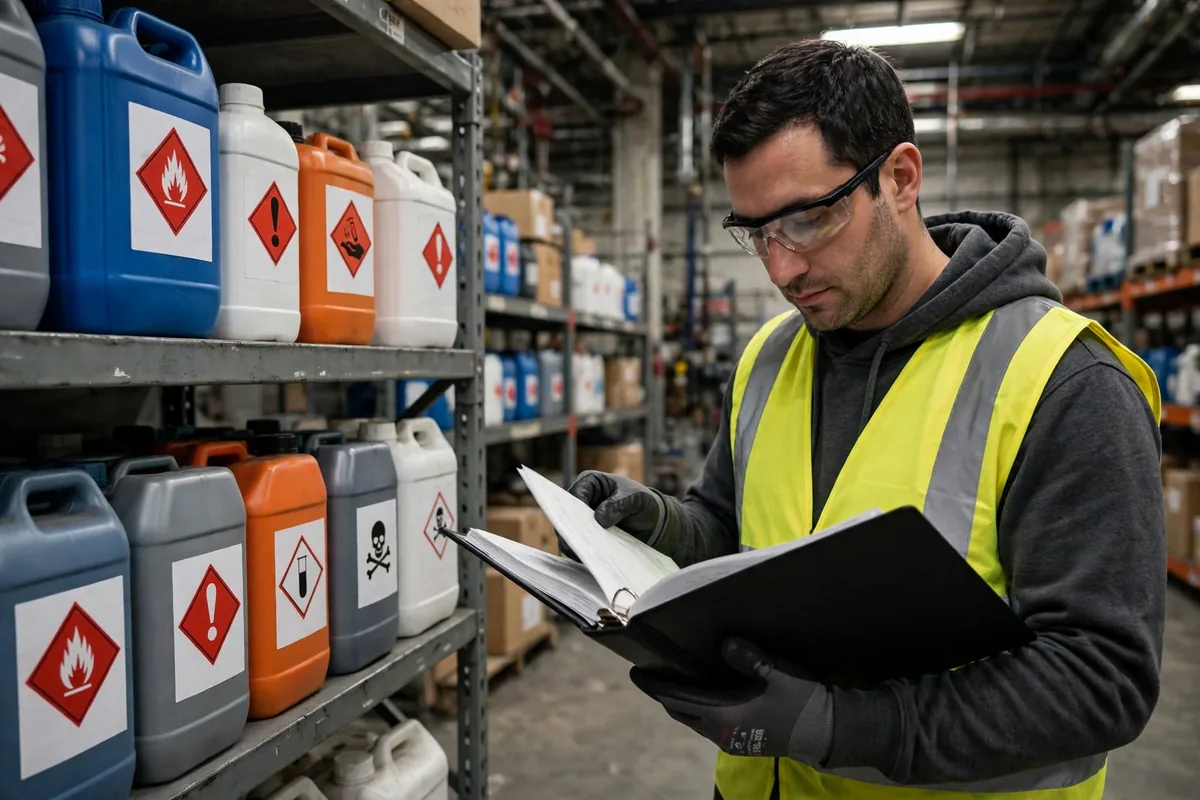
When something leaks, do not rush in to clean it up. Step back and look at three things. First, what is it — read the label on the drum or container, and if you cannot read it, treat it as the nastiest thing it could be. Second, how much — a small puddle, or liquid running across the floor toward a drain, a doorway, or a gutter. Third, has anyone been exposed, is there an ignition source nearby, and is the air moving. Once you know those three things, every step after that has a better chance of being right.
Next to the label you will usually find the safety data sheet, the SDS. It tells you what to do if the stuff touches skin and whether you can wash it down with water. If you can find it, read it first. If you cannot, go with the most cautious option and do not guess. The reporting rules, thresholds, and penalties vary by state and by federal agency, and they change over time, so check the official agency websites for the current rules rather than taking my word for any regulation.
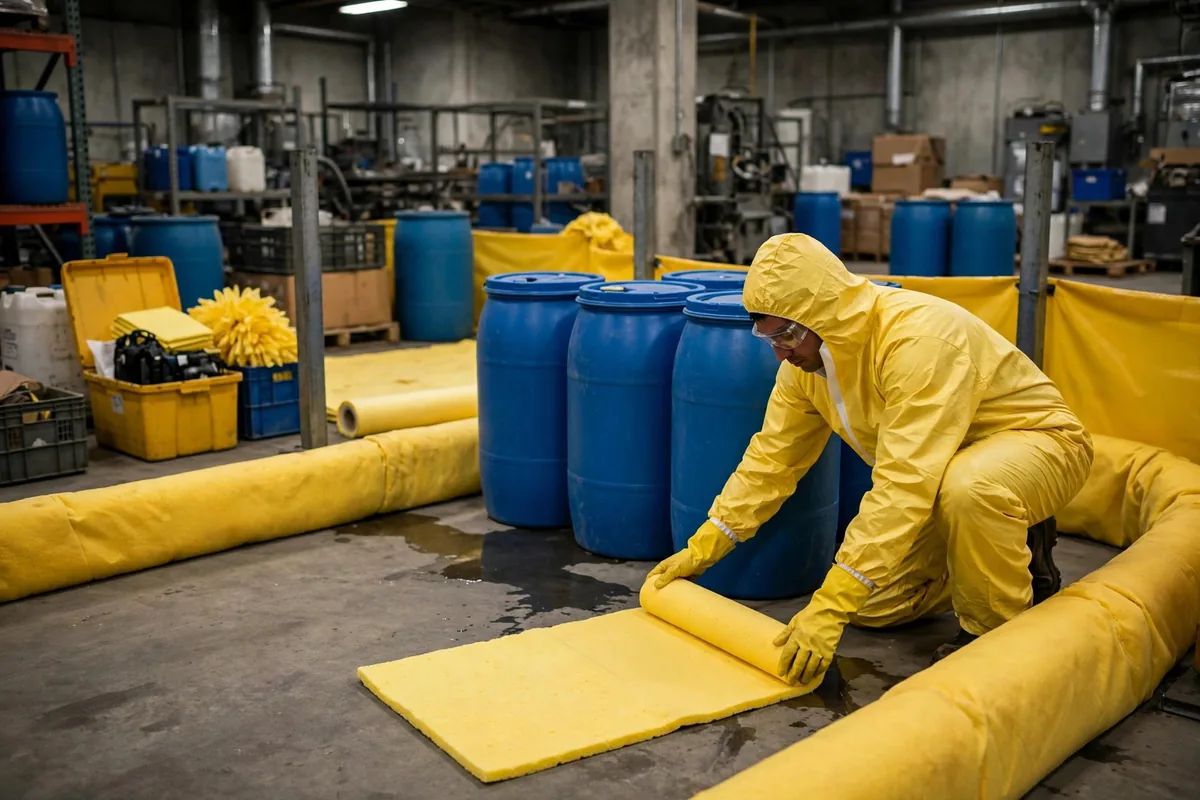
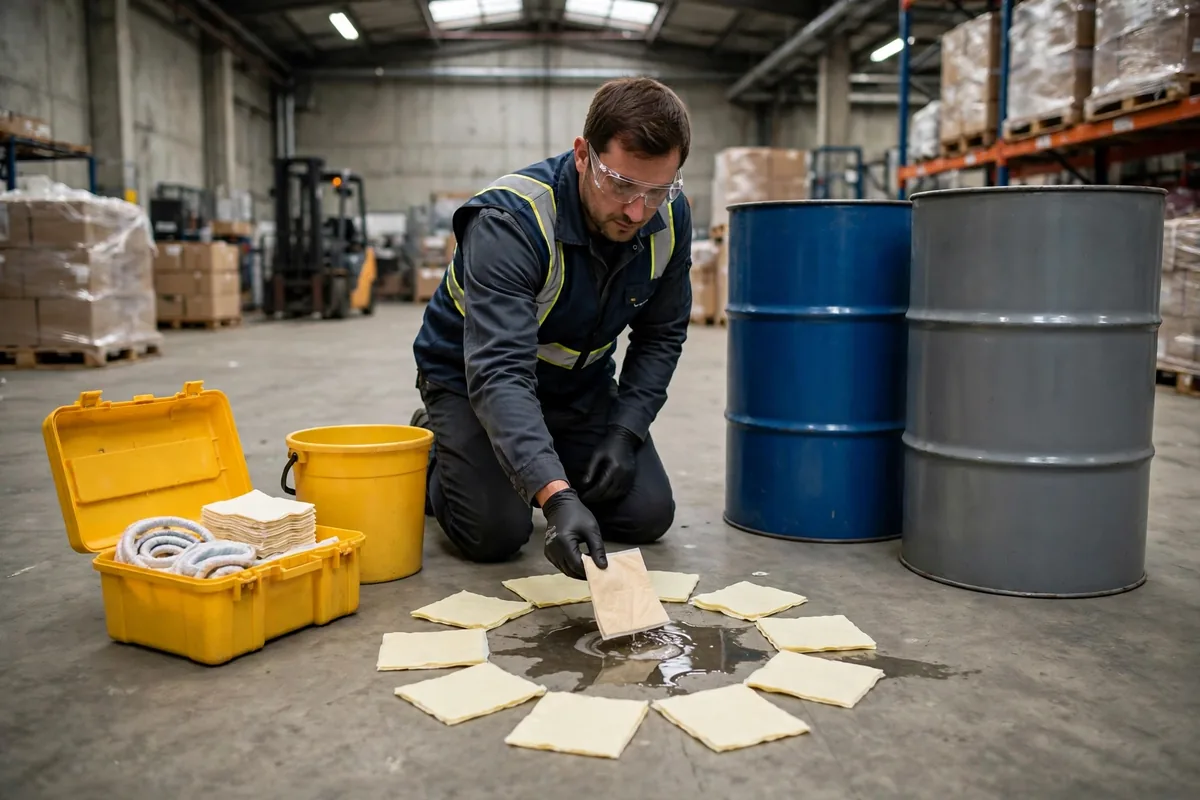
Then comes the order that protects people: clear bystanders out of the area first, then block the path of the liquid with absorbent pads, sand, or booms — the whole point is to keep it out of drains, sewers, and the street — then ventilate and shut off anything nearby that could spark. Only then do you talk about cleanup. Get the order backwards and the faster you clean, the bigger the trouble.
Spill Size Decides Who You Call
Here is a simple rule I give small warehouses. Sort the spill into three tiers and post them on the wall, so nobody has to think it through in the moment:
| Spill size | What it looks like | What to do |
|---|---|---|
| Small | A few liters at most, one puddle, nowhere near a drain | Trained on-site staff handle it in proper protective gear, absorb it, bag the waste, label it |
| Medium | Tens of liters, spreading across the floor | Call the supervisor, close off the area, gear up before touching anything, file a report when done |
| Large | A full drum tipped over, liquid in a drain, anyone hurt or exposed | Get people out, call emergency services and a professional cleanup company, do not try to handle it yourself |
The logic is plain: if you can control it, clean it; if you cannot, do not force it. Plenty of small warehouses get into trouble on the "we can handle it" instinct. A drum of oil looks manageable until it reaches a drain, and then the whole character of the incident changes.
Here is the counterintuitive part: small spills are often more dangerous than big ones. A big spill scares people into calling for help. A small spill makes everyone think they can just wipe it up by hand, and that is exactly when the careless moves happen — bare hands, a hose, a broom pushing it toward a drain. A chemical does not care about quantity the way you do. A small bottle of strong corrosive cleaner can do as much damage as a drum of motor oil. So my rule is simple: no matter how small the spill looks, gear up first and size it up before you touch it.
What Never to Do in a Chemical Spill Emergency
These are the moves that turn a spill into something worse. I have seen someone make every one of them:
- Never wash oil or water-insoluble chemicals down with a hose. Water spreads the oil and can carry it into a drain.
- Never touch spilled liquid with bare hands or ordinary work gloves. Regular gloves do not stop corrosives. If skin contact happens, flush with plenty of water and get medical attention.
- Never sweep spilled liquid into a floor drain or sewer. Once it is in the drainage system, the cleanup cost and the liability jump.
- Never mix different spilled liquids together for convenience. Different chemicals can react with each other. Bag them separately.
- Never try to neutralize an unknown chemical with another chemical. Guessing at chemistry makes the mess worse.
- Never throw chemical-soaked rags or absorbent pads into the regular trash. Bag them, label what they are and when the spill happened, and store them separately for hazardous waste handling, following the current official requirements.
A Checklist to Post Beside the Chemical Shelf
When a real spill happens, people panic and forget steps. A checklist on the wall beats memory:
- Stop and step back. Shut off nearby equipment that could spark. Do not reach for the liquid.
- Read the label and find the SDS. Know what leaked and what skin contact calls for.
- Clear people out and ventilate. Nobody who is not needed should be in the area.
- Block the path. Use absorbent pads or sand to ring the spill and keep it out of drains and doorways.
- Size it up and act by tier. Small: handle it on site. Medium: call the supervisor. Large: evacuate and call in professionals.
- Gear up before cleanup. Goggles, gloves, and respiratory protection matched to what the SDS calls for.
- Bag and label the waste. Note what it is and when it spilled, and store it separately.
- Write it down. Date, substance, amount, and how it was handled go into the shift record.
There is an old saying in our trade: it is not the accident you prepare for that hurts you, it is the one you never thought about. A checklist on the wall costs nothing. What matters is that in the few minutes after a spill, someone remembers to follow it. After all these years on the road, I can tell you that warehouse safety looks like small stuff right up until the moment it is everything.
By Shifu Zhao, Trucking Veteran (15 yrs)