Let me tell you something straight: when your warehouse carton damage rate climbs, the box is usually the last thing to blame. After fifteen years on the road, I have watched too many shippers jump straight to a thicker, more expensive carton — only to find the damage rate barely moves. The real warehouse carton damage rate causes are almost always the same three things: how the cartons were stacked, how they were sealed, and how they were handled at the end of the journey. Check those three first, and you will usually fix the problem without spending an extra cent on packaging.
A Road Story That Shows the Real Warehouse Carton Damage Rate Causes
Back in November 2024, I hauled 1,200 cartons of household goods from Langfang to a warehouse in Jinan. While the crew was loading, I could already see trouble: the bottom two layers were stacked crooked, and two layers of heavy goods sat right on top of them. The corners of the lower cartons were already starting to bulge outward. When we opened the load in Jinan, 47 cartons were damaged — a damage rate of nearly 4 percent. The shipper wanted to blame the carton supplier on the spot and file a claim against the box maker.
I asked him to slow down and look at the damaged cartons laid out in a row. Almost every break was on the side wall or the bottom corner. The tops were fine. That pattern does not point to a weak box. It points to a bottom layer crushed under weight it was never meant to carry, with corners taking uneven pressure. On the next run, we changed nothing about the box and nothing about the route. We just stacked heavy goods at the bottom, light goods on top, and staggered each layer so the edges lined up flush. Damage dropped from 47 cartons to 7.
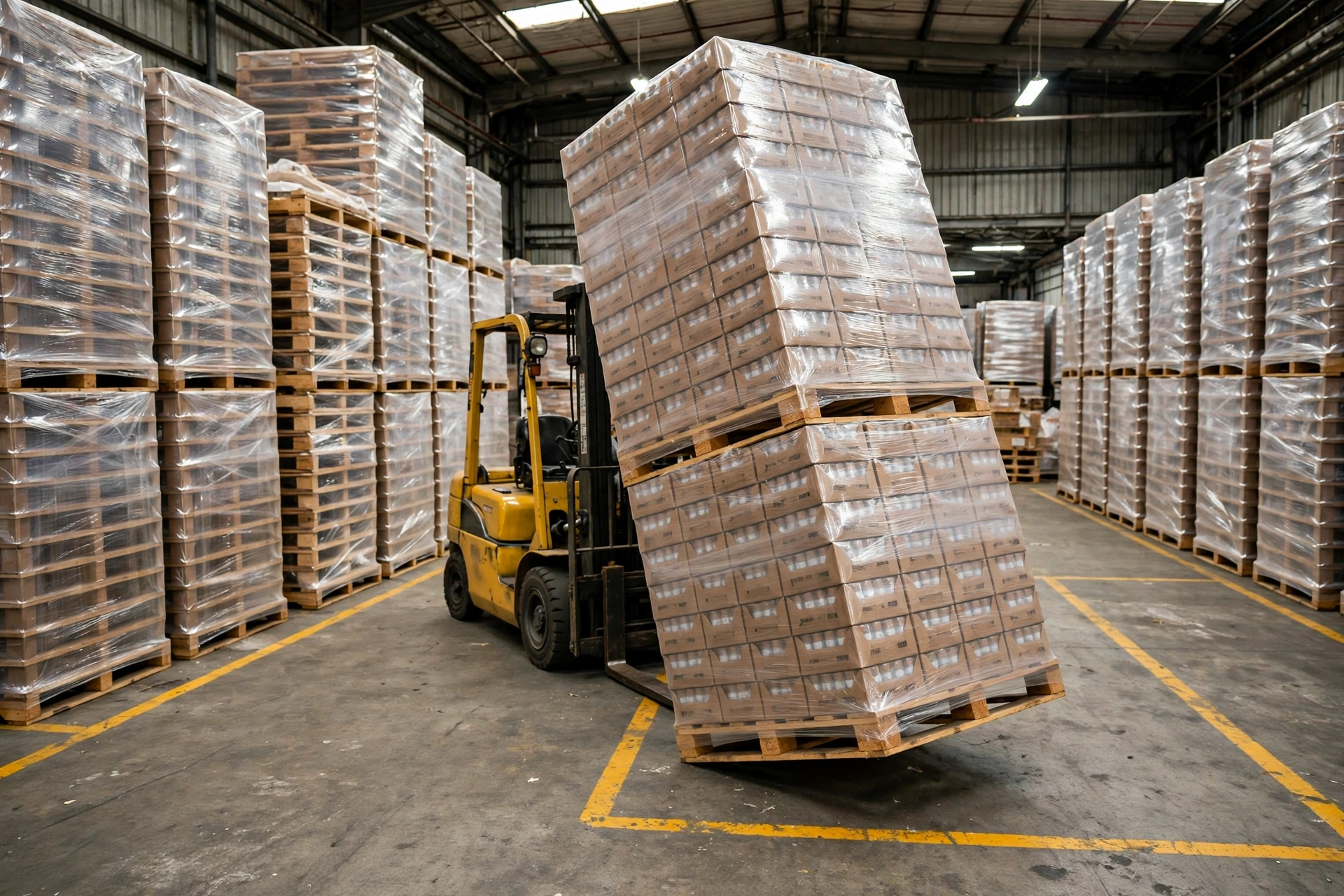
The second story happened in May 2025 at a warehouse in Zhengzhou. I had barely finished unloading when I saw a forklift driver take a corner with a pallet stacked far too high and no stretch wrap at all. The top two layers slid straight off and hit the concrete, every corner crushed. People in the warehouse called it transit damage. I have to disagree — those cartons arrived at the door in good shape, and they were broken by one sharp turn inside the warehouse. I have also watched workers in sorting areas grab a carton by one corner with one hand and toss it onto a conveyor, the tape splitting open mid-air. No carton on the market is built to survive that.
The Three Real Causes of a High Warehouse Carton Damage Rate, and How to Spot Each One
These are the warehouse carton damage rate causes I check first on any load, before anyone talks about buying a different box.
Stacking is the first place to look, and it fails in three familiar ways: heavy goods on top of light ones, layers stacked out of alignment so cartons hang over the pallet edge, and stacks built too high so the whole pallet turns top-heavy. The check is simple. Stand beside the pallet and look down its side. If the layers form one clean, flush line, you are in good shape. If any layer sticks out like a sore thumb, that is almost certainly where your damage is coming from, because one hard brake or one sharp turn is all it takes to grind that overhanging edge.
Sealing is the second place to look. The most common failure is tape applied in a hurry: a single strip down the middle, ends left unsealed, or tape pressed down loosely with air bubbles and lifted edges. Put a heavy load on a carton sealed like that and the bottom gives way. Another common failure is a carton shipped half empty, so the contents rattle around inside and batter the walls from within during transit. The check is just as simple: pull ten cartons at random, press each bottom corner with your hand, and shake the carton to listen for empty space. Corners that feel soft and cartons that rattle both tell you the sealing and the filling need work.
Handling is the third place to look, and honestly, it is the one people least want to admit. Single-handed corner grabs, airborne tosses, dragging cartons across the floor, forklift forks stabbing into carton walls, and pallets slid off a truck bed instead of lowered — I have seen all of it. Here is the uncomfortable truth: the last fifty meters inside a warehouse often do more damage than several hundred kilometers on the highway. The highway shakes a carton evenly. The warehouse drops it, throws it, and smashes it. Those are very different kinds of abuse.
Do the Math Before You Buy a Thicker Box
| Problem area | Typical symptom | First thing to check | What the fix costs |
|---|---|---|---|
| Stacking | Crushed bottom layers, scuffed edges, leaning pallets | Pallet side alignment, overhang, heavy goods on the bottom | Almost nothing — change the stacking pattern and cap the height |
| Sealing | Burst bottoms, lifted tape, contents breaking through walls | Press ten carton corners, shake for empty space, check tape adhesion | Very little — wider tape plus a second strip |
| Handling | Dented corners, impact marks, seals popped open | Watch unloading and transfers for tossing, dragging, and fast forklift turns | Nothing to buy — set the rule and enforce it on the floor |
Now run the numbers on that Langfang load. At a 4 percent damage rate, 48 of 1,200 cartons were lost. At 80 yuan of goods per carton, that is more than 3,800 yuan gone in a single trip. Cut the rate to 0.6 percent — just 7 cartons — and the loss falls below 600 yuan, saving more than 3,200 yuan per trip. Switching to a thicker carton, by contrast, adds two or three yuan per carton up front — two to three thousand yuan extra per load — without any guarantee the damage rate falls at all. Fixing the stacking pattern, adding a second strip of tape, and disciplining the handling costs a fraction of that and delivers the result you actually want.
Advice for Shippers and Warehouses: Check in This Order
My advice is one sequence, and the order matters. Step one, check stacking: fix the pattern in writing — heavy at the bottom, light on top, staggered layers, a hard cap on height — and photograph the side of each pallet before the truck leaves, so any problem can be pointed out on the spot. Step two, check sealing: heavy goods always get a second strip of tape, empty space inside the carton gets filled, and random checks use the press-the-corner and shake-for-rattle tests. Step three, check handling: no tossing at unloading, forklifts slow down for corners, tall pallets get wrapped before they move, and one clear rule posted on the floor beats ten claims filed after the fact.
Here is the counterintuitive part that surprises most shippers: a thicker carton can actually raise your damage rate. I have seen it happen. The heavier box is harder to lift, so workers drag it instead of carrying it, and dragging grinds through the bottom. The thicker box also makes people careless — they assume it can take abuse, so they toss it without a second thought. The carton is the skin; the handling is the skeleton. No matter how thick the skin is, it cannot save a load when the skeleton is sloppy. Get the handling right, and an ordinary carton arrives just fine.
So here is the old driver's rule I leave you with: a skilled hand delivers a thin carton safely, while a careless hand ruins the best box money can buy. Before you blame the box, check stacking, sealing, and handling. Fix those three, and only then decide whether a different carton is worth paying for.
By Shifu Zhao, Trucking Veteran (15 yrs)