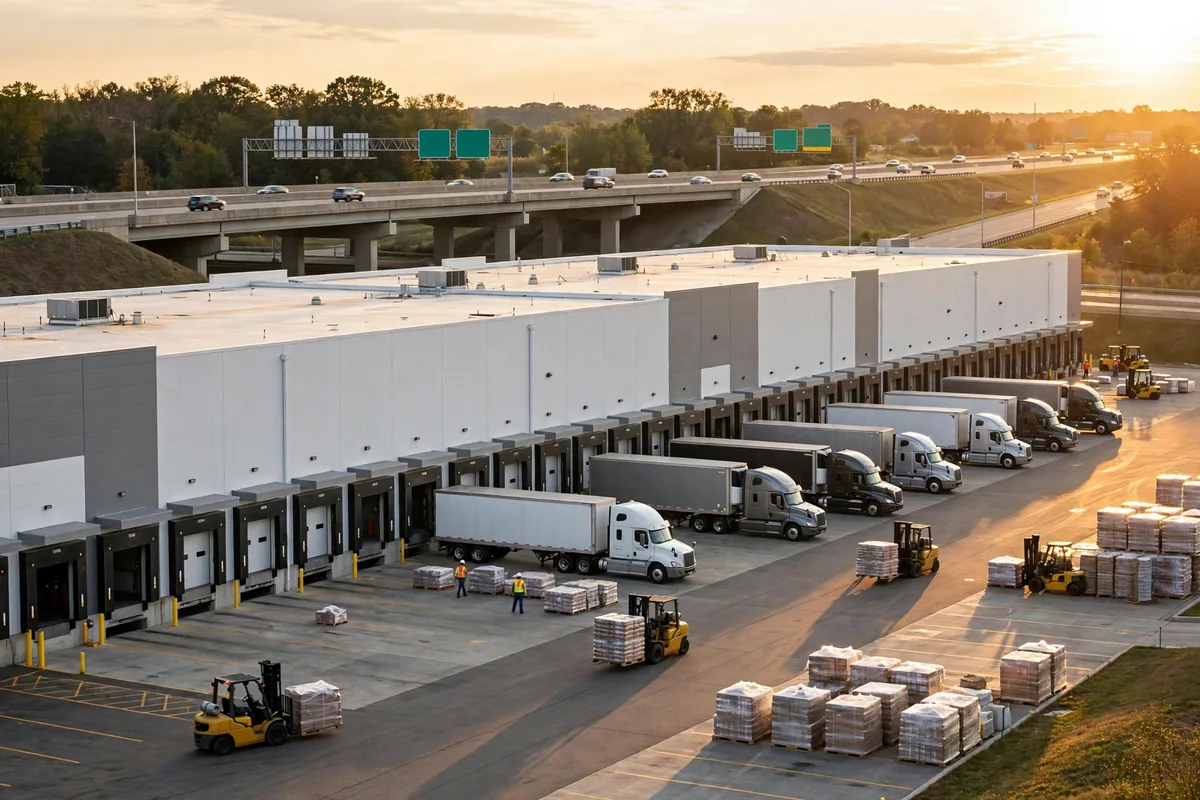
Tire warehouse work fooled me at first. I run a small warehouse, about three thousand square meters if you count every corner I pretend is usable, and when my first tire customer showed up I thought I had won the lottery. Tires do not break when you drop them, and nobody cries about a scratch. A month later the customer came for a count, picked up a tire stored near the window, and found fine cracks on the sidewall. The tire was not old. It had been cooked by sunlight in the wrong place. Another stack, laid flat for weeks, had bottom tires pressed out of shape by the weight above them. We small warehouses cannot afford to burn money like that. One claim wipes out days of margin. That was my tuition.
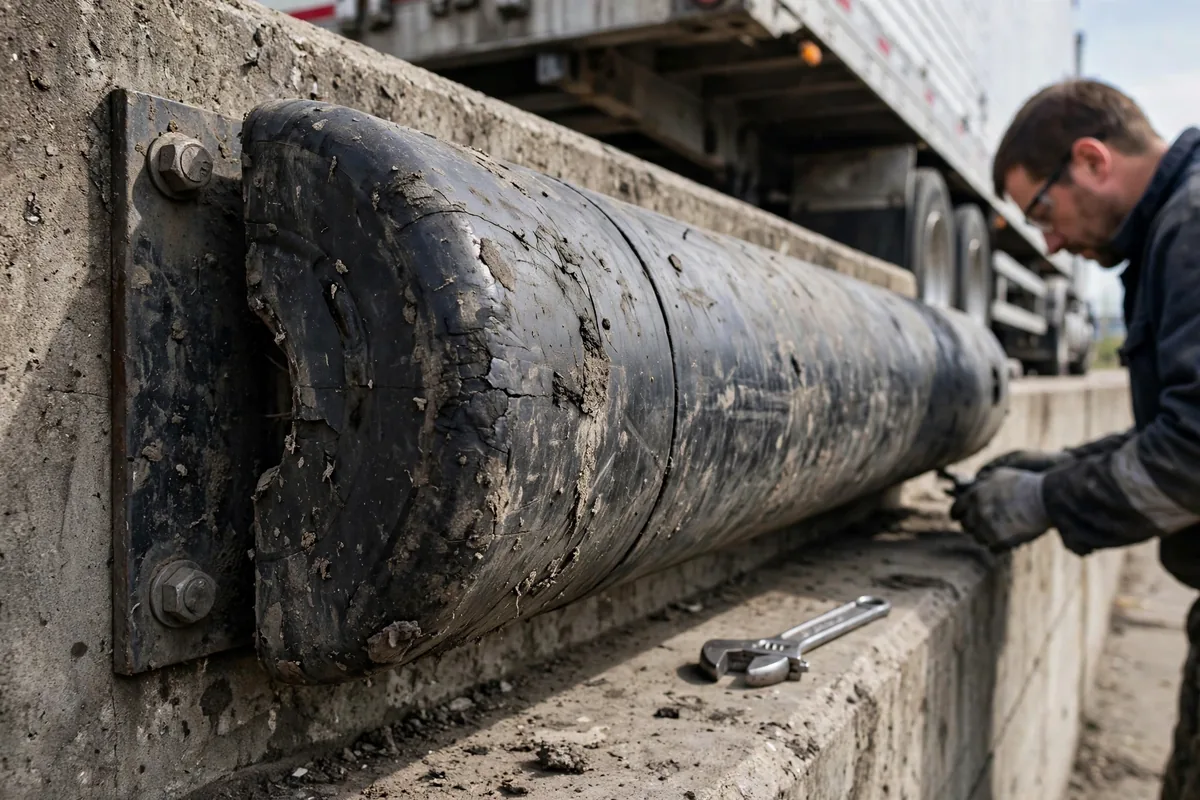
Here is a scenario, with the numbers as a hypothetical example only. Hypothetical example: in the summer of 2023, a small warehouse in southern China stacked a batch of passenger tires flat near a roller door, where the afternoon sun came in, next to an old forklift charging corner that sometimes smelled of sparks. Two months later the outer tires felt hard and looked pale on the sidewall. Nothing was wrong with how they were made. Rubber hates three things: ultraviolet light, ozone that gathers around sparking motors, and oil or solvents that swell the compound. Once oil soaks in, you do not wipe your way back. So my first rule costs almost nothing. I draw the tire zone away from charging, repair benches, and the sunny side of the building. That window row holds empty pallets. People call it wasted space. I call it cheap insurance.
Tire Warehouse Posture: Standing, Stacking, or Hanging
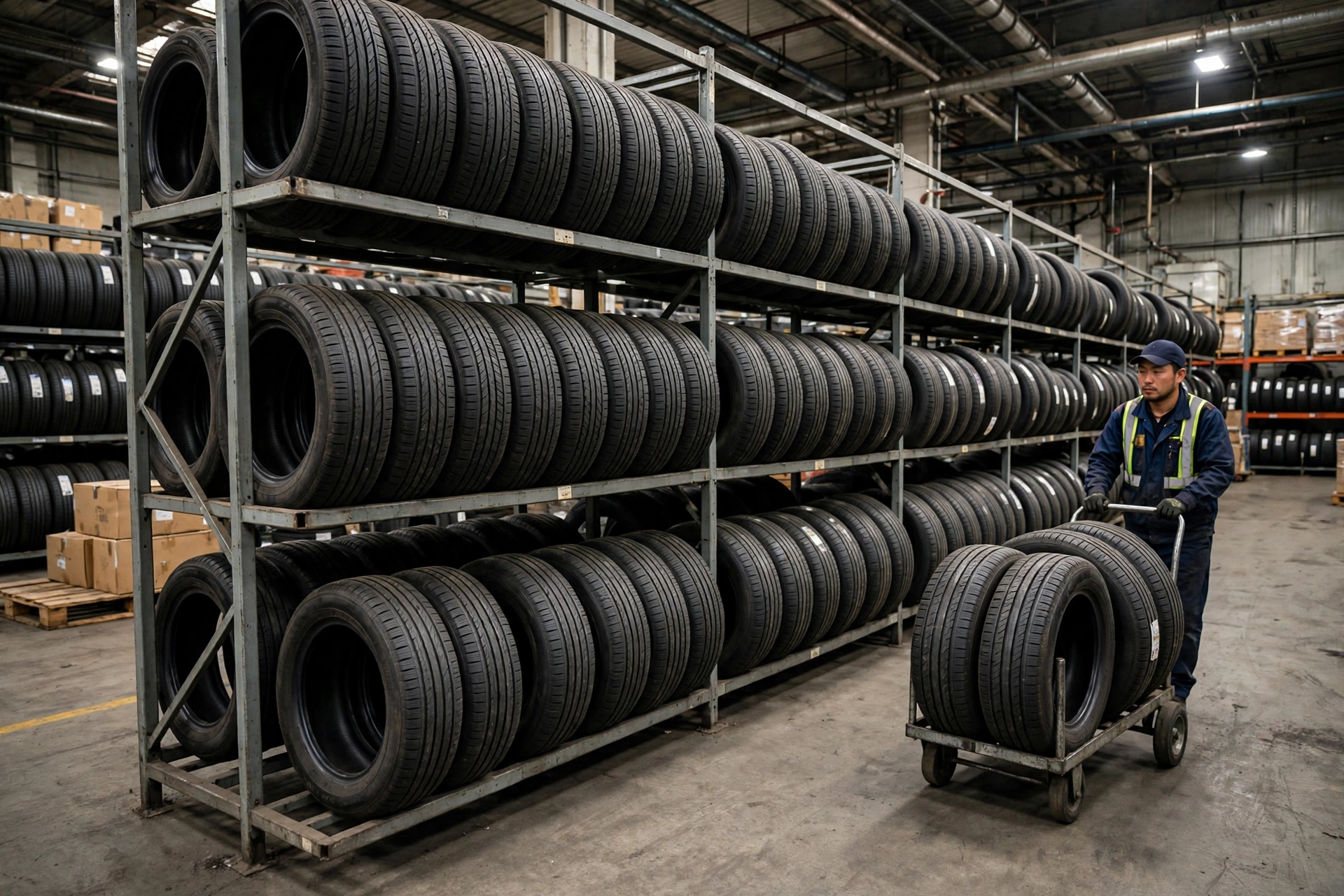
The big warehouses will sell you a beautiful story about posture, with special racks and climate rooms. Listen, learn, and then do not copy what you cannot pay for. In real life there are three postures. Standing tires upright spreads the load evenly and avoids a hard crease, but upright tires fall over if you do not fence them into bays. Flat stacking saves floor space, but the bottom tire carries everyone else, stays loaded for weeks, and is a pain to dig out. Hanging tires on a rod keeps them off the floor and works for odd sizes in small numbers, but the rod and its supports have to carry the weight without bending into a new problem.
My low-tech answer is embarrassingly simple. Fast-moving passenger sizes stand upright in bays I built from old pallets and timber dividers, openings facing the aisle, so picking one tire means pulling one tire. Slow movers can stack flat for a short stay only, and I rotate them on a schedule, bottom to top, so no tire spends its whole life being crushed. Hanging is reserved for samples and the few tires a customer wants kept separate. I bought no new racking system for this. I just stopped letting posture happen by accident, and deformation complaints dropped in a way my crew could see without a dashboard.
There is a trade-off here that most people get backwards. Flat stacking looks cheaper because it saves floor area, but you pay the saving back in labor. Every time you need the bottom size, two people unload the stack, wrestle the tire out, and restack the rest, scuffing sidewalls as they go. Standing storage looks wasteful on a floor plan and is cheap at picking time, one person and about a minute. Rent per square meter versus labor per pick is the real comparison, and the answer is different in every town. Do not let anyone do only half the math for you.
Passenger tires and truck or equipment tires also need separate homes. Passenger tires are lighter, come in far too many sizes, and turn fast, so they belong in labeled upright bays. Truck tires are heavy enough to ruin a back, so they live near the door, on ground that can take the load, and move with a forklift or trolley, never by heroics. Large equipment tires, sometimes arriving already mounted, are another species for footprint and weight. I measure and weigh before I say yes. Mixed storage sounds flexible until light tires are trapped under heavy ones and every mistake has your name on it.
Tire Warehouse Handling and Date-First Rotation
Handling tires is its own skill because they are heavy and they bounce. A dropped carton stays where it lands. A dropped truck tire rolls and goes looking for a rack or an ankle. My rules fit on one whiteboard. Heavy tires are a two-person lift or a machine job, no exceptions. Rolling is allowed only along marked lanes, never as a shortcut through racking. Bays are filled with a little room to spare, so pulling one tire does not bring three friends with it. For racking, I adapted ordinary beams with a front bar that stops tires rolling out, and lined the bays with old conveyor belt, which grips and keeps damp off. Floor stacking is fine, but only inside painted lines, with a sensible height and aisles left open.
Rotation is where tire people separate from box people. First in, first out sounds right until you remember a tire has a production date stamped on it. The sidewall carries a DOT code ending with the week and year it was made. Two tires can arrive on the same truck and be months apart in age. If you ship by arrival date, the older production batch can sit in a corner getting older while newer stock flows past it. I learned this the annoying way. Hypothetical example: in the spring of 2024, an auto parts customer asked for the earliest production stock first, and my crew shipped by receiving label instead. The older batch stayed behind for months, and by the time we found it the customer said it would be hard to sell at full value and asked what I planned to do about it. Fair question. My fix is a dumb, reliable habit. At receiving, we copy the DOT week and year onto a big outer label and stick that label facing the aisle. The picker reads the date standing up, ships oldest production first, and never has to climb into a bay to hunt for a sidewall code. It adds seconds per tire. It removes a whole category of argument.
Do the small math and the seconds win easily. Another hypothetical example, with simple arithmetic you can check: say holding stock for customers means a small share of tires gets discounted each year because date control failed, while the label habit costs a label and a few seconds of labor per tire at receiving. Even without putting a currency figure on it, one discounted batch pays for a very large pile of labels. I keep the choice on a card at the receiving bench:
| Approach | Cost per tire | Main risk | Best fit |
|---|---|---|---|
| Ship by arrival date only | Almost zero | Older production gets buried | Tiny stock, very fast turns |
| Copy the DOT date to an outer label | A label plus seconds | Label can fall off if you buy cheap ones | Most small warehouses |
| System-driven date allocation | Software and upkeep | Great accuracy, heavy overhead | Large or multi-site operators |
We picked the middle row, not because it is impressive, but because it solves the problem we actually have.
On fire, I will only give you the common-sense version and no invented numbers. Rubber carries a lot of heat when it burns, and tire fires make heavy smoke. How high you may stack, what sprinklers you need, and how wide aisles must be are set by your local fire code, so check that code and your local fire authority instead of trusting any article, including mine. What I control is discipline: stay inside the painted lines, keep aisles and exits clear, keep oils and charging equipment out of the tire zone, and keep extinguishers within reach. A warehouse my size probably does not survive one serious incident.
If you run a small operation like mine, start with the moves that cost almost nothing. Separate tires from sun, oil, and ozone sources. Let most stock stand, with flat stacks rotated on a schedule. Start the DOT outer label habit today, before any software project. Write the heavy-tire handling rules down before someone learns them from an injury. We win by making fewer stupid mistakes with other people's goods.
A small warehouse has its own way of living.
By Xiao Ma, Small Warehouse Owner