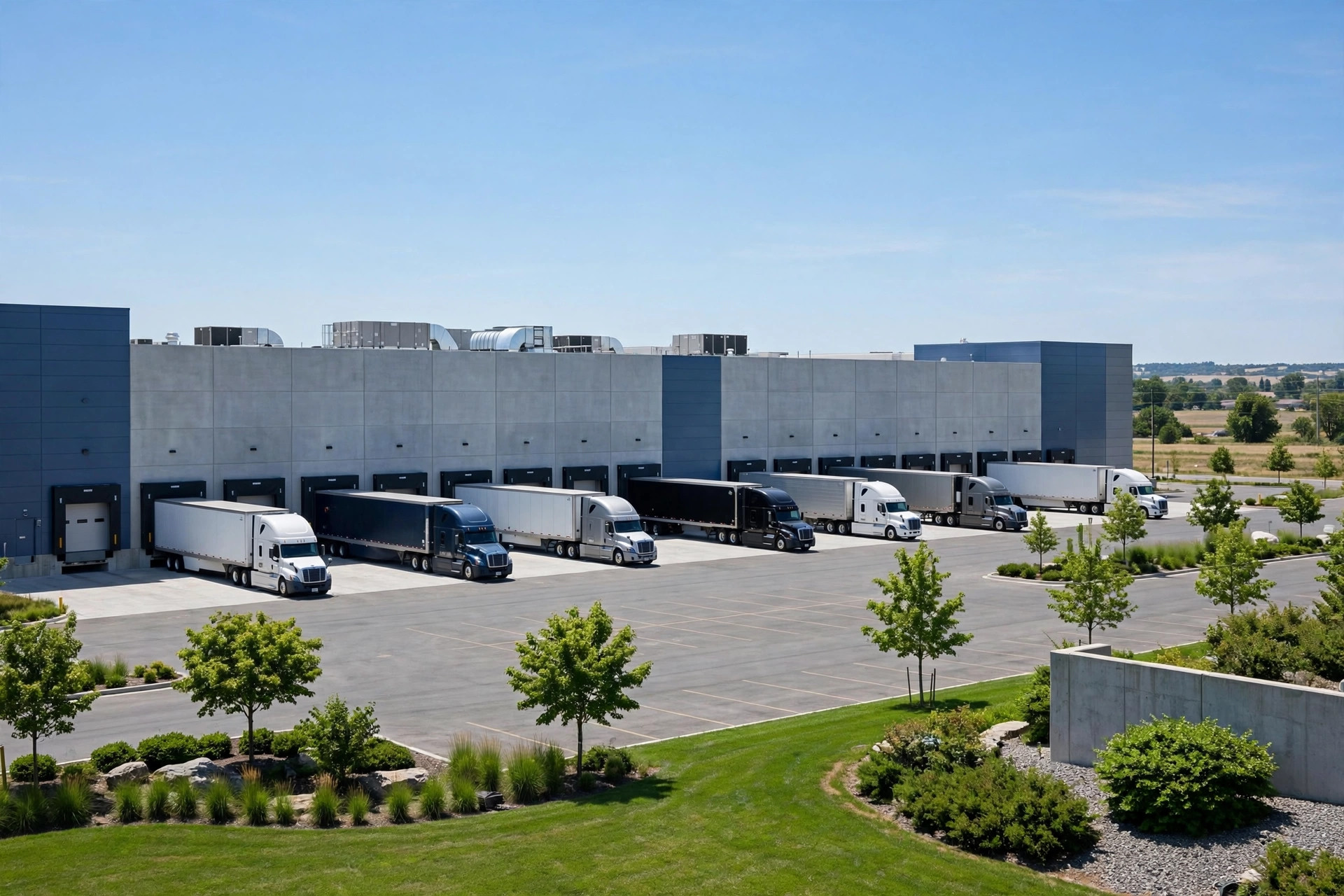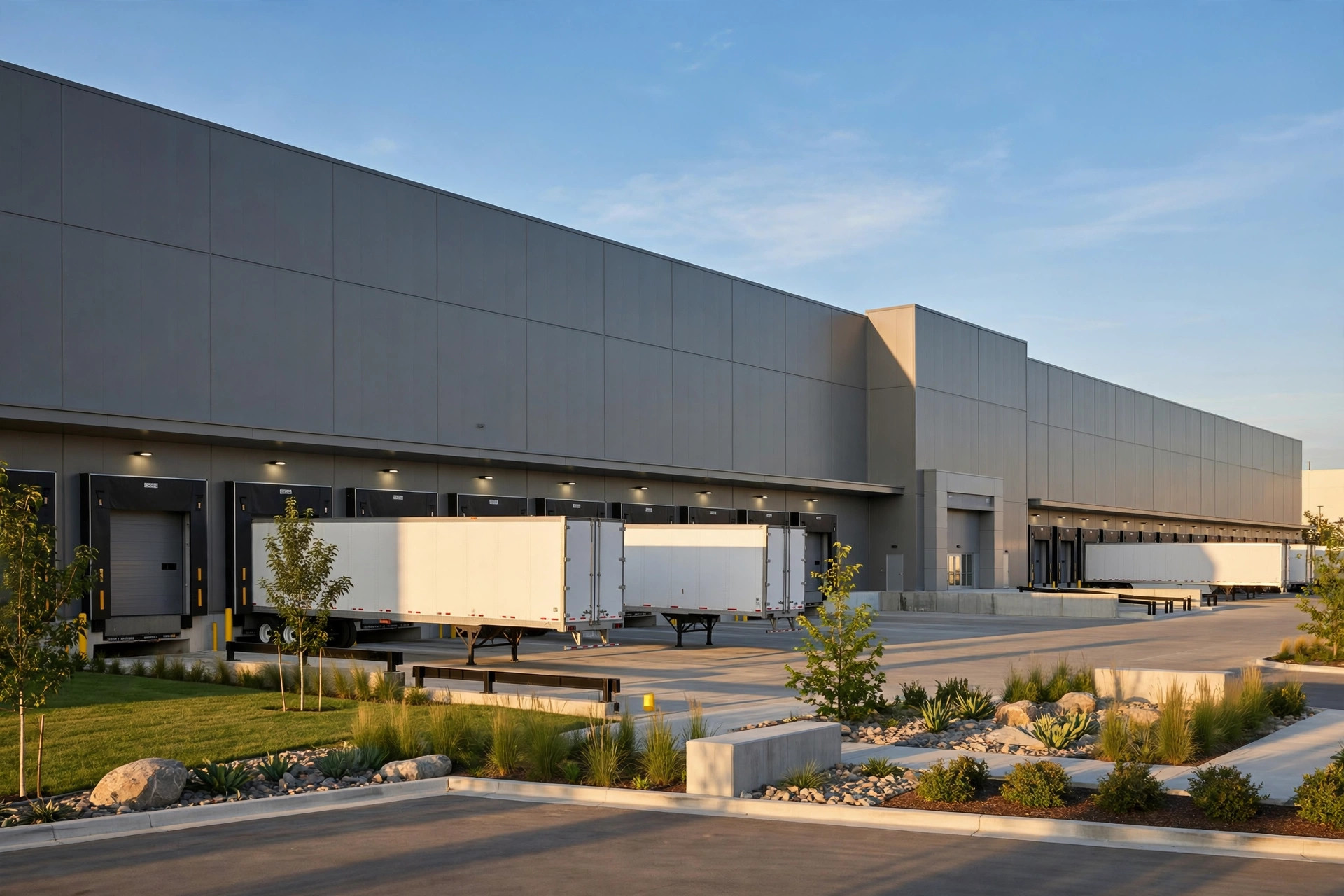
We had a client in New Jersey who survived three months of downtime after a warehouse fire — entirely because of one line on his policy called business interruption insurance.
The warehouse was about 120,000 square feet. An electrical panel caught fire overnight. The fire itself was small; the fire department had it out in two hours. But water damaged a third of the storage area, the roof needed repair, racking had to be replaced, and the fire marshal issued a remediation order. Three months before they were back up. During those three months, the landlord's rent didn't drop a cent, payroll for 80-plus workers didn't drop a cent, and customer freight couldn't ship — penalties on top.
The ending: insurance covered nearly four months of his fixed costs. Not the landlord's insurance — his own policy, the BI line.
Another client, in Fontana, California, had a smaller fire in 2024, only about five weeks of downtime. But his policy had no BI coverage — he'd figured "I already bought property insurance, why do I need this?" Those five weeks cost him roughly $300,000 out of pocket in rent and labor. That's his entire annual premium paid a dozen times over.
Two clients. The difference was one piece of paper.
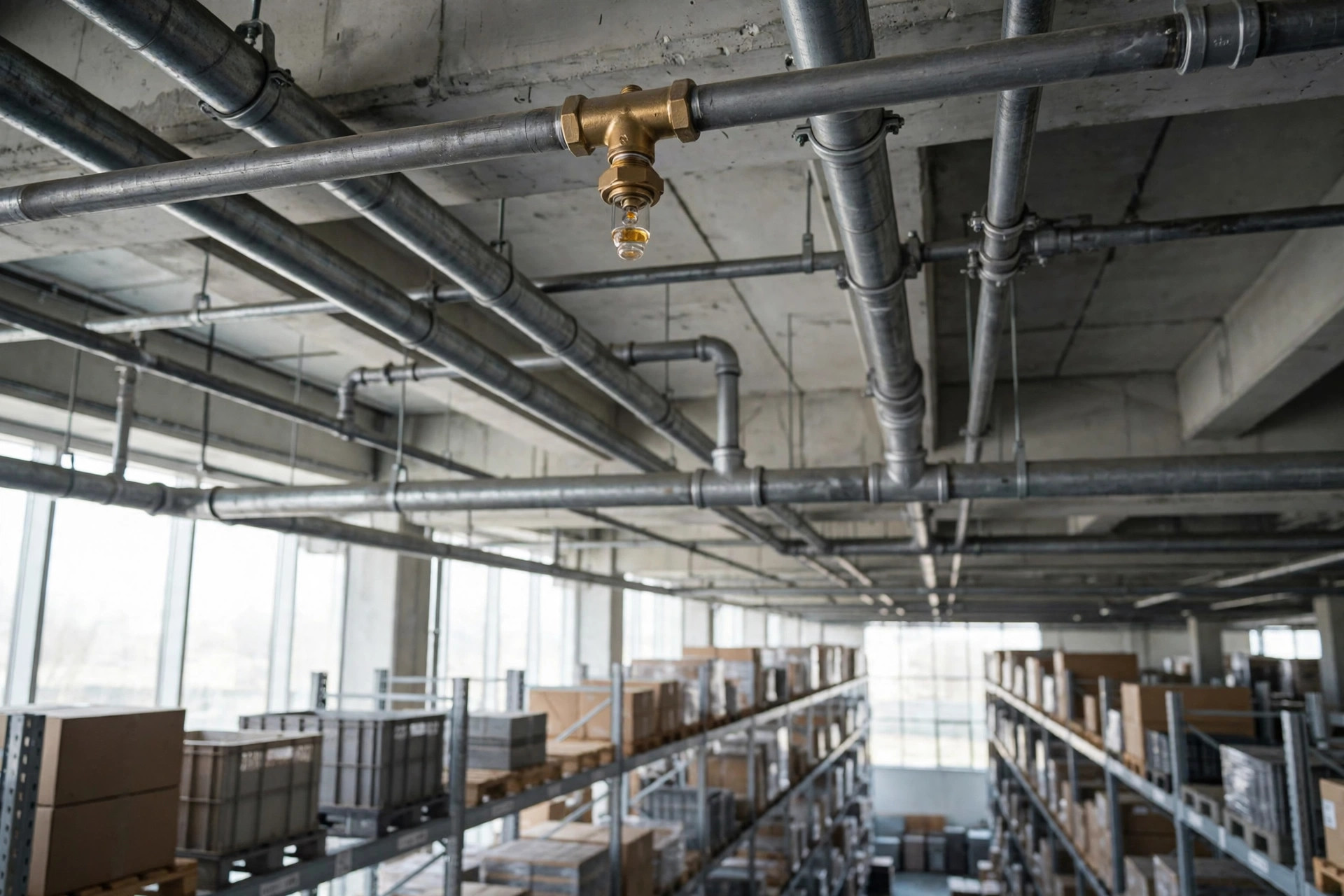
Property Insurance Covers "Things." BI Covers "Time."
Here's the part most first-time lease signers never hear: property insurance pays for the visible stuff — the burned racking, the waterlogged inventory, the charred walls. It doesn't care where the money comes from while you're shut down.
BI pays for a different line entirely: the money you would have made but didn't, and the expenses you can't avoid during the shutdown. In plain English, three things: ongoing rent, loan payments, and taxes; wages for the core staff you can't afford to lose; and lost gross profit.
This is how I usually lay it out for clients:
| Property Insurance | Business Interruption (BI) | |
|---|---|---|
| Covers | Direct physical loss to assets and inventory | Fixed costs and expected profit during downtime |
| Example | Burned racking, soaked goods | Three months of rent and payroll |
| Trigger | Covered physical damage to property | Same, plus resulting interruption of operations |
| Waiting period | Usually none | Typically around 48–72 hours |
Note that last row: BI usually has a waiting period — the first couple of days after the fire aren't covered, spelled out in the policy. And it only triggers on interruption caused by covered physical damage. Shutting down voluntarily for a remodel, or sitting idle because orders dried up? Not covered.
The Counterintuitive Part: Your Landlord's BI Has Nothing to Do With You
This is the trap I see tenants fall into most. The landlord says "I carry full coverage, including BI," and the tenant relaxes.
The landlord's BI covers the landlord's rental income — the building burns, can't be leased, insurance makes the landlord whole. Your stalled business, your payroll, your customer penalties have nothing to do with that policy.
And it cuts both ways: your BI covers your own fixed costs and lost profit. It won't rebuild the landlord's roof. In a 3PL lease, landlord and tenant each buy their own. Nobody rides on the other's policy.
Here's an insider detail only the vendor side usually knows: the lease's rent abatement clause and your BI coverage are linked. Some leases say "if fire suspends operations for more than 30 days, rent is halved" — which shrinks your BI payout base, because your "unavoidable expenses" just got smaller. You have to read those two clauses together. Negotiating either one in isolation is a con. I once watched a client negotiate beautiful rent abatement, then realize his BI limit had been sized on full rent — two years of overpaid premium.
Doing the Math: Sizing the Limit Without Getting Burned
The easiest way to get hurt on BI isn't the rate — it's the limit and the indemnity period.
Too many clients pick a 3-month indemnity period because it's cheap. But after a real fire, restoration plus restart rarely fits in three months. Our New Jersey client needed three months for a small fire. Structural damage? Six months is the starting point.
There's a back-of-the-envelope formula that works well:
Monthly fixed costs (rent + payroll + loans + taxes) × indemnity months + expected lost gross profit
Example: roughly $120,000 in monthly rent, $250,000 in payroll, $80,000 in other fixed costs — about $450,000 a month. With a 6-month indemnity period, the limit needs to be at least around $2.7 million. Add another month or two of buffer on top, because orders don't snap back on day one after reopening — customers take time to return.
There's a real trade-off here: stretching the indemnity period to 12 months costs noticeably more in premium; picking 3 months is a bet that "repairs will definitely finish in three months." With warehouses, fire-marshal remediation, the adjuster's assessment, contractor scheduling — none of it is in your control. I generally tell clients to size the period for the worst case. What you save on premium won't cover a week of payroll.
I won't quote specific rates — they vary enormously by state, industry, and carrier; go by actual quotes and policy wording. But here's the sense of scale: BI is usually the best value-for-money line on the entire property policy. Our Fontana client paid roughly $300,000 out of pocket for five weeks. Do the math on how many years of BI premium that buys.
Next Time You Negotiate a Lease, Ask These Three Questions
One: "Under this lease, what happens to rent during fire-related downtime?" Read the lease first, then the policy — the two have to line up. The abatement clause directly changes your coverage base.
Two: "On my BI coverage, how long is the indemnity period, and how long is the waiting period?" Negotiate up from 3 months; 6 months is the psychological safety line. A waiting period beyond 72 hours is too long — that's the first thing to push on.
Three: "List out what the landlord's insurance covers and what mine covers, side by side." Don't trust anyone's verbal "full coverage." The landlord covers his rent; you cover your business. Neither of you worries about the other.
In warehousing, the odds of a fire in any given year are low — but one fire can wipe out a small company. BI insurance is cheap money to buy protection against "time," the most expensive loss of all. After a hundred-plus warehouse contracts, my biggest takeaway is this: the most expensive clause in any contract is always the one you thought you had, but didn't.
By Susan, 3PL Sales Director