A shipment leaves your warehouse. Three months later, an injured consumer files a claim, and the number on the demand letter is $800,000. Who pays? The answer is not in a handshake. It is in the warehouse product liability insurance policy and the contract terms behind it. Every dollar figure below is a hypothetical illustration, not a real rate.
Start With the Bill: What One Mis-Ship Recall Actually Costs
In 2024, a 3PL warehouse in Ontario, California ran into this exact problem (hypothetical scenario; figures illustrative). A picker shipped peanut-containing energy bars into orders labeled "peanut-free." More than 2,000 parcels were already on the road. A customer with a peanut allergy had a reaction and hired a lawyer. The brand owner pointed at the warehouse. The warehouse pointed at the insurer.
| Cost item | Amount (hypothetical) | Notes |
|---|---|---|
| Recall logistics and reverse handling | $120,000 | Intercept, return, reship |
| Replacement and refunds | $90,000 | Order value plus shipping |
| Legal fees and litigation cost | $150,000 | Both sides hired counsel; 8 months |
| Settlement | $350,000 | Compensation for the consumer's injury |
| Lost customers and canceled orders | $90,000 | The brand owner lost two major accounts |
| Total | $800,000 |
The total is not the point. The split is. The brand owner cannot escape its product responsibility, but the mis-ship was the warehouse's act, so the warehouse cannot escape either. The split is decided not by who argues loudest, but by what the policy and the contract say. A brand owner with no coverage eats the $800,000 alone.
Warehouse Product Liability Insurance: Who It Covers and What It Pays
Warehouse product liability insurance covers the risk that a product causes bodily injury or property damage to a third party. The policyholder is usually the brand owner, the importer, or the manufacturer. A standard policy covers three things: third-party bodily injury, third-party property damage, and the legal costs of defending those claims.
What it does not cover is where most people get surprised, usually after an incident. First, the cost of recalling the product itself is generally excluded; recall coverage is a separate endorsement. Second, lost reputation and lost orders are not covered. Third, fines and punitive damages are often expressly excluded.
Does a warehouse need its own product liability policy? It depends. A warehouse that only stores and ships other people's goods does not own the product, so it generally does not need to be the primary policyholder. But the liability boundary must be drawn clearly. If it is not, the brand owner's insurer will pay the claim and then pursue the warehouse for reimbursement. That is subrogation.
The Warehouse's Liability Boundary: Three Lines
Line one: defects in the product's design or manufacturing are not the warehouse's problem. A flawed food recipe, a defective circuit design, substandard toy materials — those belong to the brand owner and the manufacturer.
Line two: the warehouse's own operational mistakes are the warehouse's problem. Mis-ships, short-ships, wrong labels, bad packing, broken cold chain — these are warehouse work, and when they cause harm, the warehouse bears responsibility. In the peanut-bar case above, the product itself was fine. The warehouse shipped product A into an order for product B. After the brand owner's insurer pays, it has the right to recover from the warehouse.
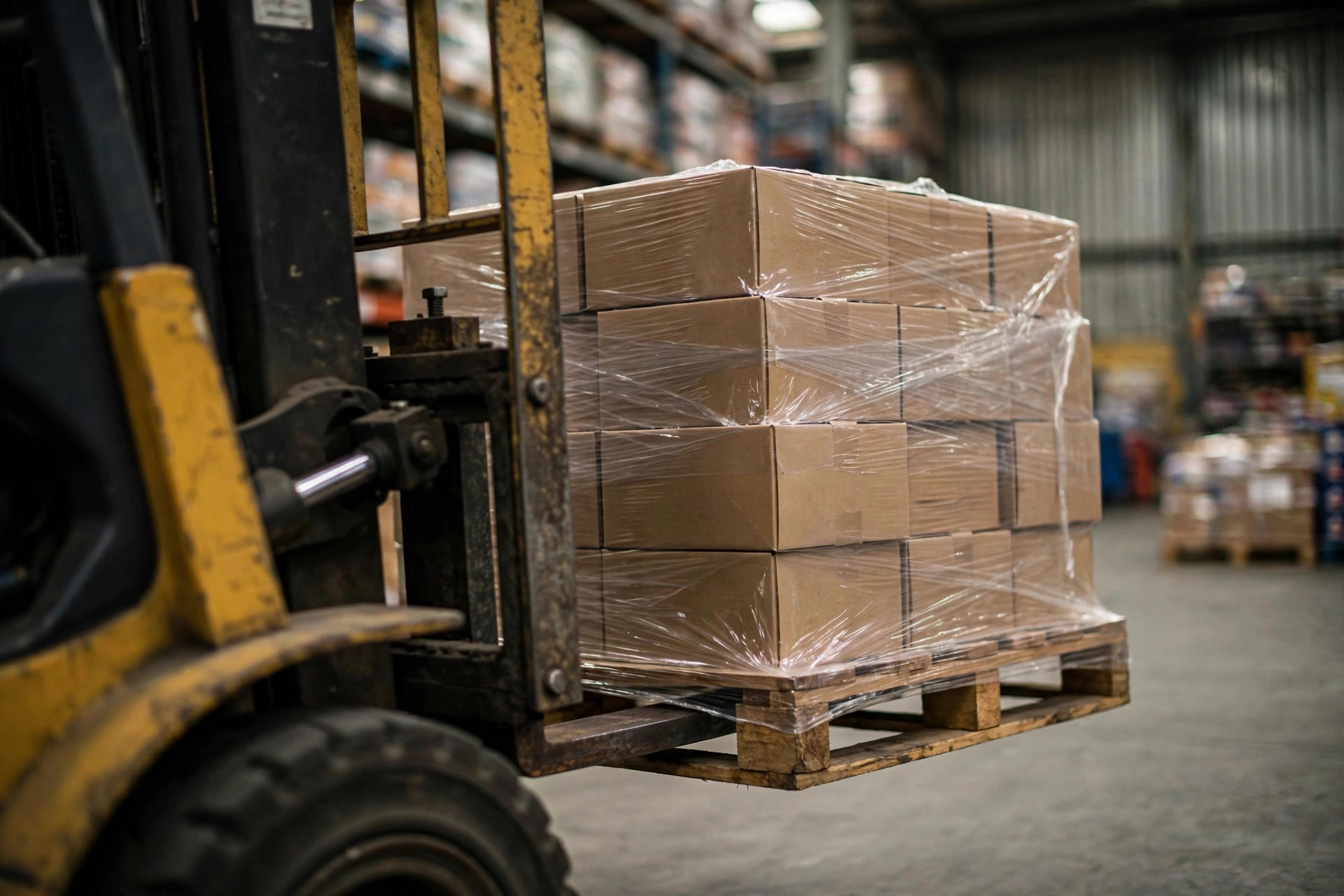
Line three: knowing about a problem and staying silent. When a warehouse spots damaged packaging, mixed batches, or labels that do not match, and ships anyway without recording or reporting it, its exposure grows. In a 2023 New Jersey case (hypothetical scenario), a warehouse noticed leaking cartons in a batch of cleaning solution at receiving, said nothing, and put the stock away. The leak corroded other goods in transit, causing about $230,000 in collateral damage (hypothetical figure). The insurer treated the warehouse as having knowingly shipped a known risk and raised its recovery share accordingly.
The Three Contract Must-Haves
When signing a warehousing agreement with a brand owner, three items are non-negotiable. Miss one, and you pay extra when something goes wrong.
First, the Certificate of Insurance, the COI. Request it at signing and check four things: the insured name is the brand owner's full legal name, the policy is within its effective period, the limits cover the scale of your operation, and the carrier is credible. Refresh it every year, with the renewed version in hand within 30 days of renewal. A COI that is expired when an incident happens is the same as having none.
Second, additional insured status. Have the brand owner add the warehouse to its product liability policy as an additional insured. That way, after an incident, the warehouse can claim protection directly under the brand owner's policy instead of waiting for the brand owner to pay and then chase reimbursement. Check the scope: does the endorsement cover only liability arising from work performed for the brand owner, or also the warehouse's own independent negligence?
Third, the indemnification and hold harmless clause. In plain language: whoever is at fault pays. The clause must run both ways — product-defect claims indemnified by the brand owner, warehouse-error claims indemnified by the warehouse. A one-way clause protects one side and leaves the other exposed. Also spell out the indemnity cap and how the deductible is shared. Do not leave "to be negotiated" in the contract.
After an Incident: Who Reports First, How Evidence Is Kept, Who Pays the Deductible
The first 72 hours after an incident decide who ends up paying how much.
Report fast. Policies generally require notice "as soon as practicable." Miss the notice window, and the insurer can deny the claim. The practical sequence: the warehouse notifies the brand owner in writing within 24 hours of discovering a suspected problem, and the brand owner notifies the insurer within 48 hours. A phone call does not count. State facts, not conclusions — "a batch of goods was possibly mis-shipped and has been quarantined," not "we accept full responsibility."
Keep the evidence chain intact. Claims are decided on records, not on testimony. Preserve receiving inspection records, batch and location records, pick scan records, verification and weight records, loading dock camera footage, and shipping labels. Keep camera footage for at least 90 days, and align pick-data retention with the policy period.
Settle the deductible question in advance, in the contract. The deductible is the portion of each claim the insured pays out of pocket; the insurer only pays above it. Suppose the deductible is $25,000 (hypothetical figure) and the claim is $800,000. The insurer pays at most $775,000, and someone has to produce the $25,000. My recommendation: split it in proportion to fault — warehouse errors mean the warehouse absorbs the corresponding share; product defects mean the brand owner absorbs it.
The Counterintuitive Part: A Pricier Product Liability Policy Does Not Mean a Bigger Payout
Most people assume spending more on premiums buys stronger protection. The math does not work that way. Premiums reflect the insurer's pricing of risk. Payouts are governed by the exclusions and limits in the policy wording. A cheaper policy with narrow exclusions can pay $200,000 more on a claim (hypothetical figure) than an expensive policy loaded with exclusions.
The more realistic trade-off sits in the deductible. A low deductible means a higher premium but less out-of-pocket cost when something goes wrong. A high deductible means a cheaper premium but a large check you write yourself after each incident. Run an expected-value calculation: average liability incidents per year over the past three years, multiplied by the average deductible per incident, compared against the premium difference between the low- and high-deductible options. If the premium difference is smaller than the expected out-of-pocket cost, choose the low deductible. For all premium-related figures, rely on the insurer's latest quote.
A Conclusion You Can Calculate
Product liability insurance is not a question of whether to buy it. It is a question of how to buy it, how to split it, and how the contract is written. Before signing, work out these three numbers:
- Your risk exposure: annual shipped orders × average order value × liability incident rate over the past three years.
- Whether the three contract items are complete: COI within its effective period, additional insured status confirmed, and a two-way indemnification clause that includes deductible sharing. All three missing means do not sign.
- Your worst-case out-of-pocket number: deductible + excluded items + potential subrogation share. If that exceeds one quarter's warehousing gross margin, the protection structure is broken. Go back and renegotiate the policy and the contract.
Once those three numbers are worked out, the warehouse product liability insurance question is genuinely settled. Signing a contract before that is handing the other side a blank check.
By Lao Zhou, Logistics Cost Analyst