Batch picking vs discrete picking looks, on the surface, like a choice between two ways of walking a warehouse. In practice it is an arithmetic problem imposed by order structure. Over the past decade, e-commerce orders have fragmented and lines per order have slid downward. Discrete picking, long the default, has started to look expensive, while batch picking has moved from a large-facility specialty to something mid-sized warehouses consider. The same method saves money in one building and loses it in another.
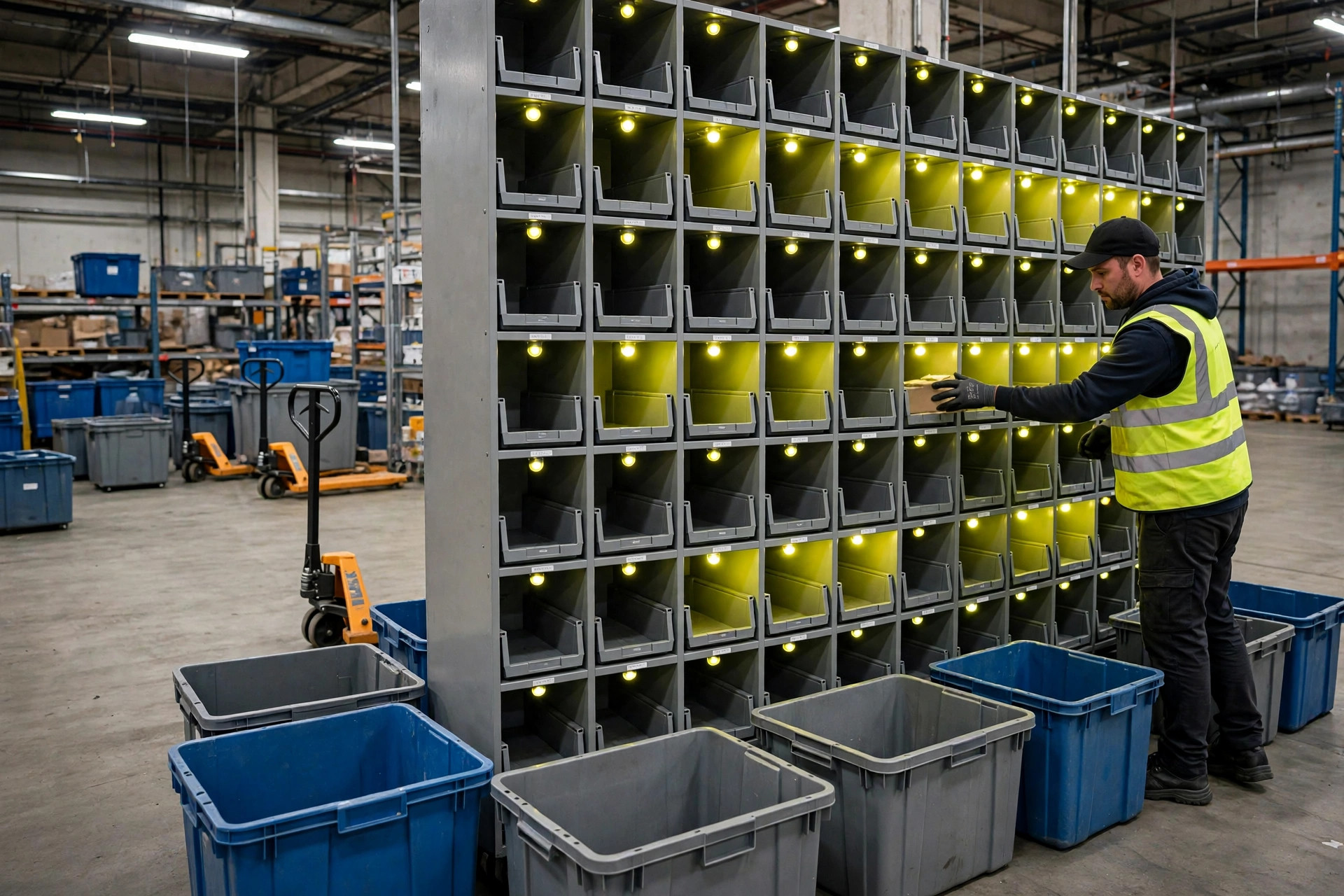
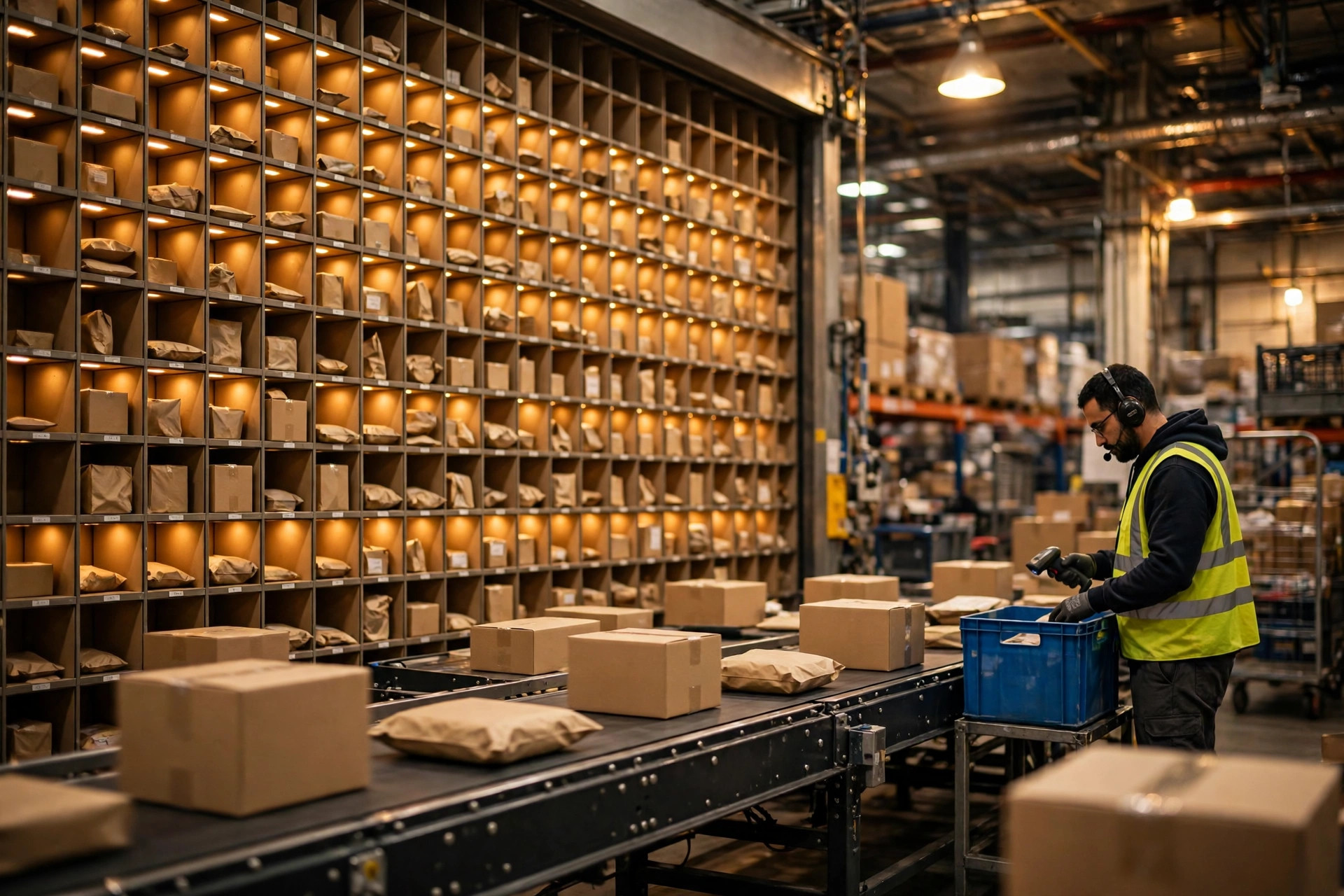
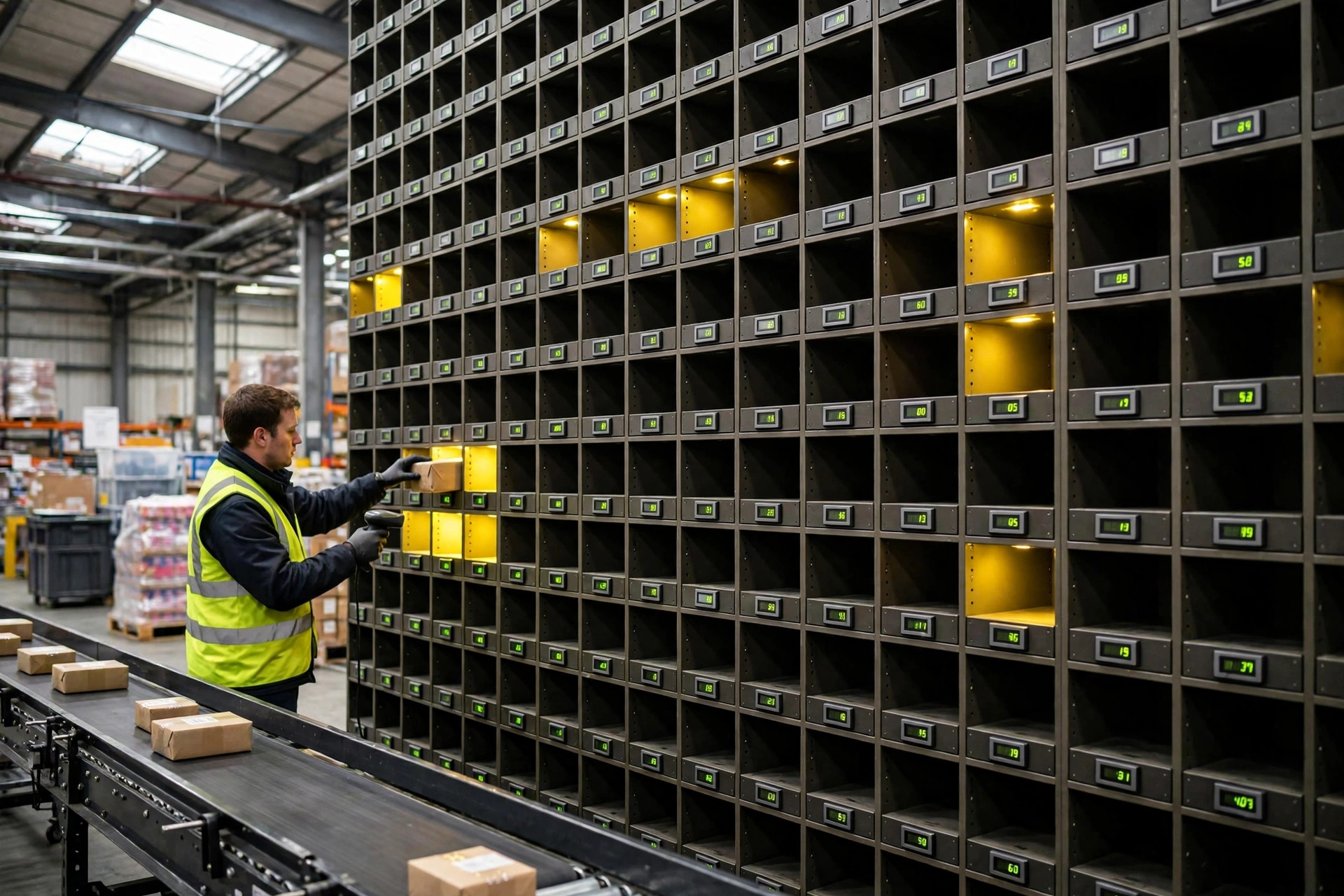
Scenario one (illustrative): in September 2024, a beauty e-commerce warehouse in East China reviewed its post-peak numbers. The site averaged about 900 orders a day at 1.8 lines per order, its top 50 SKUs covering more than 60 percent of order lines. Under discrete picking, pickers made 900 trips a day past the same racking. Batch picking, eight orders per batch, cut daily trips to around 120. The cost: a new sortation area, two people standing at its slots all day, sorting mixed totes into individual orders, with queues passing 40 minutes at peak.
Scenario two (illustrative): an auto-parts 3PL warehouse in North China tried batch picking and walked it back. The site averaged 7.4 lines per order across more than 20,000 SKUs, with little overlap between orders. After a three-week trial, stops per trip had barely fallen, the walking saved was negligible, and sortation had added a step and a new source of errors. Three weeks in, the warehouse stopped batch picking, returned to discrete picking, and turned the sortation area back into storage. Neither trial was wrong.
Travel Is Where the Hours Go
According to Bartholdi and Hackman, in Warehouse & Distribution Science, travel accounts for about 55 percent of picking time in picker-to-parts systems, searching about 15 percent, extracting about 10 percent, and other activities about 20 percent. The same source puts picking at about 55 percent of total warehouse operating cost. That is why every picking discussion circles back to walking: it is the largest single block of picking cost.
A caveat belongs on the data. The more widely quoted version, that travel is half of picking time, traces to Frazelle's World-Class Warehousing (1996), whose underlying sample and method were never disclosed. The 55 percent figure has a textbook-grade source; the 50 percent figure has only the seniority of industry repetition. Both point the same way, but single-point precision has no basis. For decisions, treating travel as roughly half of picking time is more honest than treating 55 percent as exact.
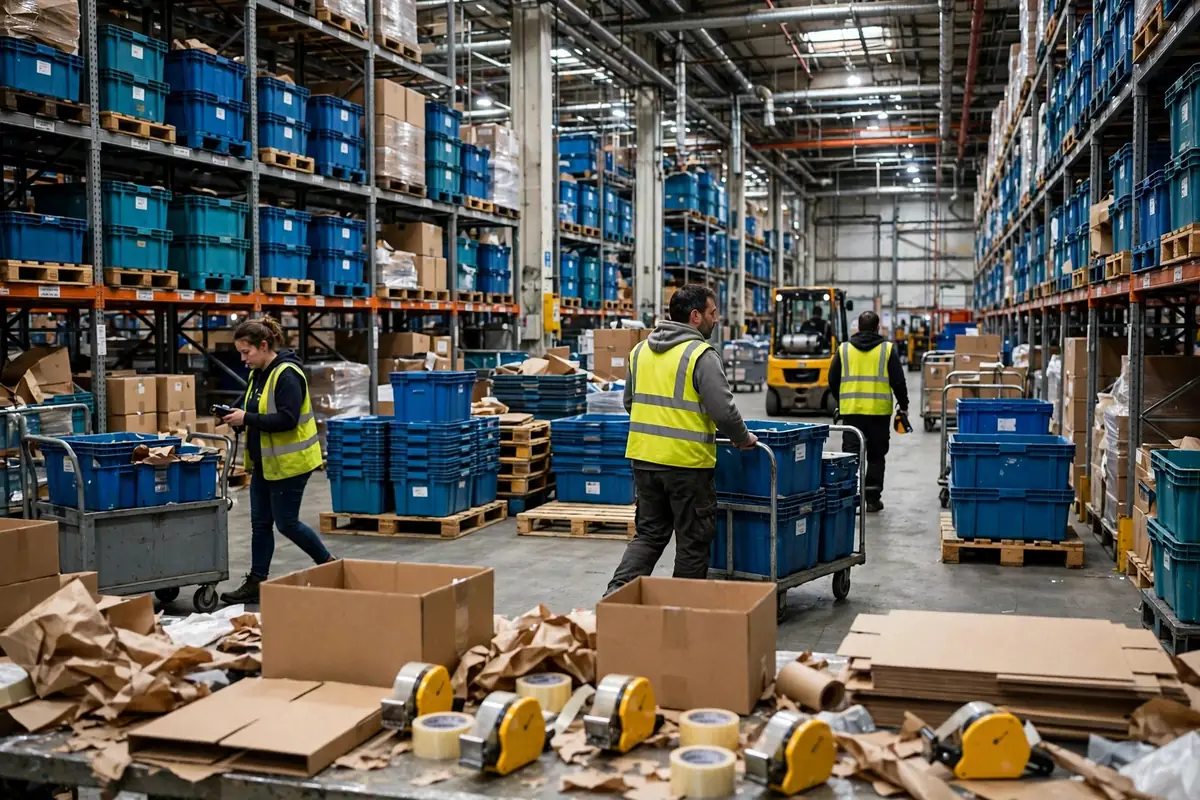
Per the RKW logistics handbook, as cited in ETH Zurich course material, discrete picking works one order at a time: the picker follows a single order's pick list through the building and hands it off complete. Batch picking pools several orders, picks their combined demand in one pass, and splits the goods back into individual orders through secondary sortation. The real difference is when sorting happens: discrete picking sorts at the shelf face; batch picking defers it until the walk is over.
What Batch Picking Saves on the Walk, the Sort Takes Back
The benefit mechanism is straightforward: one walk serves several orders, and repeated visits to the same location are consolidated. But the benefit is conditional on orders sharing locations. If ten orders want ten different products, the walking saved is close to zero, while sortation is added in full. That was the auto-parts warehouse's experience.
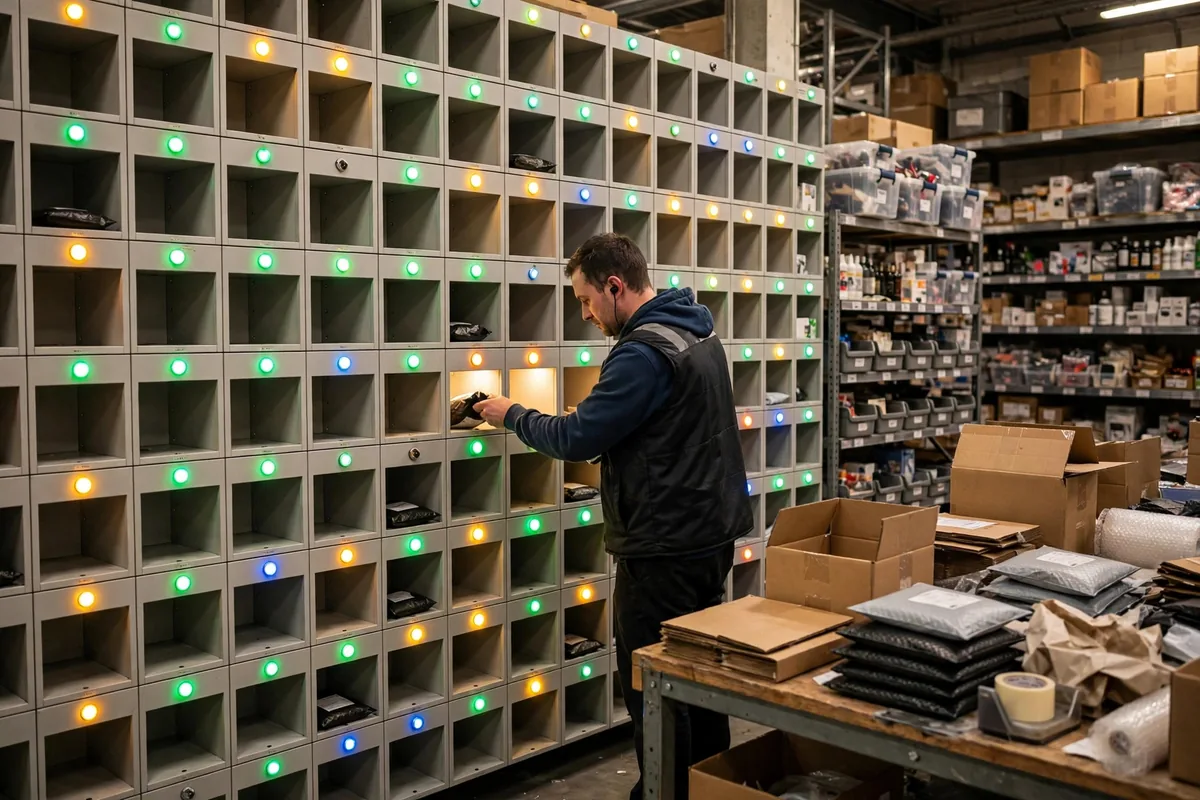
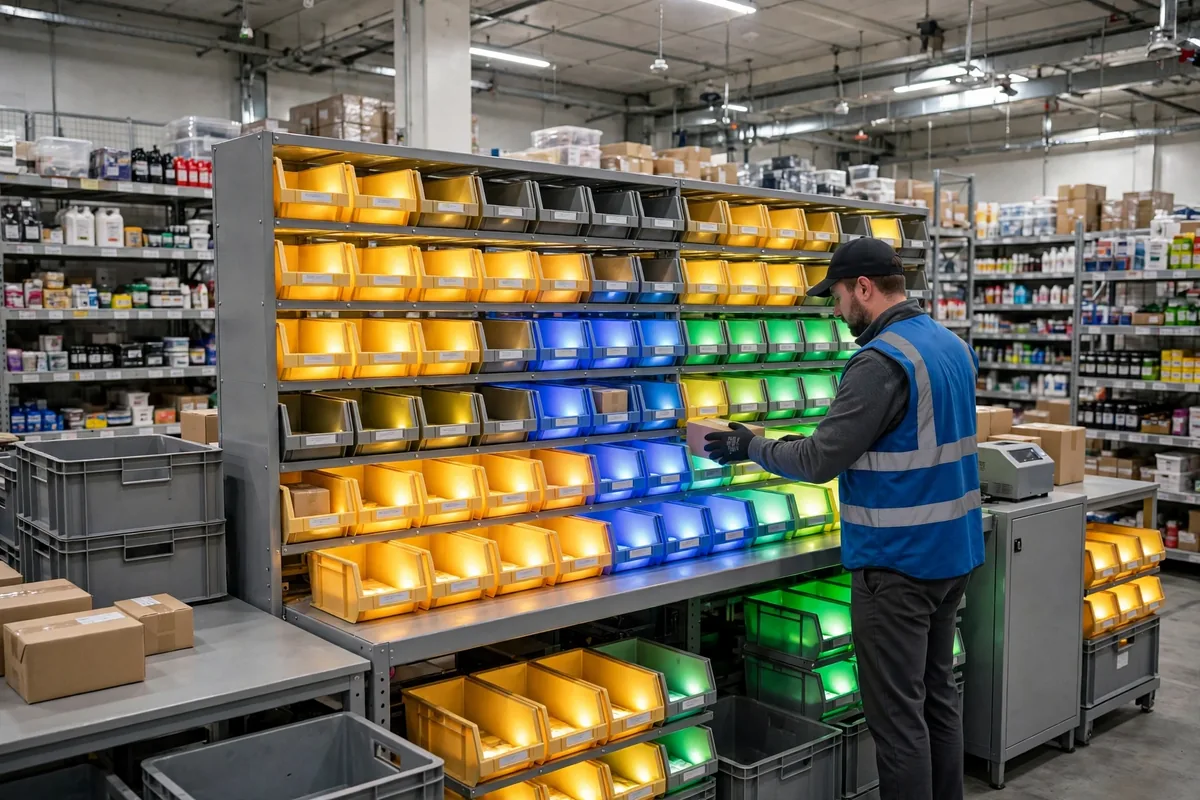
Secondary sortation carries three costs. First, direct labor: sorting takes time, and fewer lines per order means a larger share. Second, space and equipment: a sortation area occupies valuable floor near the outbound dock, and the number of slots caps how many orders a batch can hold. Third, the error surface. In discrete picking, errors happen mostly at the shelf; batch picking moves the error surface to the sortation bench, and its signature error is the right item in the wrong order's slot. Industry guides offer a reference range, roughly 97 to 98 percent accuracy for batch picking without technical assistance, against 99.5 to 99.9 percent for discrete picking with RF scanning. The range is indicative only, but without a check at the sortation step, accuracy drifts down.
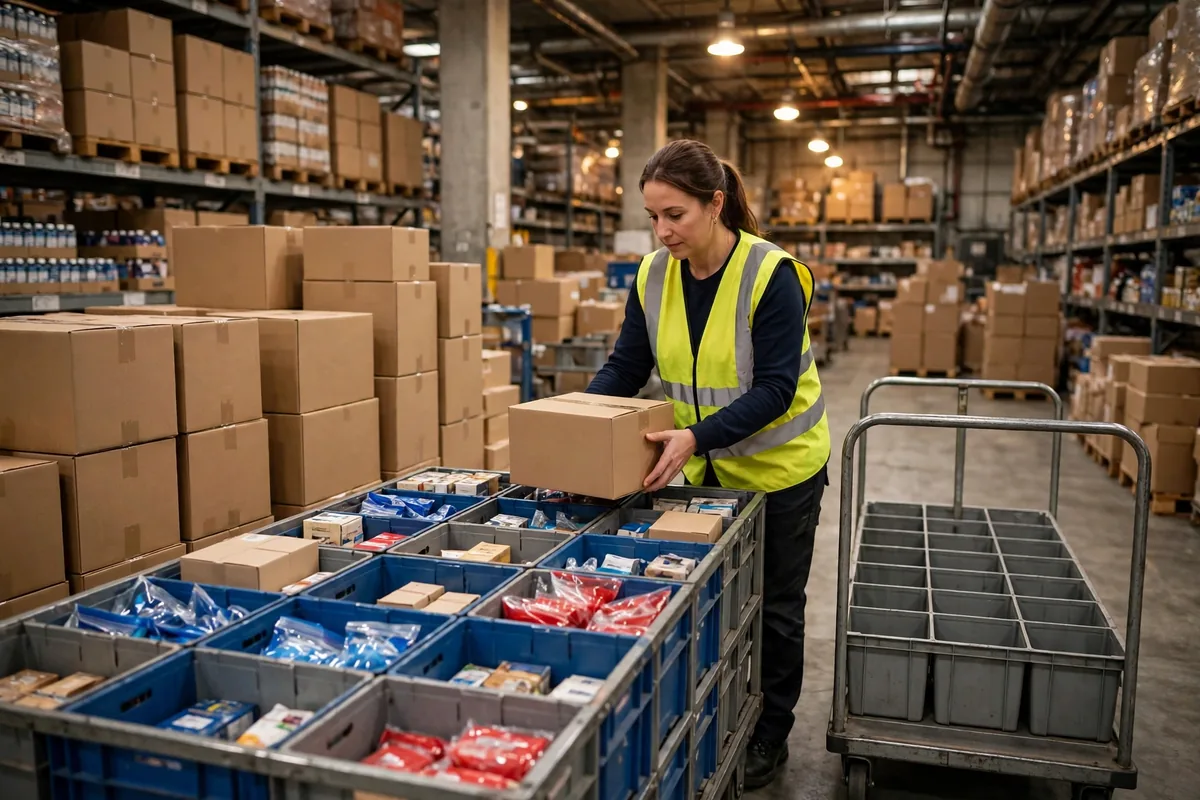
Between the two methods sits a frequently overlooked middle form: cluster picking, where the cart carries one tote per order and the picker scans and drops each item straight into the right tote at the shelf. The sort happens inside the pick, not afterwards. Vendor material puts a cart's tote capacity at typically eight to ten, which sets the ceiling on batch size. Post-pick sortation disappears; the price is an extra scan per item and a cart that returns once full. Much batch picking in practice is this middle form.
Batch Picking vs Discrete Picking: When to Switch
The counterintuitive finding: instinct says larger orders suit batch picking, but the data points the other way. The more lines per order, the more locations each order visits, the lower the share of locations orders have in common, and the less walking a combined trip saves. Batch picking shines brightest on small orders of one to three lines with heavy concentration in fast movers. The more fragmented the order, the better batch picking pays, which runs against many managers' first instinct.
The table below is a hypothetical worked example. Every figure is an illustrative assumption, not a measurement from any real warehouse.
| Item | Discrete picking | Batch picking (8 per batch) |
|---|---|---|
| Orders/day | 800 | 800 |
| Lines/order | 2.1 | 2.1 |
| Travel/trip | 4 min | 12 min (more stops) |
| Daily travel | 800 trips × 4 = 3,200 min | 100 trips × 12 = 1,200 min |
| Picking time | 1,680 lines × 0.5 = 840 min | 1,680 lines × 0.5 = 840 min |
| Sortation | 0 | 1,680 units × 0.25 = 420 min |
| Total | 4,040 min | 2,460 min |
Batch picking saves about 39 percent of total time: 2,000 minutes of travel saved, 420 minutes given back to sortation. As overlap falls and travel per trip climbs from 12 toward 20 minutes, or sortation time per unit rises from 0.25 to 0.5 minutes, the saving is eaten away quickly. Industry guides commonly put batch size at four to twelve orders; beyond that, congestion, complexity, and error rates rise faster than walking saved.
The switching decision needs only two weeks of data. First, lines per order: a site persistently below three lines is a serious candidate for batch picking; above five lines, be cautious. Second, SKU overlap: measure the share of order lines the top 50 fast movers cover; a higher share means a bigger return on consolidated walking. Third, cutoff rhythm: the more regular the wave release, the fuller the batches and the more stable the return; a site picking orders as they arrive pays a waiting cost to assemble each batch. Those three numbers usually settle it.
A Hybrid Model, and an Open Question
More warehouses now split by order profile instead of choosing one method: low-line, fast-mover-concentrated orders go to batch picking, high-line, long-tail orders stay on discrete picking, and the mix shifts with order structure during peak season. The split rule belongs in the system, not in a shift lead's judgment. The batch picking vs discrete picking decision is therefore less a one-off choice than a standing rule, revisited whenever the order profile moves.
Wave design is the most underestimated part. Batch picking depends on waves to assemble batches. Cut waves too small and batches never fill, so the walking saving shrinks; cut them too coarse and orders sit in the pool waiting, forcing earlier cutoffs and hurting service. Work backward from carrier cutoff times and anchor batches to the real shipping rhythm.
One trend: sortation is becoming the next automation investment point. Batch picking moves labor from walking to sortation, and as labor density rises at the sortation bench, the case for light-directed sortation and small automated sortation equipment strengthens. The picking-method choice is turning into a decision about where the next equipment investment goes.
Single-item orders are still rising as a share of e-commerce volume, which suggests batch picking's addressable range may still be widening, even as sortation's labor and error cost rises in step. The question: when batch picking moves from an optimization to the default, does sortation become the next function automation has to absorb? The answer depends on the price curve of sortation equipment over the next two to three years, and on whether warehouses account for sortation cost separately. If it stays buried in the picking total, many warehouses will only notice when the error rate turns red first.
By Dr. Chen, Supply Chain Researcher