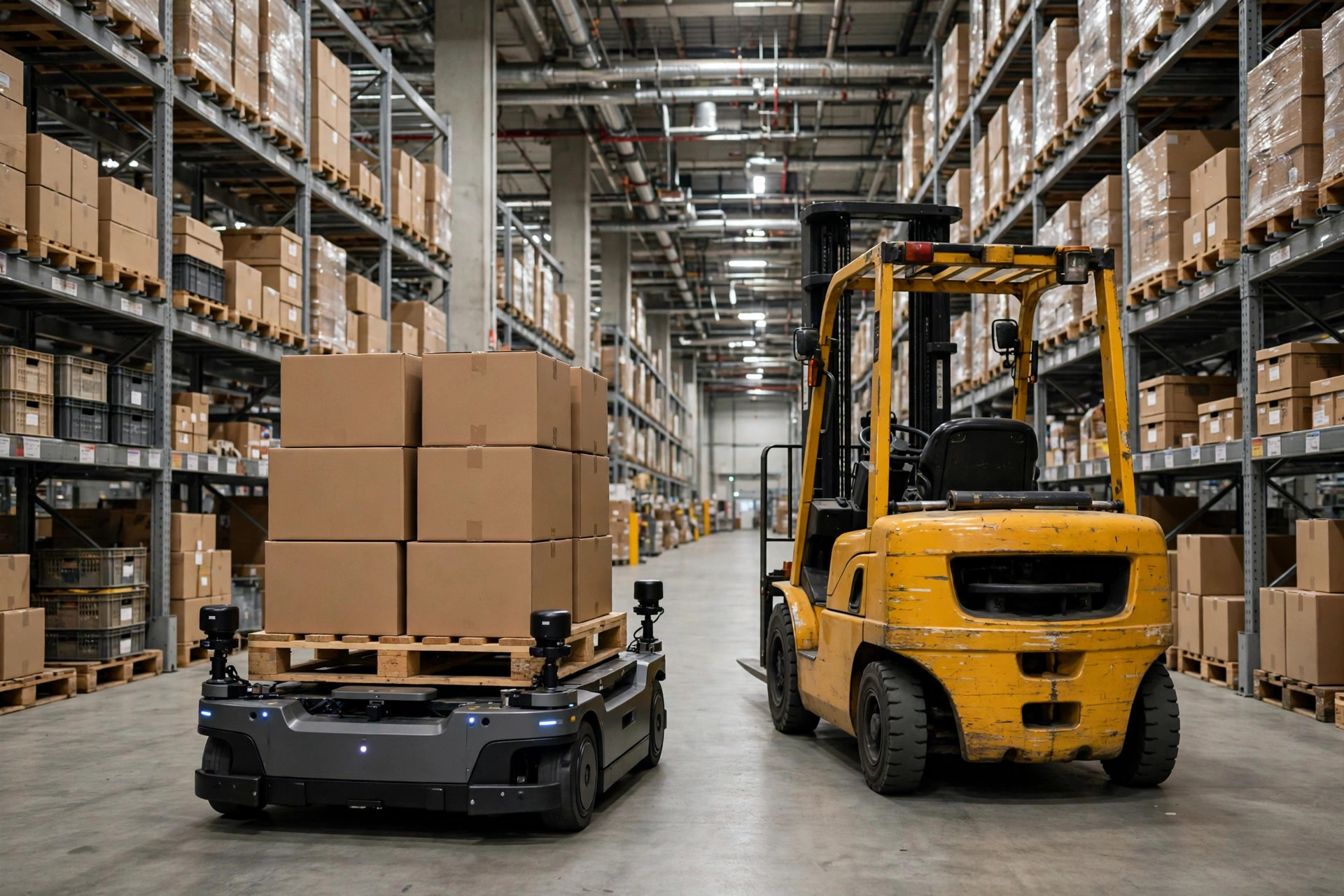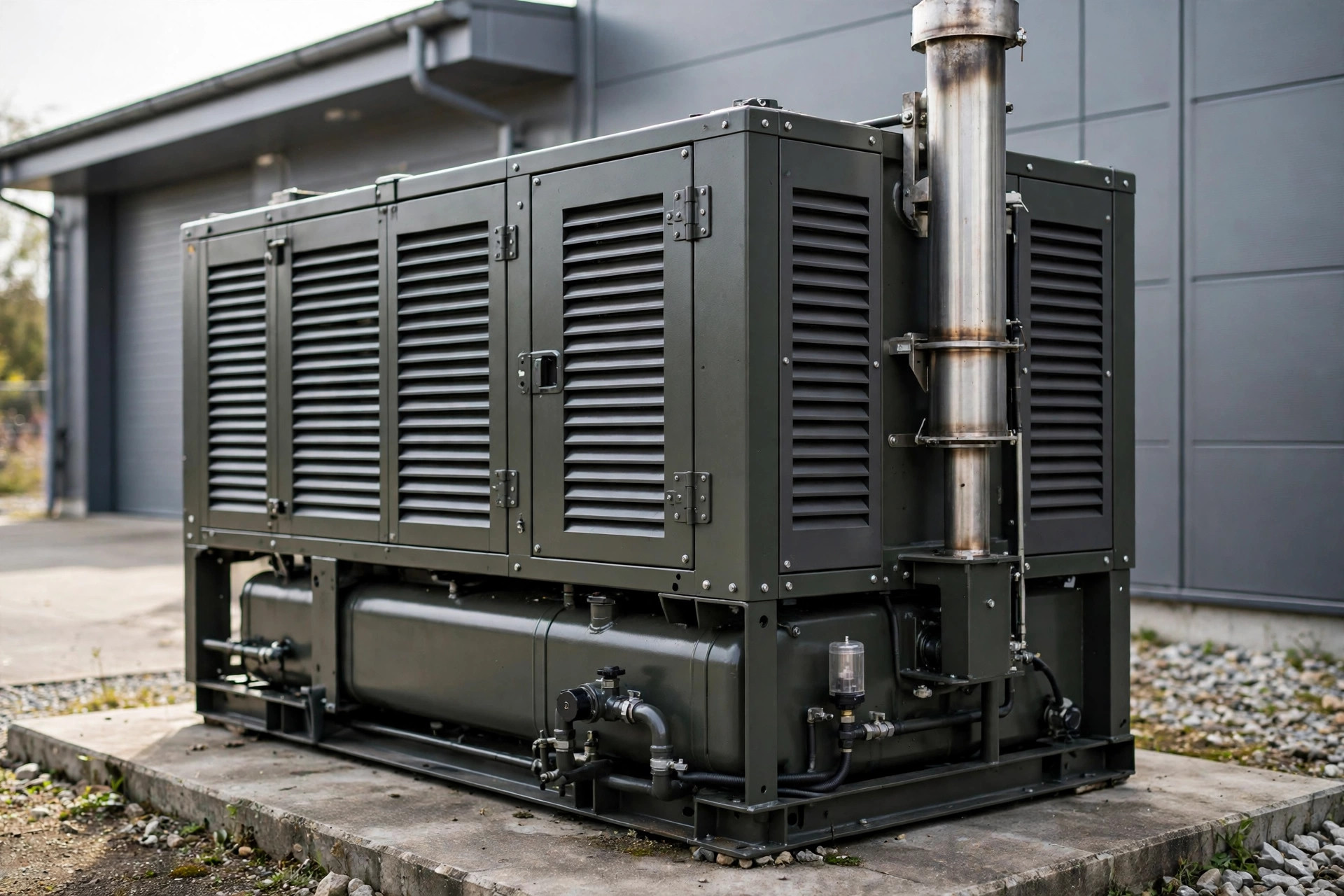
Let me open with the money. In February 2021, Winter Storm Uri knocked out the Texas grid, and a 3PL cold-storage warehouse outside Dallas sat dark for three days. Spoiled product, customer claims, emergency rental of mobile generator trailers — one week of damage cost more than two 500kW diesel gensets would have. A 300kW commercial diesel unit, installed, runs about $90,000 to $135,000 at the going $300-450/kW market rate. One extended outage costs an order of magnitude more than a generator's entire 10-year total cost of ownership. That is why learning how to size a warehouse backup generator is worth an afternoon of your time. Below: the load calculation method, the 80% load rule, NFPA 110 compliance, and the real cost comparison of diesel vs. natural gas vs. dual-fuel.
How to Size a Warehouse Backup Generator, Step One: The Load Inventory
Sizing starts with a list, not a product catalog. List only the loads that must stay up during an outage — full-building lighting is a vanity item, cut it. A proper load inventory has three buckets.
First, constant loads: emergency lighting, the WMS servers and network rack, the fire alarm panel, access control. Small draw, zero tolerance for interruption. Add them up and you have your baseline.
Second, motor loads — this is where the expensive mistakes live: conveyor motors, forklift chargers, air compressors, cold-storage compressor banks. A motor's inrush current runs 3 to 7 times its rated current. A 20kW conveyor motor can spike past 100kW at startup. If your inventory lists rated power but not starting characteristics, the genset you buy will trip on its first loaded start. I have watched that happen more than once.
Third, intermittent loads: dock doors, pack stations, auxiliary equipment that runs occasionally. Estimate at worst-case coincidence — that half hour on a peak-season night shift when everything runs at once is your peak.
The math is simple: peak kW = constant loads + motor starting increment (largest motor, or several starting together) + intermittent loads at coincidence factor. Then add 10% to 25% for future growth. A 50,000-square-foot dry-goods warehouse usually lands at 150 to 250kW of critical peak load; add cold storage at the same footprint and you are past 300kW.
The 80% Load Rule for Backup Generator Sizing
With peak load in hand, the sizing formula is one line: generator rated kW ≥ peak load ÷ 0.8. Your peak should never exceed 80% of the generator's rating. Run above 80% for sustained periods and you are buying an early rebuild — that is a decades-old industry line, and it holds.
But there is a second edge to this rule that most buyers miss: a diesel genset loafing along under 30% load develops wet stacking — unburned fuel fouling the exhaust system — and needs a major overhaul in about five years, a $20,000-plus invoice. I worked with a dry-goods warehouse in Ontario that bought a 500kW diesel unit "to be safe" while its real critical load sat around 60kW, a 12% load factor. Year six brought a $23,000 overhaul bill. Oversized costs more than undersized.
So the healthy sizing band is: normal load between 30% and 80% of rated capacity. Match your peak load to this quick table:
| Your peak load | Buy this frame size |
|---|---|
| 100kW | 125kW |
| 150kW | 200kW |
| 200kW | 250kW |
| 300kW | 400kW |
| 400kW | 500kW |
That is rated power, not the emergency standby (ESP) nameplate number. The first question for any salesperson should be: "Is that quote ESP-rated or prime power?" Anyone playing word games with ratings gets crossed off the list.
NFPA 110 Compliance: Buying It Is the Beginning, Not the End
NFPA 110 is the U.S. standard for emergency and standby power systems — it is what the fire marshal (AHJ) inspects against. Most warehouses fall under Level 2 (business continuity); if your building has fire pumps or life-safety cold chain, you are Level 1, and the requirements jump a tier.
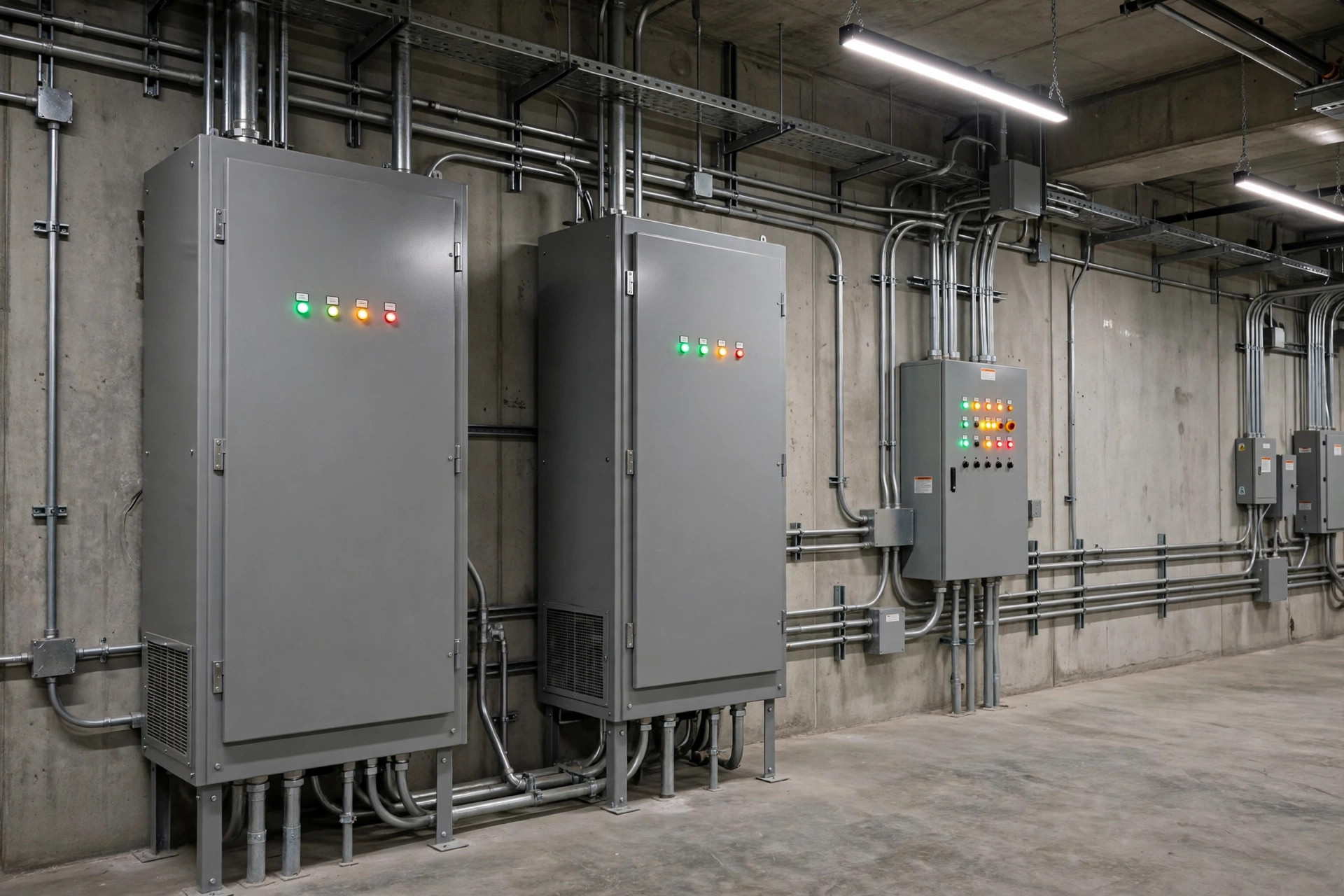
Level 1 has three hard requirements, memorize them. First, the system must carry the full emergency load within 10 seconds of a utility failure — that is why an automatic transfer switch (ATS) is standard equipment, and manual changeover is not a serious option. Second, monthly loaded testing: a no-load spin does not count; you must run it under at least 30% load for 30 minutes, and the fire inspector will ask for the test logs. Third, on-site fuel storage is tiered by hours — common classes run from 48 to 96 hours — confirm the exact requirement with your local AHJ before you sign anything, because an undersized tank fails inspection.
Level 2 is more forgiving, but any smart operator runs the monthly test anyway. There is an old industry saying: generators are not worn out, they are rusted out from sitting. A few hundred dollars a year in test fuel versus one failed start during an outage — the math is not close.
Diesel vs. Natural Gas vs. Dual-Fuel: The Real Cost Comparison
Pick the wrong fuel path and you bleed an extra car's worth of money over ten years. The comparison table first:
| Diesel | Natural gas | Dual-fuel (diesel + natural gas) | |
|---|---|---|---|
| Equipment price | $300-450/kW, the baseline | Typically 15-30% higher — get three written quotes | A step above diesel, conversion kit or factory unit |
| Installation | Fuel tank plus spill containment | Gas line upsizing and pressure testing | Both, the most expensive install |
| Fuel cost | Market price; a 300kW unit burns 20+ gallons/hour at full load | Cheap piped gas, nothing to stockpile | Burns gas first, diesel as backup |
| Fuel storage | Diesel degrades in storage; a fuel-polishing system runs ~$20,000 | No storage needed, the pipeline is the tank | Much smaller diesel reserve required |
| Maintenance | Oil changes, filters, monthly test runs | Spark plugs, ignition system | Two systems to maintain |
| Noise | 74-82 dB, loud | 70-78 dB, noticeably quieter | In between |
| Fatal flaw | Wet stacking at light load; fuel goes stale | Gas pressure can fail exactly when the grid does | Complex system, demanding maintenance |
Now the 10-year TCO, using a 300kW diesel setup as the example. Equipment plus installation at the midpoint: $110,000. A maintenance contract around $1,000 a year, so $10,000 over ten. Monthly loaded tests at 30 minutes each burn a few hundred dollars of fuel a year. Fuel polishing, oil and filter changes, miscellaneous parts: $10,000 to $20,000 amortized over the decade. Total: roughly $140,000 to $170,000 for ten years, before diesel price swings. That works out to a little over a thousand dollars a month — less than one picker's monthly wage in your building.
Two contrarian calls. First: most warehouses do not undersize their generators, they oversize them. Salespeople love upselling a frame size "for margin," margin lands you at a 15% load factor, and five years later the wet-stacking overhaul costs $20,000-plus. That money was wasted. Second: natural gas "no fuel to store" sounds beautiful, but during Uri, gas pressure dropped in parts of Texas at exactly the moment the grid collapsed. Fuel redundancy and fuel savings are two different things — if you want real redundancy, buy dual-fuel; do not bet on "piped gas never fails."
The Bottom Line: Three Lines to Take Into Quoting
One: calculate your own peak load first. Rated kW ≥ peak kW ÷ 0.8, and keep normal load above 30% of rated. Two: confirm NFPA 110 monthly loaded testing and fuel-storage requirements with your AHJ before you sign, not at inspection time. Three: at the 300kW scale, the diesel path costs $140,000 to $170,000 over ten years — that is your benchmark. If a natural gas or dual-fuel quote comes in more than 20% above that line, the salesperson owes you hard evidence. Walk in with these three lines and get three quotes; anyone playing word games will expose themselves in the first question.
By Lao Zhou, Logistics Cost Analyst