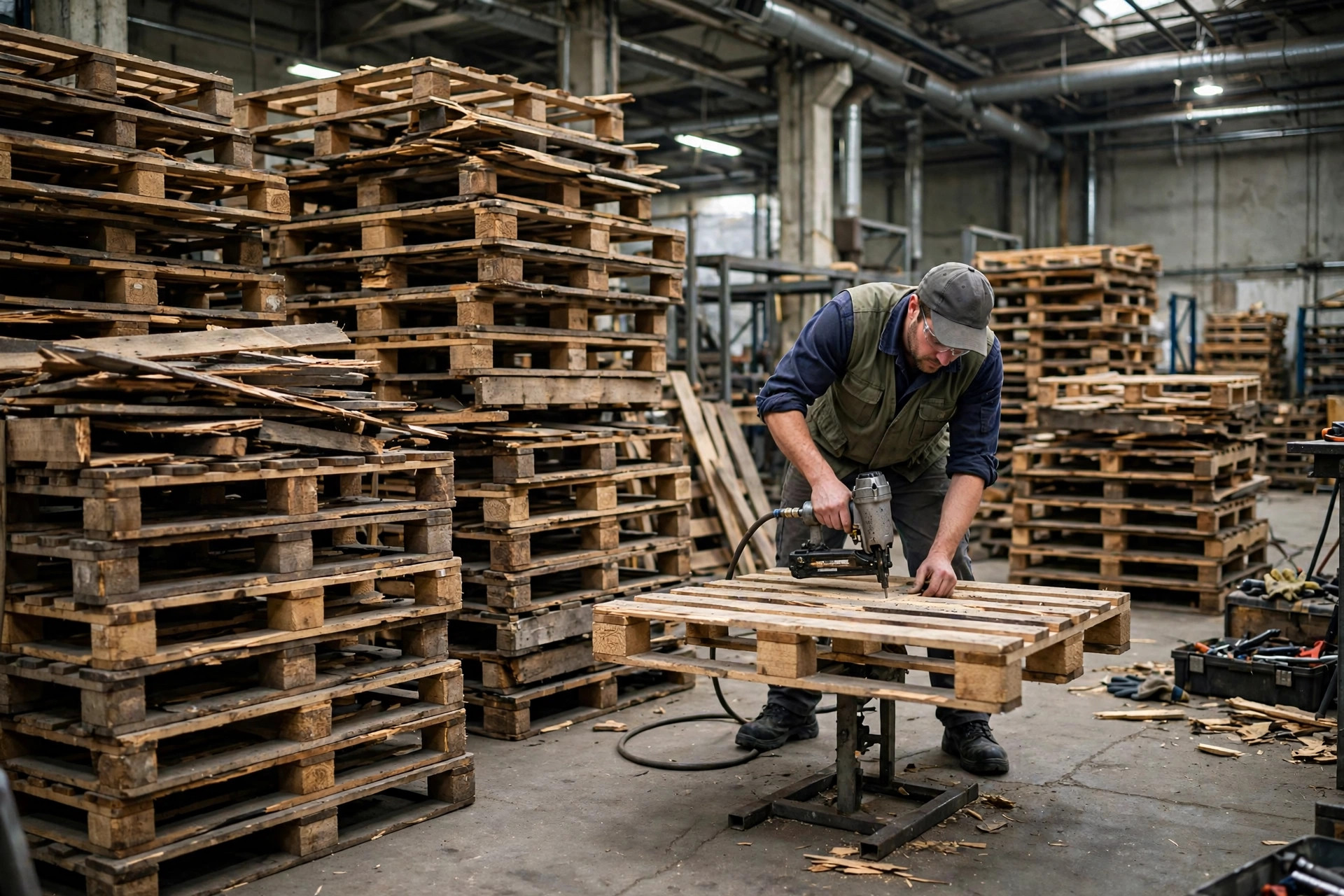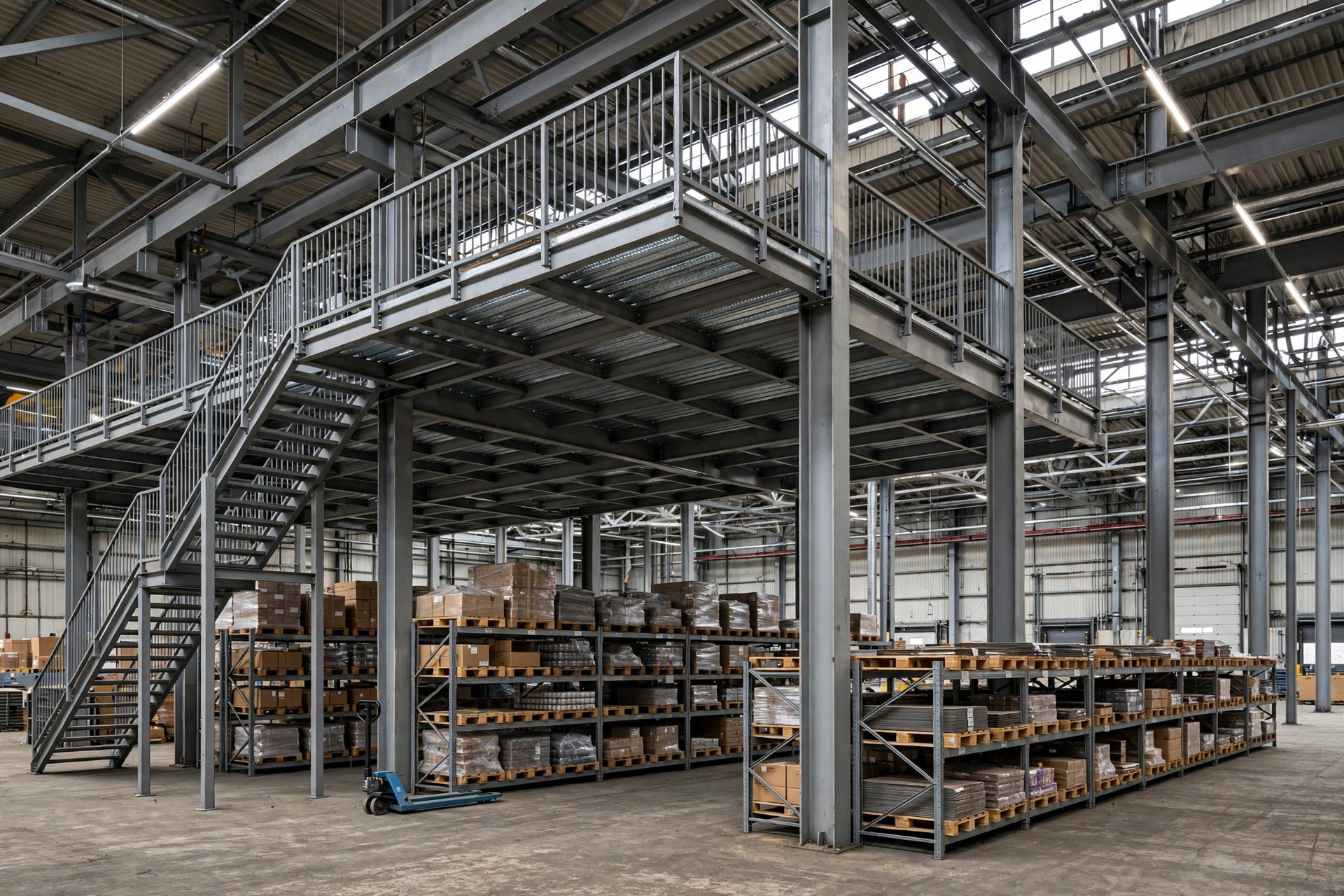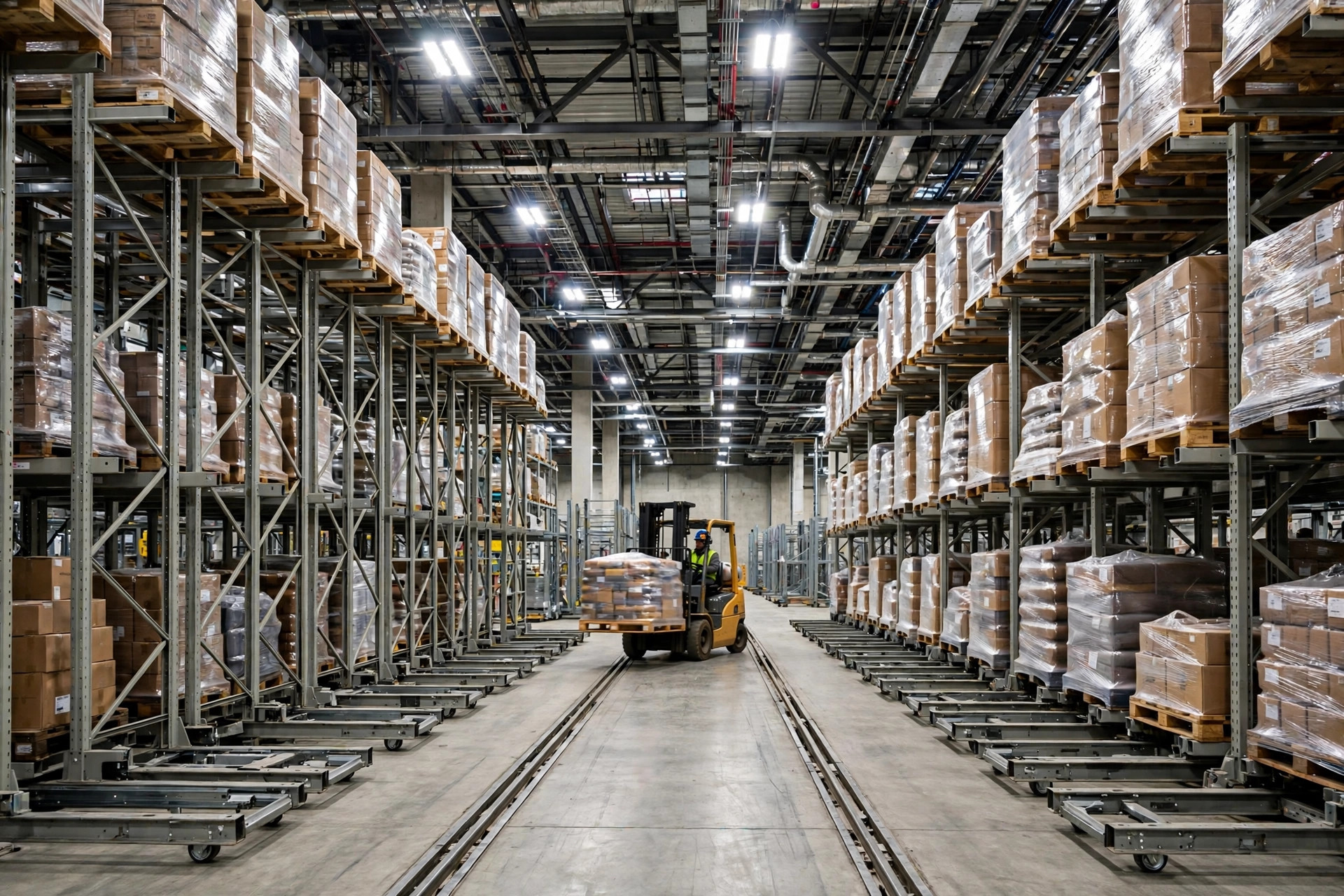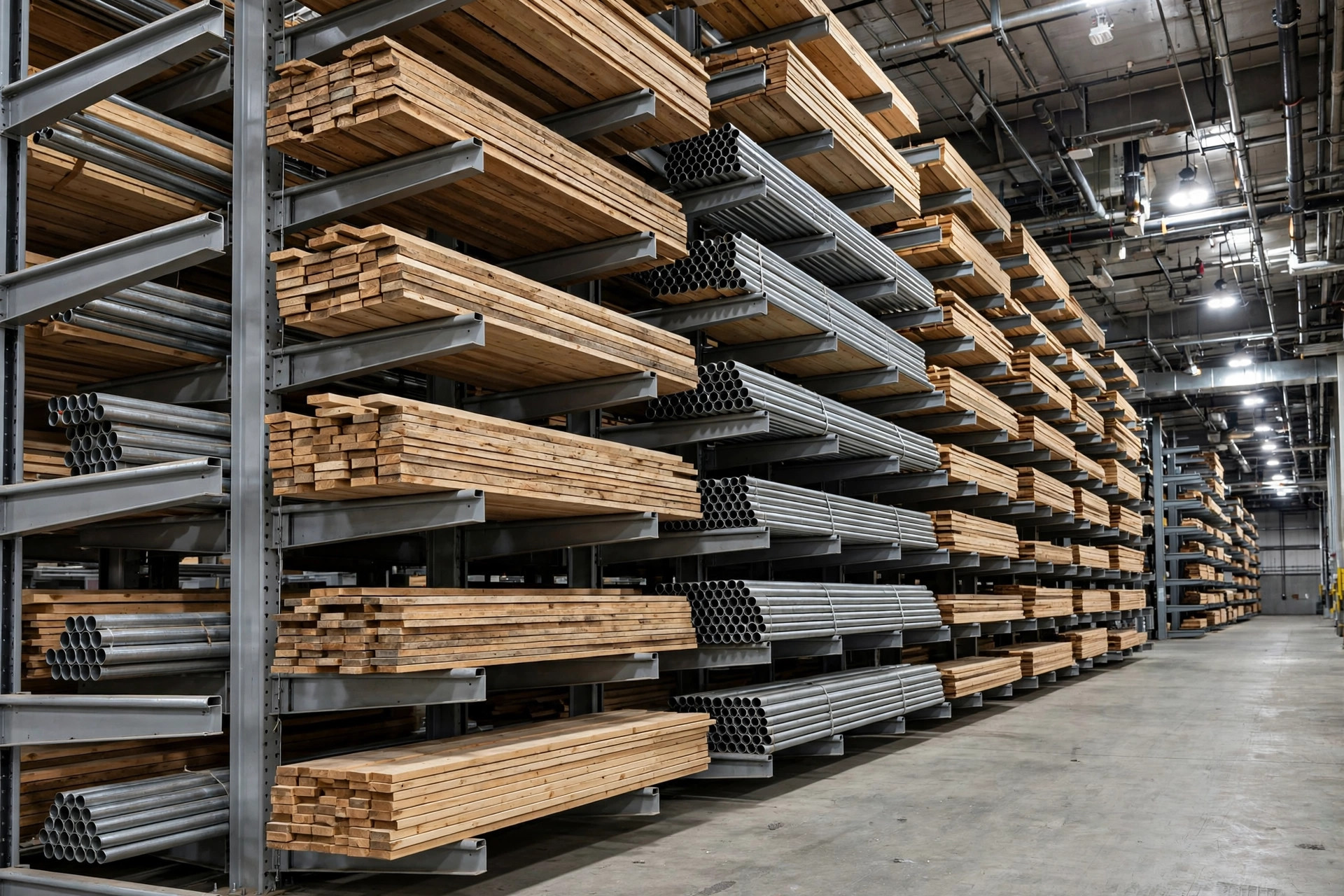
Here's the truth about long stock: nine out of ten long-goods areas look the same — stuff piled on the floor, leaning against the wall, forklifts driving over the ends. Finding one 12-foot board means moving twenty others first. That's not storage. That's archaeology. And if you search "cantilever rack warehouse," the top results are all dealer spec sheets. Nobody tells you what actually matters: retrofitting a cantilever zone into a warehouse you already run — is it worth it, and where are the traps.
Fall 2023, Fontana, California. I watched an "archaeology accident" at a partner warehouse, a little over 8,000 square feet. A rush order of decorative wood strips, 12 feet long. The forklift driver dug for the bottom bundle, tipped the forks, and two upper bundles of lumber slid off and snapped — more than 40 pieces. The order was worth under $2,000. The snapped pieces went straight to scrap, and the customer rejected half of the bent ones. Between replacements and expedited reshipping, that one afternoon burned close to $3,000. The warehouse supervisor told me: "Three years of floor-stacking this lumber has cost us more in damage than two rows of cantilever racks would have." I still remember that line.
Now the good story. Early 2024, a friend in Ontario, California who distributes building materials — 22,000-square-foot warehouse — finally added a double-sided cantilever row along one wall: 12 uprights, 16 feet tall, 48-inch arms, dedicated to steel pipe, square tube, and 4x8-foot sheets. I helped him run the retrofit math: roughly $21,000 all-in for the racks plus installation, and the freed-up floor-stack area became 6 standard pallet positions. Three months later he told me the most visible change was pick time — grabbing one pipe used to take 8 minutes on average; now it's 90 seconds. Damage claims on long stock went from monthly to zero in six months. This one actually worked. Not my invention — he told me over coffee.
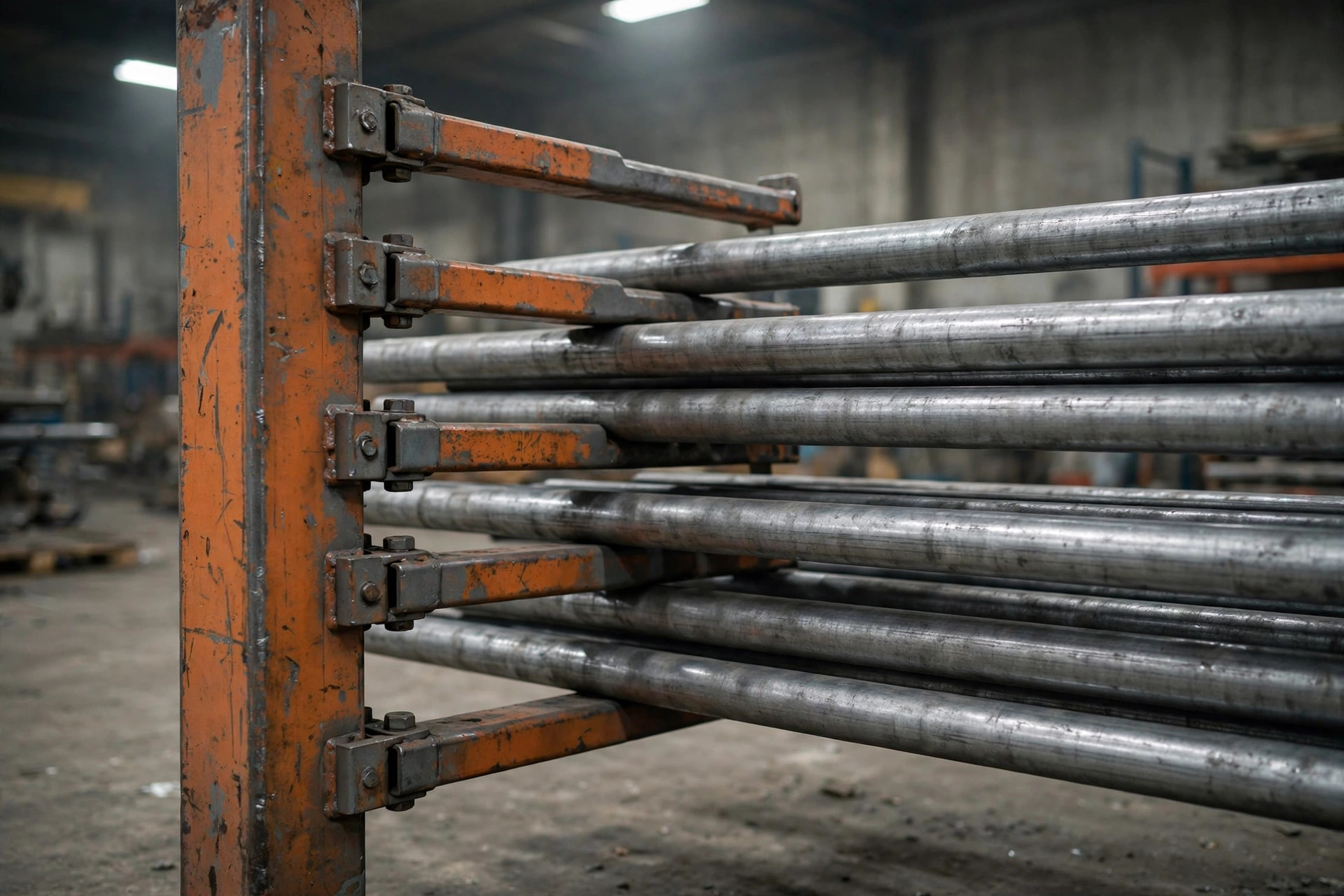
Which Long Stock Actually Needs Cantilever Racks
Don't start with "how tall, how long." Start with this decision framework — three lines to cut by:
Must go on cantilever: First, anything over 6 feet that can't be palletized. Palletizing long stock is a waste by itself — and the pallet ends up over-length anyway, so it won't fit selective beam racking. Second, bend-and-dent-prone stuff: sheet goods, pipe, profiles, lumber. A cantilever rack has no front columns in the way, so you slide the full length straight out without torquing or scratching it. Third, high-frequency picks where you grab single pieces. With floor stacks, every pick is a small relocation project, and all your labor goes into restacking.
Fine on beam racks or floor stacks: Under 6 feet and palletizable — treat it as pallet freight on selective racking, don't overthink it. Dead-slow long stock you touch twice a year — floor-stack it deep inside on dunnage and accept it; it's not worth a rack row. Pre-bundled standard units, like strapped rebar bundles — handle them as pallets.
One line: cantilever racks are for stock that is long, loose, fragile, and frequently touched. Hit two of those four and stop hesitating.
Longer Arms Are Not Better
Counterintuitive point number one, and most people's first instinct is wrong: longer arms hold more? No. A cantilever arm is a cantilever beam — same cross-section, longer arm, capacity drops fast. Manufacturer load charts are blunt about it: light-duty arms 500–1,500 lbs per pair, medium-duty 1,500–3,000 lbs, heavy-duty 3,000 to over 10,000 lbs — and they state plainly that capacity decreases as arm depth increases and column height goes up.
I've watched someone spec all 60-inch arms to "cover everything." Then they loaded 20-foot steel pipe, the arm tips visibly sagged, and the whole row had to be derated. Money wasted. The right move: measure your longest piece, make the arm 6–8 inches wider than the stock, done. Need more capacity? Tighten the upright spacing. Arm length is a "just enough" parameter, not a "bigger is better" one.
Retrofitting a Cantilever Zone: The Most Expensive Trap Is the Floor
The single most important line in this article: with cantilever racks, the most expensive trap isn't the rack. It's floor loading.
A cantilever rack is single-side loaded. The entire row's weight plus the freight funnels through a few base plates, then through anchor bolts into the slab. A loaded 16-foot heavy-duty row can put five figures of pounds on a single upright — that 18,000-lb upright rating on the spec sheet is describing exactly this scenario. If your older warehouse slab has cracks, dusting, or was poured thin back in the day, that rack row is a time bomb.
Three things before any retrofit, in this order, no skipping: First, get the load chart from the manufacturer and compute the pressure per base plate at full load — know the number before you order. Second, inspect the slab and repair cracks first, because slab rework costs multiples of the rack itself. Third, anchor bolts go in per manufacturer spec — commonly 1/2-inch anchors — and don't let the install crew "eyeball it." A fallen rack is an accident; a cracked slab is a slow bleed. The bleed costs more.
Five Pitfalls to Check Before You Install
Single-sided against walls, double-sided in open floor. Wall gets single-sided — don't waste aisle. Open area gets double-sided — one row does the work of two. That's rule one of cantilever zone layout.
Arms need end stops or lips. Long stock slides outward with the lightest forklift bump; arms without stops are uninsured. Don't save money here.
Budget the base depth into your aisle width. The base is the hungriest part of the footprint. Plan the aisle with the base sticking out accounted for, or you'll discover the forklift can't make the turn after everything's bolted down — and rework hurts more.
Label the uprights. Wrong-spec picks are the number one error with long stock. The upright faces are free label real estate — spec, length, batch, all of it — so pickers don't have to climb up to read the stencil on the stock ends.
Don't skip column guards. A forklift clipping an upright is the most common cantilever accident type. One bent upright compromises the whole row's capacity. Guards cost a rounding error compared to upright repair.
If your warehouse still has a "long-stock archaeology zone," stop doing the math in your head. Measure your longest piece, get a load chart, check the floor first, then the wallet. This one actually worked — not because cantilever racks are magic, but because you never honestly priced what floor stacking was costing you.
By Ah K, E-commerce Seller (5 yrs)