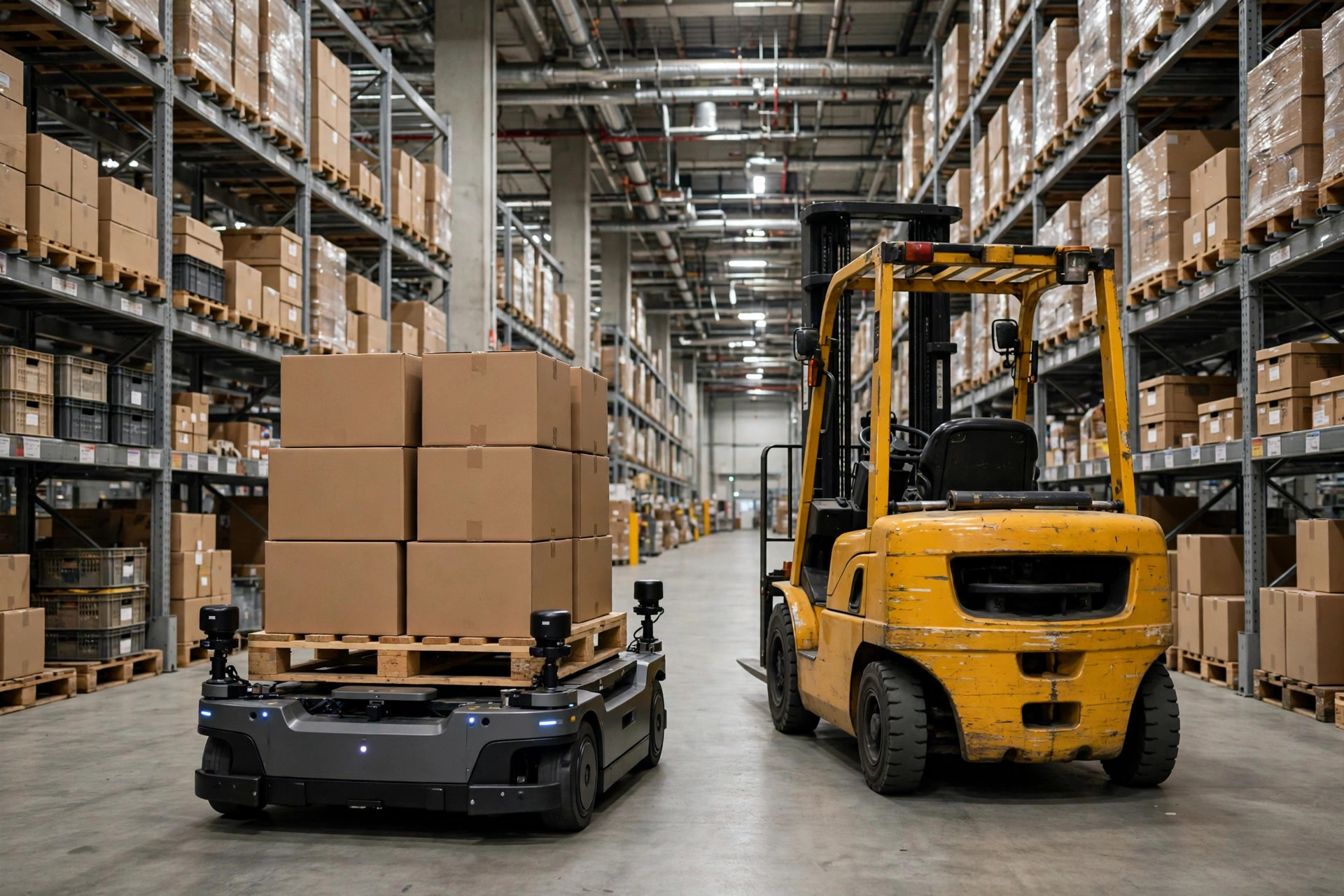
Last spring, an AGV salesman came to our warehouse. His slide deck was gorgeous: "Driverless! Runs 24/7! Pays for itself in 3 years!" I was this close to signing — then he quoted the price: $180,000 per unit, implementation not included. Our little warehouse's annual profit is what, exactly? I sobered up on the spot. He wasn't selling equipment. He was selling a dream.
But I'm stubborn. If he dares claim a 3-year payback, I dare to check his math. So I spent two evenings spreading all five costs — equipment, labor, energy, maintenance, insurance — across the table. Here's my homework, a cure for every flavor of automation anxiety.
Full disclosure first: the numbers below come from public market ranges and quotes I collected myself. Your mileage will vary — but the method is solid. Plug in your own numbers and it works the same.
AGV vs Forklift: The Five Costs, One by One
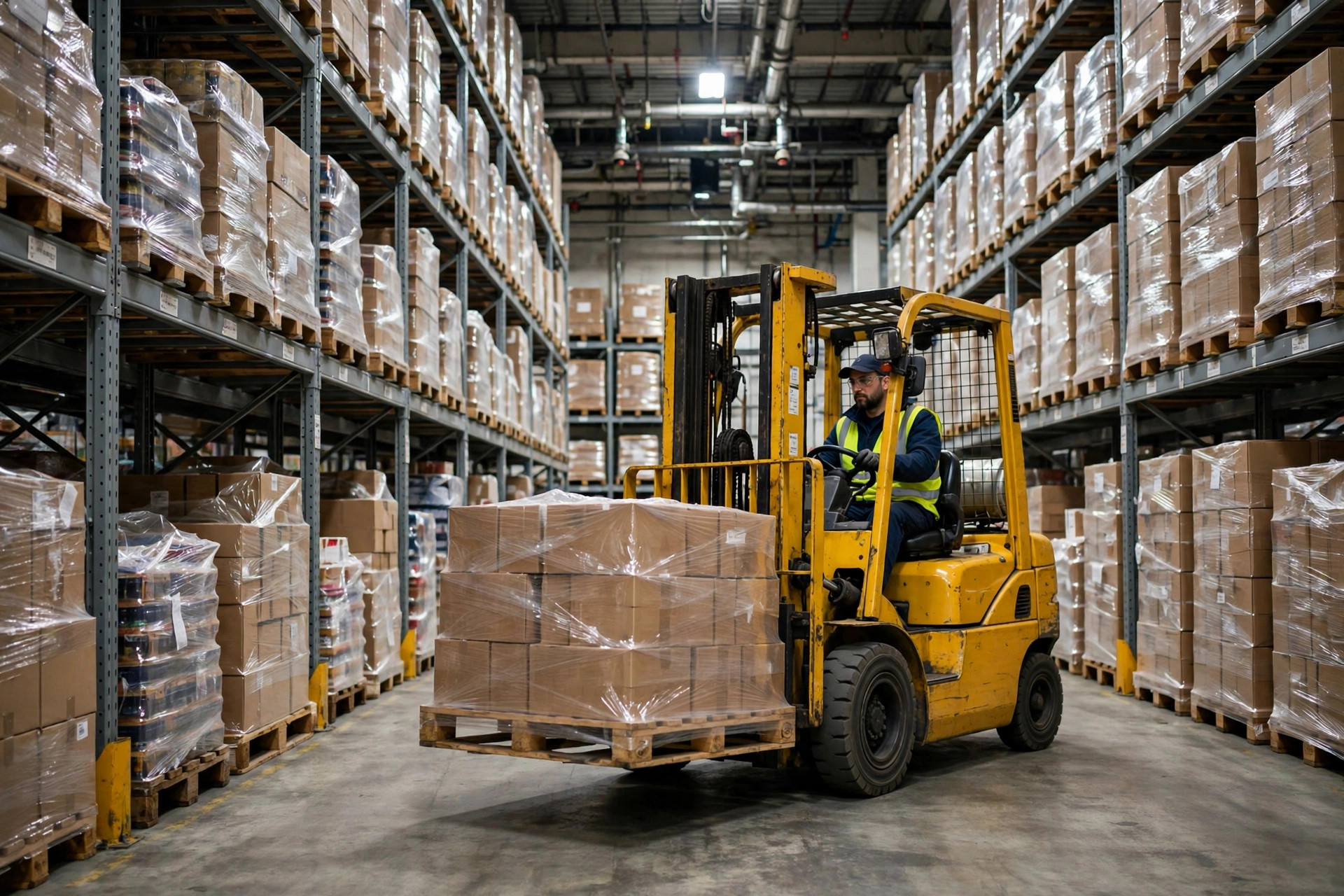
Assumptions on the table, so nobody accuses me of cooking the books: an electric counterbalance forklift (2.5-ton class) at $35,000; a forklift driver fully loaded at $55,000 per year per shift (wages plus benefits, going US warehouse rate); a pallet-moving AGV installed at $150,000; AGV maintenance plus software at $12,000 a year. Five-year horizon, salvage value and cost of capital ignored.
One shift, one forklift versus one AGV — the 5-year total cost of ownership:
| Cost item | Forklift (1 shift) | AGV |
|---|---|---|
| Equipment | $35,000 | $150,000 |
| Labor (5 yrs) | $275,000 | $0 |
| Maintenance (5 yrs) | $20,000 | $60,000 (incl. software) |
| Energy (5 yrs) | $7,500 | $5,000 |
| Total | $337,500 | $215,000 |
You're thinking: well, that's settled, the AGV wins. Has Xiao Ma been brainwashed by a salesman?
Hold on. Three buckets of cold water first — the hidden costs that never make it into the sales deck. One: implementation. An AGV doesn't work out of the box. Route planning, station calibration, WMS integration — implementation easily adds another $20,000 to $30,000, and that $150,000 above is just the bare unit price. Two: the floor. AGVs navigate by magnetic tape or QR codes and need a flat floor. Our little warehouse floor looks like the surface of the moon; resurfacing it is another bill the big guys with brand-new buildings never see. Three: flexibility. Product mix changes, racking gets rearranged for peak season — the AGV routes need recalibration, and you have to fly the vendor's engineer in. One service visit costs me a month of barbecue dinners for the crew. A forklift? The driver looks at the new layout and figures it out in half an hour. Add those three in, and the AGV's $215,000 only goes up.
But the real twist is yet to come — at least for a small warehouse like ours.
The Small-Warehouse Twist: What an AGV Actually Replaces
Here's the key question: does our warehouse even have such a creature as a "full-time forklift driver"? No! Eight people, and whoever's free drives the forklift. When the driver isn't driving, he's doing putaway, cycle counts, receiving — one paycheck, three jobs. Park an AGV during downtime and what does it do? Finds a corner to charge. It will not do your cycle counts.
So the small-warehouse method is allocating labor by utilization. We measured it: our forklift actually spends about 40% of the shift moving pallets; the other 60% the person is doing other things. So the labor attributable to material handling is $55,000 × 40% = $22,000 a year. Recalculate:
Forklift 5-year TCO = $35,000 (equipment) + $27,500 (maintenance and energy) + $22,000 × 5 (allocated labor) = $172,500 — more than $40,000 cheaper than the AGV's $215,000.
And there's the counterintuitive punchline: an AGV saves you the cost of a dedicated driver — but a small warehouse has no dedicated drivers. Everyone wears three hats. You spend $150,000 on a machine that works 40% of the time and goofs off the other 60%, while depreciation ticks away at full speed. The big guys' math looks beautiful because they run three shifts with drivers who do nothing but drive. Our utilization can't support that price tag.
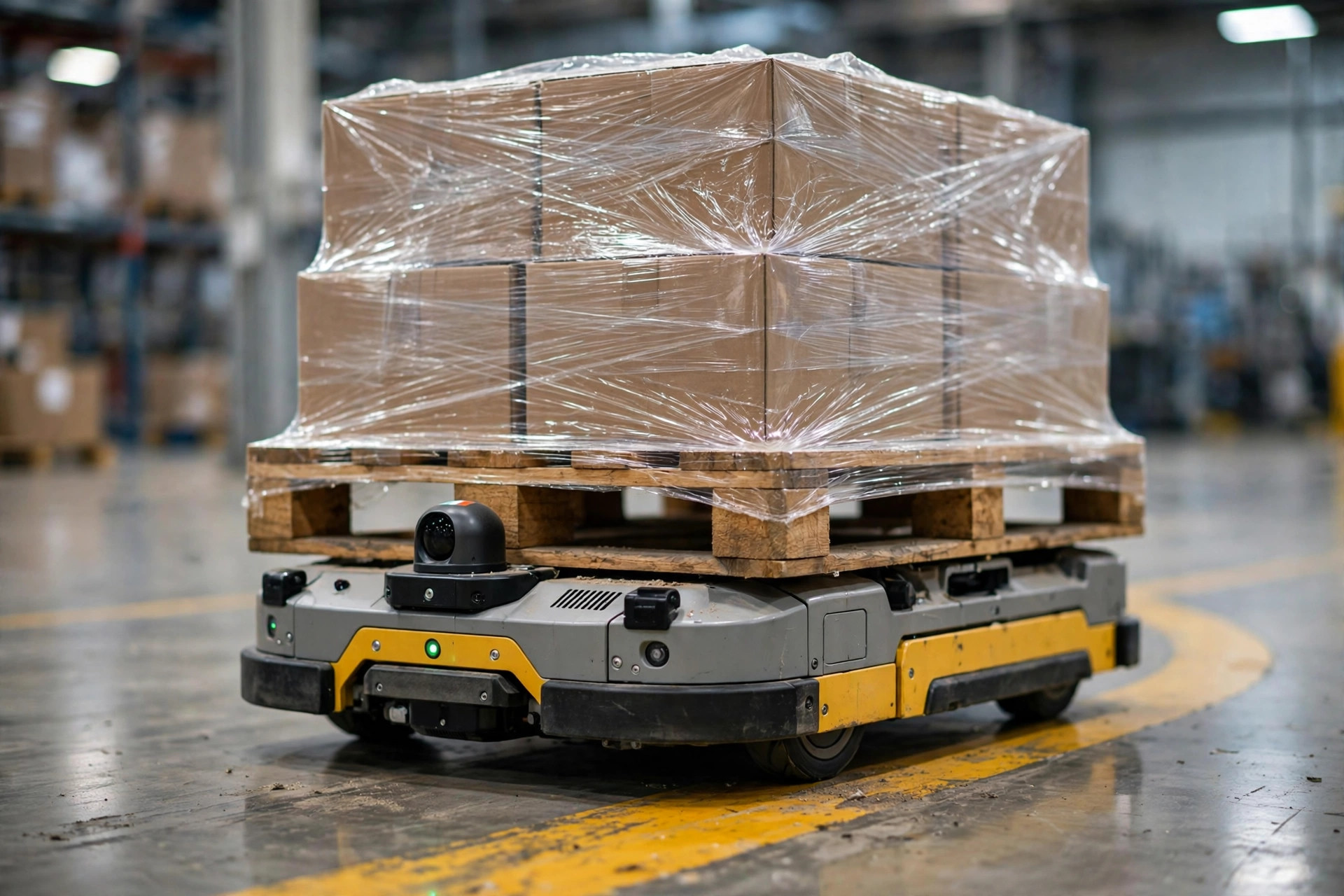
Two real stories, one of each flavor. In March 2024, after finishing the math, I politely declined the $180,000 AGV and bought a used electric pallet jack for $6,500, plus two secondhand conveyor belts — under $30,000 total for our "semi-automation," and it carried us through peak season just fine. The counterexample is a buddy's big warehouse: three shifts, 800 pallets a day, deployed 12 AGVs in 2022 at full utilization, paid back in two years. That kind of volume? We can't touch it, and I'm not jealous.
Finally, our small-warehouse money-saving playbook — every trick bought with real cash: one, buy electric, not diesel — no fumes indoors, half the maintenance. Our used electric pallet jack was $6,500 and in two years has needed nothing but a wheel replacement. Two, don't buy for peak season — rent. Two months of rental over November and December beats owning a truck that sits idle ten months a year. Three, map your travel paths and kill every wasted meter — we re-slotted the warehouse and each driver walks 2 fewer kilometers a day, which is basically half a headcount for free. Add those up and the annual savings cover a month of payroll. Automation is sexy, but saving money pays the bills.
The AGV Breakeven Formula: Run Your Own Numbers
Enough stories. Here's the actionable part — one formula, plug in your own numbers:
An AGV pays off ⟺ replaceable annual labor L > $30,500
The derivation: forklift 5-year TCO is $62,500 + 5L (equipment plus maintenance/energy at $62,500, allocated labor 5L); AGV 5-year TCO is $215,000. AGV wins ⟺ $62,500 + 5L > $215,000 ⟺ L > $30,500.
In human language: if you spend more than about $30,000 a year on pure material-handling labor (roughly a full-time driver spending 55%+ of their time on the forklift), the AGV deserves a serious conversation. If handling is only a fraction of someone's day, the AGV is a money pit.
The three-tier cheat sheet:
| Your situation | Verdict |
|---|---|
| Single shift, < 150 pallets/day | Forklift wins, stop dreaming |
| Single shift, high and steady volume | Run the formula; talk AGV only if L > $30,500 |
| Two or three shifts | AGV probably wins, call the salesman |
One more thing: this formula isn't one-and-done. Last year we moved 90 pallets a day; this year we landed an e-commerce client and we're at 160. I already re-ran the numbers — L just touched $30,000. One more bump and the AGV goes on the agenda. Volumes change, conclusions change. Re-run it before every peak season. Takes half an hour and saves you from the most expensive phrase in warehousing: "I assumed."
And the sixth cost most TCO sheets forget: insurance and accidents. Per US OSHA figures, forklift incidents cause roughly 85 fatalities and about 34,900 serious injuries a year (check OSHA's latest published data). In 2021, a rookie at our warehouse took down a whole bay of racking — $40,000+ in repairs, and our premium jumped the next year. This is one ledger where the AGV genuinely wins: it doesn't drive tired, it doesn't speed to beat the clock. So my final take: don't buy the AGV yet, small warehouse — but keep your aisles and safety standards AGV-ready, so the door stays open for later.
The big players talk unmanned operations. We small warehouses talk survival. AGVs are great machines — just not necessarily for a small frame. I ran the numbers, and they only made me more confident in my forklift. Small warehouses have their own way to survive.
By Xiao Ma, Small Warehouse Owner