Last fall I sat in a conference room at a 3PL warehouse in Ontario, California, staring at two quotes. Twelve dock doors. Edge-of-dock levelers at $4,500 per door, all in. Hydraulic pit levelers at $15,000 per door. The owner asked the only question that mattered: in this edge-of-dock leveler vs pit leveler decision, what does the 3× price gap actually buy?
Short answer: they aren't the premium and budget versions of the same thing. They're two different species. Pick wrong and the real cost isn't the price gap — it's damaged freight on one side, or tens of thousands of dollars wasted on the other.
How They Work: An Edge-of-Dock Leveler Is Not a Cheap Pit Leveler
An edge-of-dock (EOD) leveler is basically a folding bridge bolted to the dock face. Think of it as a trapdoor with manners: stowed, it stands vertically against the dock edge; when a trailer backs in, a worker flips it down and the lip rests on the trailer bed, held in place by the trailer's own weight. Dead simple — a steel deck, springs (or a gas strut), a hinge. Working range: ±5 inches.
Its superpower is cycle time: flip it down in about 10 seconds. On a door running 50 trailers a day, that adds up to real throughput.
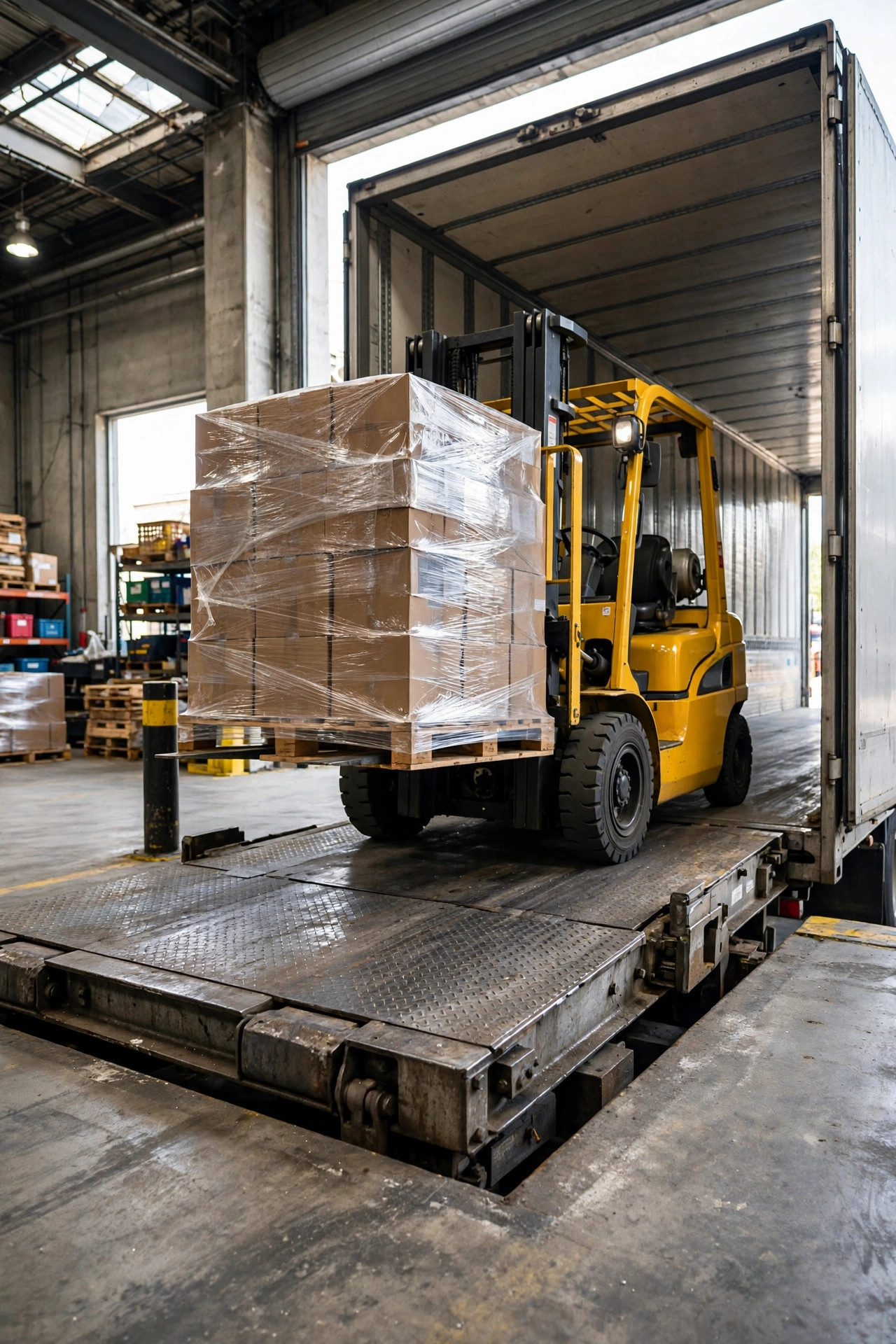
A pit leveler is a hydraulic lift platform sunk into the floor. You cut a pit into the dock, drop the unit in, and hydraulic cylinders raise the deck — the lip extends forward onto the trailer bed. Working range: ±12 inches, capacities up to 80,000 lbs.
Think auto-shop lift versus folding ladder. One is fast and light; the other is slow, expensive, and does the heavy jobs. A hydraulic pit takes 30–60 seconds to raise — on a high-frequency door, that half-minute per trailer is a full half-hour of lost throughput a day.
And let me kill a pseudo-requirement right here: people keep asking "hydraulic or mechanical — which is better?" Wrong question. The right first question is: how much does your trailer fleet's bed height actually vary? If you haven't measured that, any selection discussion is astrology.
The Real Math: Edge-of-Dock Leveler vs Pit Leveler Cost Per Door
These are recent manufacturer quote ranges (dealer pricing swings 10–20%, so treat them as orientation, not bid numbers or industry standards):
| Edge-of-dock | Mechanical pit | Hydraulic pit | |
|---|---|---|---|
| Equipment | $1,500–$4,000 | $4,000–$7,500 | $5,500–$15,000 |
| Install (incl. concrete work) | $500–$800 | $3,000–$6,000 | $4,000–$8,000 |
| All-in per door | $2,000–$4,800 | $7,000–$13,500 | $9,500–$23,000 |
| Install time | 1–2 days | 4–6 weeks | 4–6 weeks |
| Working range | ±5 in | ±10–12 in | ±12 in |
| Capacity | ~35,000 lbs max | 35,000–60,000 lbs | 35,000–80,000 lbs |
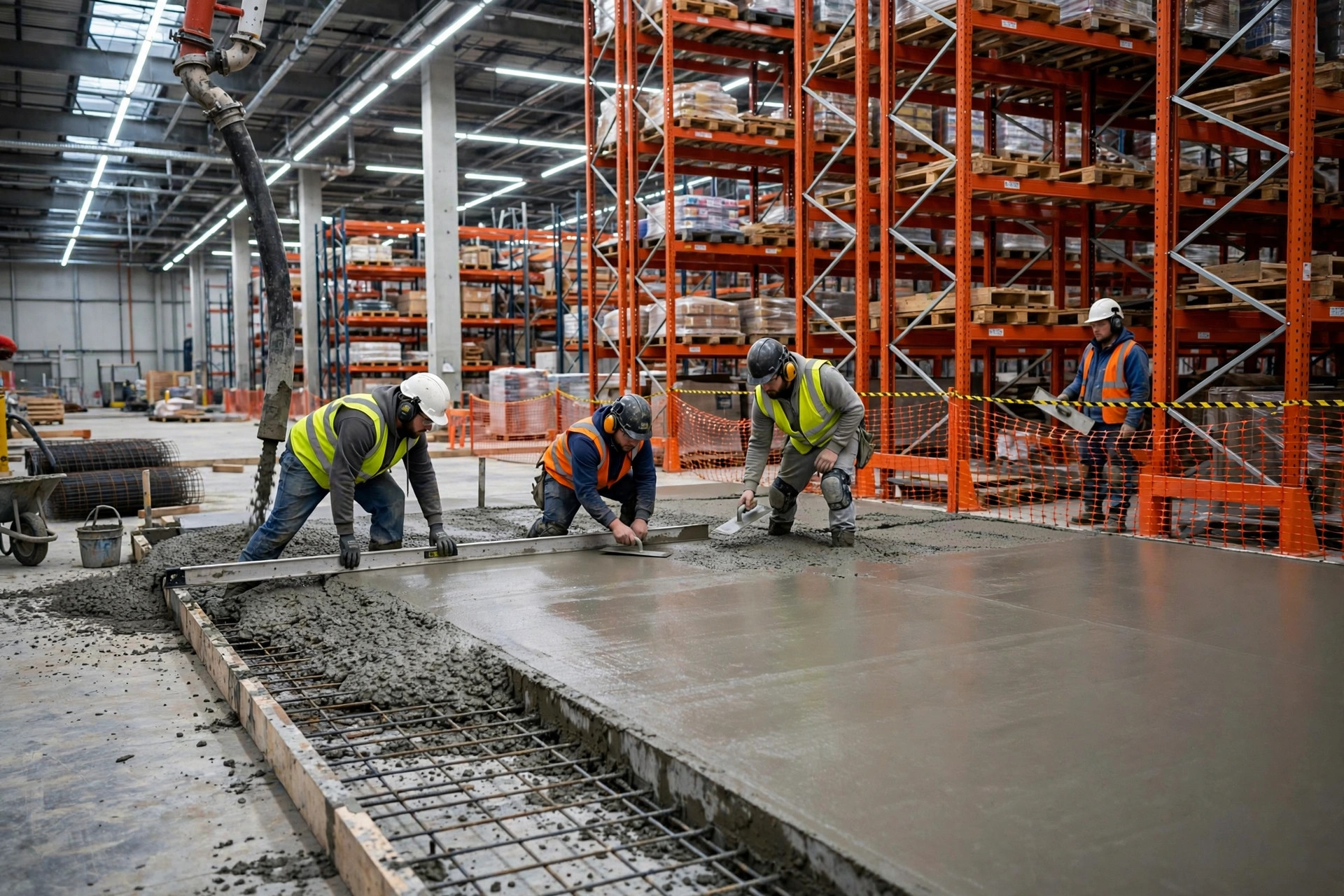
See where the real gap lives? Not the equipment — the concrete. A pit means cutting, rebar, pouring, curing: 4–6 weeks per door, during which that door is basically dead.
So the honest total cost has a third line: downtime. Say a door handles 40 trailers a day at $60 gross margin each (typical 3PL math). Five weeks down is 40 × 60 × 35 = $84,000 of margin in limbo. You can stage the work door by door, but across 12 doors you're looking at three months of disruption. An EOD installs in a day or two — nights and weekends, zero downtime.
That Ontario warehouse went EOD: $54,000 total for 12 doors, done in 11 days. The pit quote was $180,000 plus five to six weeks of downtime, with peak season starting in September. Two years on, running an all-53-foot dry-van fleet varying under 3 inches — zero issues.
The Selection Line: Measure Your Trailer Height Variance
Here's the counterintuitive part: the edge-of-dock vs pit decision doesn't hinge on price or brand. It hinges on your trailer height variance.
The method is gloriously low-tech: take a tape measure and record the bed height of 20 trailers. Measure loaded and empty — air-ride suspensions swing 2–3 inches between the two, and most people forget that.
- 90% of trailers within ±4 inches: EOD's ±5-inch range covers you. Spend the savings elsewhere.
- Regularly seeing 6–8+ inches of spread (reefers run taller than dry vans; sloped yards add more): go pit. Don't negotiate with physics.
- The 4–6 inch gray zone: let downtime cost decide. Can't afford the shutdown? EOD plus a speed limit for forklifts on the ramp. Can afford it? Do the pit once and be done.
Dallas, 2024, a food distribution center — the cautionary tale. They went all-EOD on 8 doors to save money. Their reefer beds sat 6–8 inches above the dry vans, and the yard had a grade. Forklifts bucked over the transition, pallets shifted, two customer complaints. They ended up ripping out the two reefer doors and retrofitting hydraulic pits — the rework cost more than doing pits from day one. Measure first, or you're driving blind.
One hard rule: EOD tops out around 35,000 lbs including the forklift. Paper rolls, steel coils, heavy machinery — pit leveler, no discussion.
Maintenance Traps: Where Each One Dies
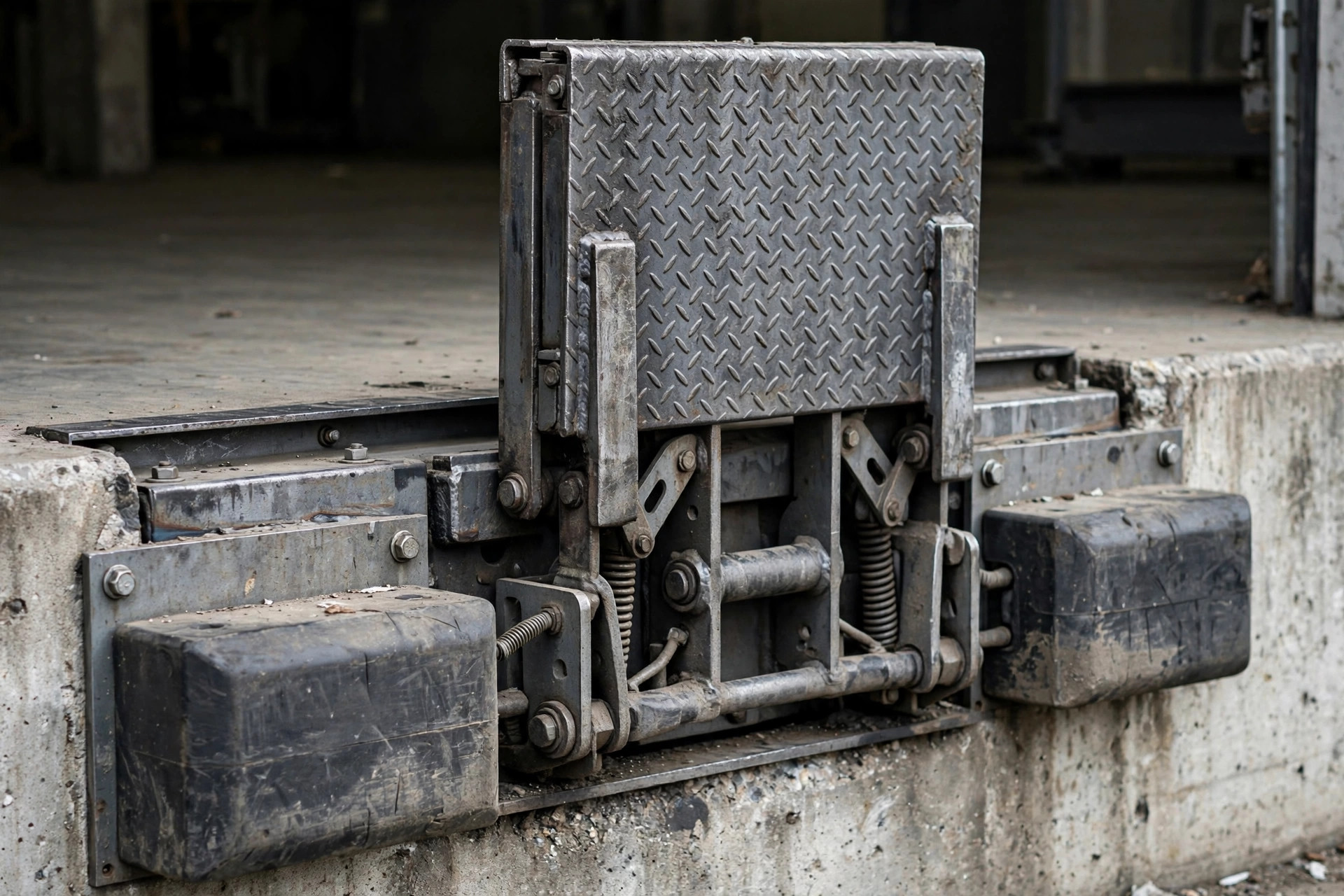
EODs die at the springs and hinges. Grease annually, replace springs every 3–5 years ($200–$400). Their real enemy is forklift impact — a bent lip usually means replacing the whole deck. Bollards at every EOD door. Non-negotiable.
Mechanical pits die of neglect. Chain-and-spring mechanisms sitting in a pit for three years, collecting dust and rust, until one day they seize. Most mechanical pits aren't worn out — they're abandoned out.
Hydraulic pits die at the seals and the oil. Change hydraulic fluid every two years; seals start weeping around year five. And the cardinal sin: standing water in the pit. Cylinders marinating in water is a $2,000+ repair. Get the drainage slope right at install — it beats any maintenance program.
Service life, per manufacturer literature: EOD 8–12 years, pit units 15–20. Run a 10-year TCO and the gap narrows — but only if you actually needed the pit's ±12 inches in the first place. If you didn't, every extra dollar was tuition.
Whether the money is worth it comes down to one number: the trailer height variance on your tape measure. Under 4 inches, EOD. Over 6, pit. And if you haven't measured — stop talking about selection.
By Da Liu, Automation Engineer