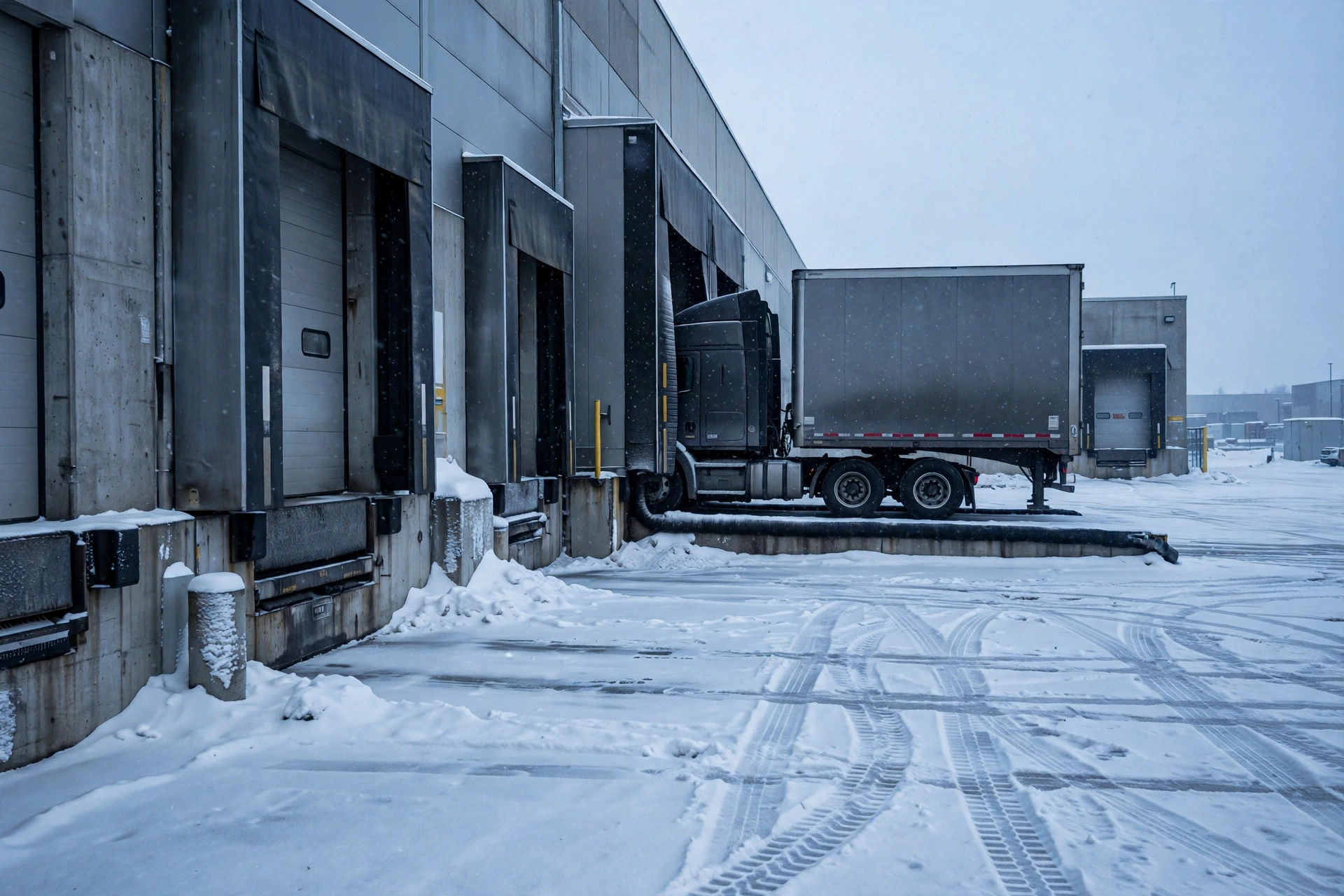
Every October, somebody asks me how to winterize a warehouse. Let me tell you why I take it seriously. Last December, I walked in at 5:40 AM. Dock door 3 went up halfway and froze — ice on the chain. Four trucks lined up outside, drivers on their horns, my night crew stomping their feet in the wind. We shipped six hours late, and the customer calls didn't stop. After that morning, winter prep became a fixed checklist in my warehouse: 8 things, done by October 31, no exceptions.
How This Checklist Got "Frozen" Into Shape
A few years ago, our winter prep was basically "wait and see." Cold snap coming? Crank up the heat. Snow? Call somebody to shovel. And every year, something went wrong.
The one that sticks with me is February 2021, the big Texas freeze. Not my warehouse — a friend's operation outside Dallas. A fire sprinkler pipe froze and burst. Water poured down from 30 feet up and soaked half the building: damaged goods, pipe repairs, drying the floor — tens of thousands of dollars, and the insurer argued for two months. His words: "A few hundred bucks of pipe insulation would've prevented all of it."
We've paid our own tuition too. One year we skipped replacing worn dock seals. Cold air poured through the gaps, ice sheeted the floor inside the door. Our driver Lao Wang took a turn, the forklift slid, and the forks clipped a rack upright. The upright held — lucky — but we shut the whole building down for half an hour to inspect. Since then, this October 31 checklist has been iron law: do it, sign it, file it.
The 8 Things, One by One (Our How to Winterize a Warehouse Field List)
1. Dock door seals. Skip it — cold air pours in, ice forms at the door.
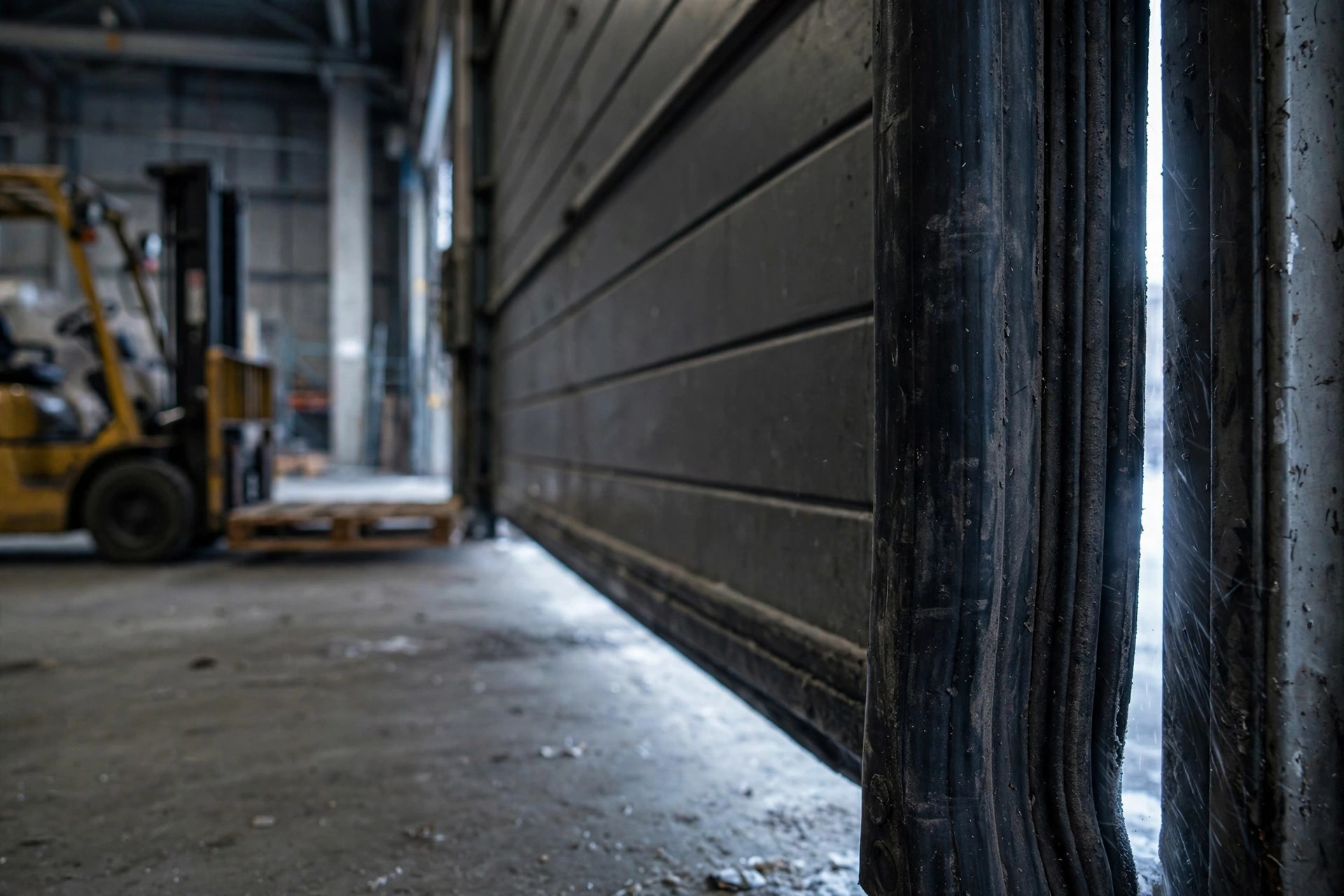
Seals are the cheapest item on this whole list, and the easiest to ignore. A set costs a few hundred dollars. But when they're cracked or warped, cold air streams through the gaps, and the temperature swing at the threshold freezes the floor into a thin ice sheet. A forklift taking that turn will slide.
Counterintuitive part: thicker is not better. We once bought the thickest seals available — tall trailers crushed them out of shape and they leaked worse than the old ones. What matters is how well the seal hugs the trailer. Every October we check every door, replace any seal with cracks wider than a finger, and test the fit against the two trailer types we see most.
2. Test-run the heating system. Skip it — your night shift freezes, and output drops.
Heaters are invisible all summer. Then the first cold night hits and two of them won't start. Every October: each unit heater runs two hours, every thermostat calibrated. Last year it caught two dead igniters, fixed in early November. Wait until December and you're in line behind everybody else.
When the pick area drops below about 50°F, hands go stiff and scanners get fumbled. My night shift lead puts it plainly: the same crew ships noticeably less during those cold weeks. People aren't machines. Freeze them and morale goes with it.
3. Freeze-protect the sprinkler pipes. Skip it — one burst floods half the building.
This is the most expensive item on the list if you get it wrong. Sprinkler lines run right under the roof — the coldest spot in the building. Insulation slips off, pipe gets exposed, one cold snap cracks it. Then it's high-pressure water raining down on your inventory and your floor.
Every October somebody climbs the roof, feels along every insulation run, re-wraps what's slipped, and insulates the valve pits. Less than a day, a few hundred in materials — versus tens of thousands when a pipe bursts.
4. Clear the roof drains. Skip it — meltwater has nowhere to go and backs up into the building.
Most people guard against the snow coming down, not the snow melting. Roof drains clogged with fall leaves? The snow sits fine — until it melts. Then the water can't drain, seeps along the wall seams, and comes inside. By the time you notice, the bottoms of the cartons on the wall-side pallets have gone soft.
One year a whole row of wall-side cartons went moldy at the bottom and the customer rejected the shipment. Now every October we walk the roof, dig out every drain, and rod out the downspouts — half a day, two people.
5. Service the overhead doors and dock levelers. Skip it — a frozen door shuts down the whole dock.
That's the scene from my opening. Door chains, leveler hydraulics — fine all summer, then ice locks them up. A door stuck halfway means trucks can't get in or out, and the entire dock goes down.
October routine: anti-freeze lube on every chain, hydraulic fluid levels checked, weather stripping inspected. One morning's work — because in December every repair tech is busy fixing everybody else's doors.
6. Outdoor lighting and snow removal. Skip it — dark plus ice equals a workers' comp claim.
It's pitch black by 5 PM in winter. The apron outside the dock, the parking lot, the walkways — if the lights are out, it's a hazard. We replace every bulb and fix every broken fixture in October. Costs almost nothing.
Line up snow removal ahead of time: buy your own de-icer or sign a contractor. Wait until it snows and everyone's booked. We signed a seasonal contract with a local company, November through March, on-call. One slip-and-fall comp claim would pay for years of snow removal.
7. Battery room insulation. Skip it — dead forklifts at 2 AM, shift over.
Lead-acid batteries hate the cold. If the charging room gets too cold, batteries drain fast and never fully charge. Then halfway through night shift, forklifts start dying one after another, and you're just standing there.
Our fix: insulated curtains on the charging room doors, and we shifted charging toward daytime, away from the coldest hours. Costs nothing — it's a scheduling decision.
8. Emergency supplies. Skip it — blizzard seals the roads, people stuck with nothing.
This one gets laughed at the most. A blizzard hits, roads close, night shift can't leave, day shift can't get in. Our kit is simple: drinking water, dry food, blankets, a first aid kit, flashlights — enough for 20 people for 24 hours. Sits in the little room next to the office. Every October we check expiration dates and swap out what's expired.
We used it two winters ago: blizzard shut the roads, six night-shift guys stayed eight extra hours — with food, water, warmth. The stuff costs almost nothing; in a crisis, it's what keeps people calm.
Spend a Little Now or a Lot Later — Your Call
| Item | Cost to prepare | Cost of failure |
|---|---|---|
| Dock seals | A few hundred per set | One slip at the door — a comp claim starts in the thousands |
| Heating test run | Half a day of labor | Cold night shift, a short-shipped day in peak season |
| Sprinkler insulation | A few hundred in materials, one day | One burst pipe: tens of thousands in damage |
| Roof drains | Two people, half a day | Wall-side cartons ruined, customer rejects the load |
| Doors & levelers | One morning | Stuck door, trucks queued, half a day late |
| Lighting + snow | Bulbs are cheap; plow contract a few thousand | One fall claim pays for years of plowing |
| Battery room | A few hundred for curtains | Forklifts dying mid-shift, the night grinds to a halt |
| Emergency kit | A few hundred, refreshed yearly | People trapped with no food or water |
Those numbers are ballpark, not quotes — labor and materials vary by market. But the direction is dead certain: winter prep costs pocket change; winter failures cost real money.
Our Schedule: Done by October 31 (Warehouse Winterization Timeline)
Here's how we pace it across October:
- Week 1: Inspect every dock seal, order replacements; test-run heating, call for repairs on anything dead.
- Week 2: On the roof — sprinkler pipe insulation and drain clearing, one day.
- Week 3: Service doors and levelers; replace all outdoor lighting; sign the snow contract.
- Week 4: Hang battery room curtains; check emergency supply dates; sign the checklist and file it.
I own the list. Old Li from maintenance and the night shift lead back me up. Every item gets signed off, and I collect the sheet on October 31. Anything unfinished gets done in the first week of November — never dragged into December.
Folks, there's zero rocket science in winter prep — it's all execution. Work through these 8 items and you'll sleep fine all winter. Skip them, and winter collects its debts one item at a time.
By Chen Feng, Warehouse Operations Manager