Start with a bill. A shuttle system quote: $2.1 million for equipment. At signing, finance calculated a 2.8-year payback. After the system actually ran smoothly, finance recalculated: real total spend $2.83 million, payback stretched to 3.9 years. The extra $730,000 appeared nowhere on the quote. That is the biggest hidden cost in any automation budget: the money that is not on the quote.
To be clear, this is not an isolated case. A third-party warehouse automation cost guide (warehousingcosts.com, 2026 edition) estimates that first-time automation deployments without a dedicated contingency typically overrun by 18% to 30%. Where does that 18 to 30 percent go? I have torn apart the final accounts of more than a dozen projects, and roughly 80% of it lands in three buckets: integration fees, facility construction, and downtime losses. Let us count them one by one.
Hidden Cost #1: Integration — Often a Single Line on the Quote
The words "software integration" on an equipment quote may be the most expensive line on the whole page.
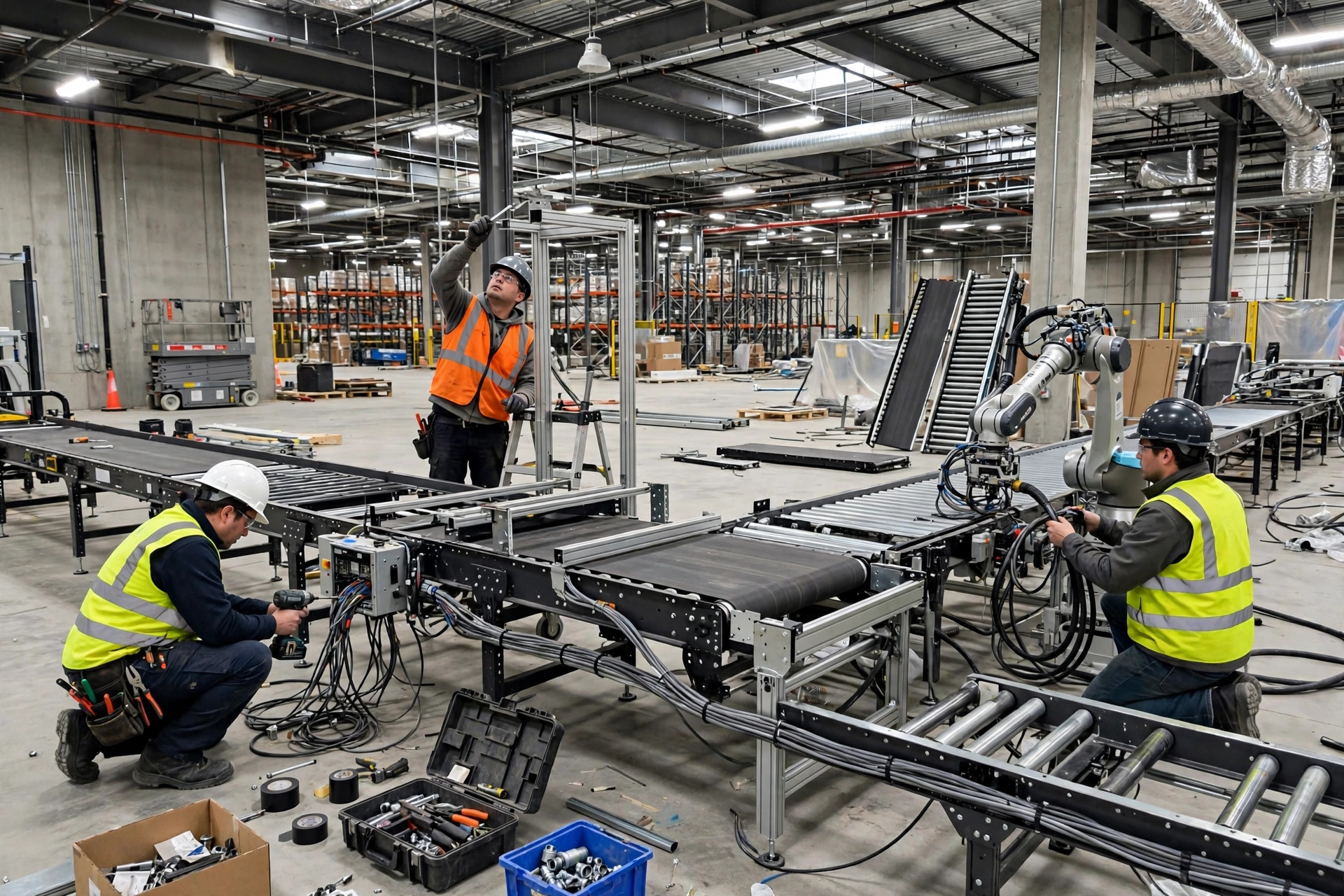
In 2025, an e-commerce warehouse in Atlanta deployed an AS/RS. The WCS had to talk to an eight-year-old WMS and to the ERP. The integrator first quoted $90,000. Once work started, they discovered the legacy system's interface documentation was long gone. Testing dragged on for four months, change orders piled up, and the integration bill ended at $170,000 — nearly double.
That number is not a guess. Third-party cost guides put ERP integration at $25,000 to $100,000 and 6 to 14 weeks (rorixtech, 2026); on complex projects, integration services run to about a quarter of total implementation cost (ascsoftware, 2026). If your site has many legacy systems and thin documentation, budget at the top of the range.
Here is the counter-intuitive part: the vendor with the lowest integration quote is often the one that makes the most money on change orders. Win the bid cheap, then every interface becomes a change order after mobilization. If the contract does not spell out change-order pricing rules and an approval process, you have handed the other side a blank check. Whether that money is wasted is decided on signing day.
Hidden Cost #2: Facility Construction — The "Building Age Tax" on Old Warehouses
New equipment in an old building means the building collects its tax first.
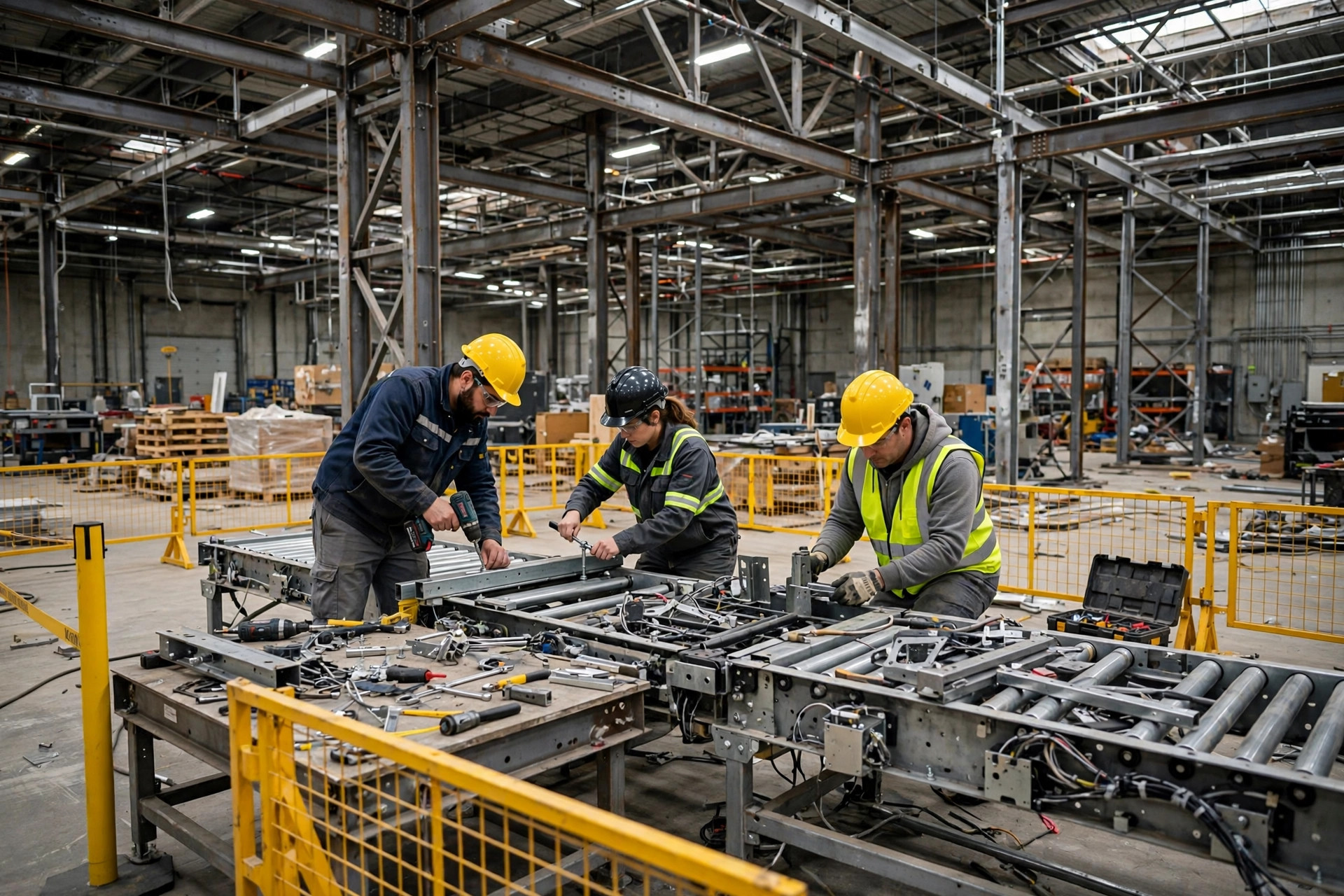
In 2024, a 3PL warehouse in California deployed four-way shuttles. The pre-installation survey found the floor flatness below spec (shuttles need FF50/FL35 or better), racking had to move, in-rack sprinklers had to be added, and power capacity had to grow. Floor grinding plus rack moves plus fire protection plus power: $380,000 total — about 18% of the equipment quote. Not a word of it on the quote.
The third-party benchmark: budget $200,000 to $1.5 million for facility readiness, depending on building age and square footage (warehousingcosts.com, 2026). For a building older than 15 years, just take the top of the range. You will rarely be wrong.
So my iron rule: before the budget is locked, two things must happen — a site survey and a software interface review. Lock the budget without them and every overrun afterward is self-inflicted. The survey report is your negotiating leverage with the integrator: who levels the floor, who moves the racking, who adds the sprinklers — all in a contract appendix, in black and white.
Hidden Cost #3: Downtime — The Quietest, Priciest Line
The first two buckets at least come with invoices. The third has no invoice at all, and it may be the most expensive.
In 2025, an auto parts warehouse in Ohio cut over to AMRs. During the two-week changeover, throughput dropped 30%, and overtime plus outsourced sortation added nearly $70,000. A published benchmark helps here: a 40-person team at $28 an hour, with a 20% productivity dip lasting four weeks, loses about $35,800 (ascsoftware, 2026). Scale that formula to your own headcount and cutover length.
Then there is the even quieter one: schedule slippage. Integrator schedules routinely slip 3 to 9 months past the original go-live target (warehousingcosts.com, 2026). Interim labor and rented space during the slip often cost more than the change orders themselves. Nobody will volunteer to remind you of this. Put it in the budget yourself.
From $2.1M to $2.83M: The Full Accounting
Back to the opening bill. Equipment quote $2.1 million, final account $2.83 million — the extra $730,000 breaks down as: integration $170,000 (the quote said $90,000; the extra $80,000 was all change orders); facility work $380,000 (the quote said zero); downtime losses $70,000 (the quote said zero); contingency drawn $110,000; training and the in-house maintenance team another $100,000. $80K + $380K + $70K + $110K + $100K = $740K, rounding to the $730K. It reconciles to the dollar.
The point of this accounting: hidden costs are not surprises. They are certainties. Every dollar has a source, and every dollar was already decided on signing day. A so-called "budget overrun" is just the bill you skipped at signing, recalculated at close-out — plus interest in the form of delays and rework.
Cost Side vs. Benefit Side: Do Not Mix the Two Books
One clarification: this piece counts only the cost side — the spending missing from the budget. Automation has a benefit side too: labor saved, accuracy gained, peak-season confidence. But everything has two sides: benefits are future and must be discounted; costs are present and will not discount by a cent. Whoever builds the budget must nail the cost side dead before talking about the benefit side. Reverse the order and the ROI model is a castle in the air.
One Table: How Much Your Budget Is Really Missing
Put the three buckets in one table and the gap is obvious:
| Cost item | On the quote? | Typical share of equipment price | Who pays | How to lock it down |
|---|---|---|---|---|
| Integration (WCS/WES interfaces) | One line: "software integration" | 10%–20% | The owner | Change-order pricing and approval process in the contract |
| Facility work (floor/racking/fire/power/network) | No | 8%–15% | The owner | Site survey before signing |
| Downtime and lost throughput | No | Depends on cutover length | The owner | Phased cutover plus interim labor plan |
| Training and in-house maintenance team | Partially | 5%–8% | The owner | Written into the implementation scope |
| Contingency | No | 15%–20% | — | Ring-fenced, not to be reallocated |
Three Levers That Actually Save Money
First, write delay penalties into the contract. The biggest slice of downtime cost is schedule slippage, and the weekly cost of a delay is calculable. A penalty clause beats shaving 5% off the equipment price.
Second, model on peak, not average. Pilot fleets typically run 15% to 25% short of steady-state need (warehousingcosts.com, 2026) because the model underestimates exception handling, charging downtime, and seasonal peaks. Renting buffer fleet later usually costs 20% to 30% above the standard rate. Model peak plus 20% up front and skip the later scramble.
Third, ring-fence a 15% to 20% contingency as its own line. A budget with no contingency does not face a risk of overrun — it faces a certainty of it. Contingency is not "money we might not spend." It is "money we will definitely spend, we just do not know on which line yet."
A calculable conclusion to close: next time an automation quote lands on your desk, do not look at the equipment total first. Multiply the quoted number by 1.25, then ask yourself three questions — are the integration change-order rules written down? Was the site survey done? Is the contingency reserved? If the answer is "no" three times, then know this about the quote's real price: add at least 25%.
By Lao Zhou, Logistics Cost Analyst