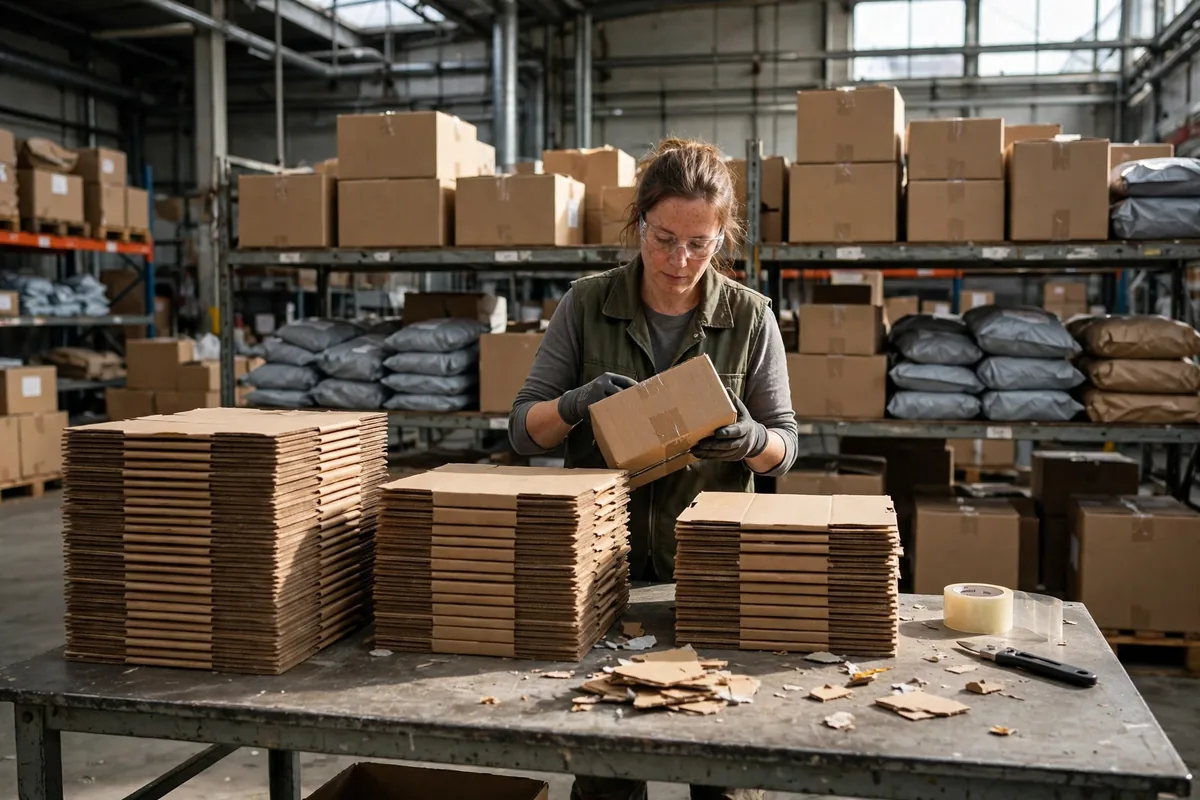
Automated labeling vs manual labeling in the warehouse is a question I get asked a lot, and my answer is never simply "go automated" or "manual is fine." I always start with one number: how many labels do you apply per day. Below the breakeven point, a machine is an expensive ornament in the corner. Above it, sticking with manual labeling means paying people to do a machine's job. This article works out that breakeven line properly.
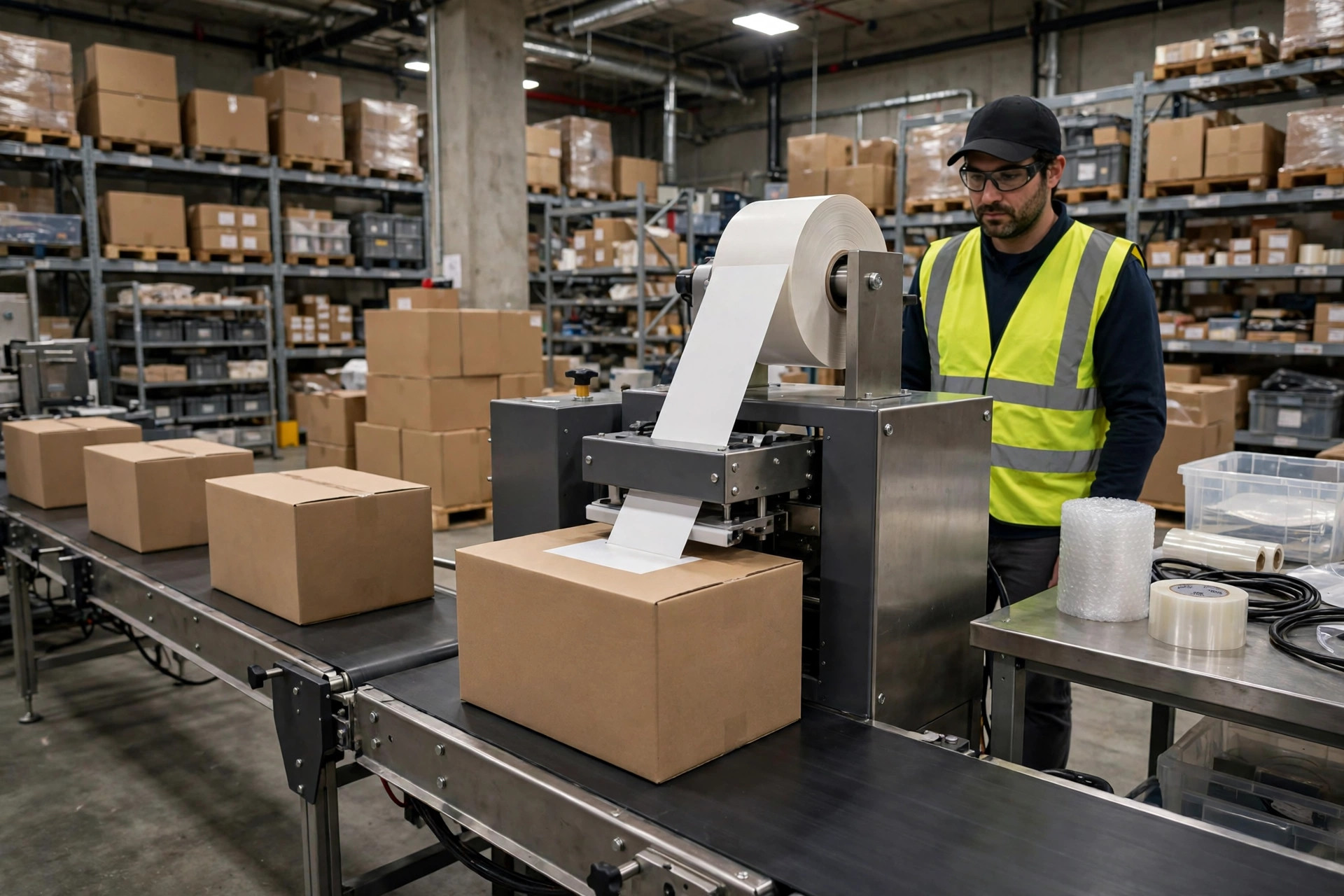
First, the principle, which is simpler than the brochures make it sound. You can think of it as three steps working together: feeding, applying, and verifying. An automatic labeler uses a stepper motor to peel the label off its backing paper, a tamp or wipe head presses it onto the carton or pallet, and then a scanner reads it back for verification. The cycle time of the whole line is set by its slowest step, and that is often not the applicator speed. It is how fast cartons arrive in position, and how fast the read-back scanner can verify. Manual labeling is the mirror image: hands are fast, but people get tired, apply labels crooked, and pick up the wrong roll, and the error rate climbs toward the end of a shift. A machine does not get tired. What it fears is non-standard cartons and constantly changing label sizes.
Automated Labeling vs Manual Labeling: Find the Breakeven Point Before You Buy
Here is a calculation you can run directly. First, the manual cost per label: how many labels one person applies per hour, at what hourly wage, plus the rework rate for misapplied labels. Take an illustrative example: one person applies 300 labels an hour at an illustrative wage of 30 currency units an hour, so the direct labor cost is 0.1 per label. If the mislabel rate is 1 percent, every 100 labels produces one rework job, and each rework trip costs a couple of minutes. That pushes the true cost higher.
Then the machine cost per label: the purchase price spread over, say, five years of depreciation, divided by total labels, plus maintenance, consumables, and downtime losses. Plot the two lines. Where they cross is your breakeven point.
An illustrative case on the low side: a household goods warehouse shipping 800 orders a day wanted an automatic labeling line. Running the numbers showed that two people could finish the day's 800 labels in half a day, while the machine would sit idle most of the day. Depreciation alone pushed the machine cost per label about 0.15 above manual labor. That purchase would have been a waste. My advice was: do not buy yet. Standardize manual work first. Pre-sort labels in order sequence, mark the apply position on the bench, and sample-check every 50 labels. The mislabel rate fell from 1.2 percent to 0.4 percent, and the rework saved in a year was worth more than the machine's depreciation would have been.
A case on the high side: an e-commerce warehouse shipping 6,000 orders a day, with three carton sizes and two label types, and double volume in peak season. Manual labeling needed eight people all day, and by 8 p.m. crooked and missed labels rose visibly, followed by carrier rejections and customer complaints. A labeler rated at an illustrative 40 labels a minute, paired with a simple conveyor positioning unit, brought the cost per label to well under half of manual cost, with uptime above 98 percent, and no scramble hiring in peak season. At that volume, not buying the machine was the expensive choice.
| Comparison | Manual labeling | Automated labeling |
|---|---|---|
| Speed (illustrative) | About 200–400 labels per person per hour | About 20–60 labels per minute, depending on model and carton |
| Consistency | Good in the morning, errors rise in afternoon and night shifts | Consistent all day, struggles with sudden carton or label changes |
| Mislabel rate | Roughly 0.5%–2%, depending on management and fatigue | Roughly under 0.1%, lower with read-back verification |
| Changeover cost | Near zero, just swap a roll | Changing label size or carton size needs parameter and tooling changes |
| Suitable volume | Usually cheaper below about 2,000 labels a day | Worth serious costing above about 3,000 labels a day |
| Biggest fear | Peak season, night shifts, staff turnover | Non-standard cartons, inconsistent label supply |
Note that the breakeven line is not fixed. The more uniform your cartons, the lower it moves. The messier your cartons, the higher it moves. If you run ten carton sizes and five label types, the machine spends so much time on changeover that the labor you saved gets paid back in adjustment time. This is where I have no patience for pseudo-demand: warehouses buy automation because the warehouse next door did, before checking whether their own carton mix can feed the machine at all. The machine ends up gathering dust in the corner while people keep labeling by hand next to it. That is not an automation failure. It is a selection failure, caused by skipping the math.
Automated Labeling vs Manual Labeling: Maintenance Traps After You Buy
A machine you cannot maintain is worse than no machine. The first trap is label supply. If backing paper thickness, label pitch, or roll diameter varies between batches, peeling becomes inconsistent. Set an incoming inspection standard when you buy labels: pitch tolerance and roll diameter range written into the purchase requirement, with sampling on delivery. Reject bad batches. Do not wait until they are on the machine to blame the equipment.
The second trap is the applicator head. A dirty tamp pad or a leaking vacuum head produces crooked, wrinkled, or lifting labels. The maintenance itself is not hard, but it has to be on a daily checklist: wipe the head before startup each day, check the air circuit weekly, check belts monthly. Many machines are not worn out by use. They are neglected into failure. The MTBF figure in a vendor datasheet is a laboratory value. Your field value depends on whether that checklist actually gets done.
The third trap is the verification step. Applying without scanning is shipping blind. Automatic labeling must include read-back scanning, with an alarm and stop on a failed read. Do not let a bad label reach the carrier. Scanner mounting angle, lighting, and print density all matter: get one wrong and false rejects climb. During commissioning, do not just check whether labels look straight. Run 500 consecutive labels and count the false rejects.
Here is the counter-intuitive part: the higher the automation level, the higher the standardization it demands upstream, not the lower. A person can look at a carton and know where the label goes. A machine cannot. Carton size, label position, print content, and incoming batch quality all have to be standardized first, or the machine cannot run stably. Warehouses that hope one machine will fix messy management usually discover the opposite: the machine amplifies the mess. Deviations a person used to work around become faults that stop the line, and the stoppage costs more than manual rework did.
So back to the opening question: automated labeling vs manual labeling in the warehouse is not decided by brand or price first. It is decided by three numbers: how many labels you apply per day, how many carton types you run, and what your current mislabel rate is. Get those three numbers, and the breakeven line draws itself.
Is the money worth it? Look at this one number: is the machine's total cost per label, calculated under your real carton mix, real daily volume, and real changeover frequency, stably below the manual cost per label — not the ideal value on the vendor's brochure. If yes, buy. If no, standardize manual work first.
By Da Liu, Automation Engineer