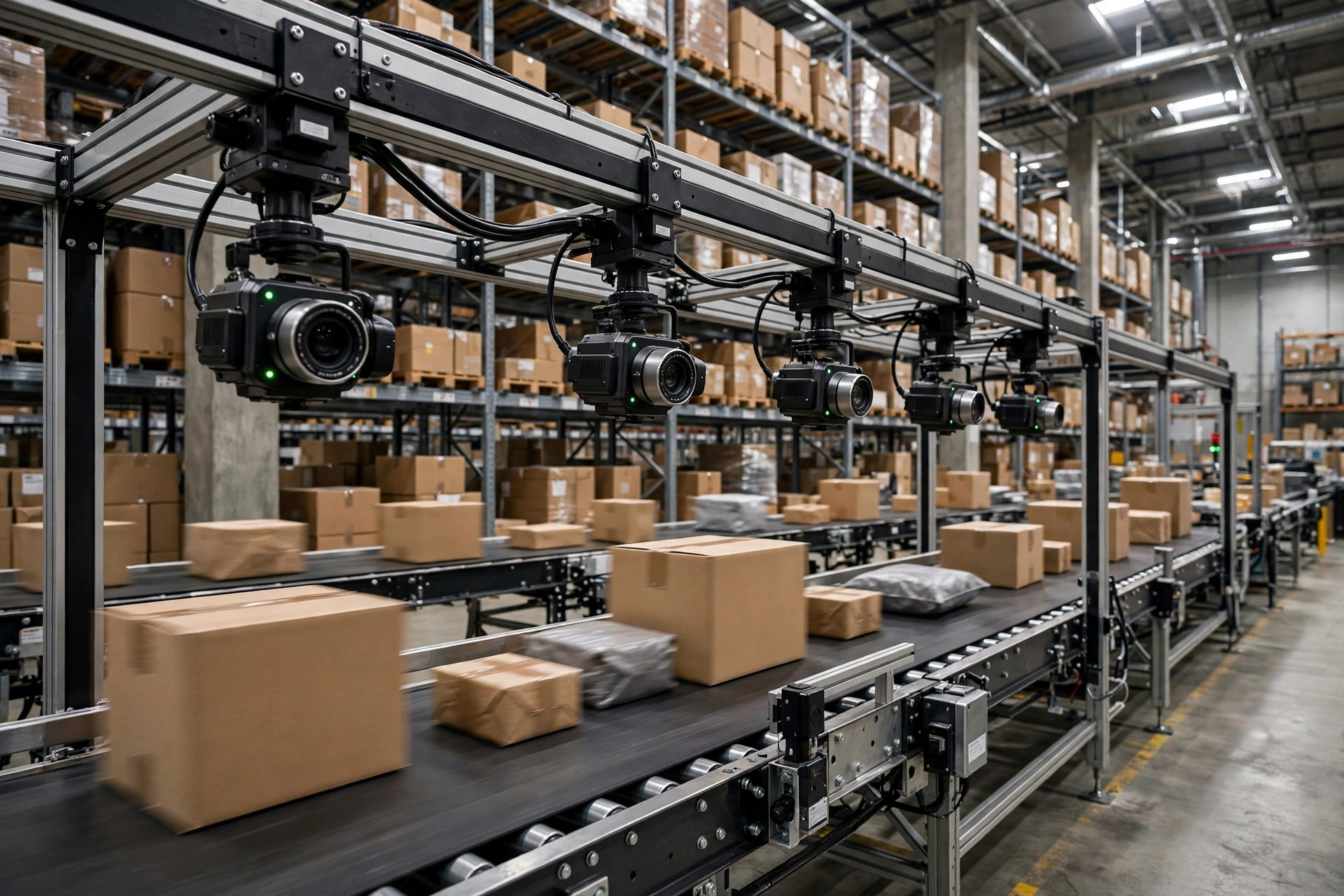
Seven thirty in the morning. At the dock doors of a distribution center in Huangpu, Guangzhou, a brand-new vision inspection unit stands over the inbound conveyor. Its camera lens is covered in dust.
It was installed last summer. During the demo, the boss's eyes lit up — cartons pass through, quantities counted automatically, damage photographed, matched against the PO. Receiving headcount drops from three to one. The POC ran a couple of months at over ninety percent accuracy. Contract signed. Final payment made.
And then, nothing.
That's what I want to talk to you about. After more than a decade running warehouses, I've watched this movie more than once: the vendor shows up, the POC works, the boss pays, and then nobody owns it, nobody uses it, and it quietly dies. In the post-mortem everyone blames immature technology or an unreliable vendor. Here's the honest truth — technology is rarely the real killer. The real killer is organization: the project never had a true owner.
So let's talk about the warehouse ai owner role: who this person is, what they do, who they report to, and how to find one.
What a Warehouse AI Owner Actually Does
This role is not "an AI technical expert." It is the project's owner inside the warehouse. The technology belongs to the vendor, the data belongs to the warehouse, and someone has to stitch the two sides together.
Here is the duties checklist we now use in our operation:
| Duty | What it means in practice | What "done" looks like |
|---|---|---|
| Requirements gathering | Walk the floor, translate crew problems into requirements the vendor understands | The vendor sees real problems on the first visit |
| Vendor management | Track progress, verify results, translate tech talk into floor language | POC metrics in the contract appendix, not verbal promises |
| Data preparation | Lead the crew to dig out historical data, label it, clean the dirty records | Whatever data the model needs is ready within a week |
| Training and rollout | Morning huddles, floor coaching, a one-page card on the equipment | A new night-shift hire can operate it by following the card |
| Results tracking | One page to the boss weekly: labor saved, exceptions caught, next steps | The boss never has to ask whether the money was worth it |
| Getting resources | Cross-department coordination: interfaces from IT, budget from finance, training time from HR | When people or money are needed, someone signs off |
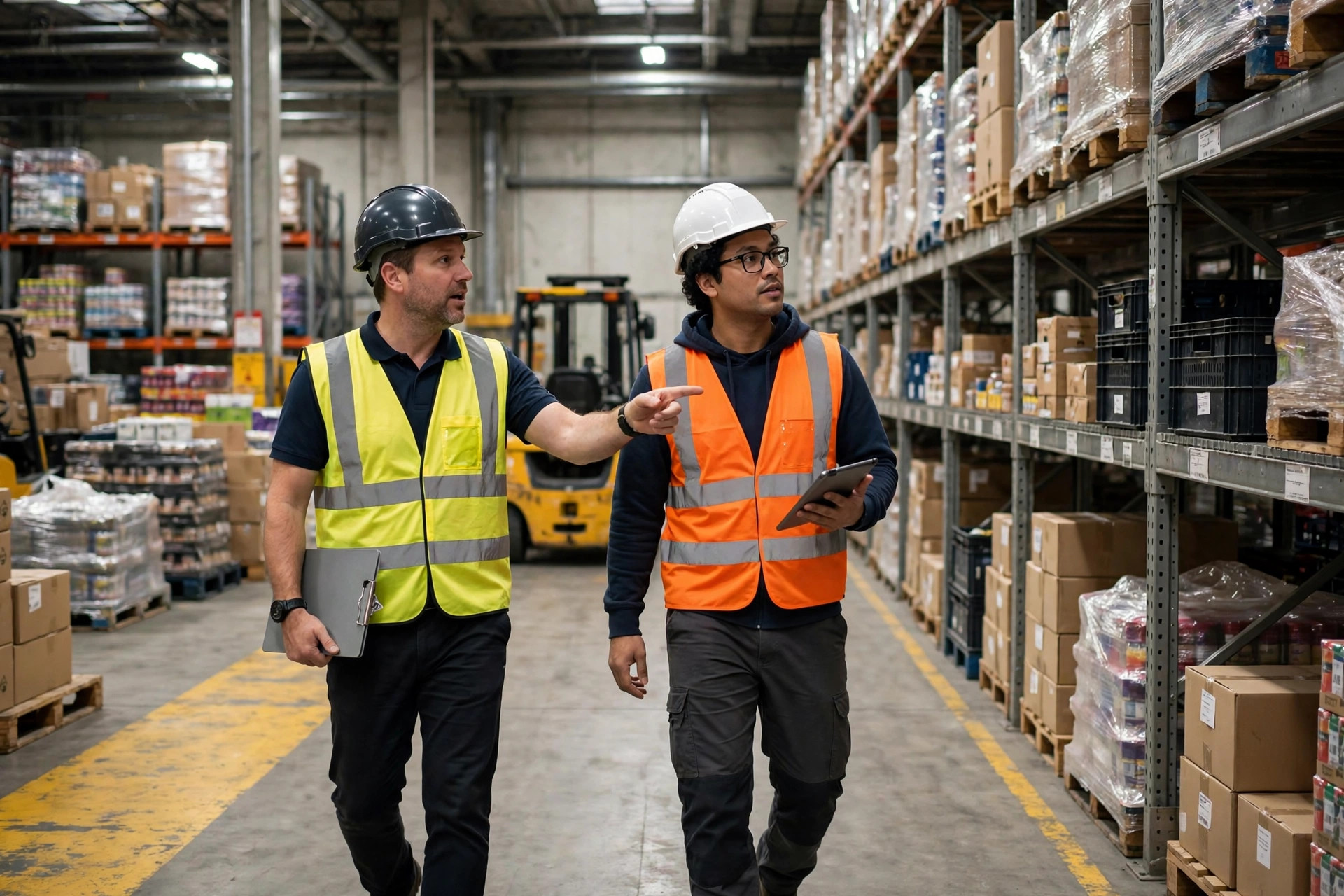
See the pattern? Not a single one of these is writing code. Every one is about people: talking to people, leading people, getting resources. So a technical background is a bonus, but knowing the warehouse, leading people, and being able to call in favors is the baseline.
Two Stories: With an Owner vs. Without One
Story one — no owner. Back to that Huangpu warehouse, run by an old friend of mine, who gave me permission to tell it. To save money, the boss had Xiao Li from IT "cover" the project part-time. Nice guy, but he'd never spent a full day following the receiving process. When the vendor talked about parameter tuning, he couldn't follow. When the receiving crew said "this thing keeps throwing false alarms," he relayed it to the vendor, who said "your cartons aren't staged properly." Two sides talking past each other.
Three months later, nobody wiped the dusty lens, nobody retuned the parameters, and accuracy slid from the nineties into the seventies. The crew just stopped using it — back to manual. The unit still stands there today, the most expensive decoration in the building. Xiao Li told me: "Feng, it's not that I didn't try. I've got my hands full with the servers, and I don't understand warehouse work."
One line: a part-time IT assignment means nobody owns it.
Story two — with an owner. Last year our Nanjing warehouse rolled out a vision system for pick verification. The boss asked me to pick the lead. I passed on IT and on the vendor's recommendation, and picked Lao Zhou, who ran receiving.
Lao Zhou had spent over a decade in the warehouse — receiving, verification, putaway, the works. Technically? He could use Excel and not a line of code. But he had three things: the whole floor respected him and he could get people moving; he could translate vendor talk into "what does this mean for our morning shift"; and he had the nerve to ask the boss for resources.
Give him three months. Month one, he dragged the vendor onto the floor, making them look at real exceptions — "can your model read a water-damaged label like this? We get dozens of these a day in peak season." Month two, data prep: he took two guys and spent two weeks digging through historical exception records, labeling them one by one. Over three thousand records — mislabeled, missing photos, incomplete, all sorted out. Garbage in, garbage out — he understood that better than many IT folks. Month three, training: morning huddles, night-shift coaching, instruction cards, hands-on help for anyone who struggled.
Now it's standard practice: every Friday, Lao Zhou sends the boss one page — orders verified, exceptions caught, false alarms, next week's tuning. With three to four thousand orders verified daily, missed shipments and mispicks dropped by more than half. Last month the boss told me: "Money well spent."
Same AI, two warehouses, opposite endings — the difference is a true owner.
Three Traits of a Good AI Owner
Looking back at these two stories plus the projects I've seen over the years, the good picks share three traits:
First, deep warehouse process knowledge — ideally ten-plus years on the floor. Ninety percent of AI rollout pitfalls are process problems, not algorithm problems. This person has to tell at a glance whether it's a data problem or a process problem — otherwise they just nod at whatever the vendor says.
Second, enough technical literacy — expert not required. They can follow what the vendor is saying, argue with data, and dare to ask "under what conditions was that accuracy measured?" That's enough. Their battlefield is the floor, not the server room.
Third, the standing to pull resources across departments. An AI project will always need interfaces from IT, budget from finance, and cooperation from the floor. A two-years-out-of-school management trainee can't push that through, no matter how sharp. Half the reason Lao Zhou succeeded is that after a decade-plus in the building, everyone gives him face. That's the warehouse ai owner role in one image: someone the floor already trusts.
So my conclusion is firm: grow this person from your veteran floor staff rather than hiring from outside. An air-dropped "AI expert" doesn't know the floor or the people. A veteran brings authority and trust for free. The vendor can fill the technical gaps; floor instinct and people's trust can't be backfilled.
Who the AI Owner Should Report To
I get asked this a lot. The answer is one line: report to the operations director, not to IT. An AI rollout is a business project, not an IT project. Success is measured by labor saved and errors avoided, not system uptime. Under IT, the KPIs become equipment uptime — the project quietly turns into a maintenance job and nobody cares about business results.
Three Classic Ways to Kill It
A final warning for my fellow operators — the three deaths I see most:
One: make IT cover it part-time. That's story one above. IT has its own KPIs; your warehouse AI project will always be their second priority. Part-time means nobody owns it, and nobody owning it means a slow death.
Two: let the vendor station someone on site. Some bosses keep the vendor's person around to lead. They know the tech, but not your warehouse or your people. The apprentices they train are the vendor's apprentices — when the person leaves, the knowledge leaves with them. You can't domesticate that.
Three: the boss runs it personally. The boss's time is the most expensive resource in the company. Daily check-ins in month one, weekly in month two, "you guys handle it" in month three. Three days of enthusiasm, and the project cools with it.
The Honest Truth
The biggest risk in an AI project is not picking the wrong technology — it's picking the wrong owner. Wrong tech can be swapped out and recovered in three months. The wrong person burns half a year, plus the crew's confidence in AI — next time you mention AI, everyone mentally rolls their eyes.
So before you sign when the vendor comes to install next week, ask one question: who exactly owns this project?
Find that person first, then talk technology. Don't get the order backwards.
By Chen Feng, Warehouse Operations Manager