
Let me be blunt: when AI adoption dies in a warehouse, nine times out of ten it isn't the technology. It's that nobody ever truly pushed it. The vendor installed the system, IT provisioned the accounts, and then... nothing. The floor kept doing what it always did, and three months later everyone agreed "the system doesn't work." I've watched this movie too many times — money spent, dust settled, morale gone.
There are two sides to this: the technology side belongs to the vendor; the pushing side can only come from one of your own people. The jargon word is "champion." In plain language: the person who treats the project like it's their own problem.
What a Dead AI Rollout Looks Like: A $300,000 Lesson in Dallas
Dallas, 2023. A 3PL spent $300,000 on AI vision inspection for damaged cartons and crooked labels. IT led the project; the IT manager was diligent; the test data looked gorgeous. In week one on the line, veteran QC staff treated the cameras as decoration — every alarm got muted, because "too many false alarms, it's killing my throughput." IT tuned the parameters twice. False alarms dropped, misses rose, and two customer complaints landed. Eight months later the system was unplugged. Three hundred thousand dollars, and nobody even heard it hit the floor.
The postmortem was a blame circle: IT said the floor wouldn't cooperate, the floor said the system was useless, the owner said the vendor was a fraud. The truth is simpler — from day one, not a single person actually wanted this project to succeed. The technology was fine. The data was fine. What was missing was one person on the floor willing to speak for it and take bullets for it.
What a Living AI Rollout Looks Like: A Night-Shift Supervisor in Fontana
Fontana, 2022. A 120,000-square-foot e-commerce warehouse deploying AMRs for pick assist. It worked because of one person: the night-shift supervisor — nine years at that building, started as a picker. The pilot ran on his shift: 40 people, six weeks. He did four things, which I'll break down below.
The result: pick productivity up 32% in the pilot zone, error rate down from 0.8% to 0.3%. In week seven, the owner asked, "Can we roll this out everywhere?" Note the order of events: the floor proved it, and the boss came asking — not the other way around. Same kind of AI project. Dallas died with nobody pushing; Fontana lived with somebody pushing. The difference wasn't the technology. It was the person.
Three Criteria for a Champion — All Non-Negotiable
First, credibility on the floor. People follow them because they've earned it, one order at a time. That kind of authority can't be bought — it's built shift by shift. Parachuted-in managers and HQ experts fail this one by default. The Fontana supervisor had nine years in that building; half the night shift were people he'd trained himself. When he said "we're doing it the new way tonight," nobody argued.
Second, they feel the pain. They know where it actually hurts — not the pain on the PowerPoint. He picked the most congested pick zone for the pilot because that's where he fought fires every night. A lot of champion picks go wrong right here: big title, far from the floor, and they choose a pilot that hurts nobody, so nobody cares about the numbers it produces.
Third, they have real time. The boss has to free them up — at least 30% dedicated — not "push AI in your spare time on top of your day job." Spare-time projects die spare-time deaths. The Fontana owner cut the supervisor's scheduling and reporting load in half and told him to focus on the pilot. That's what serious looks like.
Picking Right Isn't Enough — Four Moves Have to Follow
These four are exactly what the Fontana supervisor did:
- Call the pilot scope, decisively. Small, painful, measurable in six to eight weeks. Trying to boil the ocean is a champion's first killer. He did one pick zone — no packing, no putaway. Let everyone see "this thing actually works" before anything else.
- Get resources across departments and take the bullets. A pilot will eat capacity and generate complaints; the champion has to go argue with the ops director and the customers on the project's behalf. In week two at Fontana, an AMR blocked an aisle for 20 minutes and the day-shift supervisor complained to the owner. The night supervisor pushed back: "Twenty minutes blocked now, two hours saved every day after — your call." Without that spine, the first complaint kills the project.
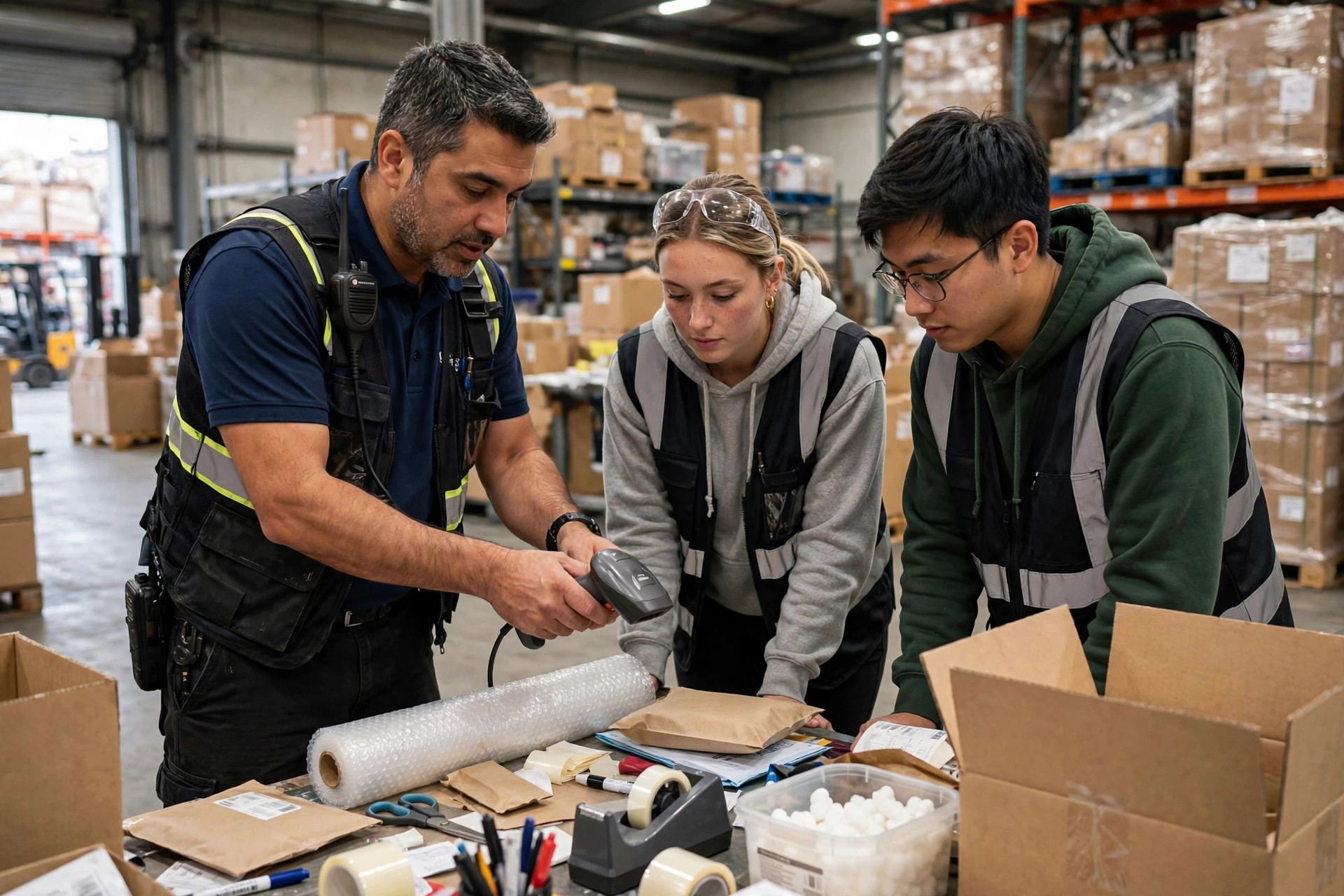
- Train the floor hand by hand. Not a manual, not a town hall — standing at the station teaching one person at a time. For the first two weeks he spent 20 minutes at the start of every night shift walking through the operation, veterans coaching rookies, mistakes corrected on the spot. Primitive. It worked.
- Translate wins into the boss's language. Owners don't care about "97% model accuracy." They care about "two headcounts saved in six weeks, $12,000 less in damage claims." If the champion can't do that translation, phase-two budget never gets approved. His week-six report was one page: three numbers, plus one line — "full rollout, roughly $400K a year in savings." The owner nodded on the spot.
Cost first, because there's always a cost: the champion playbook is slow. Six to eight weeks for a single pilot, and impatient owners will wonder why the vendor's fireworks produced so little smoke. But here's the other side of that trade — the $300,000 in Dallas was tuition for "fast." Two sides to everything; you have to pick one.
One counterintuitive warning: the champion can't be the owner, and can't be pure IT. The owner has authority but no time; IT has tech but no floor. And here's the harsher one: a champion who's too strong is its own risk — everything hangs on one person, they quit, the project collapses. So hidden inside the four moves there has to be a fifth: write it down as process. People can leave; process stays.
Last question: who's pushing the AI project in your warehouse right now? Name them. If you can't — the project's already dead. It just hasn't been buried yet.
By Lao Mi, Supply Chain Veteran (20 yrs)