How does a small warehouse adopt AI without a data team? Last fall, a friend who sells digital transformation solutions for big enterprises came to tour our warehouse. After walking the floor, he told me very seriously: "At your scale, getting AI running means building a data platform first, then hiring two or three machine learning engineers. The budget would be roughly…" He named a number. I nearly spat out my tea. That number would cover our payroll for the better part of half a year.
We are nine people. Fifteen or sixteen if you count the temps during peak season. A data platform? ML engineers? We could never afford that kind of money. But it hit me that day: the big-company playbook was never written for operations like ours. That does not mean AI is off-limits. It just means we need our own way in.
After a year of trial and error, here is what I learned: an operation like ours can absolutely get AI running without a data team. This is our scrappy playbook, shared for fellow operators running lean.
The Reality of Running a Small Warehouse
Let me lay out our situation, and see if it sounds familiar.
We run a 3,000-square-meter warehouse doing e-commerce fulfillment. On a normal day we ship around 800 orders; during peak season that pushes toward 1,500. We have one basic WMS, and most of our data still gets keyed in by hand, mistakes included. A vendor once pitched an "intelligent warehousing solution": custom development plus on-premise deployment, six figures minimum. I asked whether it could first solve one concrete problem, our endless damage-claim disputes with carriers. He paused and said we would need to do data governance first. That told me everything: enterprise AI is designed for companies that already have data teams. We do not even have a proper IT person.
But our pain was real. Damaged inbound freight, missing cartons, and every time we had no evidence, so we just ate the loss. Last year alone, the claims we could not prove cost us tens of thousands of yuan out of pocket.
Then it clicked for me, and it runs against the conventional wisdom: big companies do AI from data to algorithms to use cases. Small warehouses have to flip it around. Start with one problem that hurts badly enough, then work backward to figure out what data you need. Reverse the order, and the cost collapses. You do not need a data platform. You need an old phone and one specific pain point.
The Scrappy Three-Piece Toolkit: Buy, Repurpose, Collect
Our whole approach comes down to three cheap moves, each used in the right place.
First, buy off-the-shelf SaaS instead of building. There are ready-made vision services that do parcel damage detection and label data extraction, billed monthly at a few hundred to a couple thousand yuan. Never try to train your own models. You cannot afford a labeling team, and you cannot wait three months for training. Buying instead of building is not embarrassing. For shops like ours, the survival philosophy is simple: if you can buy it, do not build it.
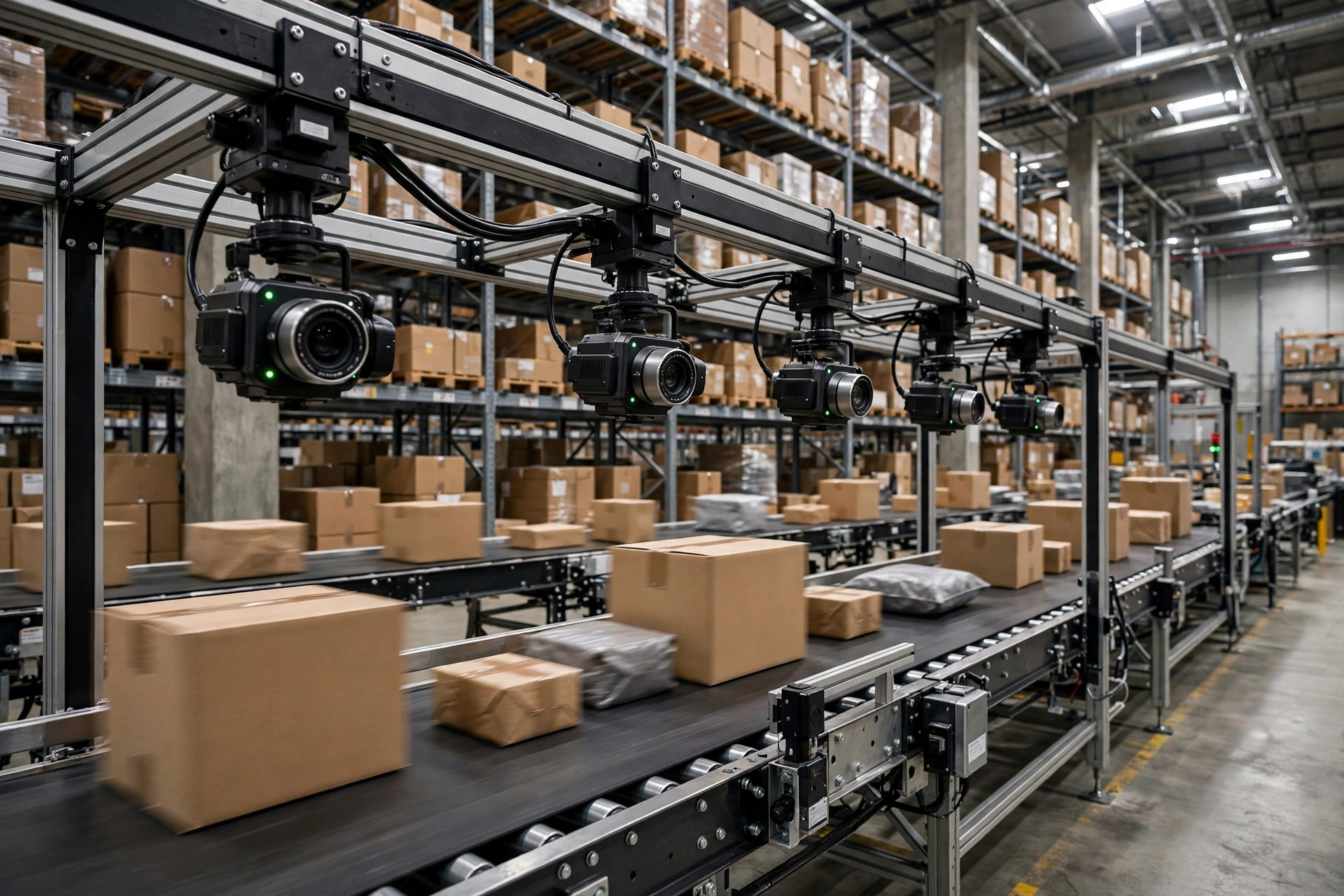
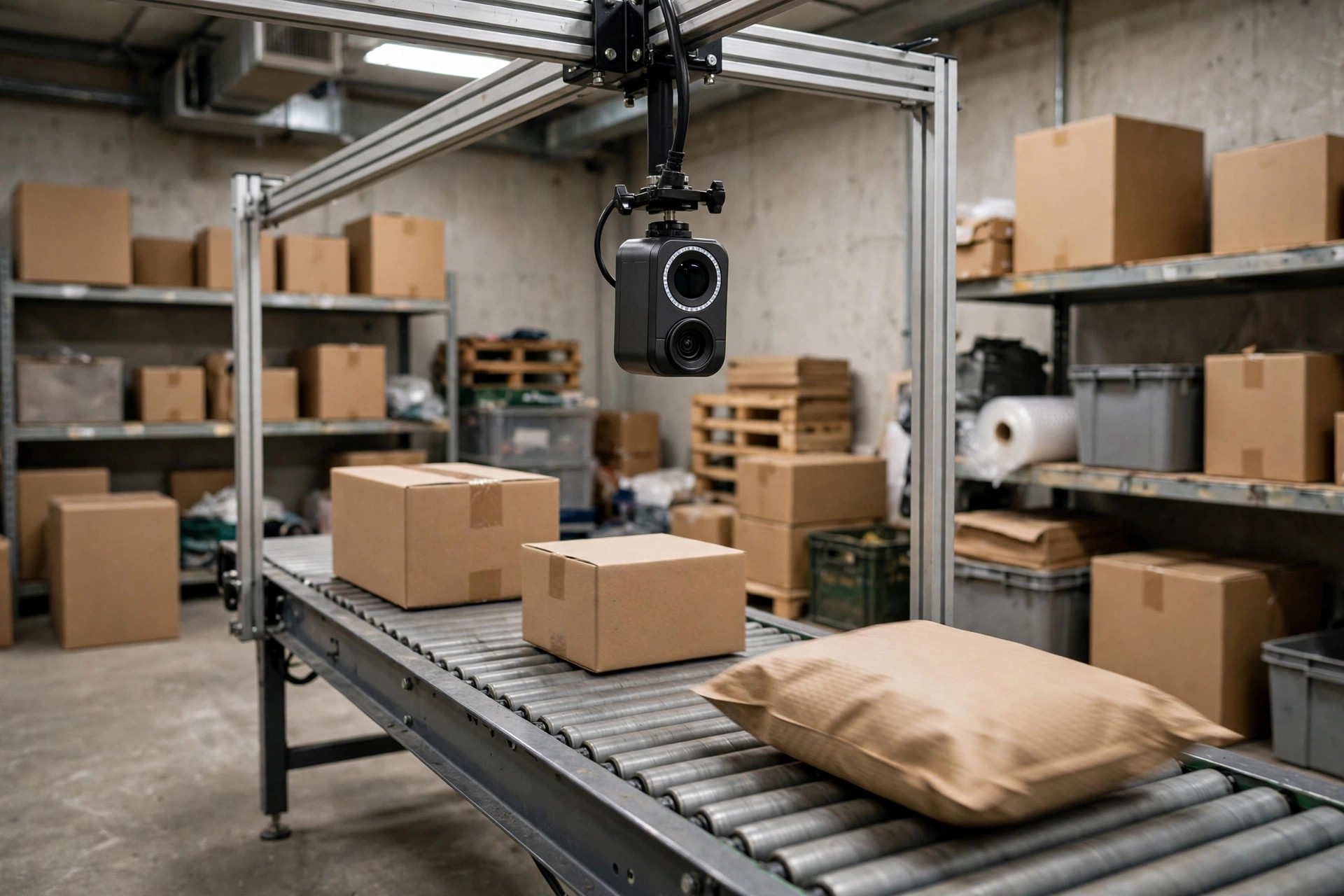
Second, run your vision pilot on phones and old cameras. We mounted an old phone above the inbound dock, pointed at the conveyor. Every inbound parcel gets photographed automatically as it passes, and the photos are archived by date and tracking number. The hardware cost was close to zero, and the software is a standard cloud album plus a basic recognition service. Disputes with carriers used to be shouting matches. Now we just send the photo: "October 3rd, 2:22 PM, the carton was already crushed before it reached you." End of argument.
Third, start collecting data in spreadsheets. Do not wait for a system upgrade to talk about data; that day never comes. Starting today, log every inbound exception, every damage case, every lost parcel in a spreadsheet: date, tracking number, issue type, photo link, resolution. Is it primitive? Sure. But three months from now you will own your first real dataset. Plenty of small warehouse owners look down on spreadsheets, as if that is not real digitalization. Let me tell you something: real operational data captured in a spreadsheet is worth more than the "clean data" sitting unread in some enterprise data platform, because it grew right next to your actual pain.
Why Our First Pilot Was Inbound Photo Documentation
Picking the first pilot matters a lot. We chose inbound photo documentation, and every reason came from painful experience.
First, it is low risk. Taking photos changes nothing about the workflow. If the camera misses a shot, outbound shipping is unaffected. A lean operation cannot afford experiments that stop the shipping line. If my first AI project had frozen outbound, the owner, yours truly, would have lost it.
Second, it is high frequency. Hundreds of inbound parcels a day means data accumulates fast. AI grows by eating data. Pick a scenario that happens once a week and your model will still be starving three years from now.
Third, it is where the disputes live. Inbound damage and shortages were our biggest battleground with carriers and upstream suppliers. Our claim success rate used to sit below 30 percent, and plenty of cases were written off simply because we could not prove anything. Three months after photo documentation went live, the success rate climbed to around 70 percent. That improvement alone paid for a full year of software subscriptions, with plenty left over.
Here is the before-and-after math:
| Before (manual) | Now (scrappy AI) | |
|---|---|---|
| Dispute handling | One part-timer spending nearly a week a month digging through chat logs for evidence | Photos auto-archived; looking up one case takes under a minute |
| Claim success rate | Below 30%, lots of "unprovable" cases written off | Around 70%, photo evidence settles it |
| Upfront investment | Zero, but we bled money every month | One old phone plus a mount; software a few hundred yuan a month |
| Risk | Winning an argument depended on luck | A missed photo never stops shipping |
After I showed my enterprise friend this table, even he was convinced. He called it "budget AI." I said, exactly, and budget AI pays for itself.
Once inbound photos were running smoothly, we added a second tiny pilot almost for free: automatic alerts for exception-prone freight. The logic could not be simpler. After a few hundred damage records accumulated in our spreadsheet, one carrier stood out with a clearly higher damage rate. So we wrote the dumbest possible rule: when that carrier's freight arrives, the system pings our receiving lead's phone, "inspect carefully." No model, no algorithm, just an if statement. But the effect was immediate: that carrier's shipments started getting opened and inspected on the spot more than nine times out of ten, and the arguments dropped off a cliff. The carrier's regional manager even came by to ask what "intelligent system" we had installed. I told him the intelligence was in keeping good spreadsheets.
See the pattern? AI at our scale is nothing grand. It is just replacing the places where people used to remember, shout, and argue with machines that record, alert, and keep evidence. Win the first small victory, let the team taste it, and everything after gets easier.
Straight Talk for Fellow Small Warehouses
One year in, here is my straight talk for other small warehouses with no data team.
First, scenarios before data. Do not let "data governance" scare you off. Ask yourself: which step hurts the most, lacks evidence the most, generates the most arguments? Start there, and the data will follow.
Second, buy, do not build. Your edge is flexibility and low cost, not algorithms. Spend the savings on the business.
Third, start with edge scenarios that cannot break shipping. Inbound photo documentation, loading video archives, automatic exception alerts are all good entry points. Let the team taste a win before you talk bigger.
Fourth, collect data from day one, even in a spreadsheet. Today's spreadsheet is tomorrow's training data. Do not look down on primitive tools; primitive is what lasts.
Fifth, do not measure yourself against big companies. Their KPI is "99 percent model accuracy." Ours is "fewer arguments this week than last." AI that saves money, saves hassle, and keeps you out of blame is good AI.
At the end of the day, AI is not a big-company privilege. It is just a handy tool. Big companies use it like artillery; we use it like a slingshot, and we still hit the target. Small warehouses have their own way to survive, and surviving well beats everything else.
By Xiao Ma, Small Warehouse Owner