Here is an uncomfortable truth: most warehouses buy AI security monitoring for the wrong reason. The owner wants theft prevention, the vendor sells theft prevention, and the acceptance form says theft prevention. But once the system has run for six months, theft prevention turns out to be the smallest part of the payback. The real money comes from catching errors, stopping near-misses, and ending disputes with evidence. I have told this to three warehouse owners. Two did not believe me on the spot. Both came back within six months to admit I was right.
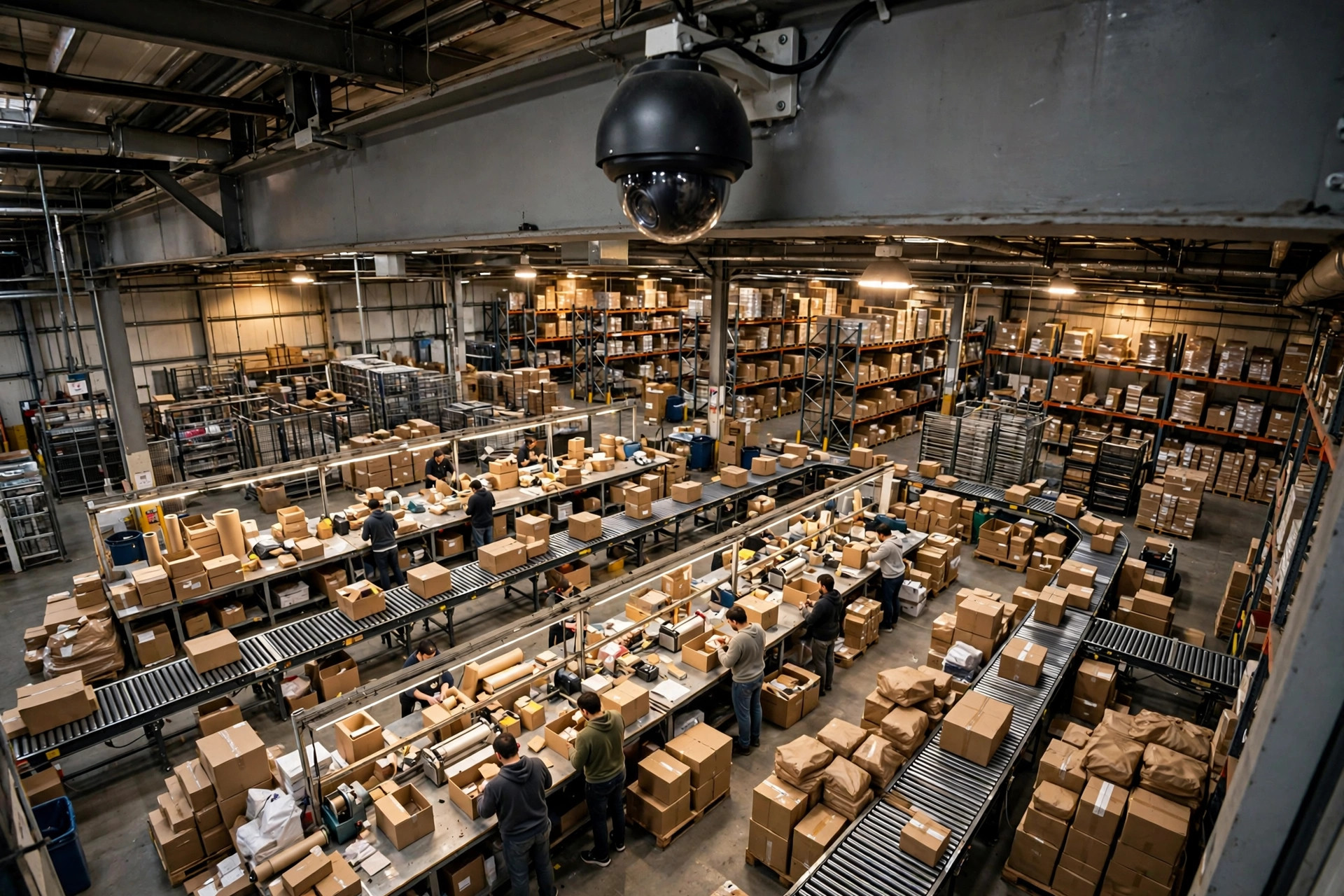
In 2023, a 3PL warehouse near Ontario, California — roughly 80,000 square feet, apparel and small home goods — lost two pallets of high-value stock on a night shift. The duty manager and two staff spent two full days scrubbing footage before they spotted an unplated van near the back door at around 11:40 p.m. The goods were gone for good; the time was gone too. After the site added AI event search to its existing cameras, the same kind of incident took about ten minutes: enter a time window, add "person appears in back-door zone," and every relevant clip comes back. Same cameras. Different brain behind them.
What AI Security Monitoring Actually Watches
Think of it as hiring a guard who never blinks — except this guard has no eyes, only an algorithm. You can think of it this way: traditional surveillance records video and waits for a human to watch it; AI security monitoring understands the video first and only then calls a human. That one sentence is the difference between two orders of magnitude of workload.
The security industry often cites a striking figure: a person watching a monitor misses about 45% of activity after 12 minutes, and about 95% after 22 minutes. Treat that as an industry-cited figure, not a measurement to the decimal point — but nobody disputes the conclusion. Two night-shift guards watching 40 feeds at 3 a.m. will get drowsy. Drowsy means missed. Missed means the system might as well not exist.
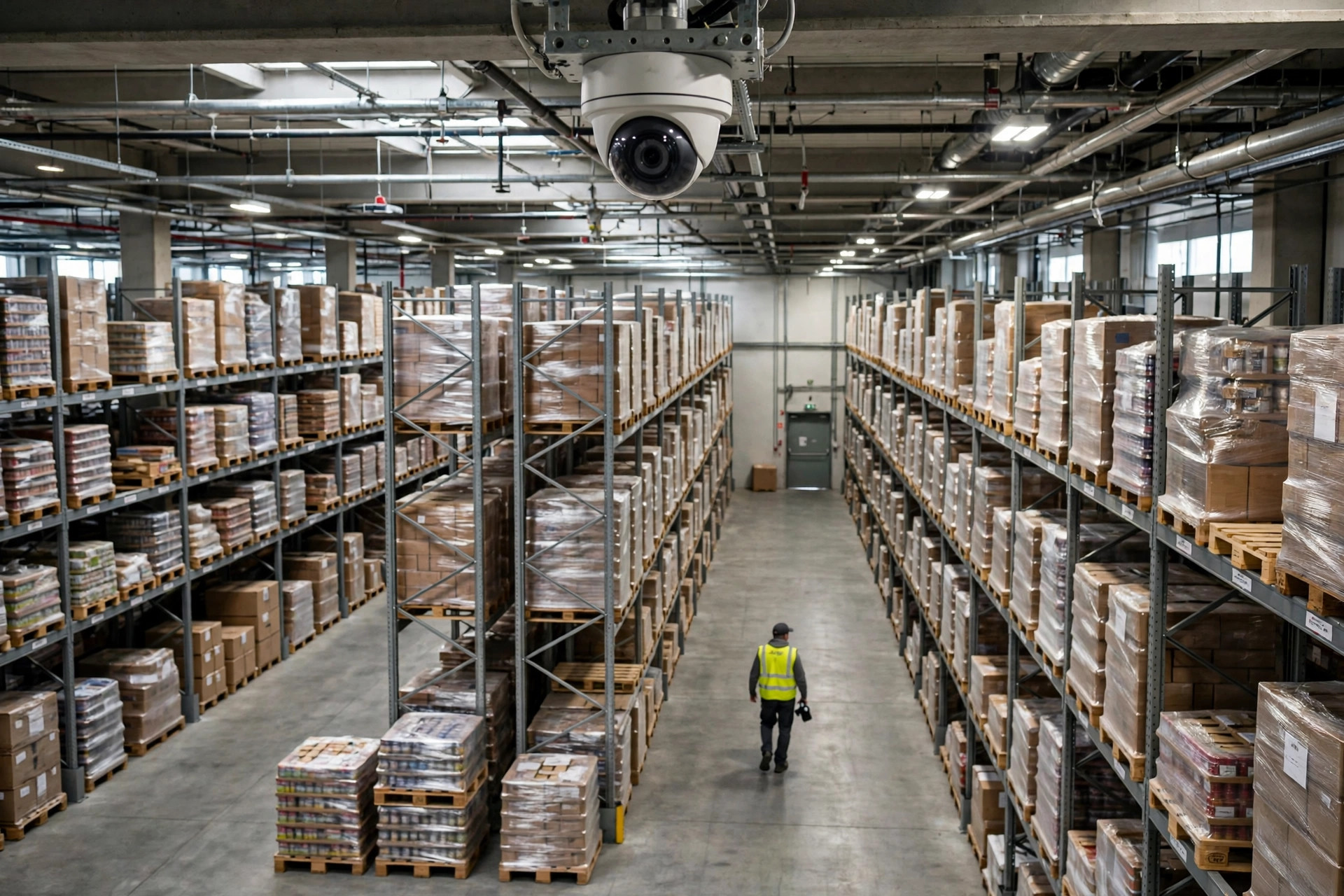
AI monitoring works in three layers. Layer one is classification: is the thing moving a person, a forklift, or a plastic bag blown by the wind? Only people and vehicles deserve an alert. Layer two is zoning: the dock, the back door, and the high-value cage are sensitive areas; a general aisle is not. The same event in a different place gets a different response level. Layer three is time: a person lingering five minutes in the high-value cage at 2 a.m. is a completely different event from a picker walking through for 30 seconds at noon. Many vendors sell you layer one and charge for all three. That is the pseudo-need I have no patience for — before you buy, ask how many of the three layers you are actually getting.
Theft Prevention: How AI Security Monitoring Changes How Fast You Can Explain a Loss
Here is the thing about theft prevention with warehouse cameras: AI does not change whether you catch the thief. It changes how fast you can explain what happened. When stock goes missing, eight times out of ten the real cost is the argument: the client says the warehouse lost it, the warehouse says the carrier lost it, the carrier says the client short-shipped. Without evidence, three parties can argue for a month. With event-searchable AI security monitoring, the argument collapses — pull up the last time that pallet appeared on camera, then who touched it, and in ten minutes responsibility is clear.
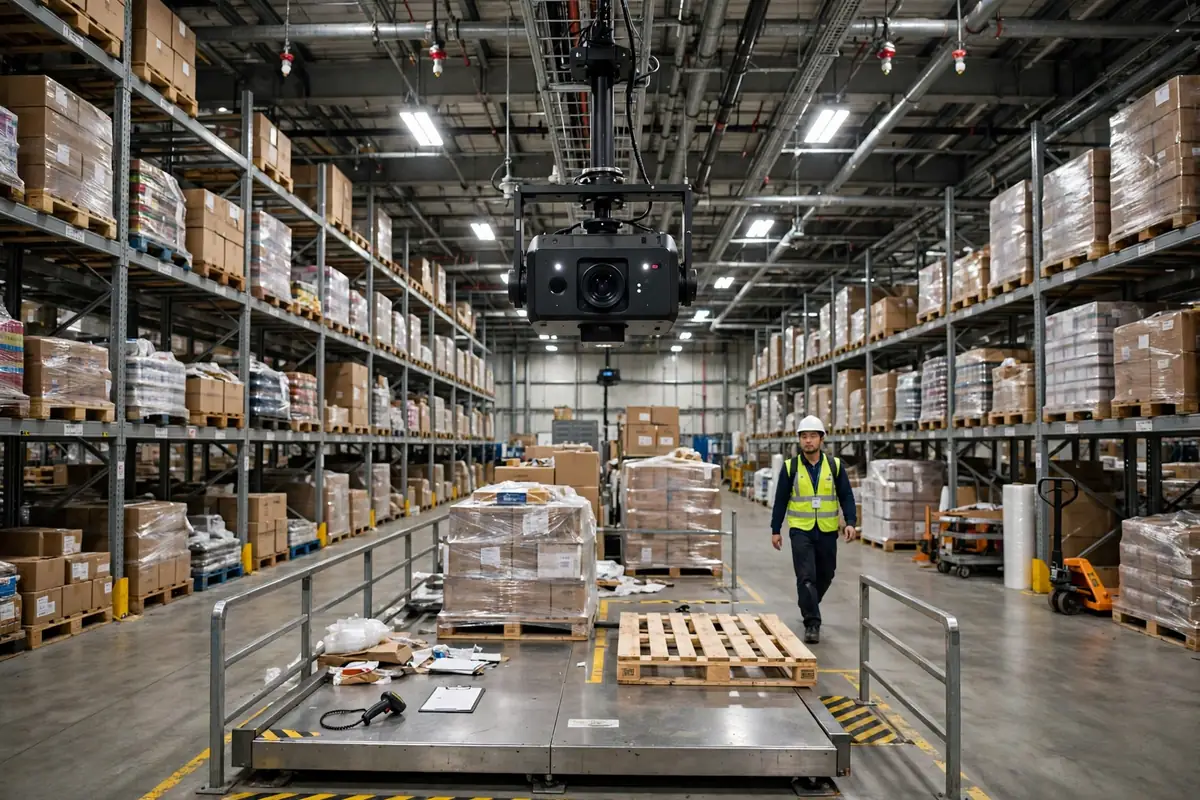
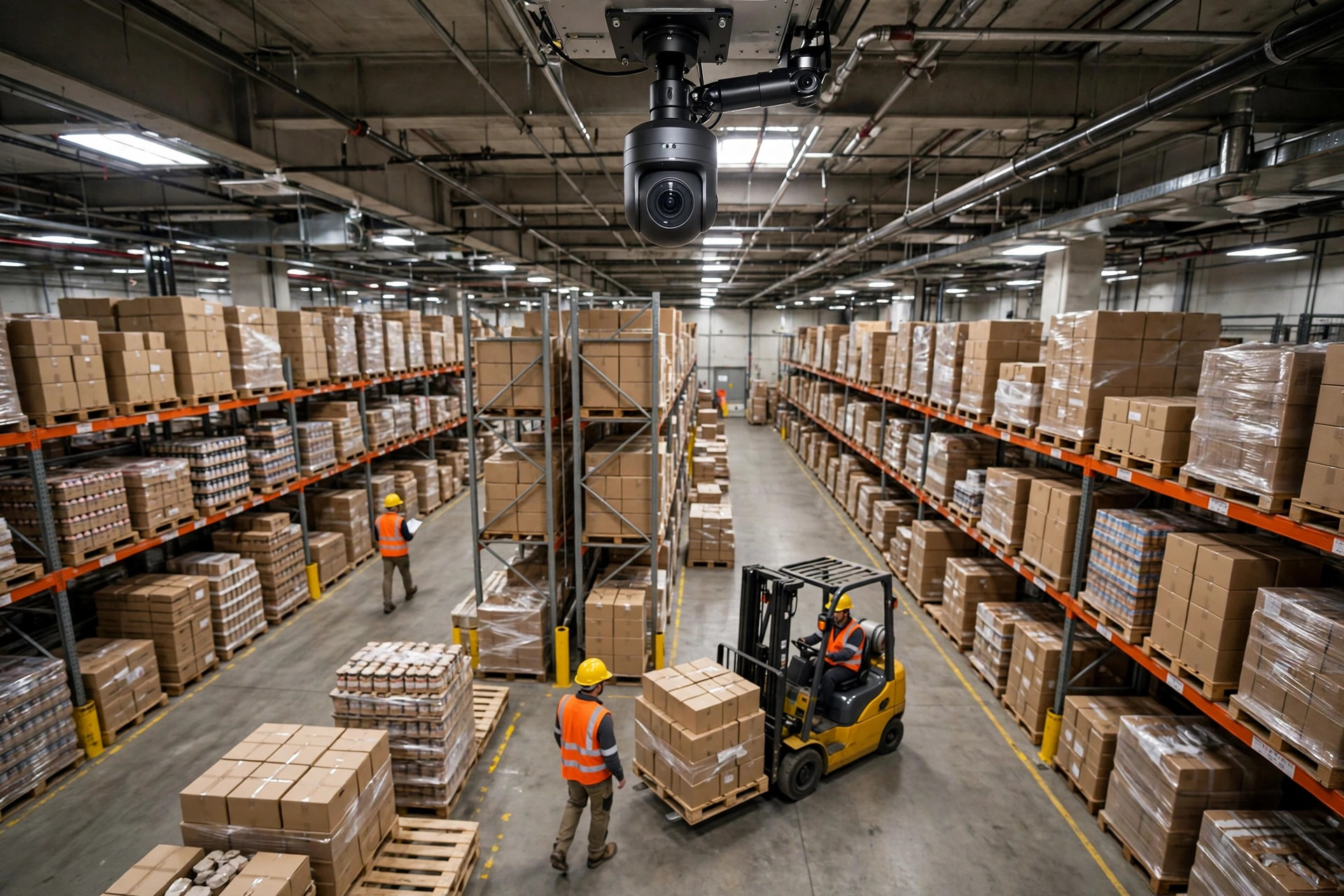
Another project makes the point even better. A consumer-electronics accessories warehouse added person-vehicle proximity alerts in 2024: when AI cameras detect a pedestrian entering a forklift zone, lights flash and a buzzer sounds on site. Near-miss incidents fell from 7 per month to 1 per month over three months. That is the project's own operating record, not an industry average — your warehouse will differ. But the direction is right: the most valuable use of AI security monitoring in a warehouse is often not stopping outside thieves, but stopping the "almost had an accident" moments inside.
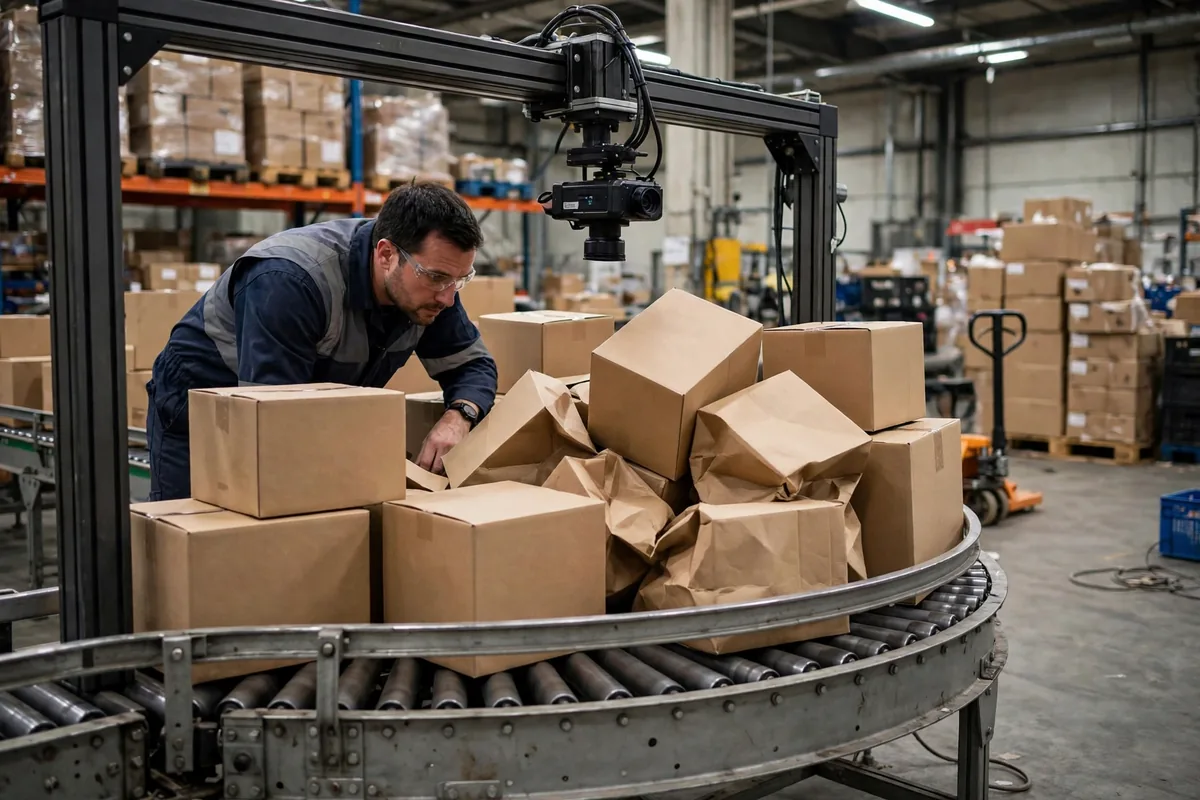
A third use most people overlook is catching mispicks. A camera above the packing bench photographs the label and the item, checks them against the order lines, and flags a mismatch on the spot. One warehouse shipping 3,000 orders a day cut its mispick rate from 0.3% to under 0.1%; at an estimated $15 per wrong shipment, a month of savings covered the monthly fee. Worked-example numbers — plug in your own volumes — but the payback math for error prevention is far easier than for theft prevention.
Do Not Trust the Vendor's 90%: Measure False Alarms Yourself
Now the cold water. The most common number on vendor slides is "90% fewer false alarms." Does it have a basis? Yes — the vendor's basis. In one vendor's published field test, a neural network filtered out 86% of false alarms: out of about 110 alerts, manual verification left only 13 real ones, while conventional infrared sensors fired 88 false alarms in the same period. Other vendors claim 70–90% reductions. All of these are vendor-measured figures, in scenes, lighting, and camera angles they chose. Bring the same system to your warehouse and the number will almost certainly come down.
So my advice is simple: do not trust the slide deck; trust two weeks of measurement. Before go-live, run a two-week baseline — AI off, just count how many alerts traditional motion detection fires per day. Then run two weeks with AI on, and count how many alerts it fires and how many are real. Write the acceptance criteria into the contract: false-alarm rate below what level, what penalty for missed detections, whether you can return it if it does not deliver. Any number that is not in the contract is advertising.
False alarms have a knock-on effect most people miss. When they pile up, duty staff stop believing the system — the alarm sounds and nobody looks, and you paid for a decoration. The industry calls this the "cry wolf" effect. Half the value of AI security monitoring is the algorithm; the other half is getting people to trust the alarm again. If the false-alarm rate does not come down, everything else is wasted.
| Traditional motion detection | AI security monitoring | |
|---|---|---|
| Alerts per day (40 cameras, worked example) | ~1,200 | ~120 after classification, ~12 after zone and schedule filters |
| Time to find one footage segment | 2 days of manual scrubbing | About 10 minutes with event search |
| Night-shift screen watching | 2 people watching full-time | 1 person reviewing alerts |
| Miss risk | People get tired and miss things | Algorithms do not get tired, but a wrong threshold misses things |
| Biggest trap | So many false alarms nobody looks | Vendor numbers are inflated, acceptance has no standard |
The alert volumes in this table are illustrative arithmetic, meant to show the order-of-magnitude change from layered filtering — not measured data from any specific warehouse. Your own numbers come from running your cameras and your scenes for two weeks.
Whether the Money Is Worth It Comes Down to One Number
When you calculate ROI, do not count "how many thieves we caught." Count "how many hours we saved." In one line: monthly hours saved on footage review and alert handling, multiplied by your local hourly cost, plus the management time saved on disputes, minus the monthly system fee. Above zero, it is worth it. Below zero, do not buy it.
Fill in the frame yourself. Cost side: reuse your cameras; the new spend is the analytics box or cloud subscription, installation, and two weeks of tuning. Return side, three items: labor hours saved reviewing footage and alerts; direct losses avoided by error prevention and near-miss reduction; and money saved when evidence settles a lost-stock dispute in your favor — the hardest to quantify, and the one every warehouse that has survived a month-long dispute knows the value of.
One last counterintuitive judgment: more cameras does not mean more security. Forty poorly tuned AI cameras are worth less than twelve well-tuned ones. More camera positions mean more false alarms, and the duty staff will stop trusting the system just the same. Get the ten or so feeds covering the high-value cage, the back door, and the dock tuned first, push the false-alarm rate down until the staff actually look at alerts, and only then expand coverage. Reverse the order and the money is wasted.
AI security monitoring treats theft prevention as a side job. Its main job is to make every "nobody can explain this" moment explainable. Whether the money is worth it comes down to one number: three months after go-live, do your duty staff still believe the alarms? If yes, it was worth it. If no, send it back.
By Da Liu, Automation Engineer