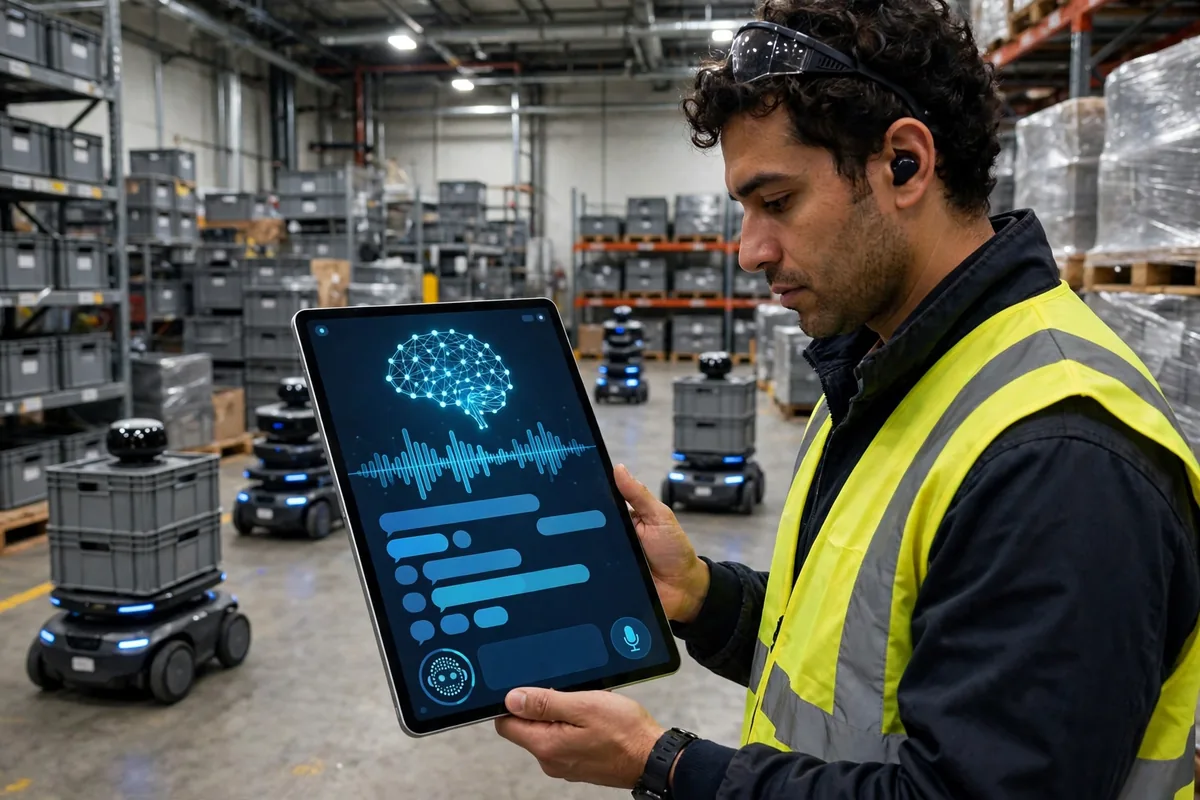
Here is my verdict up front: warehouse AI customer service after sales is worth doing only if the ROI works first and the technology second. An automated after-sales reply system is not a robot you buy and forget. It is a math problem: how many inquiries arrive a day, how many can be answered right automatically, and what does one wrong answer cost. If you cannot do that math, whatever you save on wages will come back as refunds and bad reviews. I have seen too many warehouses fall in love with the words "AI customer service," switch it on, and quietly switch it off three months later, calling it a "strategy adjustment." It was not the AI that failed. The math was wrong.
This cuts both ways. Automated replies genuinely handle a huge pile of repetitive questions — "where is my order," "how do I return this," "can I change the address." A human answering the same question once or a hundred times adds nothing. But the other side matters just as much: the most valuable part of after-sales inquiries is exactly where machines mess up most. Wrong item shipped, missing piece, damaged goods — behind each one is a customer's real money, and a robot answering "your case has been registered" is not an answer. The customer does not want registration. They want a fix.
Where Warehouse AI Customer Service After Sales Must Hand Off to a Human
Let me tell you about a pit I watched happen. Last year a partner warehouse switched on auto-reply to push its after-sales volume down. In the second week, a customer wrote in saying the wrong item had arrived. The bot classified it as a tracking inquiry and sent back a shipment-tracking explanation. The customer wrote twice more. The bot sent the same answer twice more. On the third day the customer refunded and left a bad review, and only then did someone in the warehouse discover the ticket had been sitting there for three days. The order value was not large. But that customer ordered dozens of times a month. Gone, just like that.
Since then, I draw the handoff line hard, and three kinds of issues must go to a human immediately — no bot heroics. First, anything involving money: wrong shipment, missing item, damage, refunds. Second, anything with emotion: a customer who has already asked twice. Third, anything the system cannot look up: if the bot does not know the answer, it must not invent one. A made-up answer hurts more than no answer at all. Write these handoff rules into the system. Do not leave them to a support agent's judgment in the moment — judgment in the moment is unreliable.
One detail matters here: the path to a human must be visible from the first reply. The deeper you hide it, the angrier the customer gets. Our rule now is that the bot's first reply ends with "reply HUMAN if you need a person." It looks like an extra step. In practice it kills a lot of complaints. The handoff script itself should be written in advance too — no bot that just says "transferring you" and goes silent. A good handoff tells the customer three things: who they are being transferred to, roughly how long the wait is, and what other channel exists if they cannot wait. Put those three lines in a template and let agents use it. Error rates drop immediately.
Automating After-Sales Replies: Do the ROI Math Before You Talk Technology
Let me run the numbers with our warehouse's volume as an example — swap in your own numbers. Say 200 after-sales inquiries a day, and a human takes about 5 minutes per ticket, so one agent handles roughly seventy to eighty tickets in a full day. If auto-reply can reliably handle half of them, that saves more than one person's day. But there is a condition hiding in that sentence: "handle" means "answer correctly," not "answer." One wrong answer — a refund, a reshipment, a bad review — costs enough to wipe out the savings from ten correct ones.
| Measure | If you only watch automation rate | If you watch correct-answer rate |
|---|---|---|
| What the bot answered | A flattering number | Only the ones it got right |
| Cost of wrong answers | Nobody tracks it | Refunds plus reshipments plus bad reviews, all counted |
| Handoff speed | Customers find it themselves | The three must-escalate types route automatically, and wait time gets measured |
| Real ROI | Looks like saved headcount | Saved headcount minus the cost of wrong answers is the real number |
Public cases are worth reading but never worth copying as a promise. One public case says a DTC brand took its AI customer service automation rate from about 41% to over 90%. That is a public case, not a universal promise. Their product mix, inquiry mix, and training data are nothing like yours. Copying their number is digging your own hole. The only number you need is your own: two straight weeks of correct-answer rate and the cost of wrong answers.
The Rollout Checklist: Two Weeks Small, Then Decide on Scale
If you are going to do this, do it in this order, and do not go all-in on day one. In week one, let the bot answer only the three safest question types: tracking lookups, address changes inside the change window, and the returns policy. The answers are fixed and hard to get wrong. Get those stable first. During the trial, sample-check every day: the support lead pulls twenty bot-handled tickets and reads them one by one. Wrong answers get flagged the same day and fixed the next morning. Do not save them up for a weekend review — the cost of saving them up is the same wrong answer going out to dozens more customers. In week two, look at the data: correct-answer rate, handoff ratio, and the rate of customers asking the same question twice. If all three pass, add another category. If any one fails, stay put and fix it. Do not scale.
Here is the counterintuitive judgment: a higher automation rate is not always better. A customer service operation at 90% automation that gets answers wrong all the time costs more than one at 60% with clean handoffs. Customers do not care how advanced your AI is. They care whether their problem got solved. The goal of auto-reply is not "no humans." It is "humans only handle the problems worth a human." That does not sound exciting. It is the only version of this math that works.
One more cost people forget: maintaining the knowledge base. Auto-reply answers come from the knowledge base. A policy changes, an address changes, a return window shifts, and if the knowledge base does not change with it, the bot starts answering new questions with old answers. Our rule is fixed: once a week, someone goes through the bot's wrong answers, and the three most common wrong answers must be corrected that same week. A knowledge base nobody maintains will drag your correct-answer rate down within three months. Buying the system is a one-time spend. Keeping the knowledge base alive is monthly headcount. If that cost is not in your ROI, your ROI is fake.
So here is the question I will leave you with: of all the after-sales inquiries your warehouse gets in a day, how many could a bot answer correctly with its eyes closed? Count that number first. Then decide whether to bring in AI customer service at all.
By Lao Mi, Supply Chain Veteran (20 yrs)