Generative ai warehouse adoption has been loud for two years now. I have read vendor demos and industry reports that make it sound like the technology can run a building on its own, and then I have walked real warehouses where it still mostly answers questions. This piece is not about the vision. It is about measuring the distance between answering a question and making a decision, stage by stage, and asking what each stage actually costs and how long it takes.
A warehouse is a hard place for a confident-sounding system. Picking the wrong item can be returned. Shipping the wrong pallet can turn into a claim for a full truckload. Language models are good at handling vague phrasing and pulling scattered information together. Warehouses need definite actions with a traceable record. Search interest in generative ai warehouse tools keeps rising, but search interest is not the same as shop-floor readiness. The gap between those two demands is the subject here.
Generative AI in the Warehouse: Three Stages, Not One Leap
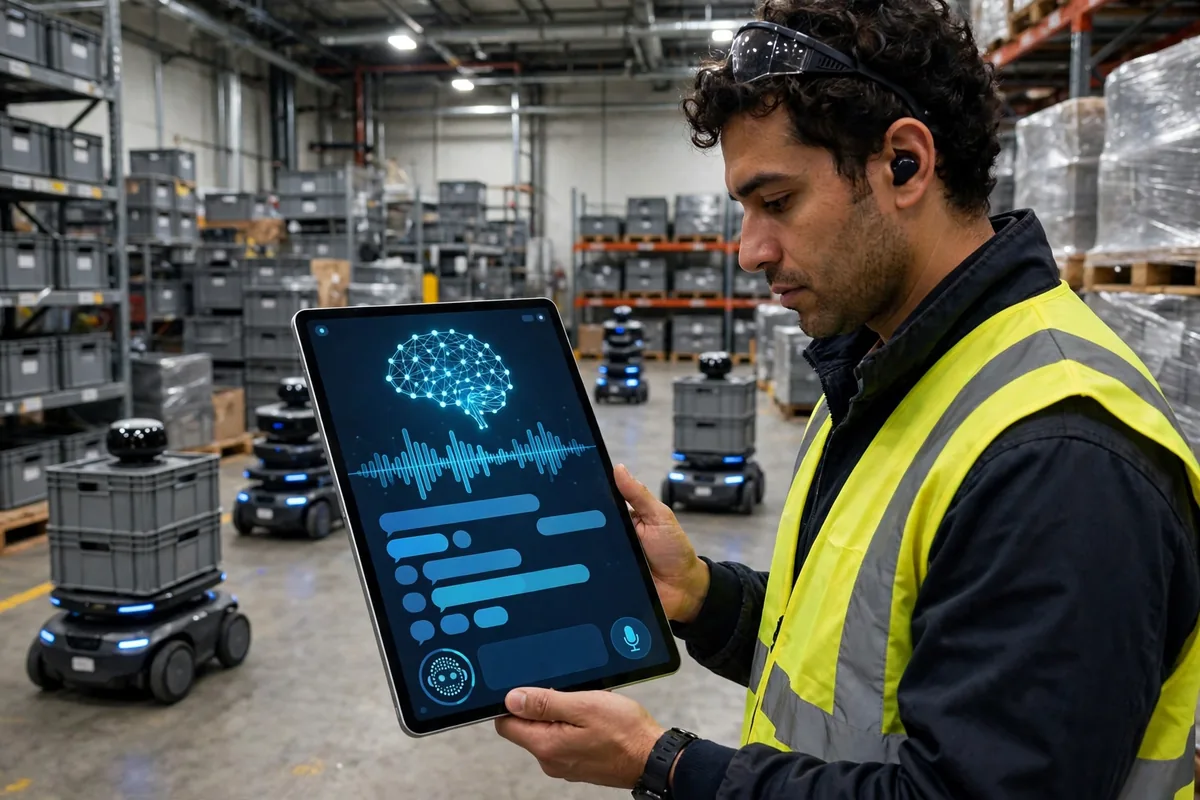
The first stage is the question-answering assistant. A worker asks a phone or a tablet where tomorrow morning's shipment sits, and the system looks up the location in the warehouse management system and answers in plain language. The barrier here is low because nothing is executed. The system only touches information. In the fall of 2024, I watched a pilot of this kind at a third-party warehouse near Ontario, California: a night-shift supervisor asked by voice where a batch due out in the morning was stored, and the system read the location back from the WMS. The pilot ran for six weeks, and the supervisor's verdict was practical. It saved time, he said, but only when the location data was already accurate. When the data was wrong, a fluent answer was simply a wrong answer delivered faster.
The second stage is the copilot. It stops merely answering and starts helping people judge: which orders to pick in this wave, which zone is about to jam given today's inbound plan, or a draft handover note for the next shift. This stage touches process, and with process comes the question of responsibility. If a suggestion is wrong, who owns it? Does the system say how sure it is? Demos never show those questions. Real operations raise them every day.
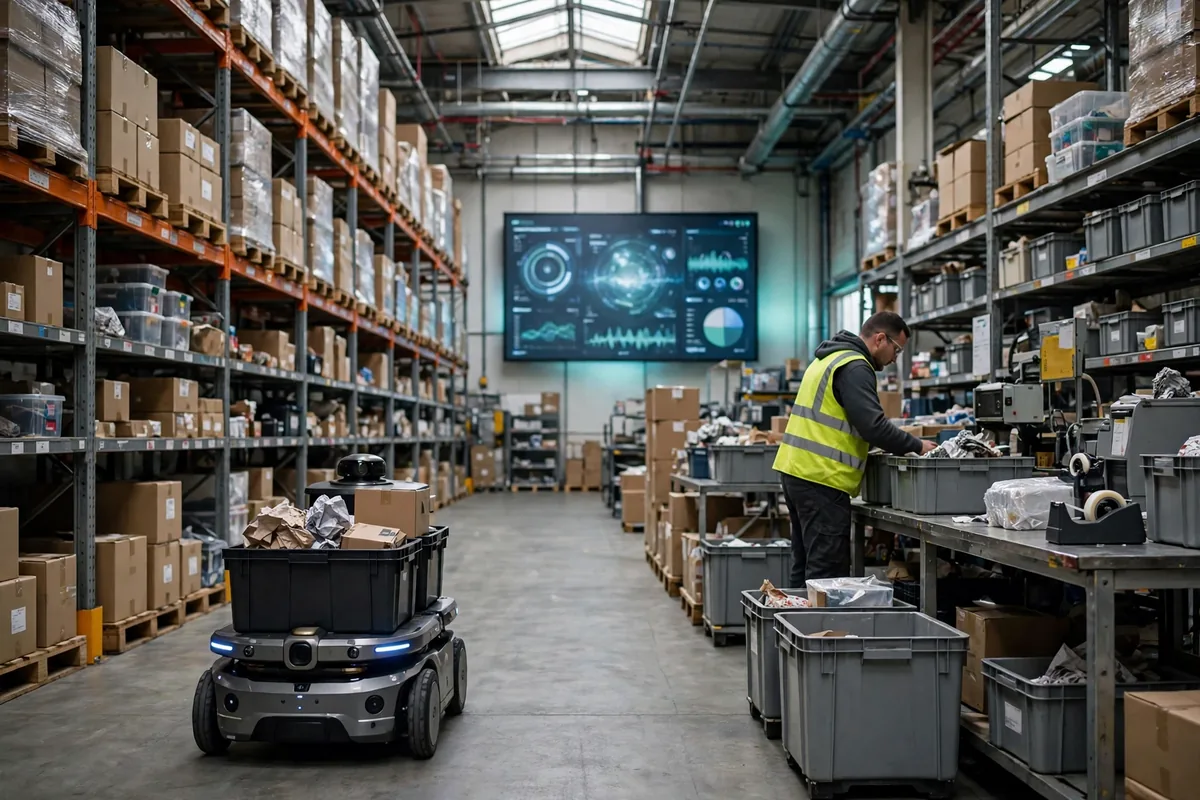
The third stage is autonomous execution. The system decides replenishment, transfers, and wave changes on its own, with people reviewing exceptions. The nearest realistic form is not full automation but narrow autonomy: authority inside one product family, one zone, one shift, with anything outside that scope handed back to a person. Treating this stage as an overnight takeover misunderstands how warehouses work.
There is no skipping. A warehouse where the answering assistant cannot run reliably will only amplify its errors with a copilot. A copilot whose suggestions nobody reviews and nobody corrects cannot grow into autonomous execution. Each stage has to produce reviewable results at small scale before it earns a wider scope.
Generative AI and the Money Question
A researcher looks at technology through its ledger, not its headlines. The ledger for generative AI has three entries, and each one needs its premises stated plainly, or the numbers mean nothing.
The table below is a hypothetical example. Every figure is invented to show the method, not taken from any real warehouse's books.
| Cost or benefit | Hypothetical example | How to verify it |
|---|---|---|
| Question-answering pilot | Around $60,000, including integration and three months of trial | Check the vendor quote line by line |
| Supervisor time saved on lookups | Assume 40 minutes a day, at $28 an hour | Measure two weeks of time records |
| Copilot stage, added spend | Assume a further $120,000, including process changes | Split into software, integration, and training |
| Extra wave capacity | Assume 90 more orders a day | Compare outbound volume for the same hours before and after |
| Cost of fixing wrong answers | Assume $2,000 a month for correction work | Count real correction tickets |
Here is a contrarian judgment worth stating before the arithmetic: the most overrated benefit of generative AI in a warehouse is headcount reduction, and the most underrated is fewer rework jobs. An answering assistant does not remove a role. It removes the forty interruptions a day that break a supervisor's concentration. A good copilot suggestion is valuable not because it is fast but because it stops a new hire from making a mistake an experienced worker would spot at a glance. A business case built on cutting heads is wrong on the day it is signed.
Timelines deserve the same restraint. The answering-assistant stage can reach a usable pilot in most mid-sized warehouses within a year. The copilot stage needs clean process data first, and that preparation often takes longer than the model work itself. Autonomous execution will appear first only in a small number of warehouses with strong data foundations and stable product ranges, and it will start narrow. Any roadmap that squeezes all three stages into a single year should be asked one question: where in the plan is the data preparation work?
What Generative AI Still Cannot Do on the Floor
The first barrier is data. Warehouse data lives in the WMS, the ERP, spreadsheets, and the heads of experienced staff, and the same item can carry three different names across three systems. Generative AI tolerates dirty data far worse than people do. A person who sees a wrong location corrects it from experience. A model states the wrong answer with confidence. There is no shortcut past data governance, and warehouses that skip it pay for it during the pilot.
The second barrier is responsibility. When a copilot suggests and a system executes, the question of who owns a mistake has to be written into the process before go-live, not debated after an incident. The steadier approach is graded authority: routine low-risk suggestions can run automatically, high-risk actions need human confirmation, and every automated decision leaves a record that can be traced, reviewed, and stopped.
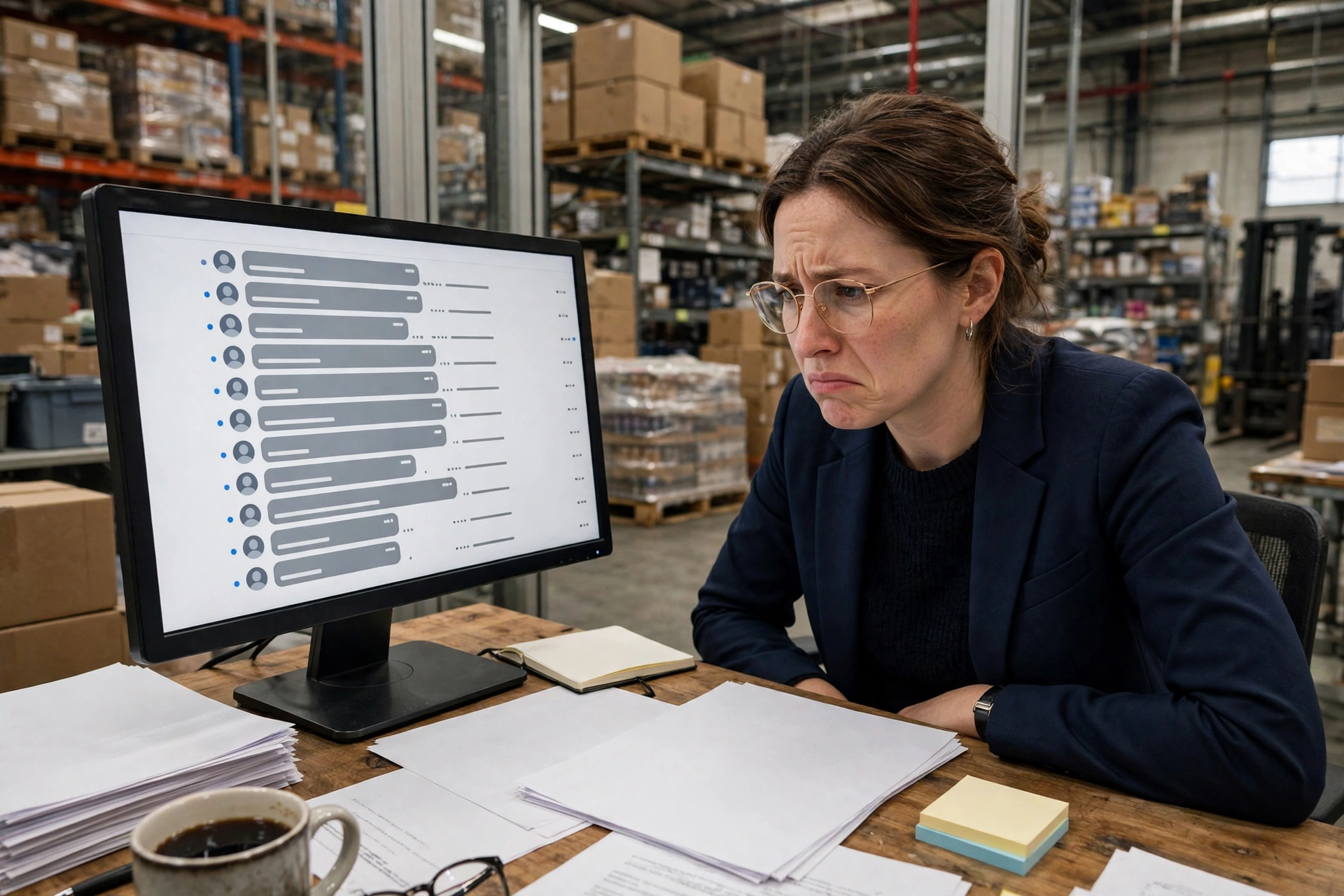
The third barrier is acceptance on the floor. Frontline workers judge a new tool on one test: does it help or does it get in the way? If an answering assistant gives a useless reply twice out of ten, workers stop asking by the third try. The numbers that matter most during a pilot are not demo scores but real usage counts and workaround counts. Those two figures are more honest than any satisfaction survey.
Put together, the sequence is clear. Make the answering assistant solid enough that workers genuinely use it. Place the copilot in one or two concrete scenarios and run it until its suggestions can be reviewed. Talk about autonomous execution only when data, responsibility, and trust are all in place. That order is slow, and it is the only order that works inside a warehouse.
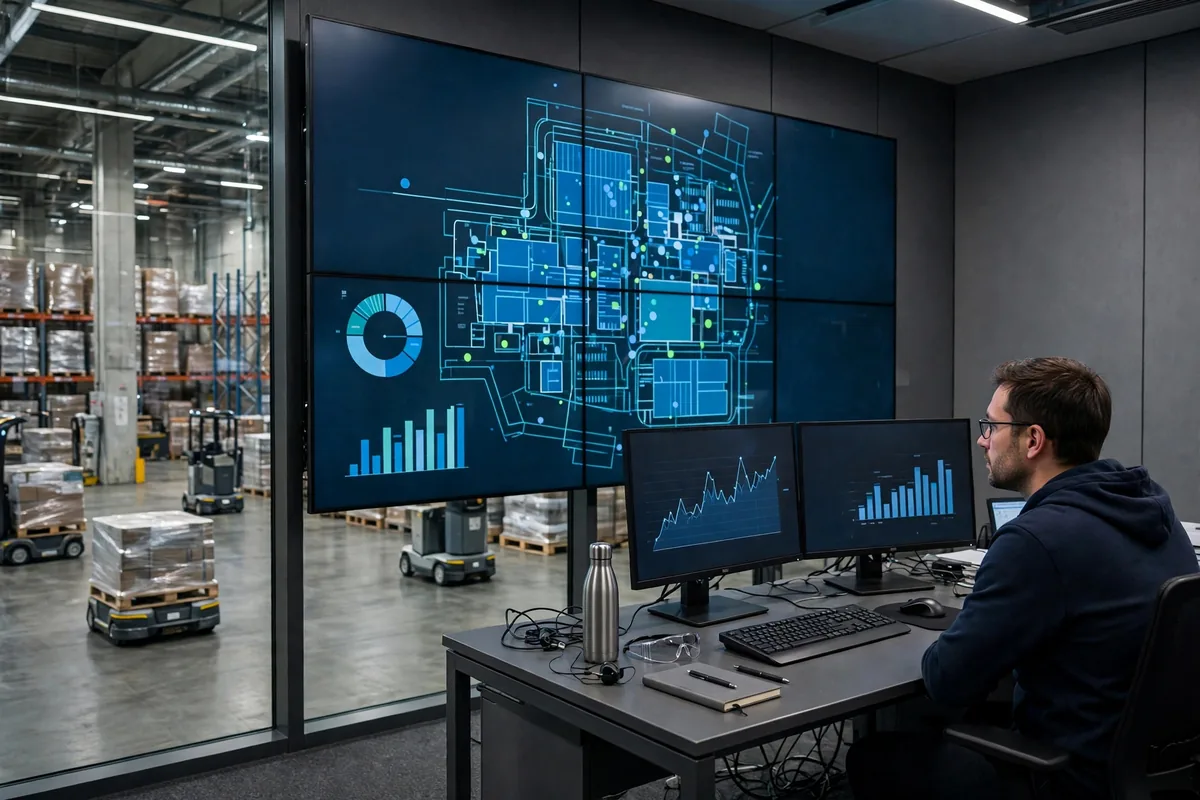
Looking three years out, the most likely shape of generative ai warehouse technology is not a talking robot but an invisible layer of help: inside the WMS search box, inside wave planning suggestions, inside handover notes. To judge whether a warehouse is truly using it, skip the launch event and check two things: do workers actually ask it questions every day, and do supervisors actually consult its suggestions when they plan shifts and waves? If both answers are yes, the third stage is not far away. If either answer is no, the honest question is what is still missing, and the answer is usually data, responsibility, or trust.
By Dr. Chen, Supply Chain Researcher