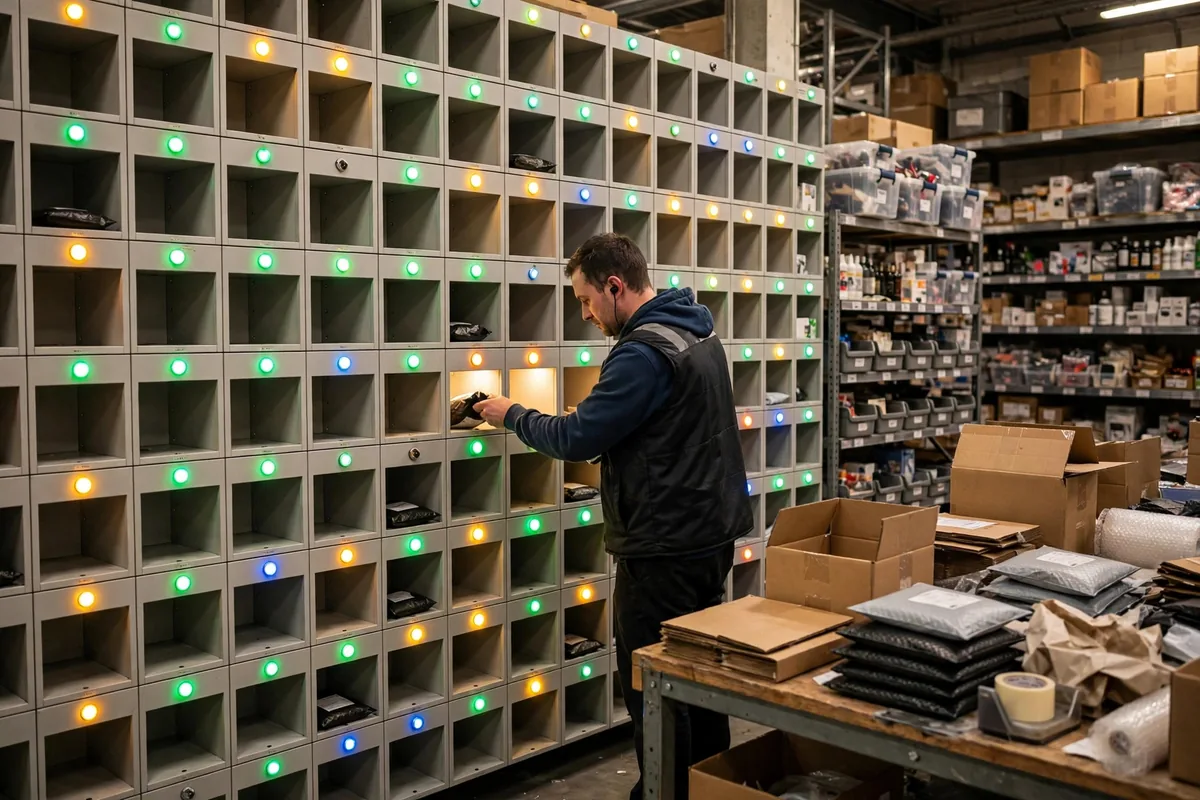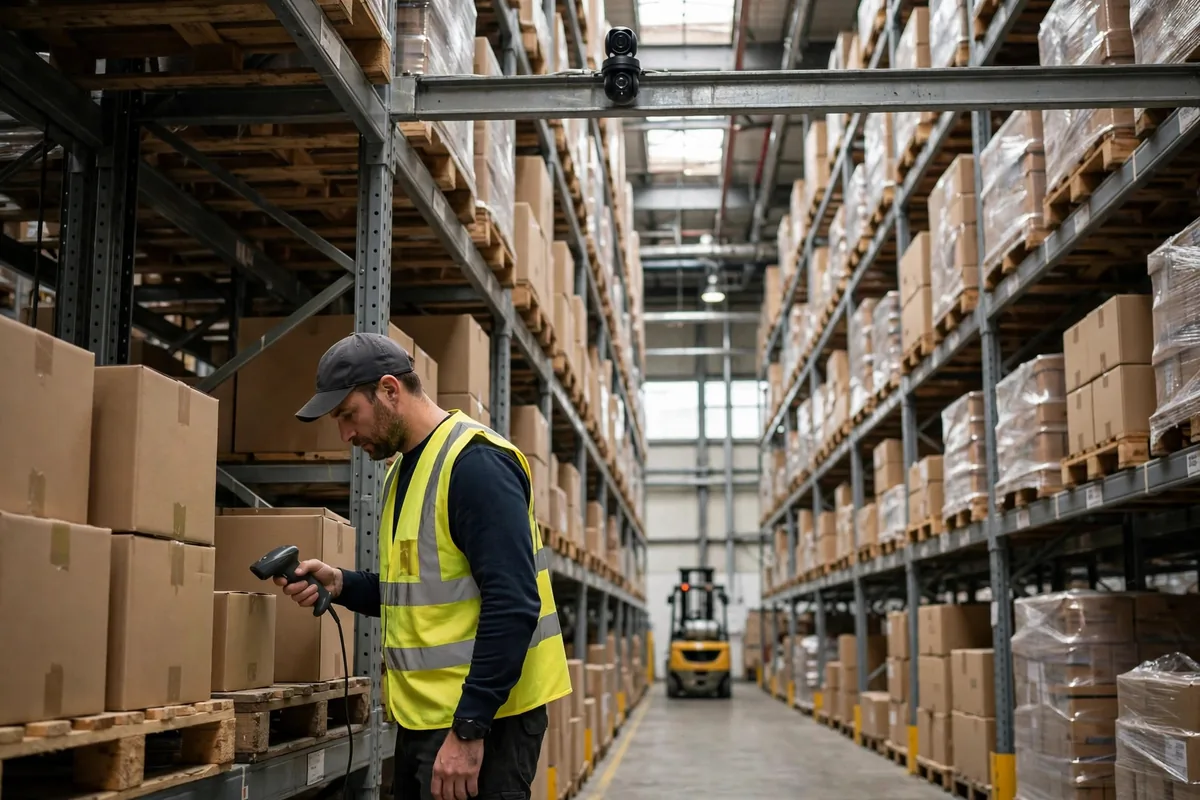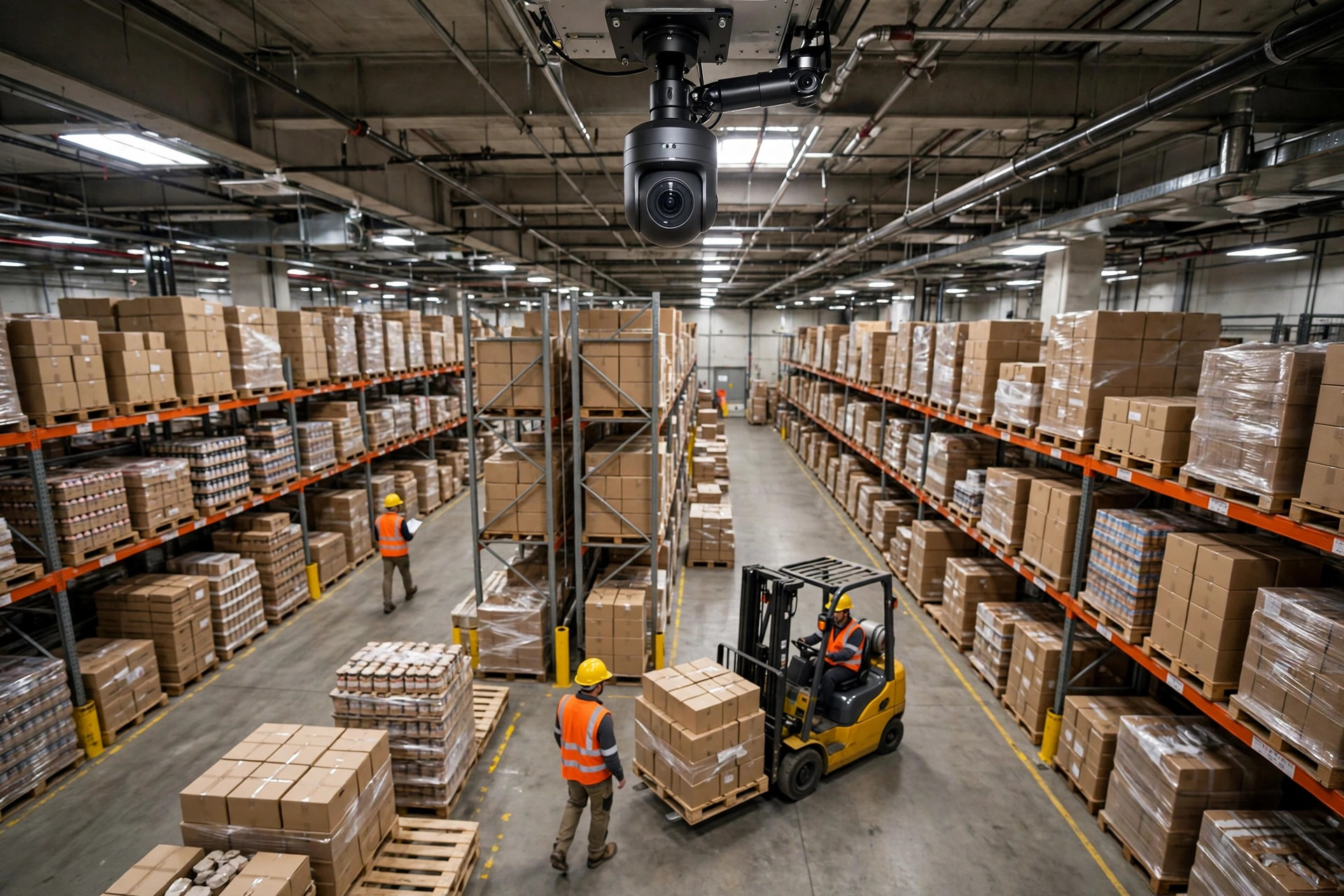
We are a small warehouse. We can't afford to burn money like that. That was my first thought when a salesperson pitched me warehouse AI customer service after-sales automation. Our warehouse is 3,000 square meters. The support team is two people: one on days, one floating. When a promotion hits, the phone and the chat blow up at the same time, two people answer messages until midnight, and then they still have to pick orders the next morning. The salesperson said the bot would handle 80 percent of questions without a human touching them. My first thought was: if it were that good, the big companies would have fired every support agent already.
Three months in, here is the honest version. It saves money. Just not the amount in the sales deck. And there are traps you only find by stepping in them.
In Week One, It Got Me in Trouble
A customer wrote in during the first week: "The outer box arrived damaged and one item is missing." The bot replied instantly with a claims process: prepare photos, fill in a form, wait three to five business days for review. But the customer didn't want a claims process. He wanted a replacement shipped today because his own shipment was urgent. He blew up in the group chat, saying the warehouse couldn't even understand plain language. I stepped in myself, shipped a replacement the same day, waived the freight, and talked him down. That one order cost me a few hundred yuan in freight and replacement stock.
That is the first limit of AI support: it can't tell "I want the process" from "I want the result." Tracking numbers, freight quotes, return addresses, questions with a fixed answer, the bot answers those faster than any human. But when a customer is genuinely in a hurry, the question is rarely a standard one. It is "I need an answer right now." The bot can't hear tone. It definitely can't hear urgency.
Then came a promotion night around 11 p.m. More than 200 messages flooded in. The bot held the line on about 90 percent of them, all "has my order shipped," "what's the tracking number," "can I change the address." Without it that night, my two support staff would have worked until dawn and picking would have collapsed the next day. That is where the bot earns its keep: at night and during peak season, the hours nobody wants to work. It doesn't sleep, doesn't complain, doesn't call in sick.
Warehouse AI Customer Service After-Sales Automation: The Savings Math, Done Honestly
The salesperson's math went like this: a human reply costs about 8 dollars, a bot reply costs about 10 cents, so you save 98 percent. I laughed. Gartner's widely cited figures do say a live service interaction costs about $8.01 while a self-service resolution costs roughly $0.10. But that is the cost per interaction, not the total bill. The bot doesn't take a salary, but it charges a subscription, it needs someone to build the knowledge base, someone to review its wrong answers every week, and someone to clean up the mess when it gets things wrong.
Here is a hypothetical example based on our real volume, just to show the structure, not exact numbers:
| Item | Per month (hypothetical example) | Notes |
|---|---|---|
| Total inquiries | about 1,200 | Doubles in promotion months |
| Handled by the bot | about 720 (60%) | Tracking, freight, return-policy questions |
| Escalated to humans | about 480 | Complex, urgent, or compensation cases |
| Bot subscription plus upkeep | about 2,000–3,000 yuan | Subscription plus weekly knowledge-base work |
| Human time saved | about half a person | Biggest value is night and peak-season cover |
| Wrong-answer payouts | about 300–800 yuan | One or two cleanups a month |
The real monthly saving comes to two or three thousand yuan, a long way from "save a whole support agent." But the math doesn't stop there. In the promotion month, inquiry volume doubled and I didn't hire anyone extra, and nobody worked through the night. The salesperson never put that in the deck, but to me it was the most valuable line.
The industry numbers are worth reading side by side, with a pinch of salt. Salesforce's 2026 State of Service report says AI resolved 30 percent of service cases in 2025, projected to reach 50 percent by 2027. Gartner predicts agentic AI will autonomously resolve 80 percent of common customer service issues by 2029 and cut costs by 30 percent. But the same Gartner also predicts that over 40 percent of agentic AI projects will be canceled by the end of 2027, because costs rise, value stays unclear, or risk controls fall short. Klarna once said its AI assistant did the work of 700 agents and cut cost per transaction by 40 percent, then publicly said it would hire more humans because quality had slipped. Put those numbers together and the message is clear: it can save money, but how much, and at what price, is different for every warehouse.
What the Bot Can Have: Sorting After-Sales Questions Into Three Tiers
After three months, I sorted our questions into three tiers and stuck the list next to the support computer.
Tier one, hand it to the bot with confidence: tracking numbers, freight quotes, business hours, return policy, how to get an invoice. Fixed answers, low error rate, and the customer isn't in a rush.
Tier two, bot answers first, human standing by: damage, missing items, wrong shipments, urgent orders. The bot can reply "let me check that for you," collect the order number and the details, then hand over. Never let it give a verdict, and never let it promise a compensation amount.
Tier three, never let it near: claims, complaints, lost parcels, key accounts. The customer is already angry. One more robotic reply is pouring fuel on the fire. Transfer to a human immediately, and tell the customer "a specialist is on it." Don't make people shout at a robot.
Here is the counterintuitive part: the hardest thing about AI customer service isn't the technology, it's the knowledge base. You think buying the system is the job. It isn't. Every week, someone has to read what it answered, what it got wrong, and which questions it couldn't answer. Questions it can't answer don't fix themselves. If nobody adds them to the knowledge base, it will still be failing them next month. We now spend half an hour every Friday afternoon on this, more effort than the launch day itself took.
The handoff cost matters too. When the bot fails and passes the customer to a human, the customer has queued twice, which feels worse than going straight to a person. So the transfer button has to be obvious, and the whole conversation history has to travel with the transfer. Never make the customer repeat the problem. "Could you please describe your issue again" is the sentence customers hate most.
So, Is It Worth It for a Small Warehouse?
My answer is simple. If your warehouse gets fewer than 500 inquiries a month, don't bother. Two people on rotation can handle that, and the subscription plus the upkeep isn't worth it. If you're over 1,000 a month, and nights and promotions regularly bury your team, it can be worth it, but don't expect it to replace a person. Its value is as a safety net, not a substitute.
Before you sign anything, ask yourself three questions. First, do your common questions have standard answers? A warehouse without standard answers just gets a parrot. Second, is someone willing to maintain the knowledge base every week? Nobody maintaining it means it starts making things up within three months. Third, can you afford one wrong answer? If a single order is worth tens of thousands of yuan, one wrong sentence from the bot can cost more than a year of subscription.
Small warehouses have their own way of surviving. Warehouse AI customer service after-sales automation isn't a revolution for us. It's an extra helper that doesn't sleep at night. It held the line for us on that promotion night, and that was enough. As for the salesperson's "80 percent without a human," listen politely, and then do your own math.
By Xiao Ma, Small Warehouse Owner