We are a small warehouse. We can't afford to burn money on that. That was my first reaction when I saw the price tag on an AI customer service system. One human rep costs a few thousand a month. The AI license, billed annually, didn't look cheap either — and if it gave a client the wrong number, the client would walk, and the money saved wouldn't cover the loss. Then something happened in the first week after the 2026 Lunar New Year that forced me to redo the math. Three clients asked about stock at the same time. Our one customer service rep couldn't keep up. One client waited more than forty minutes for a reply and moved their next shipment somewhere else. We didn't lose the goods. We lost the client.
After that, I started asking a different question: what exactly should AI customer service do in a 3PL? My answer now is simple. Let the AI answer first when the answer can be looked up, and let a human answer first when the answer needs judgment. Stock levels, arrival status, shipping progress — the system has a standard answer, so the AI replies. Claims, order changes, price negotiations — those need a person to decide, so the AI hands them over.
One Rep, a Dozen Clients
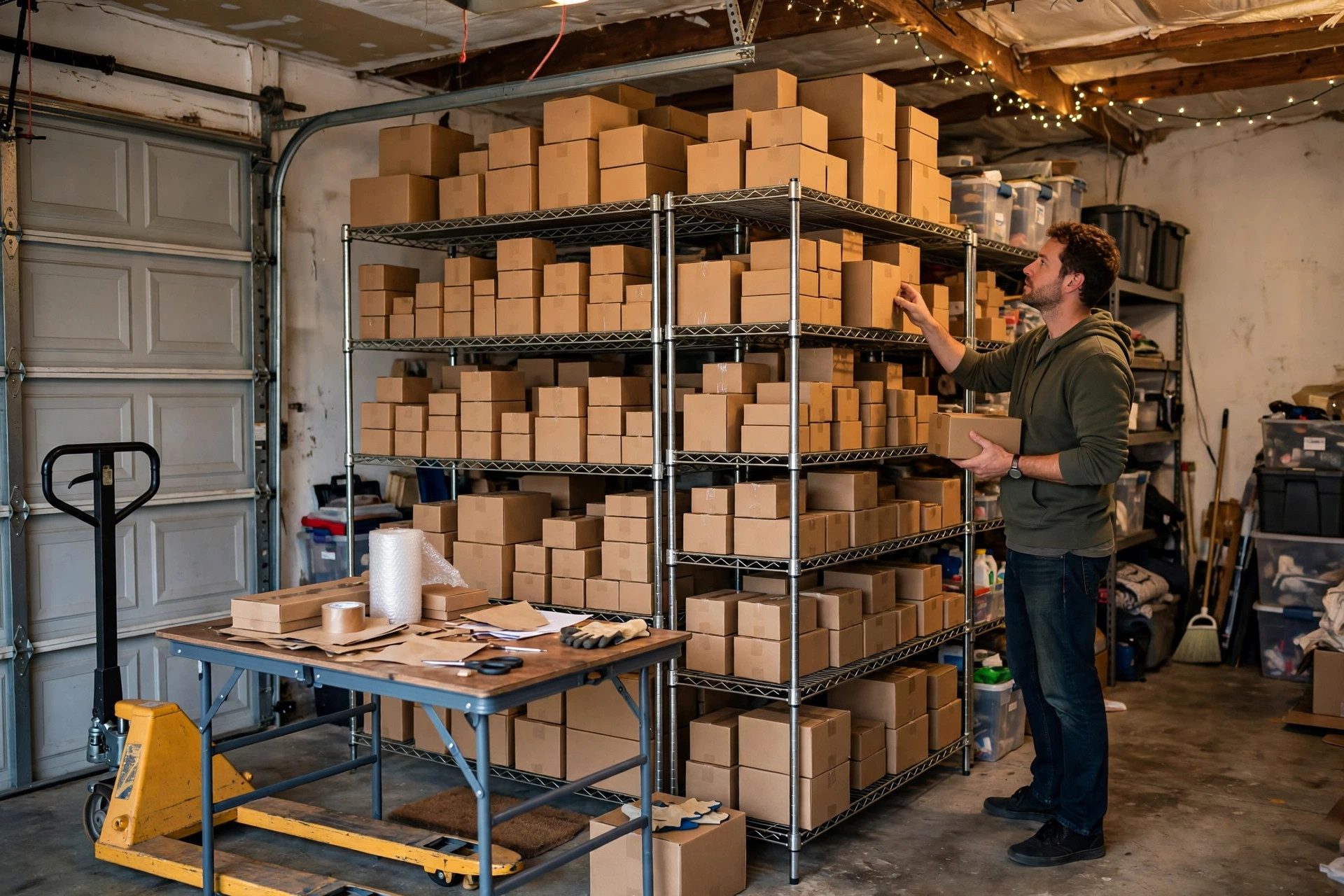
Let me describe our predicament. A 3,000-square-meter warehouse, a dozen or so clients, one customer service rep. During the day she takes calls, answers messages, checks stock, and chases drivers — on a busy day she barely has time to drink water. The stock questions I know by heart: "How much of our shipment is left?" "Did last week's container finish shipping?" "Can we send another 200 units this week?" These take up more than half her day, and every answer lives in the WMS. She was basically a human query machine.
In March 2026, I gritted my teeth and rolled out a lightweight AI customer service setup, starting with exactly one scenario: inventory inquiries. The scrappy approach went like this. The AI only reads the WMS live inventory feed. A client messages "check stock," and the AI replies with the current available quantity, the inbound quantity, and the time of the last outbound shipment. Before answering, it passes two checks. First, the client's identity has to match — no client number, no numbers back. Second, every reply ends with "figures as of 9 a.m. today; the warehouse's physical count is authoritative." That last line is my escape hatch.
The results beat my expectations. Our internal numbers for the first month: the AI handled about 70% of inventory inquiries on its own, average response time dropped from more than 20 minutes to under a minute, and the rep got roughly two hours a day back to deal with claims and order changes — the work that actually needs a person. Clients didn't blow up, because the answers were just numbers from the system. The AI wasn't improvising. It was reading the numbers out loud.
What AI Customer Service Answers and What It Never Touches
But I also learned quickly what a wrong AI answer costs. In May 2026, a client asked about a product's stock, and the AI mixed up "inbound plus on-hand" with "available to ship," overstating the number by 300 units. The client took orders downstream based on that figure, and when shipping day came, the stock wasn't there. We paid for emergency transfer freight to fix it, and the client nearly walked. After that, I made an iron rule: the AI reports one number only — available inventory. Inbound, inspection, and frozen quantities are never quoted. Anyone asking about those goes straight to a human.
Our triage table now looks like this. The bot handles three things: current available stock, order shipping status, and delivery confirmation. Humans handle four: stock discrepancies that need investigation, claims and damage, order changes and rush requests, and pricing and billing. Then there's the gray zone: a client asking "can you hold 500 units for me?" The AI must never say yes to that on its own, because holding stock means locking inventory and affecting other clients. A person has to make that call.
Here's the counterintuitive part: the biggest value of AI customer service isn't the money it saves. It's that the rep finally has time to do customer service. We ran the numbers as an internal estimate: one rep costs about 6,000 yuan a month, the AI works out to about 1,500 yuan a month, so it looks like 4,500 yuan saved. But the real math is on the other side. If the two hours a day the rep gets back go into proactive client follow-up and exception handling, the renewals and extra volume are worth far more than 4,500 yuan. Flip it around: if the AI just replaces the rep and leaves clients talking to a robot, the savings will come back as lost clients sooner or later. ROI isn't just subtraction.
The First Month of AI Customer Service, and One Rule That Saved Us
Here's the unglamorous part nobody mentions. For the first month after launch, I spent 20 minutes every evening reading that day's AI conversations — what it got wrong, what it answered vaguely — and fixed the rules first thing the next morning. After a month, the error rate fell from more than 20% to under 10%. That "human supervising the AI" job can't be skipped. The AI isn't an employee you hire and forget. It's a new hire that needs training.
Three months in, what I watch isn't the money saved. It's whether clients still want to talk to us. Two numbers tell me: the share of clients who place an order after asking about stock, and the share who demand a human. The first number held steady, which means the AI isn't scaring anyone off. The second fell from more than 40% to around 20%, and most of the remaining 20% are complicated cases — stock that doesn't match, checks that need a person — where a handoff is the right answer anyway. One longtime client told me our replies have gotten so fast lately, even at midnight. What he doesn't know is that the midnight "person" isn't a person. What he feels is that this warehouse is reliable. I'll take that compliment.
Of course it still fails sometimes. In June 2026, a system upgrade broke the inventory feed for a while, and the AI, unable to find the numbers, invented an "expected arrival tomorrow" reply. The client believed it, sent a truck to pick up, and the goods were still on the road. We paid the freight and nearly lost the client. After that, I added a hard rule: if the feed is down, the AI replies "the system is verifying, please wait, a human will contact you shortly." No guessing, no inventing, no filling in the blanks. The AI can be slow. It cannot be wrong. That's the floor.
So, three pieces of advice for a small warehouse thinking about AI customer service. First, start with one scenario — inventory inquiries — and get that one solid before you let the bot do anything else. Second, answers only come from system numbers. The AI never invents, estimates, or guesses a number. If it can't find it, it says so and hands over to a human. Third, keep the human escape hatch visible: every AI reply carries a line like "reply 1 for a human check," so clients can always reach a person.
So who answers first when a client asks about stock? My answer: the AI answers first when the number can be looked up, the human answers first when the situation needs judgment. The AI is a good helper, but it's not the customer service rep. Clients never wanted "instant replies." They wanted accurate replies and a human they can reach. Small warehouses have their own way of surviving. Ours is this: let the AI save the money that should be saved, and don't cut a single cent of the human effort that matters.
By Xiao Ma, Small Warehouse Owner