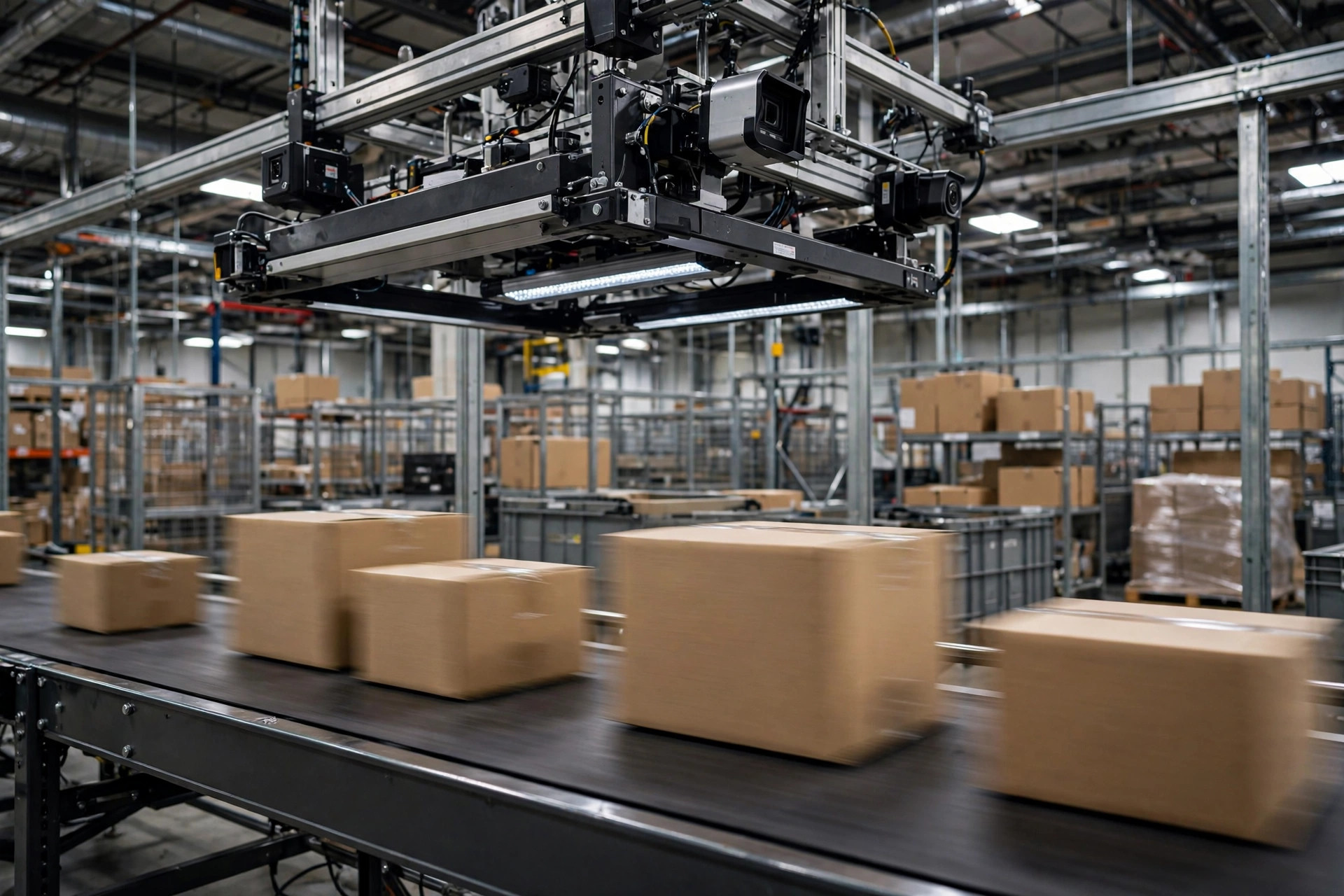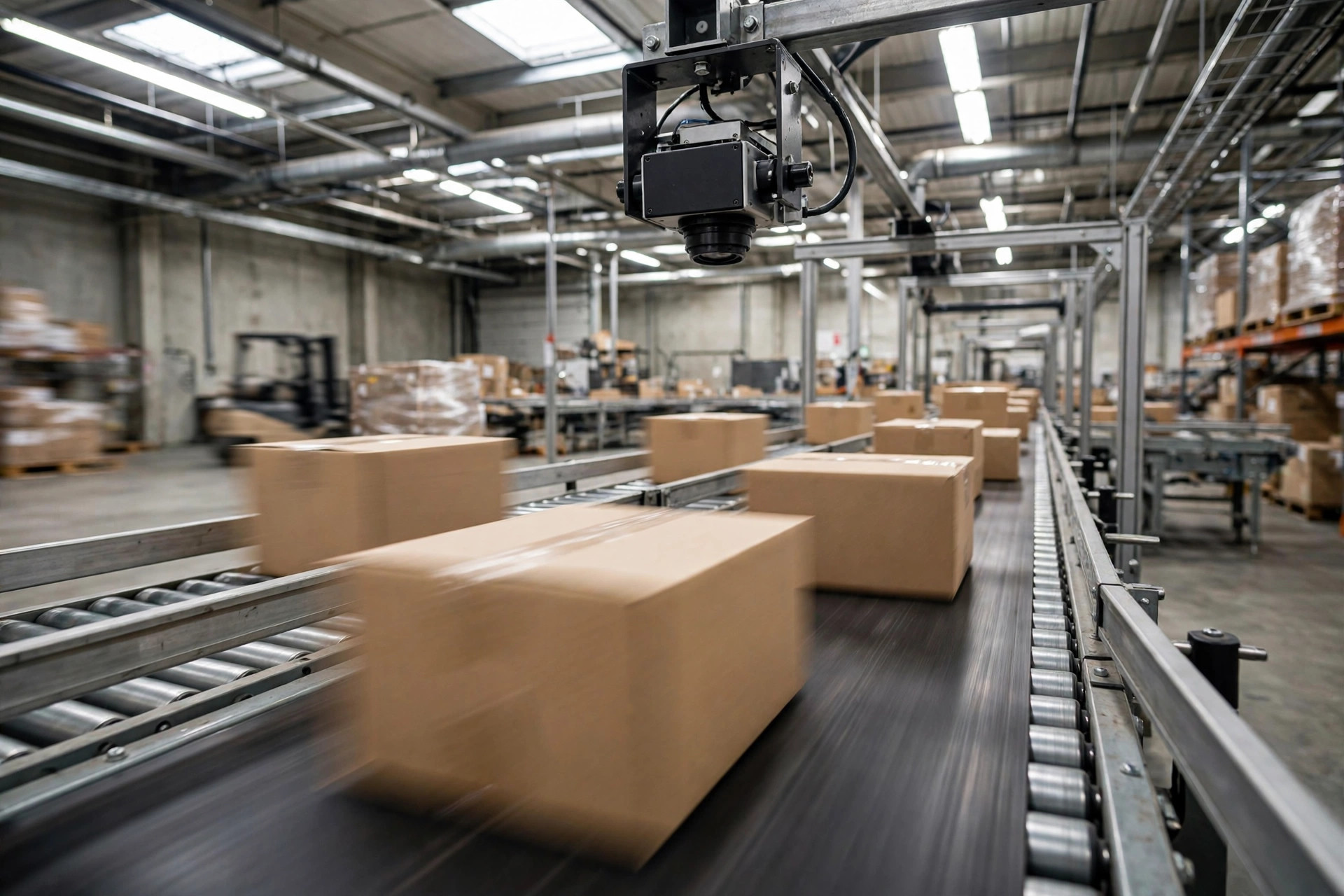
In March 2025, an operations manager at a 3PL outside Nashville called me, furious. His AI conveyor jam detection on the main sort line had fired over 140 false alarms a day for two weeks, so the operators just muted it. The third week after the mute, the line jammed three times for real — and the system stayed silent. That pattern is exactly what false alarm tuning is supposed to prevent: an alarm nobody trusts is not a safety system, it is decoration.
Here is my verdict up front: in most projects where "the AI alarms don't work," the tuning was never finished. The model is fine. Jam detection is simple in principle; the hard part is driving false alarms down to a level humans believe. Let me walk through it in order: the principle first, then the selection line, then the maintenance traps.
What the AI Is Actually Detecting
The old-school approach is a photoelectric sensor: beam blocked longer than a set number of seconds, call it a jam. You can think of it as watching a single point — "is something squatting here and not moving."
AI anomaly detection plays a completely different game. It does not watch a point; it watches whether the picture looks normal. It is like hiring a veteran shift lead to stand on the catwalk and watch the whole line — he has memorized ten thousand versions of "normal" in his head: parcels moving at steady speed, roughly even spacing, a clean belt surface. The day a parcel sits unmoved for five seconds, or a pile of cartons wedges sideways against a guide rail, he feels it instantly.
Technically, the model learns the distribution of normal frames, and every live frame gets an anomaly score — its distance from normal. Score crosses the threshold, alarm fires. Note the catch: the model does not know what a jam looks like. It only knows "this isn't normal." That is why it catches belt drift and fallen debris as a bonus, things a photoeye can never do.
But that same "only knows abnormal" trait is the root of all false alarms: anything normal-but-unseen gets flagged. A new batch of reflective polybags for peak season, one burnt-out light tube making the frame darker, a mop leaning on the guardrail — all "abnormal" to the model. Once you see that, the tuning logic is clear: either show it more kinds of "normal," or draw the "how abnormal counts" line properly.
False Alarms Start at Selection: Draw the Line Before You Buy
Rant time. Plenty of integrators sell "AI jam detection" that, opened up, is frame differencing plus a fixed threshold: too much pixel change between two frames, fire the alarm. That thing never learned what normal looks like, and they still call it AI? The test is simple: ask for the measured precision-recall curve and field-tested false-positive and false-negative numbers. If they cannot produce them, you are looking at PowerPoint AI.
The real selection line is not "AI vs. non-AI." It is what your line actually needs:
| Scenario | Photoelectric sensor | AI vision anomaly detection |
|---|---|---|
| Decision basis | Blockage duration at one point | Whole-frame deviation from normal distribution |
| Catches | Stalls at fixed positions | Jams, pile-ups, belt drift, foreign objects |
| Afraid of | Wrong mounting position ruins everything | Any unseen "normal" becomes an alarm |
| Tuning cost | Turn a potentiometer, 5 minutes | Sample collection and threshold tuning, counted in days |
| Fits | Simple line, uniform parcel types | Mixed parcel types, unpredictable jam shapes |
A straight replenishment line running standard cartons at 1 m/s does not need AI vision — that is a sledgehammer for a nail, plus a pile of false alarms to babysit. Flip it around: a high-speed sort line running everything from envelopes to odd-shaped parcels, full of curves — photoeyes cannot cover it no matter how many you mount. That is where AI earns its keep. Get the selection wrong, and no amount of false alarm tuning will save you.
Tuning False Alarms: From 140 a Day to 3
Back to the Nashville warehouse. Main line at 1.8 m/s, 60,000 units a day. We walked the floor and found three layers of problems — and tuned them layer by layer.
Layer one: the sensing was bad. The camera sat 3 meters overhead, backlit; midday sun blew out the exposure, overcast afternoons went dark — the model's "normal" changed three times a day. We switched to auto-gain locked on a reference region. False alarms dropped by half on the spot. It is like asking the shift lead to watch the line through photochromic glasses that keep changing tint — of course he cries wolf.
Layer two: not enough normal samples. The vendor shipped with 2,000 daytime samples only — night-shift lighting, reflective bags, oversized cartons were all strangers to the model. We added 8,000 samples covering all shifts and parcel types, then retrained incrementally. Watch the order: samples first, threshold second. Tuning the threshold on thin samples is adjusting the volume blindfolded — symptom relief, not a cure.
Layer three: one threshold for everything. The old setup fired a push alert plus a stop recommendation at any score above 0.7. We split it into two tiers: 0.5–0.75 only logs and shows a yellow banner on the control screen (operators glance at it walking by); 0.75 and above triggers the audible-visual alarm. And it must stay over the line for 3 consecutive frames (about 0.5 seconds) — single-frame flicker gets filtered out.
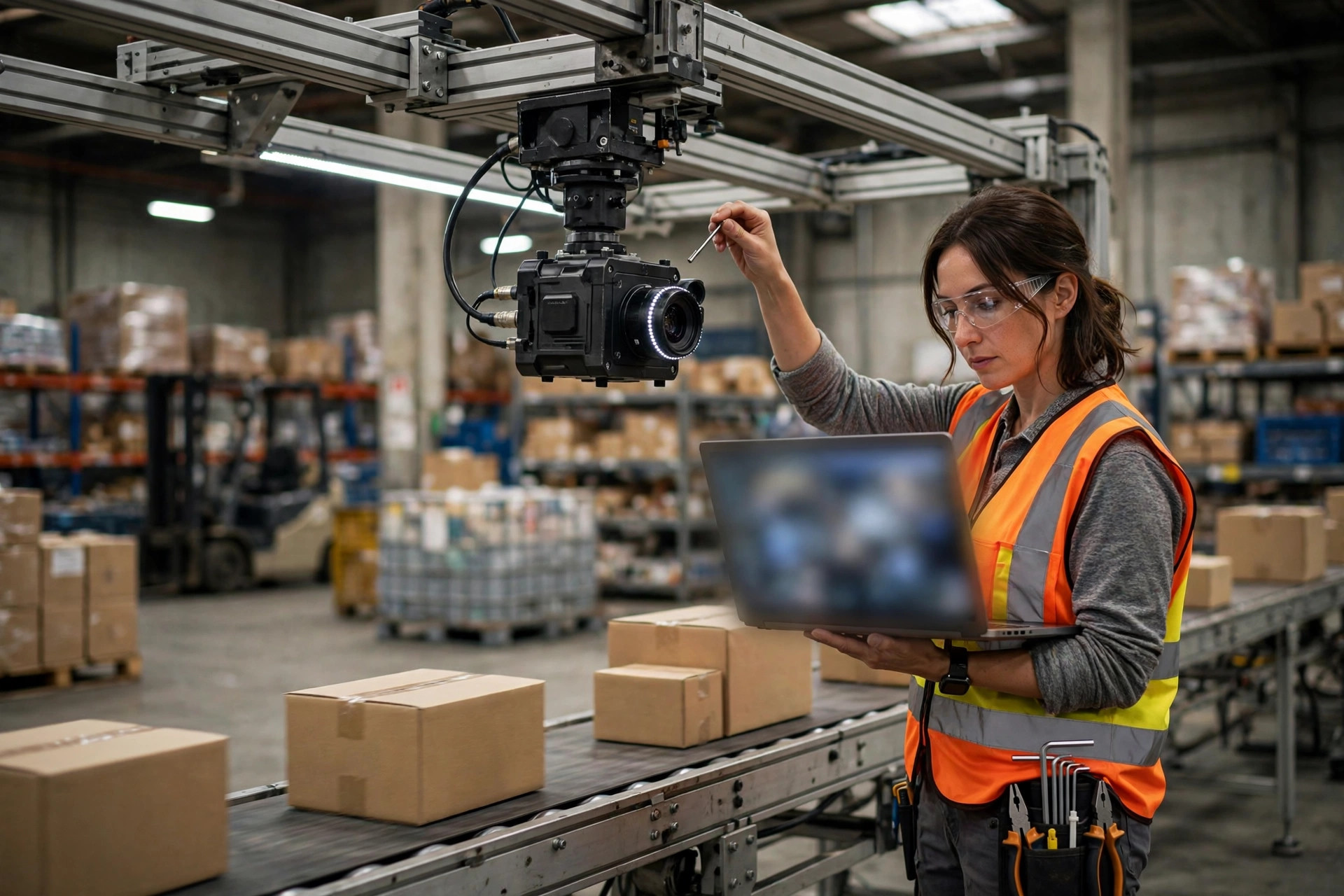
Two weeks after tuning, false alarms went from 140+ a day to 3–5. Four real jams happened in that window — all four caught. One came at 2 a.m.: an operator spotted "suspected pile-up" on the yellow banner and cleared it 10 minutes early, avoiding a full-line stop.
The second case is peak season 2024, an e-commerce DC in Ontario, California. Black reflective polybags on the high-speed line got flagged as "foreign pile-up" constantly — while two real jams slipped through. Root cause: too few reflective bags in the sample set, so the model had learned "reflective = anomaly." Same fix: 2,000 more normal samples containing reflective bags, not a looser threshold. Loosening the threshold lets real and fake anomalies through together — like removing the door to stop burglars.
Here is the counter-intuitive call: tuning false alarms to zero is not victory, it is surrender. Zero false alarms means one of two things: the threshold is so high that real anomalies slip through, or your line is too simple to need AI. A healthy system always has a few false alarms. What matters is whether each alarm is actionable.
Worth the Money? Watch This One Number
Let me run the numbers. On the Nashville line, one real jam means about 12 minutes of downtime. Line capacity is roughly 3,000 units per hour, so 12 minutes wipes out 600 units of throughput. In peak season those 600 get recovered with overtime — labor plus rush handling, roughly $400 a pop. The tuning took 3 engineer-days, a few thousand dollars at outsourced rates. Two avoided full-line stops pay it back.
But that math only holds if operators trust the alarms. At 140 false alarms a day, the system's value is zero — any price is money wasted. So don't ask me "how accurate is AI conveyor jam detection." Ask for the actionable rate: of 100 alarms, how many sent someone to the floor who found something worth handling? Below 60% long-term, you don't have a system. Above 80%, the money is well spent.
One last thing to check for yourself: when was your AI conveyor jam detection threshold last retuned? The moment the SKU mix changes — peak season full of odd-shaped parcels, say — the normal samples expire, and the false alarms will come back. Thresholds are not set-and-forget. They change with the season, like wardrobes.
By Da Liu, Automation Engineer