A warehouse ai adoption reality check is overdue. Three years ago, nearly every warehouse AI launch promised the same things: picking without people, forecasts accurate enough to schedule by the hour, and quality inspection handled by a single camera. The honest way to judge those promises is not to rewatch the launch videos but to look at what is actually running on warehouse floors today, and to sort the claims into three buckets: delivered, half-delivered, and still a demo.
The survey data sets the scene. According to MHI's annual industry report, about 28% of respondents were using AI by late 2024, while another 54% said they planned to adopt it within five years. In other words, most warehouses were still watching or piloting. A 2026 PitchBook report adds useful context: only around a quarter of warehouses worldwide have implemented any meaningful form of automation. Investment in AI robotics is accelerating and the funding numbers look impressive, but the share of warehouses with systems genuinely running day to day is far smaller than the excitement suggests. That gap between enthusiasm and deployment is, in itself, the story of the last three years.
Warehouse AI Adoption Reality Check: What Delivered
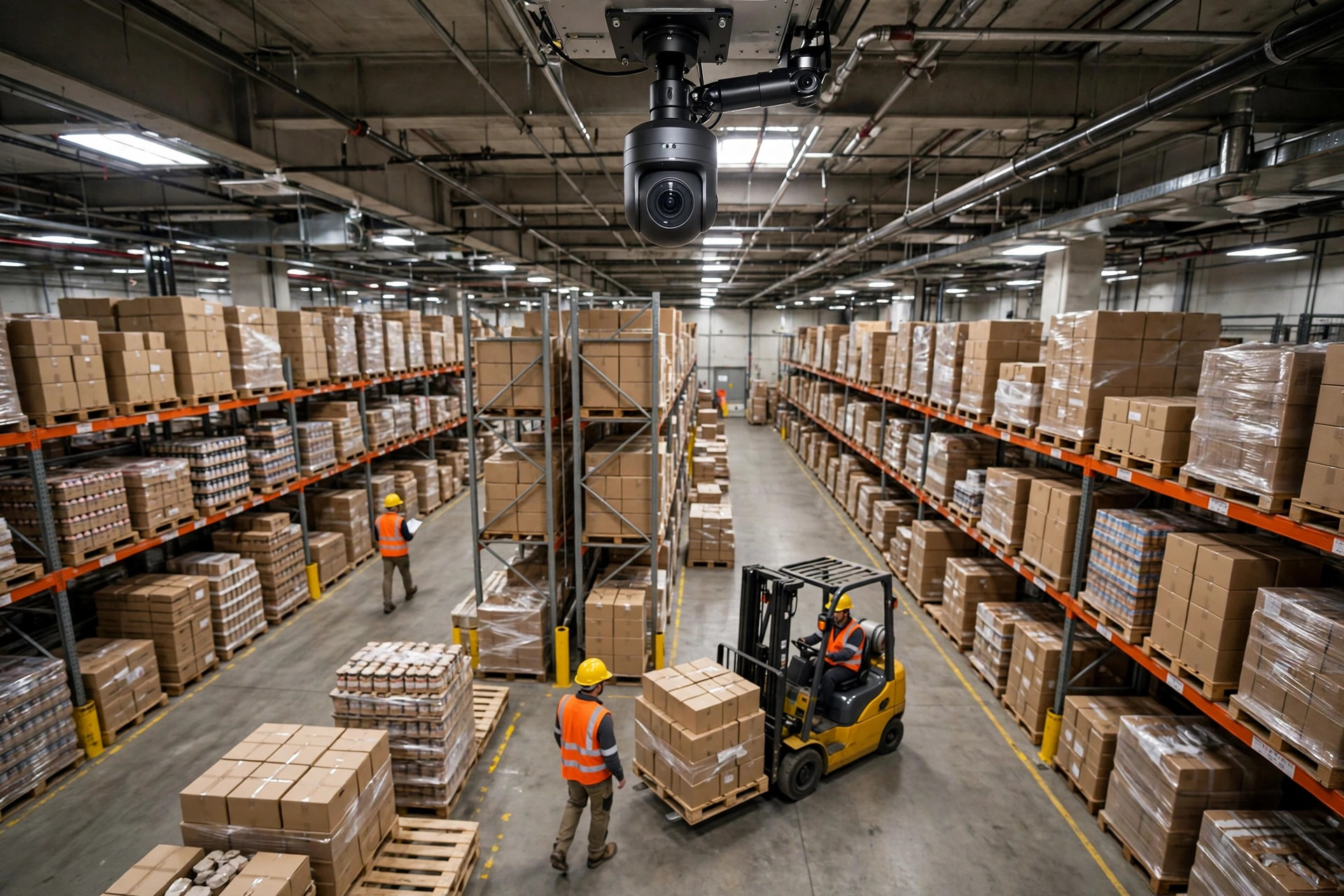
Two applications have delivered most convincingly. The first is vision inspection. A camera reading a pallet barcode, checking a carton label, or flagging a damaged package is a well-bounded task: the input is an image, the output is a judgement, and right or wrong is verifiable on the spot. In one e-commerce distribution centre I have followed, quality control used to rely on manual sampling, and errors usually surfaced only when a customer complained. After a vision system went in, exceptions were caught before dispatch. Headcount in inspection did not disappear, but the work changed from firefighting after the fact to interception before it. That is the signature of a delivered application: AI did not replace people, it moved them from repetitive judgement to handling the exceptions machines cannot judge.
The second is demand forecasting and slotting. Forecasting was never fortune-telling. Its real value is narrowing volatility to a range that rostering and replenishment can work with. Experts cited in the MHI report make the same point: AI helps most with predicting demand swings and supporting slotting decisions, particularly for seasonal categories. The logic is straightforward. The historical data already sits in the WMS; the cleaner it is, the more useful the forecast. A warehouse with messy master data will get little from even an expensive forecasting model. Both delivered applications share three traits: a clear task boundary, results that can be reviewed weekly, and a cost of failure that stays contained.
AMR Scheduling: Half-Delivered, and Scale Changes the Problem
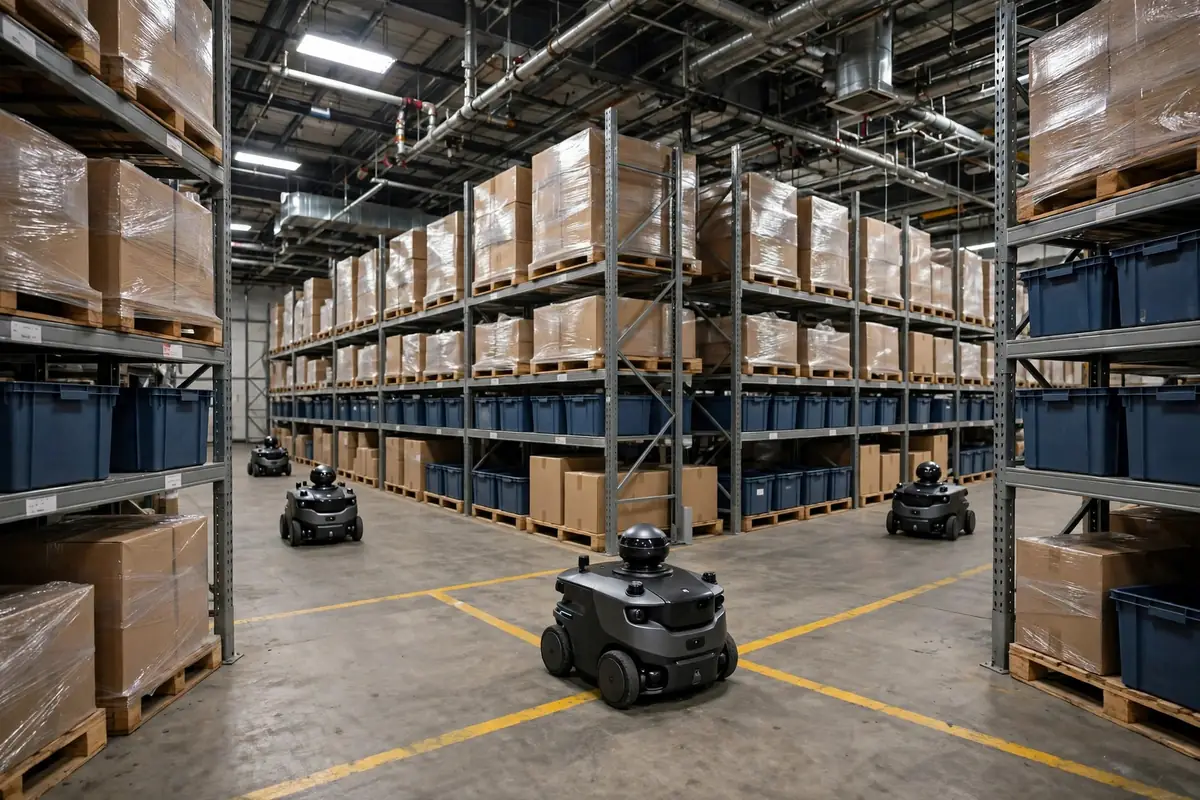
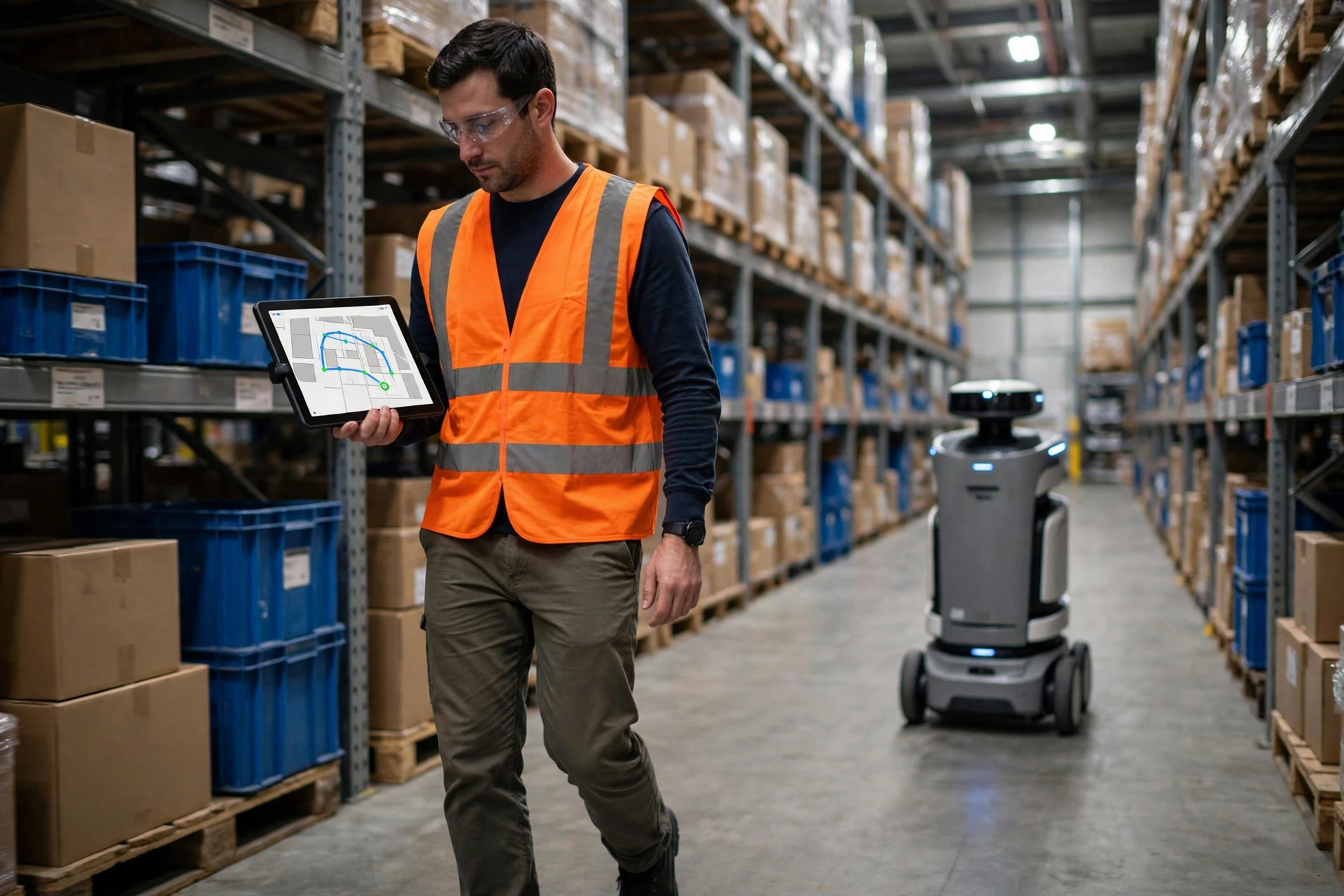
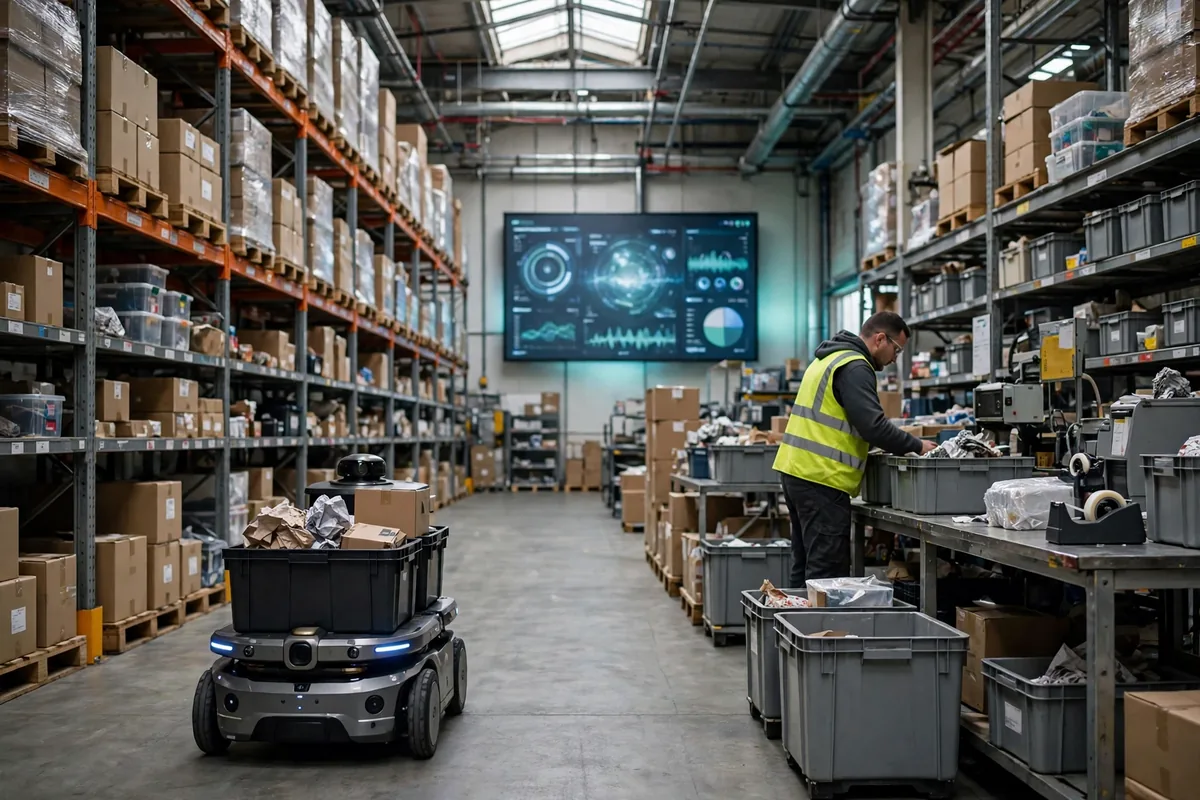
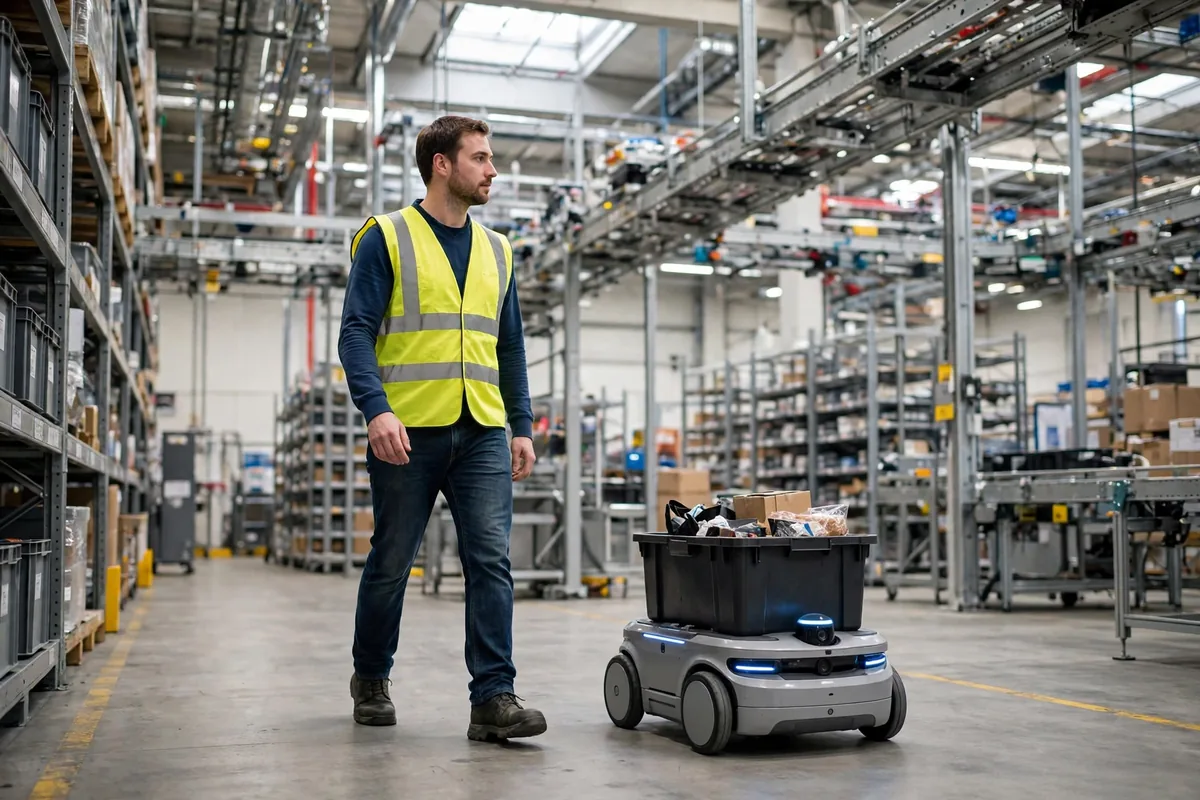
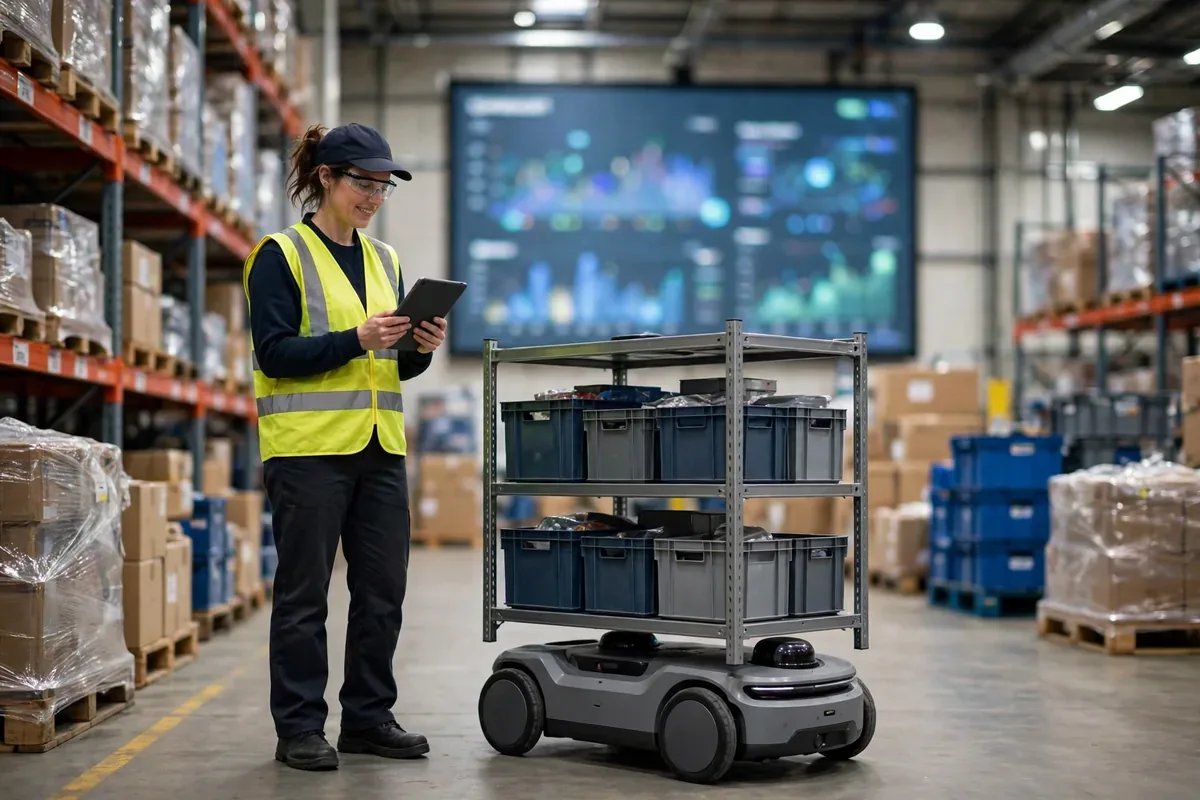
AMR scheduling sits in the half-delivered bucket. Getting one AMR running is not hard. Getting dozens or hundreds of them sharing aisles, chargers, and conveyor junctions without gridlock is a different problem altogether. A 2026 industry analysis put it plainly: once a fleet scales into the hundreds, what determines throughput is no longer the capability of any single robot but the quality of routing and congestion avoidance. The AI value of AMRs, in other words, lives in the fleet software, not in the vehicle, and the quality of that software cannot be judged from a demo. It only shows up after two weeks at full peak-season load.
I followed a mid-sized 3PL through exactly this transition. A pilot zone with a dozen or so robots ran beautifully, picker walking distance fell, and management approved a site-wide rollout on that evidence. Once the fleet passed a hundred units, charging queues and waiting time at intersections ate into the labour savings, and the project team spent months retuning parameters and redrawing travel lanes before throughput stabilised. The lesson is not that AMRs do not work. It is that scale changes the problem: a solution validated at small scale has to be re-validated when it grows. Any vendor who shows you ten robots running smoothly but will not discuss scheduling strategy, charging planning, and congestion behaviour at a hundred units deserves one more hard question.
Still Mostly Demo: General Picking and the Unmanned Warehouse
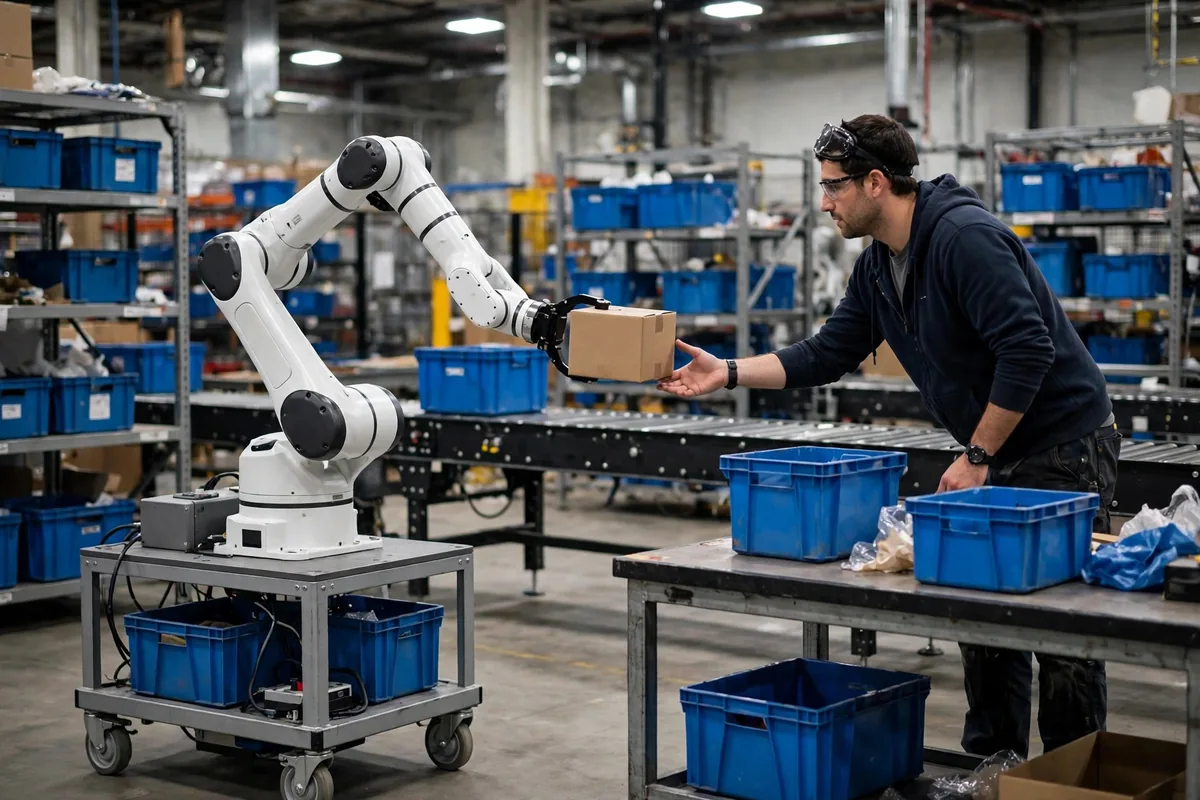
The still-a-demo bucket is dominated by general-purpose picking and the "unmanned warehouse" narrative. Vision-guided picking arms have genuinely improved and can now handle a wider range of product shapes and packaging than the older rule-based systems could. But e-commerce SKU diversity is brutal: irregular shapes, soft packaging, and reflective surfaces still route large volumes back to human pickers. More important is the economics. The labour a robotic arm saves has to be weighed against depreciation, maintenance, and downtime, and most demos only count the first of those three.
Scale also turns technical risk into financial risk. The same 2026 PitchBook report notes a large retailer taking a multi-billion-dollar impairment tied to an automation programme. That does not prove automation is wrong; it proves that when a project is big enough, the risk stops being a technical footnote and becomes a balance-sheet event. There is a further obstacle that rarely appears in sales material: safety and certification. Probabilistic AI systems working alongside people are far harder to certify than deterministic machines governed by explicit rules. When something goes wrong with a rule-based system, you can trace it to a line of logic. With a statistical system, the chain of responsibility and the certification path both have to be renegotiated. Until that gate is cleared, "unmanned" stays confined to closed environments.
The Checklist Before You Buy Warehouse AI
What decision-makers need is not another vendor white paper but a short list of questions that can be answered with evidence. This warehouse ai adoption reality check comes down to five of them.
| Question | How to verify it | If the answer is no |
|---|---|---|
| Is the data clean? | Sample a month of master data and check the error rate | Fix data governance before buying a model |
| Can results be reviewed weekly? | Agree a control metric up front: interception rate, forecast error, minutes per order | No control group, no big contract; pilot first |
| Does it still hold at triple the pilot scale? | Ask for a reference site of equal scale that survived a peak season | Treat the demo as unproven at your scale |
| Who handles the exceptions? | Price the manual fallback, not just the labour saved | Put the fallback cost inside the ROI, not outside it |
| What does it cost to stop? | Check the exit: can you wind down gracefully if results disappoint? | Prefer staged expansion and usage-based pricing |
There is a counterintuitive conclusion hiding in the last three years. The biggest winners from warehouse AI may not be the buyers of the most expensive systems but the operators who did the unglamorous groundwork first. Accurate slotting, clean master data, standardised processes: none of these carries an AI label, yet they decide whether AI amplifies the gains or amplifies the mess. A warehouse that has never done proper ABC classification and expects AI to sort its slotting is like someone expecting a navigation app to choose the destination. The route can be perfectly calculated and still end up in the wrong place.
Three years on, the pattern is reasonably clear. The delivered part of warehouse AI is the least glamorous part: catching defects, narrowing forecast error, keeping robots out of each other's way. The half-delivered part is stuck on scale and exception handling. The demo part is stuck on economics and certification. That pattern is unlikely to reverse dramatically in the next year or two; it is more likely to converge slowly, with fewer demos and more weekly reviews.
That leaves an open question rather than a conclusion. As AI gets cheaper and more capable, will the warehouse organisation change first? Rostering, performance measurement, exception-handling routines: these are harder to change than any model, and they may ultimately decide how much of the promise gets delivered. Technology can be bought. Organisational capability has to be grown.
By Dr. Chen, Supply Chain Researcher