The debate over AI warehouse jobs restructuring in the next three years is no longer theoretical. In June 2025, Amazon put its one-millionth warehouse robot into service, spread across more than 300 facilities worldwide. In the same year, the World Economic Forum's Future of Jobs Report 2025 projected that by 2030 the global economy would create 170 million new jobs while displacing 92 million existing ones. That debate has therefore moved past the question of whether it will happen. The question now is how far it has already gone, and whose job changes first.
The Data: Restructuring Is Already in Motion
According to the World Economic Forum's Future of Jobs Report 2025, job creation and displacement driven by macrotrends will together affect about 22% of today's jobs by 2030: 170 million created, 92 million displaced, a net gain of 78 million. The report is explicit about where the losses concentrate. The fastest-declining roles are clerical: data entry clerks, administrative assistants, cashiers and ticket clerks, printing workers, and accountants and auditors. These figures cover all macrotrends, not AI alone, but the report names AI, information processing, and robotics as the primary drivers of the clerical decline.
The McKinsey Global Institute's 2025 report, Agents, Robots and Us, frames the exposure more directly: roughly 57% of US work hours are technically automatable with existing AI and robotics capabilities, and about 40% of American jobs sit in occupations facing significant disruption. The report adds a qualification that matters more than the headline number. Technical feasibility is not the same as actual adoption. The real bottleneck, McKinsey argues, is whether companies are willing to redesign entire workflows, and whether policy and investment keep pace. That distinction runs through everything that follows.
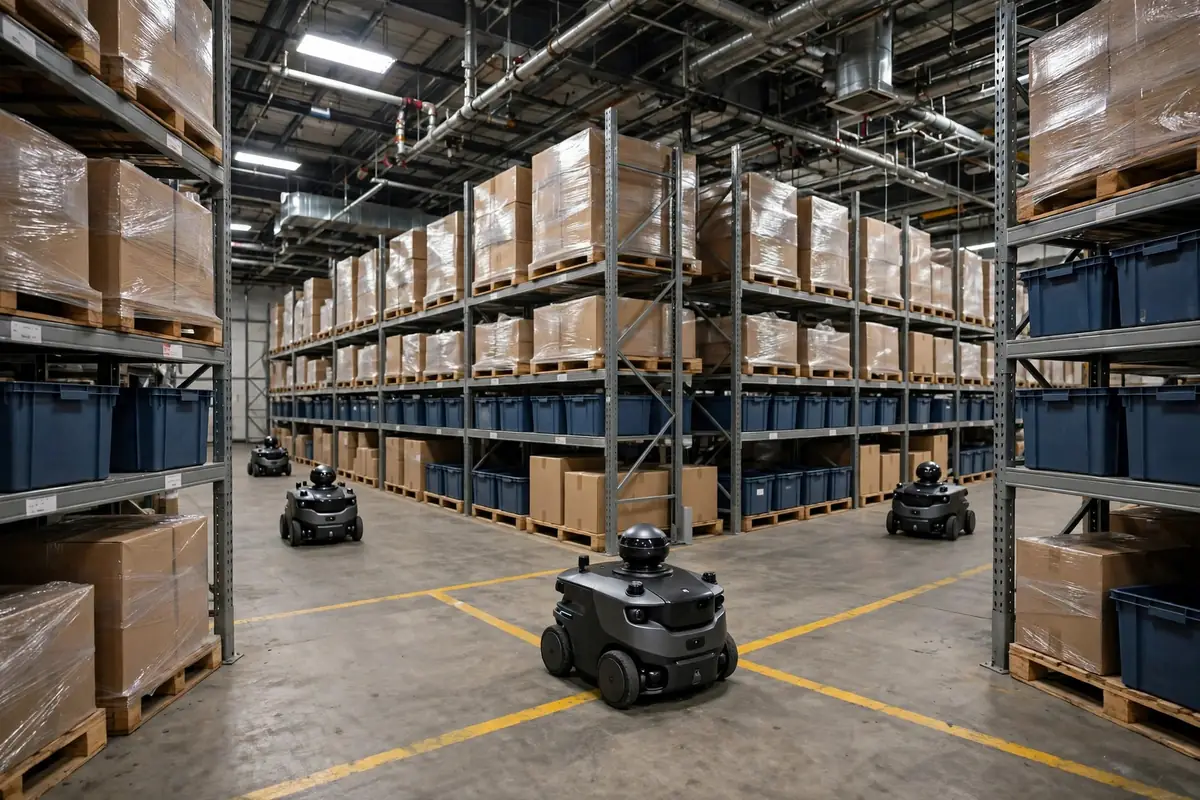
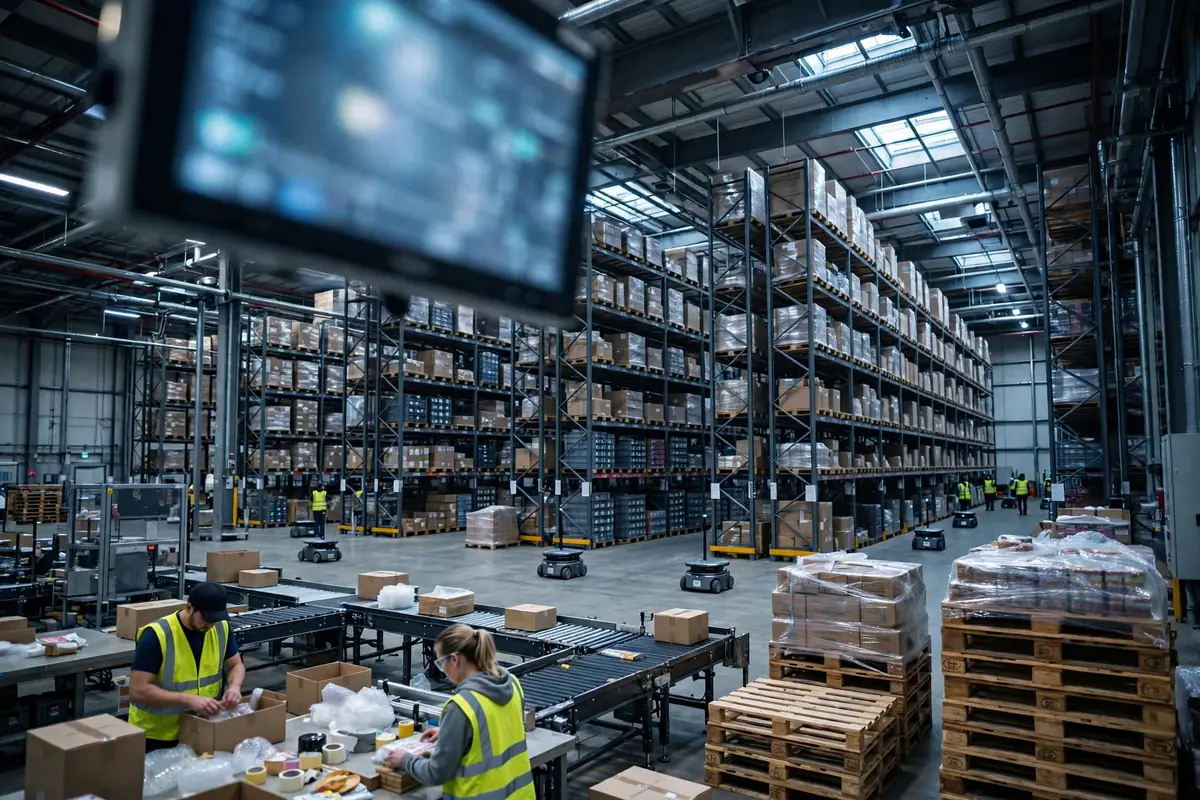
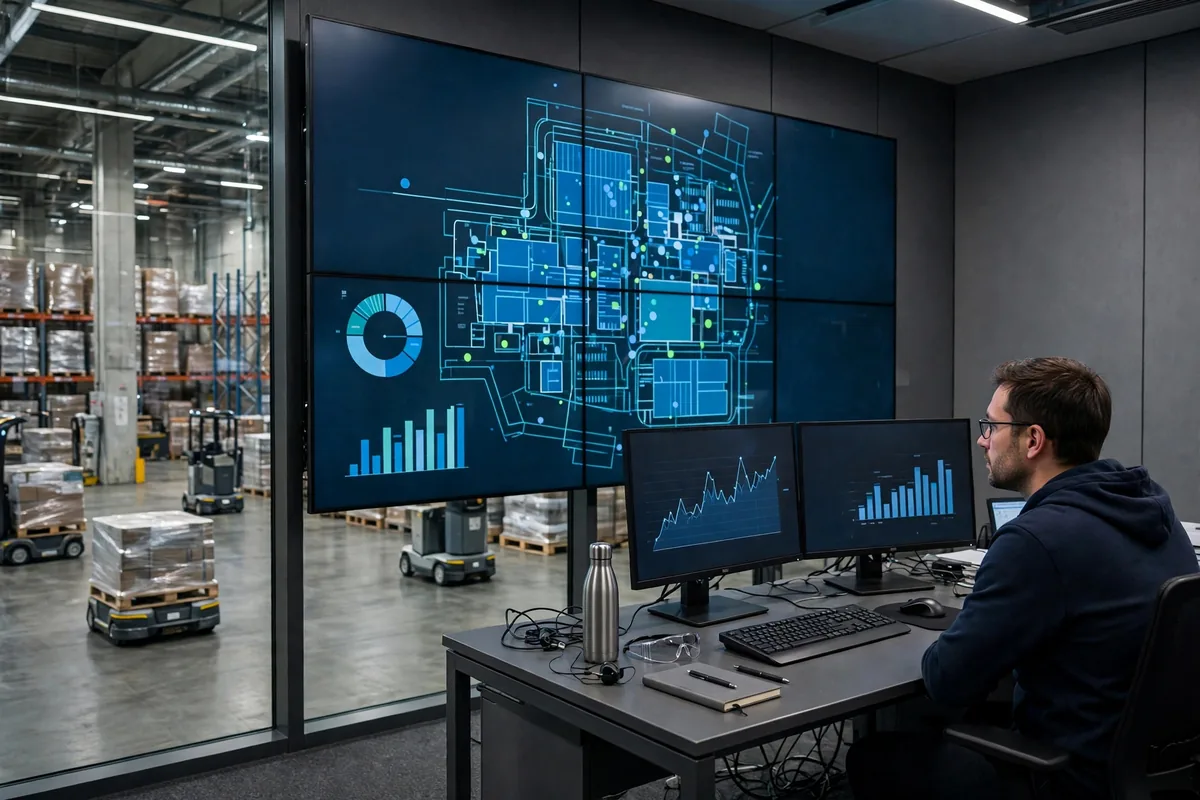
Amazon provides the most complete public case study of what adoption actually looks like. In June 2025, its millionth robot entered service, and the company simultaneously launched DeepFleet, an AI foundation model that coordinates the robot fleet. Amazon says DeepFleet improves fleet travel efficiency by about 10%, a company-reported figure that has not been independently verified. The more telling numbers came from internal documents reported by the New York Times in October 2025: the company's new Shreveport, Louisiana facility runs about 1,000 robots and needs roughly a quarter fewer workers than it otherwise would, and Amazon plans to replicate that design across 40 facilities by the end of 2027.
One dataset that rarely enters this conversation comes from a 2025 study published in ILR Review: warehouses equipped with robots recorded about 40% fewer serious injuries but 77% more non-serious injuries than comparable traditional warehouses. Automation is never a one-way improvement.
Three Signals: Where AI Warehouse Jobs Restructuring Starts
My assessment of which roles change first rests on three signals, the same three I watch whenever someone asks me about ai warehouse jobs restructuring next three years. The first is the wording of job postings. In 2025, I visited several large warehousing operators, and the hiring language is quietly being rewritten. Postings that used to say "proficient in WMS operation" now say "able to resolve exceptions flagged by the system." Roles once advertised as "data entry clerk" are now advertised as "warehouse associate willing to learn AI tools." The job titles have barely changed. The required capabilities already have. That is where restructuring shows itself first.
The second signal is what management meetings are actually about. Warehouse meetings used to revolve around one question: do we have enough people today? Increasingly, they revolve around a different one: which steps no longer need a human to look at them? Once a task is defined as rule-based, with standardised inputs and verifiable outputs, automation is a matter of time. Data entry, daily reporting, and inventory reconciliation meet all three conditions at once, which is why they sit at the front of the line.
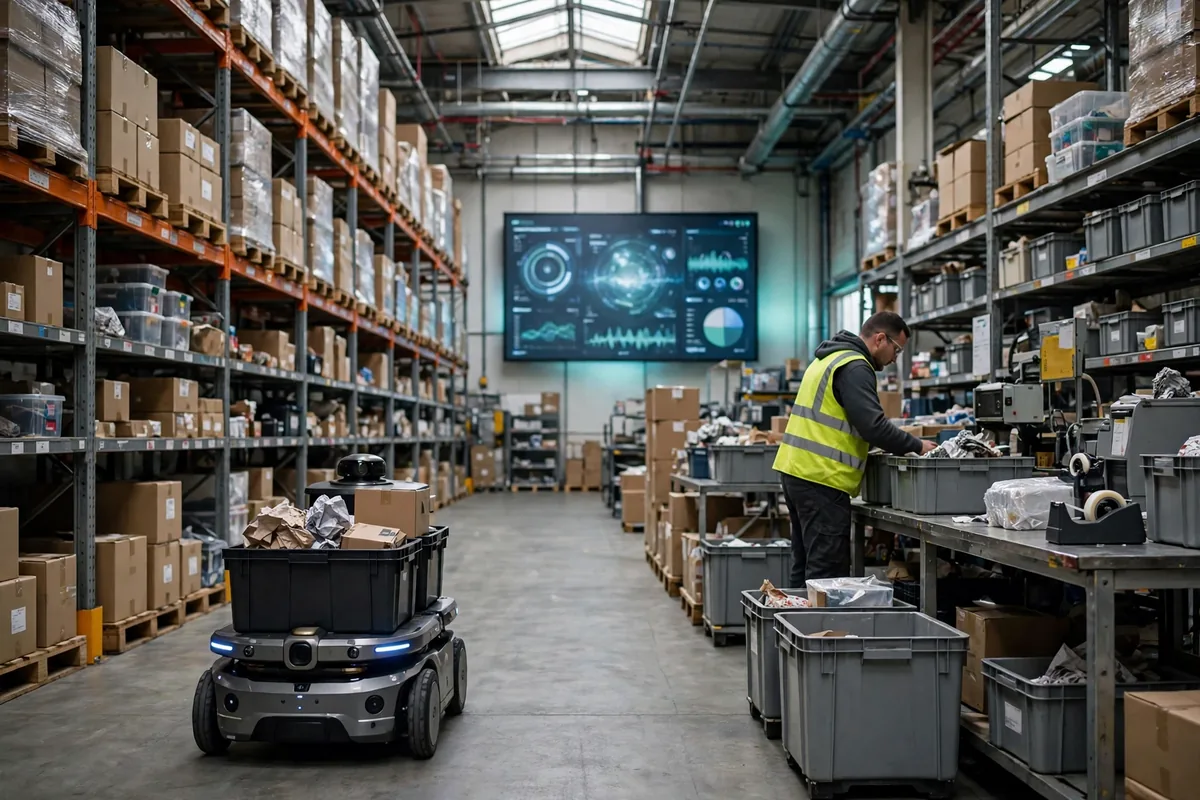
The third signal is where training budgets go. Money is the most honest indicator available. In 2025, a 3PL I surveyed in eastern China shifted the bulk of its annual training budget from new-hire onboarding to equipment operation and exception handling for existing staff. Its reporting team shrank from six people to two, and the freed headcount moved into the exception-handling group. Budget flows reveal a company's real judgment better than any strategy statement.
Stack the three signals together and a risk map emerges. First to be restructured: data entry, simple picking, and daily reporting, where rules are clear, inputs are standard, and the cost of an error is low. Currently changing: forklift driving and quality inspection, where machines handle most of the work but complex routes and ambiguous defects still need human eyes and hands. Hardest to replace: exception handling, equipment maintenance, and customer communication, three roles that share the same traits: non-standard inputs, no single correct answer, and immediate customer consequences when judgment fails.
The Three Hard-to-Replace Roles Are Where the Value Sits
The counterintuitive finding is this: the first jobs to be restructured are not the hardest or the dirtiest, but the cleanest. People sitting in offices entering data and building reports are being replaced before people standing on picking lines. The reason is straightforward. AI does not replace physical effort first. It replaces rules. The rules of data entry are written on paper. The rules of picking live on the shelves and inside the exceptions, and machines still have a long way to go there.
Exception handling is the first hard-to-replace category. Systems only handle the exceptions they have seen before, and a warehouse produces unseen ones daily: a last-minute address change, an unscannable damaged package, stock the system swears exists on an empty shelf. These moments need judgment about which rule can be broken and who absorbs the consequence. Over the next three years, I expect this work to move from informal firefighting to a formally staffed core role.
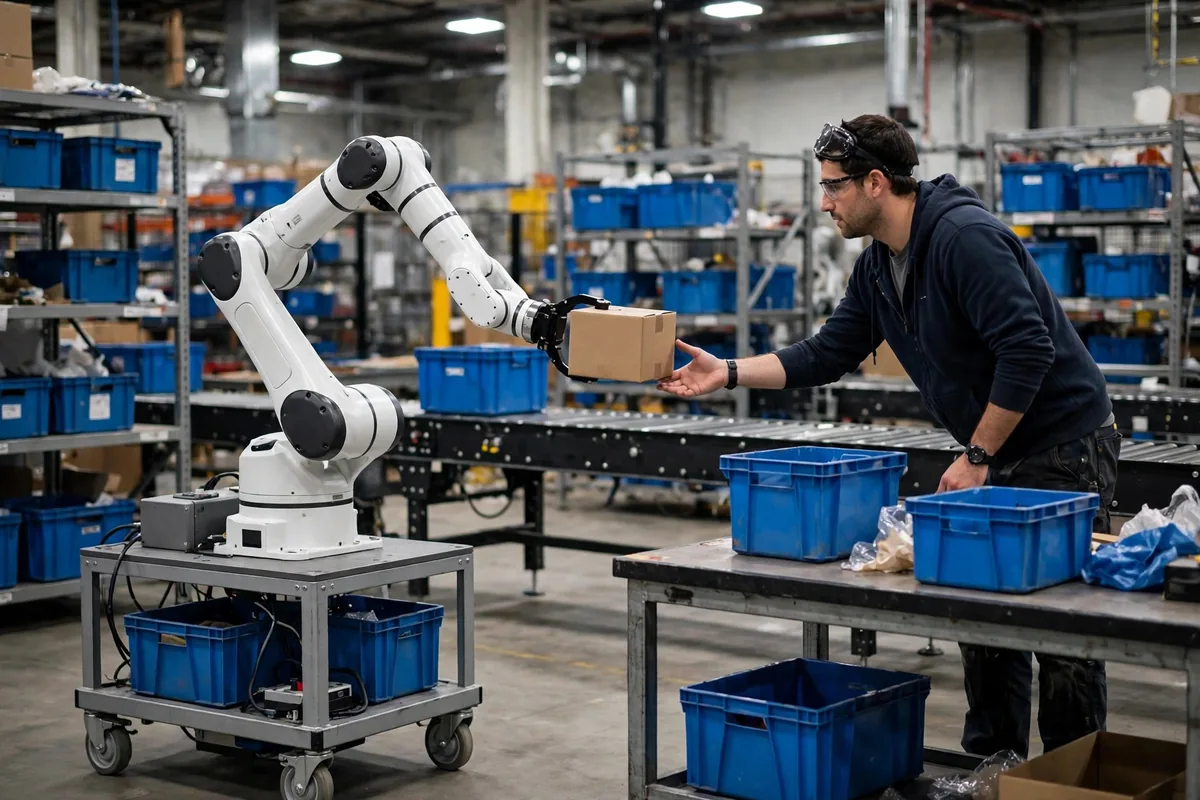
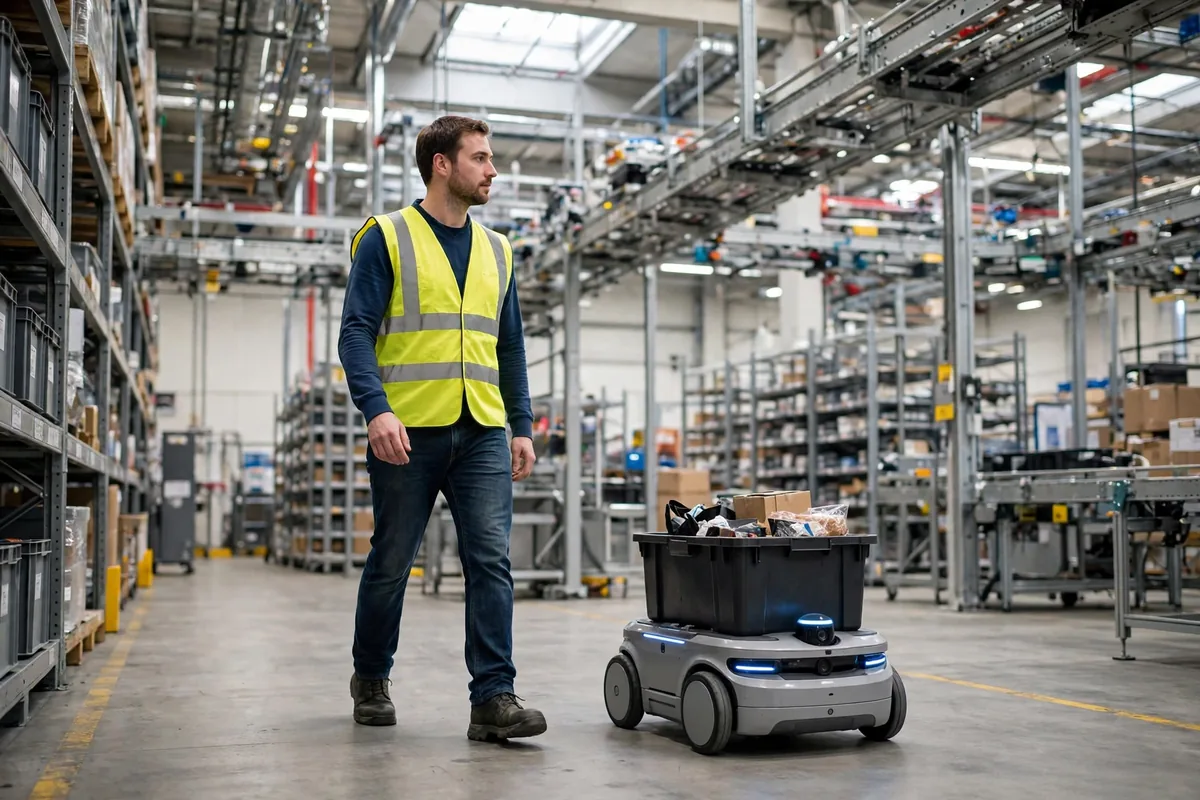
Equipment maintenance is the second. The more robots there are, the more valuable the people who repair them become, and this follows almost by definition. The Shreveport case shows that robots replace repetitive movement, not maintenance itself. When a robot stops, an entire flow loses its rhythm, and the person who restores it within an hour grows more valuable as equipment density rises.
Customer communication is the third. Trust between a warehouse and its customers rests on one thing: when something goes wrong, someone can explain it clearly. AI can draft a perfect apology email, but it cannot hear whether the customer is worried about the delivery date or the invoice, nor decide on the spot which to protect when both cannot be saved.
A Timeline for Warehouse Workers: AI Warehouse Jobs Restructuring in the Next Three Years
My timeline below is a judgment based on the forecast ranges in the reports cited above and the actual pace of enterprise deployment. It is not a precise prediction. The ai warehouse jobs restructuring next three years will not arrive as a single event but as a sequence, and the sequence matters more than any single date. From 2026 to 2027, reporting and data-entry roles will contract first; large warehouses may cut clerical headcount by roughly a third (judgment, based on the World Economic Forum's 2025 expectations for clerical decline and the hiring freezes companies are already applying). From 2027 to 2028, simple picking and standardised packing will enter large-scale substitution, though only where product categories are standard enough; non-standard warehouses will move a beat slower. From 2028 to 2029, the centre of change will shift to management itself: scheduling, forecasting, and performance analysis, work that is half rule and half judgment, will be drafted by AI and signed off by humans.
There are roughly three transition paths. The first is managing robots: moving from operator to fleet monitoring and scheduling, where the core skill is understanding system logic rather than memorising operating steps. The second is managing exceptions: moving from execution to exception expertise, where the core asset is accumulated judgment, the path most dependent on experience and hardest to shortcut. The third is managing customers: moving from inside the warehouse to the customer interface, converting familiarity with goods and processes into service capability. None of the three is superior to the others, but they share one precondition: start now. Once a role formally disappears, the options only narrow.
Three years from now, warehouses will employ fewer people, but those who remain will matter more. That is not reassurance but inference: if machines take over the rules, human value lies only in what sits outside them. The question belongs to every warehouse worker: how much of your job consists of judgments only you can make? That proportion is your margin of safety for the next three years.
By Dr. Chen, Supply Chain Researcher