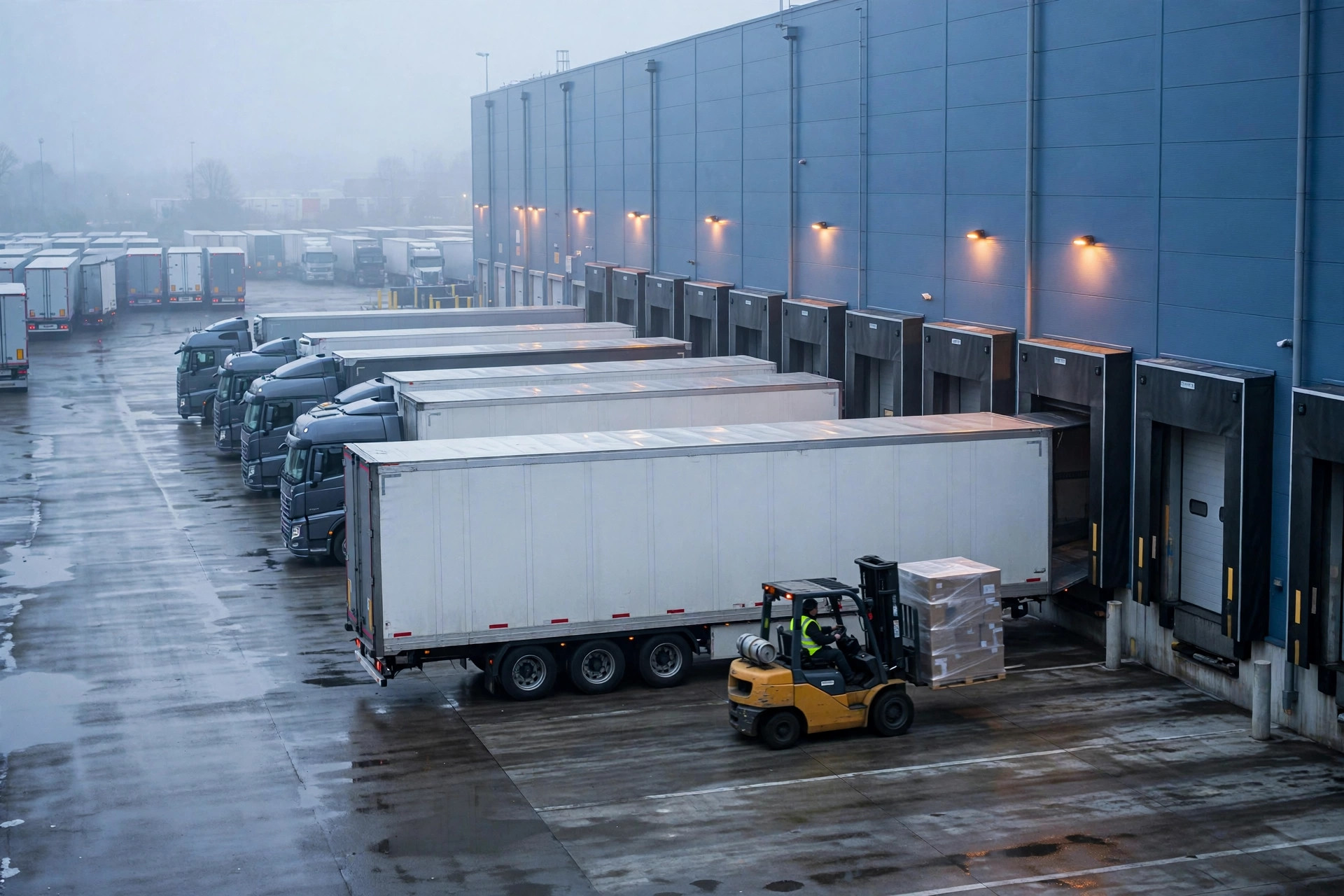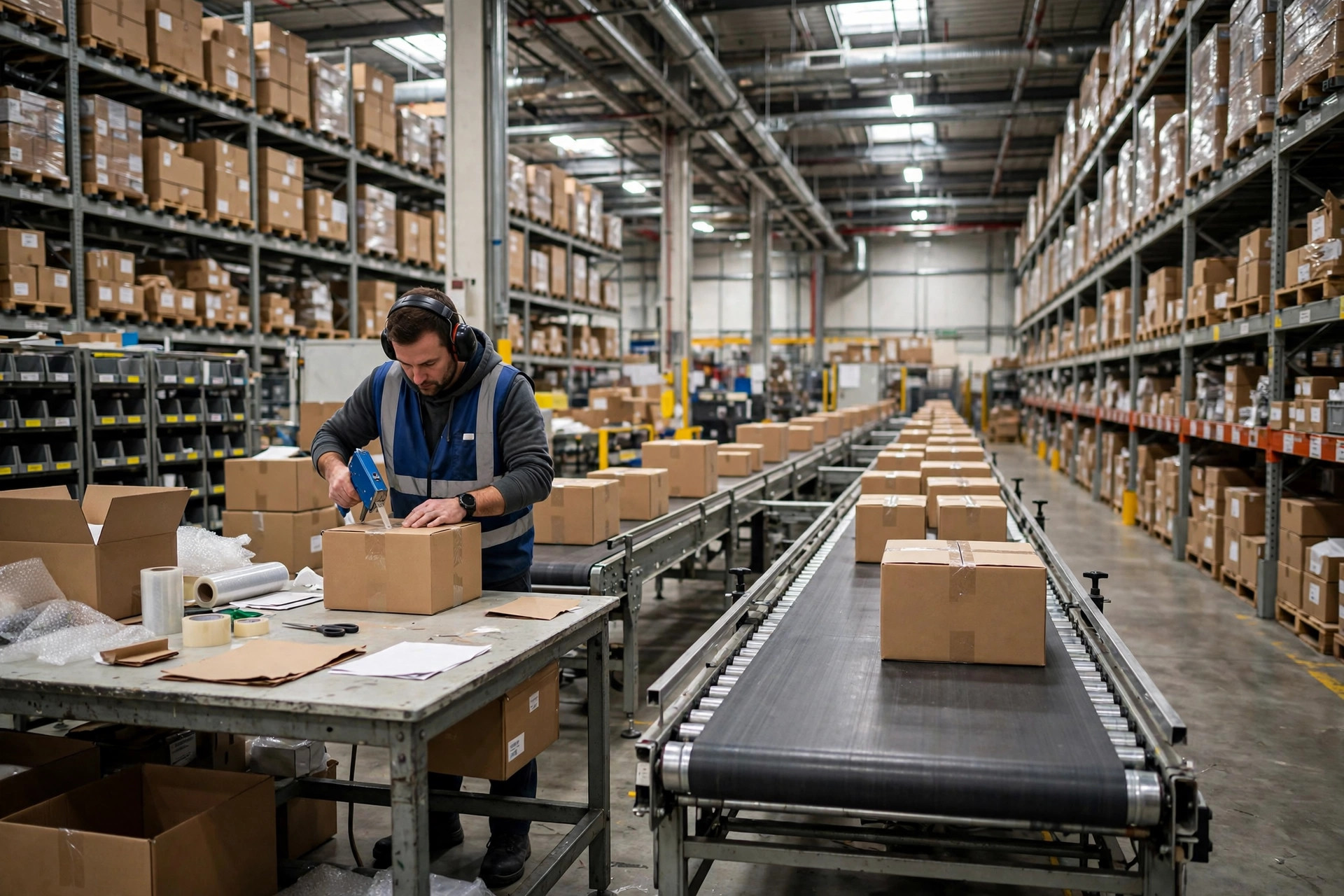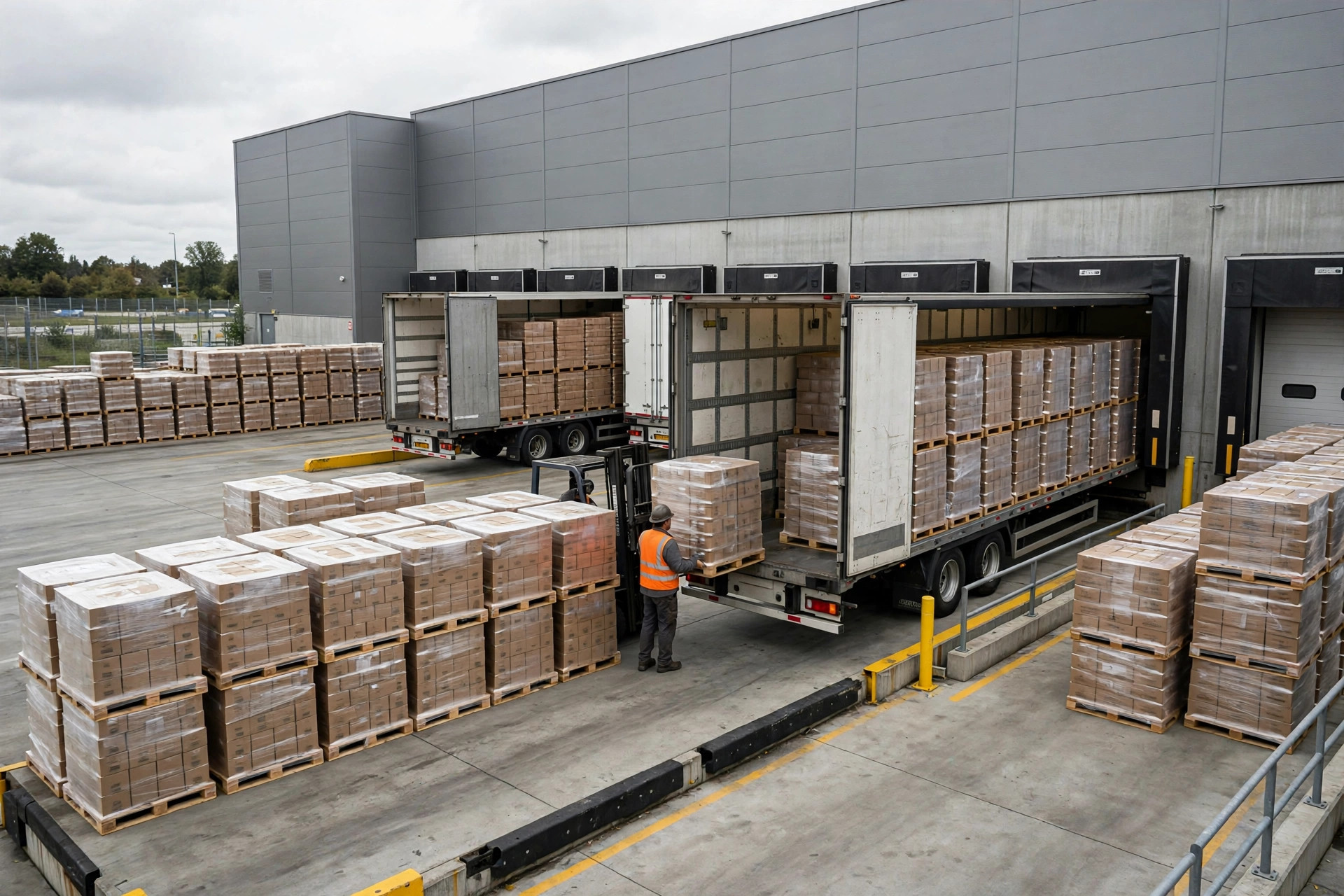
We have a client that sells home storage products out of a warehouse in Ontario, California. Last September, they were hit with a Walmart OTIF penalty over a Thanksgiving promo load — a load they had shipped to the distribution center two days early. The warehouse manager had been pretty proud of himself. Early delivery, what could go wrong? Then the month-end statement arrived, and everybody stopped smiling.
Yes, you read that right. At Walmart, showing up early can cost you just as much as showing up late.
As a 3PL sales director, I walk dozens of suppliers through Walmart compliance every year, and I have seen enough OTIF fines to tell you the part most people miss: the fine itself is not the most expensive part of the story.
What the Walmart OTIF Penalty Actually Punishes
Let me lay out the rules first. OTIF stands for On Time In Full, and it is the delivery-compliance core of Walmart's SQEP — the Supplier Quality Excellence Program. Two requirements: On Time, meaning your freight arrives inside the delivery window tied to the "must-arrive-by date" (MABD) Walmart assigns; and In Full, meaning you ship every unit on the order, no shorts.
The compliance bar has moved several times: it started at 75% when the program launched in 2017, tightened to 98% in 2019, and was relaxed to 90% on-time and 95% in-full in February 2024, according to Wall Street Journal reporting. One thing has never changed, though: misses are fined at 3% of the cost of goods. Treat any threshold number as perishable — always confirm the current terms in Walmart's Retail Link supplier portal before you argue with a buyer over a three-year-old screenshot.
Two details catch first-timers off guard:
First, OTIF is scored monthly. One bad week drags down the whole month's rate, and three good weeks usually cannot pull it back.
Second, early arrivals count as non-compliant. Walmart distribution centers run on appointment-based dock schedules. Arrive two days early and there is no dock door with your name on it — the truck sits, and the system logs an early delivery. Fined all the same. When Walmart rolled out the program, it made the position explicit: early shipments are fined as well. Plenty of warehouse managers live by the "ship early, sleep well" philosophy. At Walmart, that habit is a fine-print trap.
The Early-Arrival Trap: Two Real-World Lessons
Back to that Ontario client. Their Thanksgiving load carried a MABD window of September 18–20. The carrier rolled up to the DC gate on September 16. The driver figured early arrival meant early unloading — except the appointment system had no dock slot for the 16th. The truck waited outside for two days and finally unloaded on the 18th, but the system recorded arrival on the 16th: early, non-compliant, case closed. At 3% of the non-compliant goods value, that one load cost them close to ten thousand dollars. The maddening part? The product never missed its shelf date by a single minute.
The second trap is sneakier, and it hit a beauty client of ours in New Jersey. Early last year they had a PO for 1,200 cases, and the factory had shorted 40 cases of a bonus pack. The warehouse looked at it — "it's only 40 cases" — shipped 1,160, and planned to make up the bonus packs later. But In Full is measured at the order-line level, so those missing 40 cases failed the entire order on fill. The fine was the smaller problem. The SKU was mid-promotion, two stores stocked out for nearly two weeks, and the lost sales were more than ten times the penalty. The buyer named them in the quarterly review.
Here is the counterintuitive truth about OTIF fines: everyone stares at the 3%, and nobody totals up the three bigger bills behind it — lost sales from stockouts, a downgraded supplier scorecard, and, in serious cases, next quarter's order allocation. Anyone on the vendor side of this business knows Walmart doesn't actually want your fine money. It wants full shelves. The fine is just the lever.
The Math: What Missing OTIF Really Costs in a Year
Stories are nice; let's run the numbers. Below is a model for a mid-size supplier, using the publicly reported 3% fine rate:
| Item | Estimate |
|---|---|
| Average PO value | $80,000 |
| POs per month | 25 |
| Monthly goods value | $2,000,000 |
| Actual OTIF compliance | 85% (blended on-time / in-full) |
| Monthly non-compliant value (est.) | approx. $300,000 |
| Monthly fine (3%) | approx. $9,000 |
| Annual fine | approx. $108,000 |
Note that $108,000 is only the visible fine. In our experience serving suppliers, the hidden costs — stockouts, scorecard downgrades, lost allocations — typically run 3 to 5 times the fine. A mid-size supplier with a sloppy OTIF operation is really looking at something approaching $400,000 a year in damage.
And what does the fix cost? The remediation package we build for clients has three parts: first, a cleanup of the ASN and appointment workflow — two people, two weeks, mostly about managing MABD windows and planning shipments to the day; second, a MABD-window alert in the WMS outbound check, so the system flags any load shipping outside its window during pallet verification — for clients who already run a WMS, that's a configuration task; third, a buffer safety stock of around 2%, reserved for Walmart promo POs to protect the in-full metric. All three together usually cost under $30,000 in external spend. Thirty thousand versus four hundred thousand — you can do that math yourself.

How to Avoid Walmart OTIF Penalties: Three Clauses to Negotiate Upfront
What I have covered so far is tactics. Now the strategy — because as a sales director on the vendor side, I believe OTIF is half warehouse execution and half contract negotiation. A lot of fines could have been firewalled at the signing table:
First, negotiate prepaid versus collect on day one. Walmart orders come two ways: prepaid, where you arrange the freight and own any in-transit delay; and collect, where Walmart handles the freight and absorbs in-transit risk. Many suppliers default to prepaid because "our own trucks are cheaper." Cheaper, yes — but then you own 100% of the on-time risk under OTIF. My advice: for new suppliers, or categories with shaky lanes, push for collect and hand the in-transit risk back to Bentonville. Trade away a little freight leverage in exchange for OTIF compliance. Worth it.
Second, write an OTIF penalty-sharing clause into your 3PL contract. Our own template says it plainly: fines caused by the 3PL's warehouse operation — wrong shipment, late dispatch, ASN never transmitted — are borne 50% to 100% by the 3PL. Awkward to discuss upfront, far fewer fights later. Sign a 3PL contract without this clause and you have effectively bought full insurance for someone else's mistakes.
Third, price compliance as its own line item. ASN integration, label and pallet compliance, appointment management, MABD monitoring — every one of these costs money. Too many suppliers bury it all in the warehousing rate and quietly eat the compliance labor cost. When I quote a client, "retailer compliance services" gets its own line, priced in the open. The buyer can negotiate it with eyes open, and you don't bleed out in the dark.
One honest word from the vendor side: OTIF doesn't reward the biggest warehouse or the largest fleet. It rewards precision. Hit the window, ship the full quantity, transmit clean paperwork, and a small supplier can run 95%+ compliance all year. I have seen sub-$5M brands stay green on OTIF for years, and I have seen large suppliers burn six figures a year in fines because their warehouse still ships early "to be safe." The difference isn't scale. It's whether anyone takes the MABD window seriously.
So next time you're negotiating a contract, ask these three questions: one, "What exactly is the MABD window for this PO?" — never ship on gut feel. Two, "Prepaid or collect — who owns an in-transit delay?" — draw the liability line before you sign. Three, "If we miss OTIF, does my 3PL share the fine?" — push the penalty upstream. Get clear answers to those three, and you're halfway to never paying a Walmart OTIF penalty again.
By Susan, 3PL Sales Director