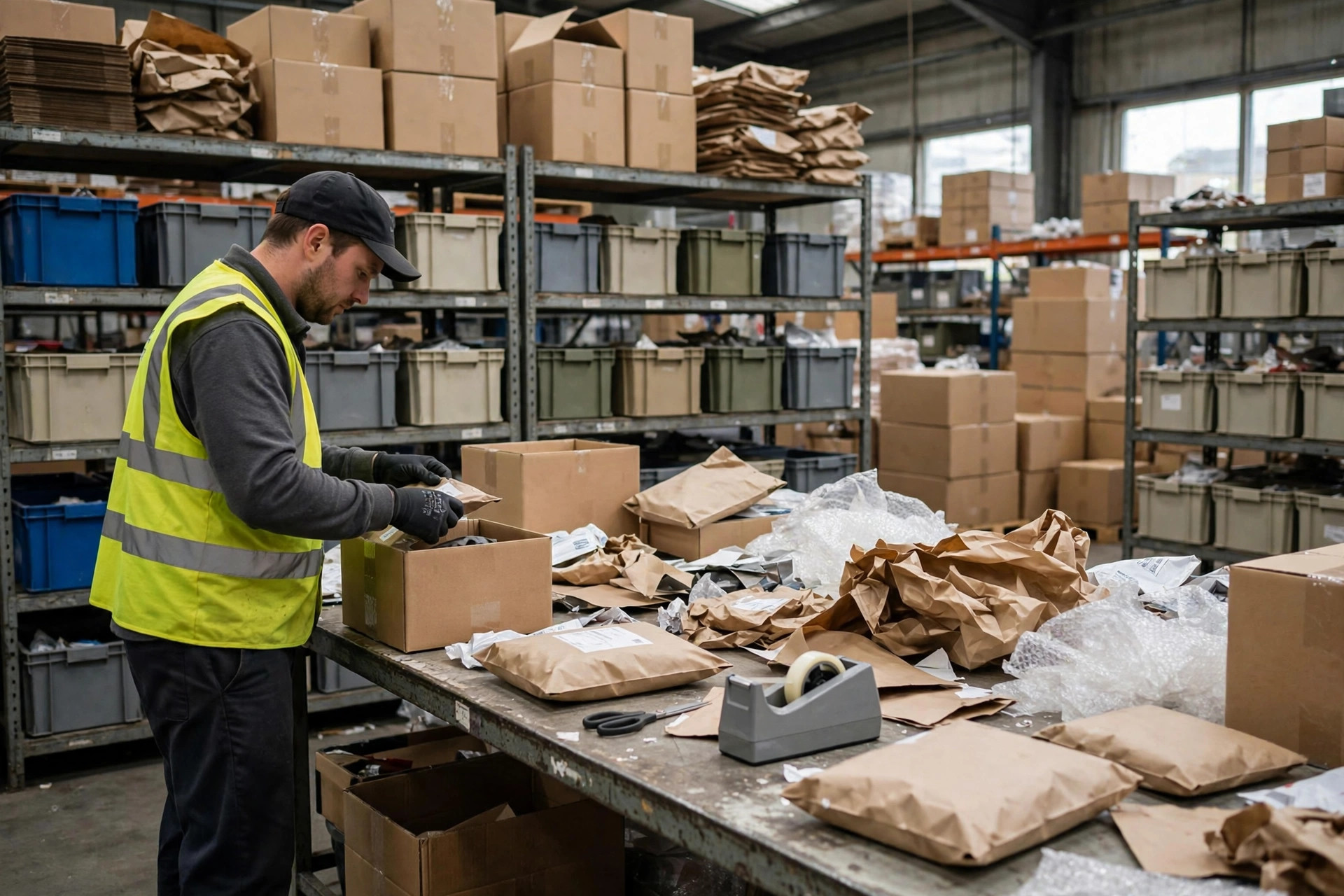
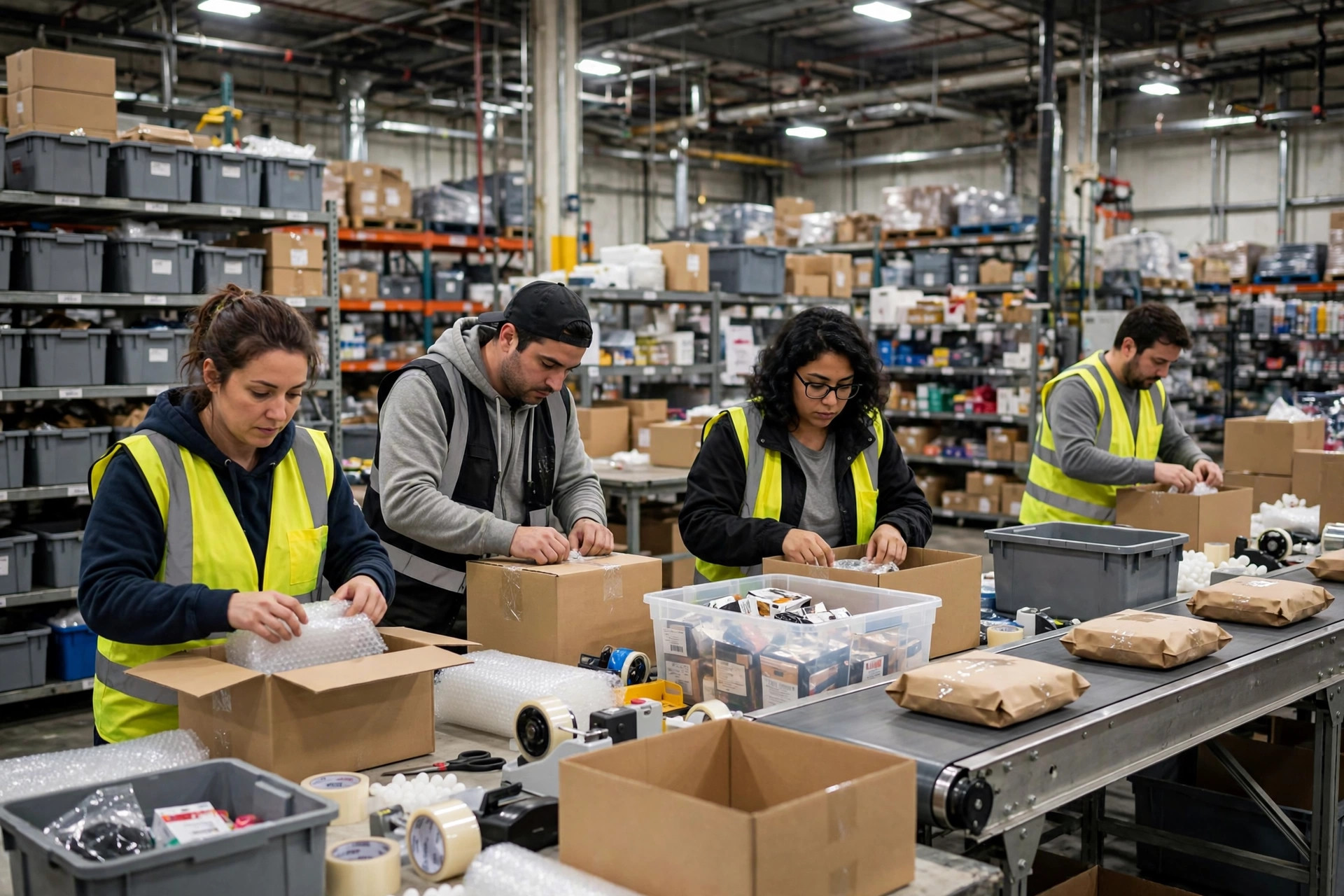
Let me start with a rant: marketplaces keep getting nastier about overselling. On Amazon, a spiking cancellation rate gets you warned first, then throttled. TikTok Shop is even more brutal — your experience score drops 0.1 and you can watch the traffic shrink in real time. But the fines aren't even the worst part. An oversold order earns you zero profit and still costs you customer service time, refund fees, and negative reviews. You're literally paying to lose money.
Black Friday 2024, a friend selling home storage organizers learned this the hard way. Three channels running at once — Amazon, his Shopify store, TikTok Shop — each with its own inventory count in the backend. His viral storage box had 800 units physically sitting in the California warehouse, but across the three storefronts it showed as "in stock" for 2,000 — because each platform displayed the full 800. Six hours on Black Friday night moved 1,400 orders. 600 of them didn't exist. He cancelled 600 orders, burned nearly $9,000 on refund fees and overtime CS, his Amazon account health went red, and traffic stayed depressed for two weeks. Worse, 40-plus of the 600 cancelled buyers left 1-star reviews, nearly all saying "fake inventory" — organic traffic took two full months to crawl back. His words: "That night, the more we sold, the more we lost."
That's life without oms virtual inventory: multiple warehouses, multiple platforms, and every channel staring at phantom stock.
What Virtual Inventory Actually Is: One Pool of Truth in the OMS
Virtual inventory doesn't conjure goods out of thin air — it's an allocation ledger inside the OMS. Physical stock: 800 units. The OMS first holds back safety stock (say 10%, 80 units), leaving 720 sellable. Then it splits the 720 across channels by trailing-30-day sales weight: Amazon at 50% gets 360, the indie store at 30% gets 216, TikTok at 20% gets 144. Each storefront only sees its own slice. When a slice sells through, listings lock — instead of raiding someone else's share.
The key distinction: virtual inventory allocates "available to sell," not "physically present." Inbound shipments, units awaiting QC, stock reserved for key accounts — none of it enters the sellable pool. I've watched too many sellers count "2,000 units arriving next week" as available, then the vessel slips a week and the whole network oversells. In-transit stock is a futures contract, not cash.
Three Firewalls for Oversell Prevention
Allocation alone won't save you — oversells happen in the time gaps. My OMS runs three firewalls, and they took our oversell rate from 3% to 0.2%:
Firewall one: real-time deduction. The moment an order lands, the OMS decrements available stock in seconds — not when the WMS confirms shipment. Some OMS platforms sync every 15 minutes; during a big promo, 15 minutes can mean 200 orders, and that lag is oversell by another name. I got burned by this once. Now sync frequency is my first question in any OMS demo.
Firewall two: oversell circuit breaker. When a SKU's available count hits zero, the OMS flips every storefront to "out of stock" or "pre-order" automatically — no human needs to notice first. During Prime Day in July 2025, our fan-light SKU blew through its allocation in 40 minutes, the breaker tripped, and the TikTok listing switched to pre-order mode (ships in 7 days). Pre-orders beat cancellations every time — the listing kept its ranking.
Firewall three: dynamic safety stock. Seven days before a big promo, the safety factor goes from 10% to 20%; slow movers can sit at 5% day to day. This isn't gut feel — it's sized off fulfillment volatility: take the largest "sold but unshipped" gap in the last 90 days, and safety stock covers at least that.
The Math: What One Oversold Order Really Costs
Plenty of sellers shrug: "Oversell? Just refund it. How bad can it be?" Here's a real breakdown for a $29.99 home product on Amazon:
| Cost item | Amount |
|---|---|
| Refund fee (the part the platform keeps) | ~$1.20 |
| Customer service (15 min of labor) | ~$2.50 |
| Review / account-health damage (amortized) | ~$5–8 |
| Traffic penalty (two weeks of suppressed ranking, amortized) | ~$10–15 |
| Total | ~$19–27 |
On a $29.99 item you're making maybe $8 of margin — one oversell loses you around $20 net. Meanwhile, holding 10% safety stock costs you 8–10% annualized on tied-up capital. One oversold order's loss funds safety stock for 200 orders. Once you see that math, you know exactly where the money goes.
And here's the counter-intuitive part: inventory that "looks fine" is the most dangerous state. 800 units physical, 800 showing on the storefront — feels safe, right? But with three channels each showing 800, you've got 2,400 units of hallucinated stock. Overselling is never "selling with nothing left." It's "every channel believing the stock is theirs."
Different platforms punish oversells differently, which decides where your firewalls lean hardest:
| Platform | Oversell consequence | Firewall priority |
|---|---|---|
| Amazon | Cancellation rate breach → warning → throttling, slow recovery | Trip the breaker early; go out-of-stock sooner |
| TikTok Shop | Experience score drops, traffic shrinks immediately | Keep safety stock generous; don't gamble |
| Indie store | Mostly refunds + CS cost, no platform penalty | Use pre-order mode as cushion, protect ad ROI |
See the pattern? Amazon and TikTok will hurt you themselves — be aggressive there. Your own store only bills you — handle it softly with pre-orders. That's exactly how my friend configures it now: 15% safety stock on Amazon, 15% on TikTok, 8% on the indie store. Same pool of goods, different tension.
Three pitfalls, all paid for with my own tuition:
One, don't rush returned goods back into sellable stock. Returns need QC. Give them their own "pending inspection" status in the OMS — no instant resurrection.
Two, keep pre-order and in-stock pools strictly separate. Pre-orders sell futures. Mix them and one big promo blows the whole thing up.
Three, freeze before transferring between warehouses. Moving 200 units from warehouse A to B? The second the transfer order is created, both sides' available counts lock simultaneously. Otherwise both warehouses sell those same 200 units during the 3 days they're on a truck. My friend ate this one in April 2025: 300 units moving from the East Coast warehouse to the West Coast facility, four days in transit, neither storefront locked — 90 extra orders sold, another round of cancellations and refunds. Since then, their transfer orders and inventory freezes run in the same transaction: both succeed, or both roll back.
Going live doesn't have to be scary, either. Four steps, and my friend was up in three weeks early in 2025: first, squeeze the "water" out of physical counts — pull in-transit, pending-QC, reserved, and defective units out of sellable to get one honest baseline (the number shrinks ~30%, but what shrinks is illusion). Second, set allocation rules — start simple with trailing-30-day sales share per channel, recalculated every Monday, and manually lock a version before big promos. Third, wire up the deduction chain — orders, cancellations, and returns must all hit the OMS in real time; cancelled orders especially need instant stock release, or you're overselling while ghost reservations pile up. Fourth, run two weeks of shadow mode — old and new logic in parallel, daily reconciliation, investigate anything over a 5-order variance. Zero risk until you cut over.
This setup genuinely works — I tested it myself: three firewalls plus dynamic safety stock, and in the second half of 2025 we oversold 11 orders total across three platforms, versus 340 in the same period of 2024. OMS virtual inventory isn't magic. It's one sentence: let every channel see only its own slice, and don't let phantom stock fool you.
By Ah K, E-commerce Seller (5 yrs)