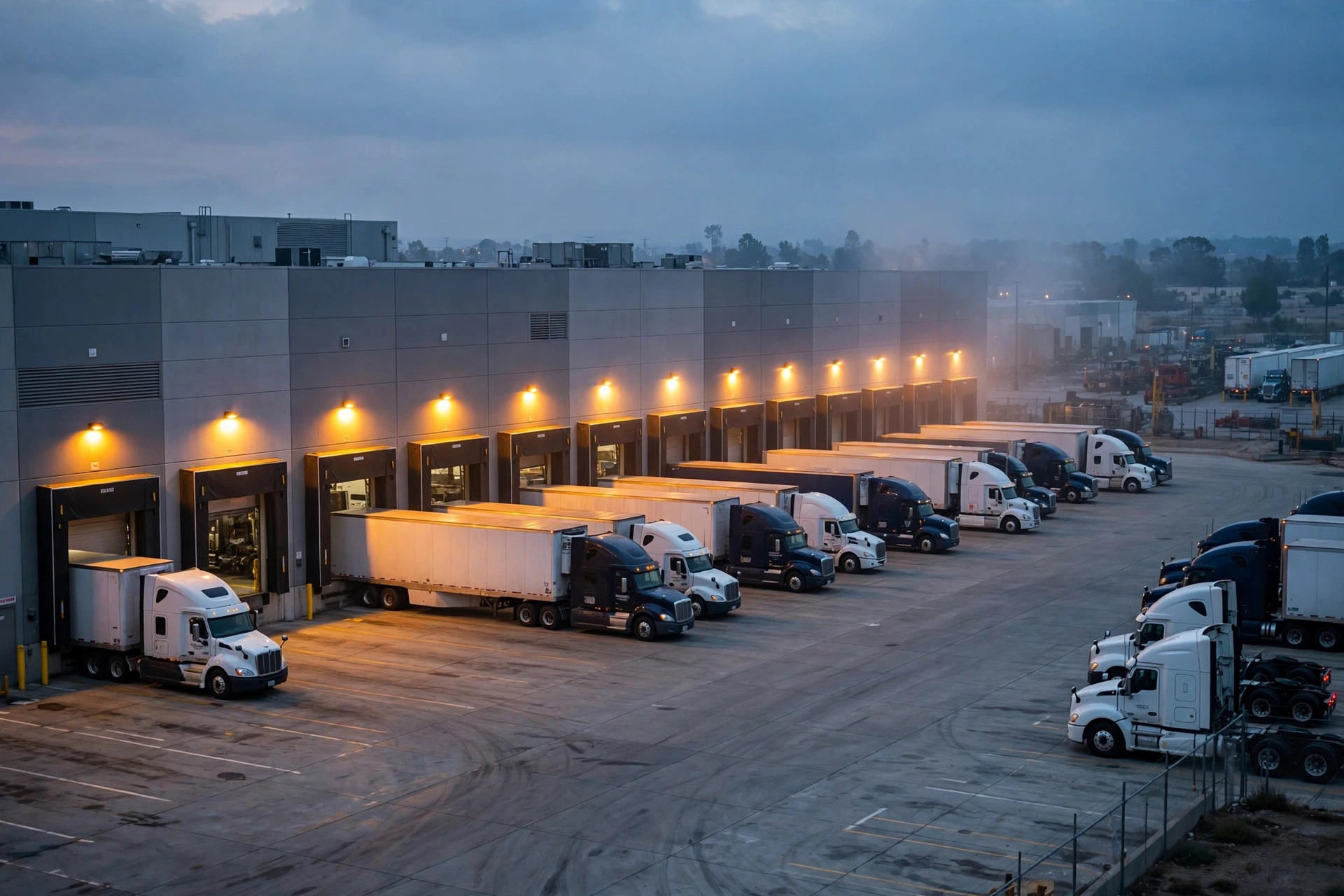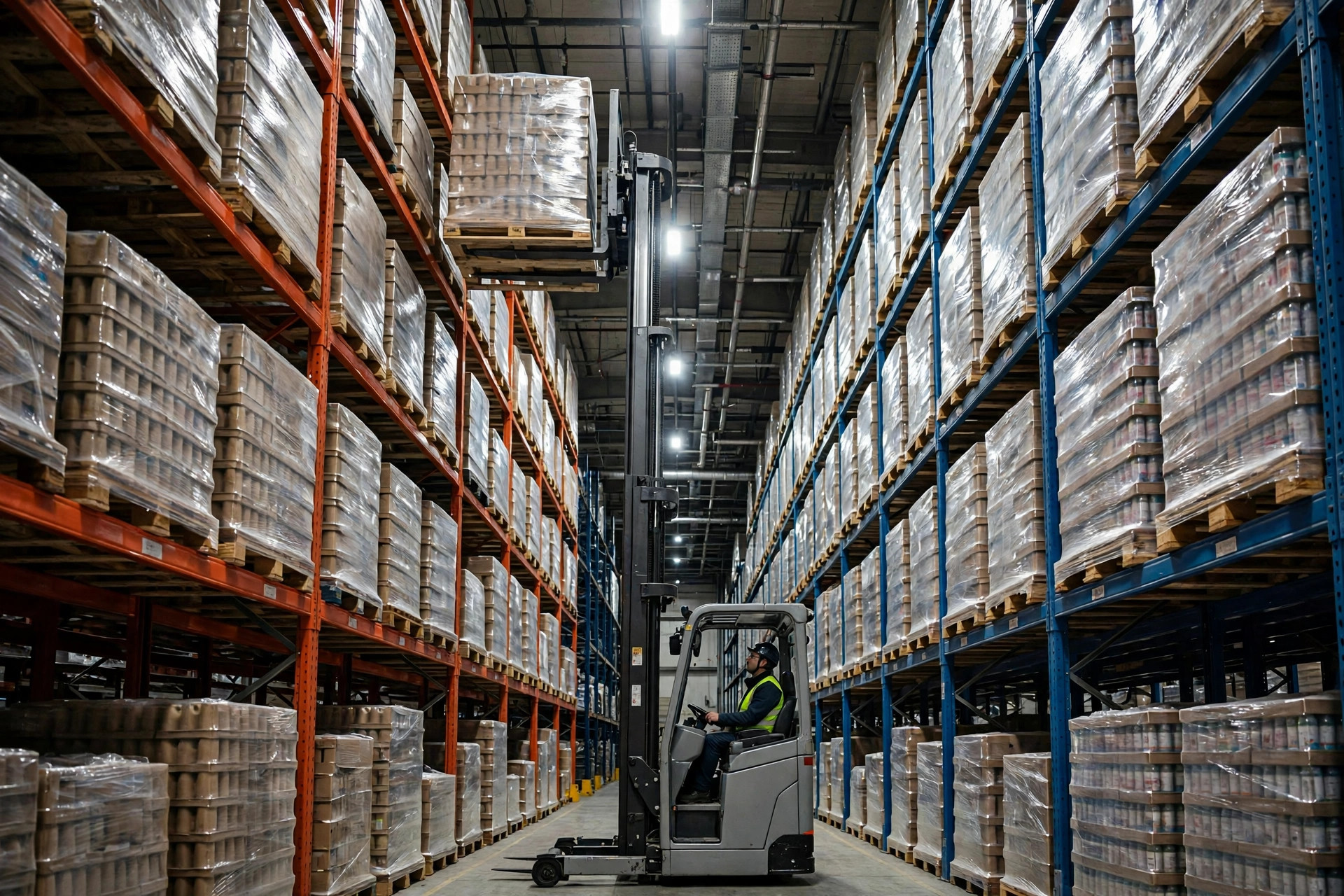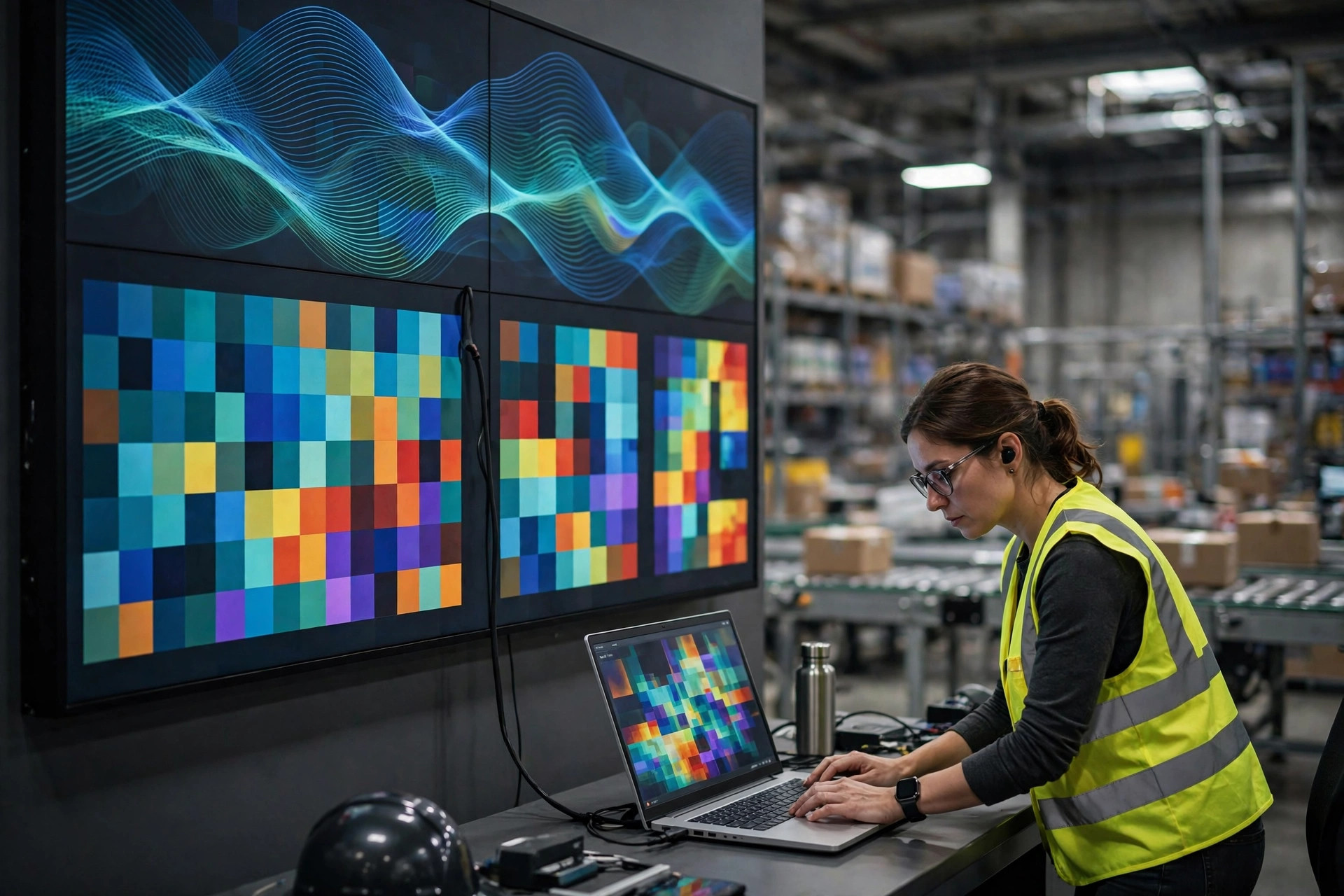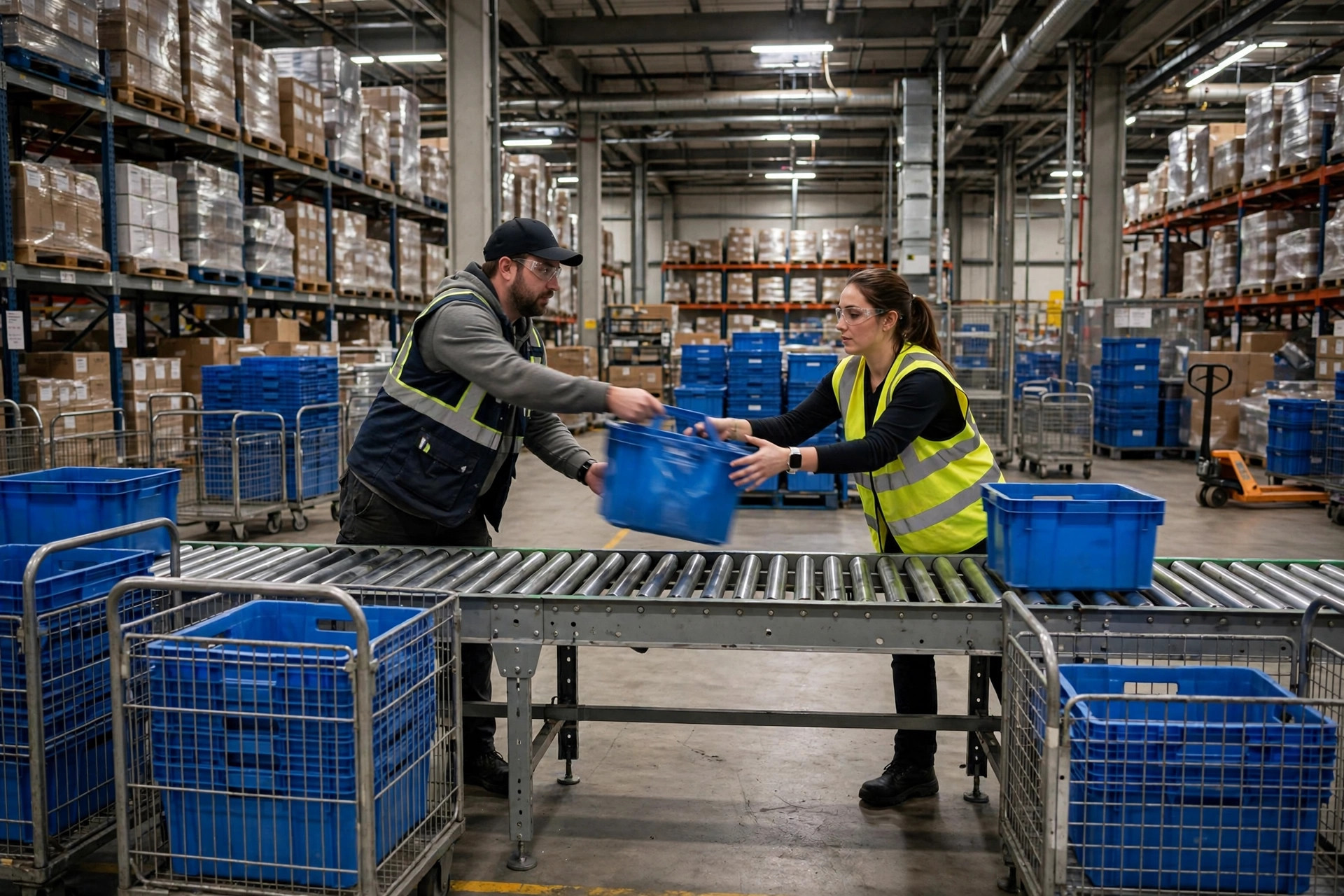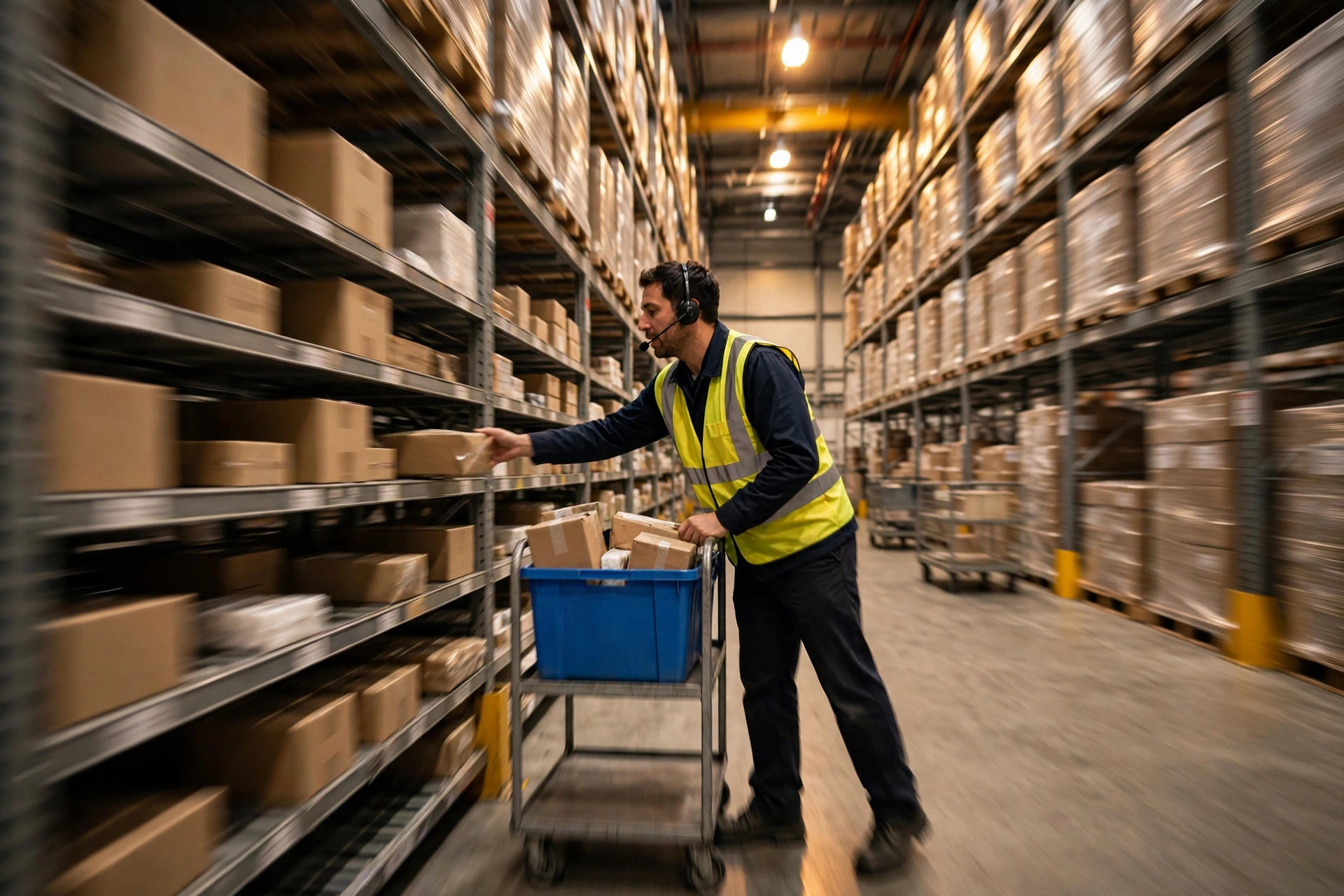
Last month I walked into a 3PL warehouse in Fontana — 120,000 square feet, mostly e-commerce parcels, about forty pickers on the floor. The owner told me they'd run traditional voice picking for three years and liked it fine. But every peak season, temp hiring turned training into a bottleneck. And whenever the conveyor roared or a forklift rolled past, recognition accuracy visibly dropped. So they agreed to pilot a new AI voice assistant for picking, and asked me to come watch the numbers.
I stayed for two full days. Here's what I saw, what I calculated, and where it hurt.
First, a word in defense of the old stuff: traditional voice picking works. Established vendors publicly claim 99.99% picking accuracy, with productivity gains of 10–35% over paper-based picking. There's a well-documented food distribution case out of Santa Barbara — a 100,000-square-foot DC that went from 135 cases per hour to 160, cut errors by more than 90%, and halved training time. Those numbers are real. They're also measured under near-ideal conditions: clear speech, stable network, cooperative workers. Real warehouses are rarely that tidy.
Where the old system hits its ceiling
Traditional voice picking is beautifully simple: the system speaks the location and quantity, the picker repeats back a check digit to confirm. It frees your eyes and hands — no paper, no scanner to fumble with. But after twenty years of watching these deployments, I can tell you exactly where the ceiling is.
First, the interaction is command-based. Mispronounce one word and the system just doesn't get it — say it again. During peak season, temps spend two or three days learning not how to pick, but how to talk to the system. Second, the check digit is a double-edged sword. It protects accuracy, but every order demands an extra spoken confirmation. After a peak-season shift, it's the picker's throat that gives out first. Third, noise kills it. Forklifts passing, conveyors rumbling — the old engines lean on the headset's physical noise isolation, and their tolerance for background noise is limited. When it gets loud, the system keeps asking you to repeat yourself.
The AI assistant in this pilot attacked exactly those three spots: noise-robust recognition, conversational confirmation, and voice-reported exceptions. In plain terms: no more memorizing command formats — you talk like a person. The system decides for itself whether it heard you clearly, and asks a follow-up question instead of throwing an error. And when you hit an empty slot or damaged goods, you just say so out loud, and it files the exception ticket automatically. No taking off the headset to go find a supervisor.
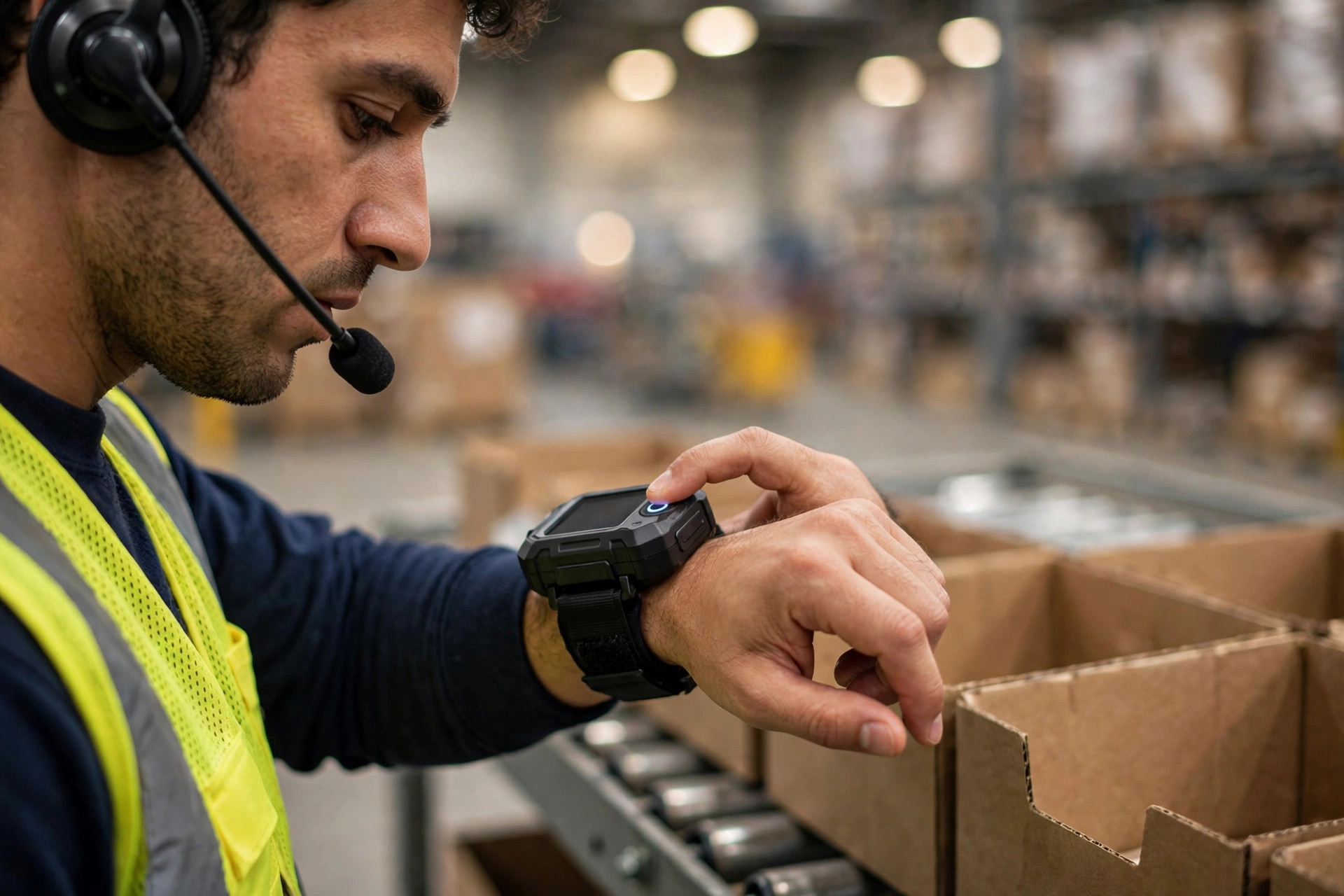
Where the saved minutes actually come from
We measured four things: recognition accuracy in noise, new-hire ramp-up time, exception handling time, and the handoff with scan verification.
In noise, we tested beside the conveyor line and at the forklift aisle. At peak noise, the legacy system managed first-try recognition in the low 80s percent range. The AI setup stayed above 95%. Don't shrug at a ten-point gap — every failed recognition costs 20–30 seconds of repeating and re-confirming. Across hundreds of orders a day, that's a full worker's hours, recovered.
New-hire ramp-up was the biggest delta. The old system typically needs two to three days before a temp works independently, and most of that is memorizing command formats and check rules. The AI system understands plain speech — "A zone, third row, second slot, grabbing four cases" — so a new hire keeps pace within half a day and matches veteran speed within a week. For a 3PL, this is real money: temps churn fast in peak season, and shaving two and a half days off training for twenty hires is fifty person-days of wages you don't spend.
Exception reporting is the part I cared about most. In the old workflow, a picker who found an empty slot or a crushed box either filed it through a rigid voice command — most just skipped it — or took off the headset and walked to a supervisor. In the pilot, the picker simply said "this slot is empty" or "the box is damaged," and the system logged the exception and triggered a replenishment task on its own. Measured end to end, the time from exception to system record dropped from over ten minutes to under one. Inventory accuracy lives and dies in those ten minutes: the system thinks stock is there, keeps assigning picks, and every mispick and re-pick grows out of that gap.
So what's the math? This pilot was priced per picker per year — for forty-plus seats, a low six-figure annual commitment. The savings come in three buckets: per-picker throughput (measured at roughly 15% more pick lines per hour), training cost (temp onboarding cut from three days to half a day), and the after-sales cost of mispicks and exceptions. The owner figured a 14–18 month payback at their volume. My read: that's optimistic. Budget for 20–24 months and you'll sleep better — because each of the three traps below eats into the return.
Three traps the sales deck won't mention
Trap one: Wi-Fi dead zones. An AI voice assistant is hungrier for real-time network than the legacy system — natural language understanding runs in the cloud or on an edge server, and it demands low command latency. This warehouse had a dead spot near the dock corner. Walk in there and the system hesitated; a single confirmation took two or three seconds. Over a day, orders in the dead zone actually ran slower than on the old system. Lesson: before you sign anything, walk the entire building with a test device and map the signal. If the network isn't solid, the smartest AI in the world won't save you.
Trap two: accents. The vendor demos in crisp standard English. Your warehouse doesn't sound like that. Heavy accents still knock recognition down a notch, whatever the brochure says about multilingual support and no training required. My advice: during the pilot, test with your heaviest-accented workers, not the supervisor and the two people with the clearest English. If the demo promises 99% and you hold 95% on the real floor, that's a win — plan for it.
Trap three: veteran resistance. The least technical trap, and the most dangerous. A picker who's spent three years rattling off check digits finds "just talk naturally" disorienting — it feels less safe, not more. Two senior guys in this pilot got slower in the first two weeks and complained daily. What fixed it was keeping the legacy command mode as an option and letting them transition at their own pace. Any system that changes how floor workers do their jobs needs an off-ramp for the veterans, or the rollout friction will eat half your ROI.
So here's my verdict, plainly stated.
This is worth it for: warehouses running 3,000+ pick lines a day, more than 5,000 SKUs, and heavy temp hiring in peak season — 3PLs and e-commerce operations first. The bigger the training and exception costs, the better the math. Loud facilities and messy assortments (food, auto parts) get extra value from the noise robustness and conversational interface.
Skip it for now if: you're a few-hundred-orders-a-day shop — legacy voice, or even paper plus scanning, is plenty, and the annual fee won't amortize. If your building never got a proper wireless survey, fix the network first. And if management expects the system to eliminate training — it won't. AI lowers the bar; it doesn't remove it. Every SOP still needs to be taught.
One last honest thought: the AI voice assistant isn't a revolution that replaces voice picking. It's an algorithm sanding down the friction of "humans adapting to the system." Whether the money is worth it depends entirely on how expensive that friction is in your building. Run that number before you sign.