Here's what nobody tells you when you sign with a 3PL: how high your pallets sit is your problem, not theirs. I spent my first two years as a seller never once thinking about rack height. Then I learned that every pick fee and every damaged carton in high-bay picking lands on the seller's P&L.
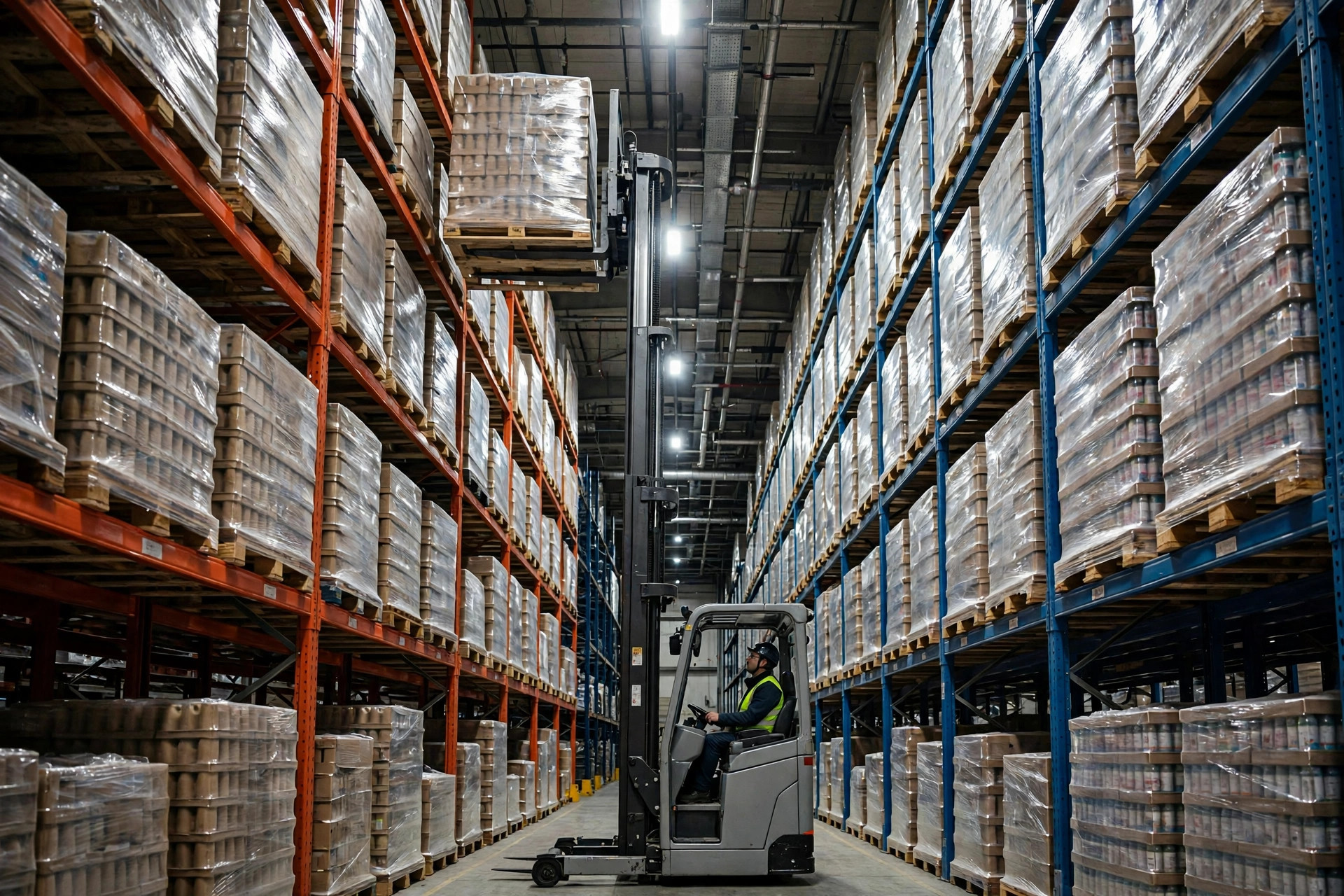
Here's what happened. My inventory sat on the 5th beam level of a California 3PL warehouse — over 6 meters up. During the week before Black Friday 2024, the warehouse was slammed. To keep up, they started pulling full pallets down from the high bays with a reach truck, breaking bulk at the floor, then putting the pallets back. One pallet of small appliances wasn't squared on the forks. It swayed at over 5 meters, and 8 cartons came down. Three were crushed, two units had cracked housings.
The warehouse's damage claim paid me a little over $800 — at landed cost. But those broken units would have sold for over $2,000 on Black Friday itself. The lost margin, the ad spend burned while I was stocked out — nobody reimburses that. That's the seller's relationship with high bay picking: the warehouse refunds your cost, you eat the profit.
The OSHA numbers are worse. Roughly 85 forklift-related deaths and about 34,900 serious injuries happen in the US every year, and OSHA estimates 70% were preventable. Tip-overs account for about a quarter of the fatalities, and falling loads plus falls from height make up a big share of the rest. A carton falling from 6 meters hits like something thrown off a second-floor balcony — if someone's underneath, it's catastrophic.
High Bay Picking by Forklift: Fast, But Who Pays When It Falls
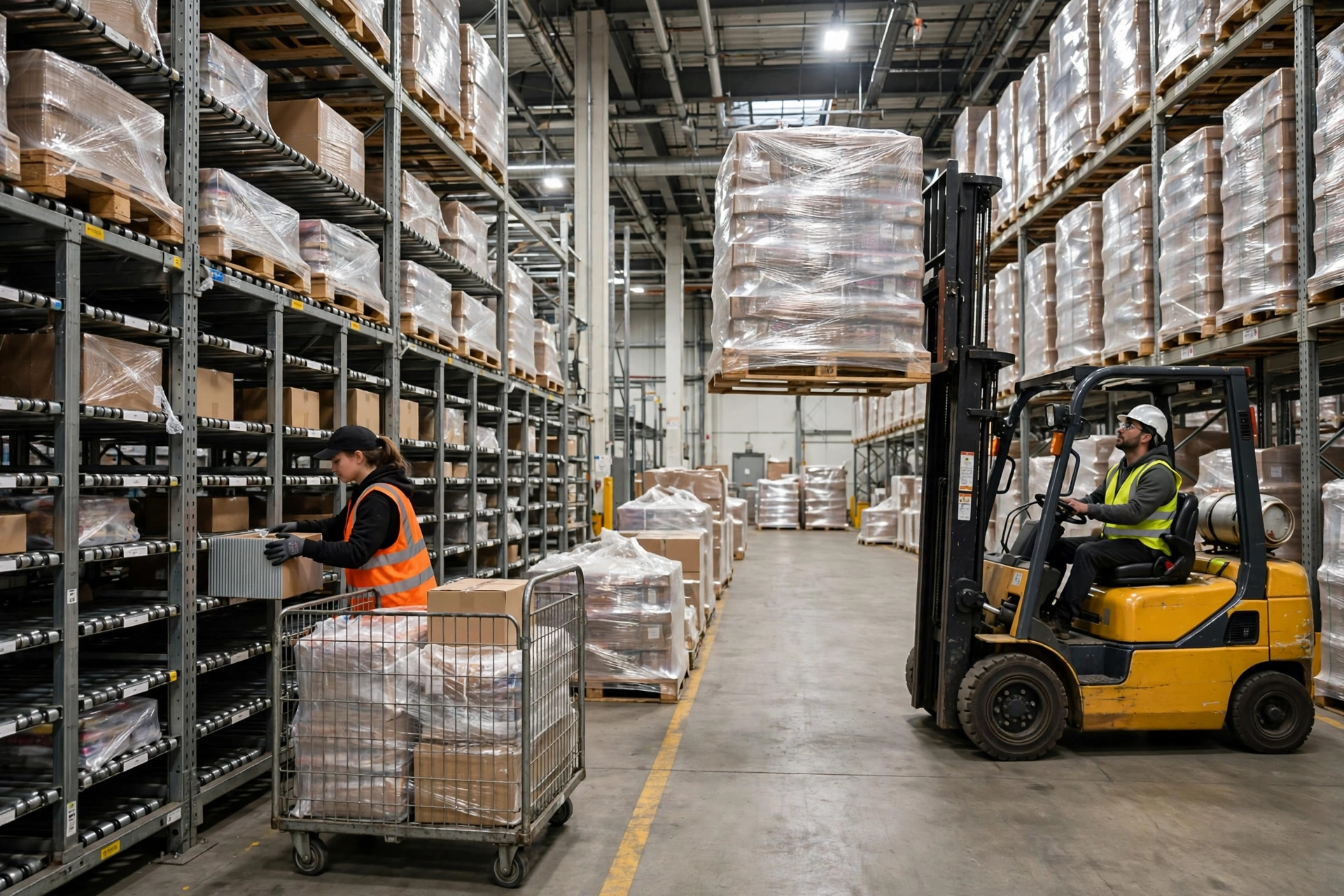
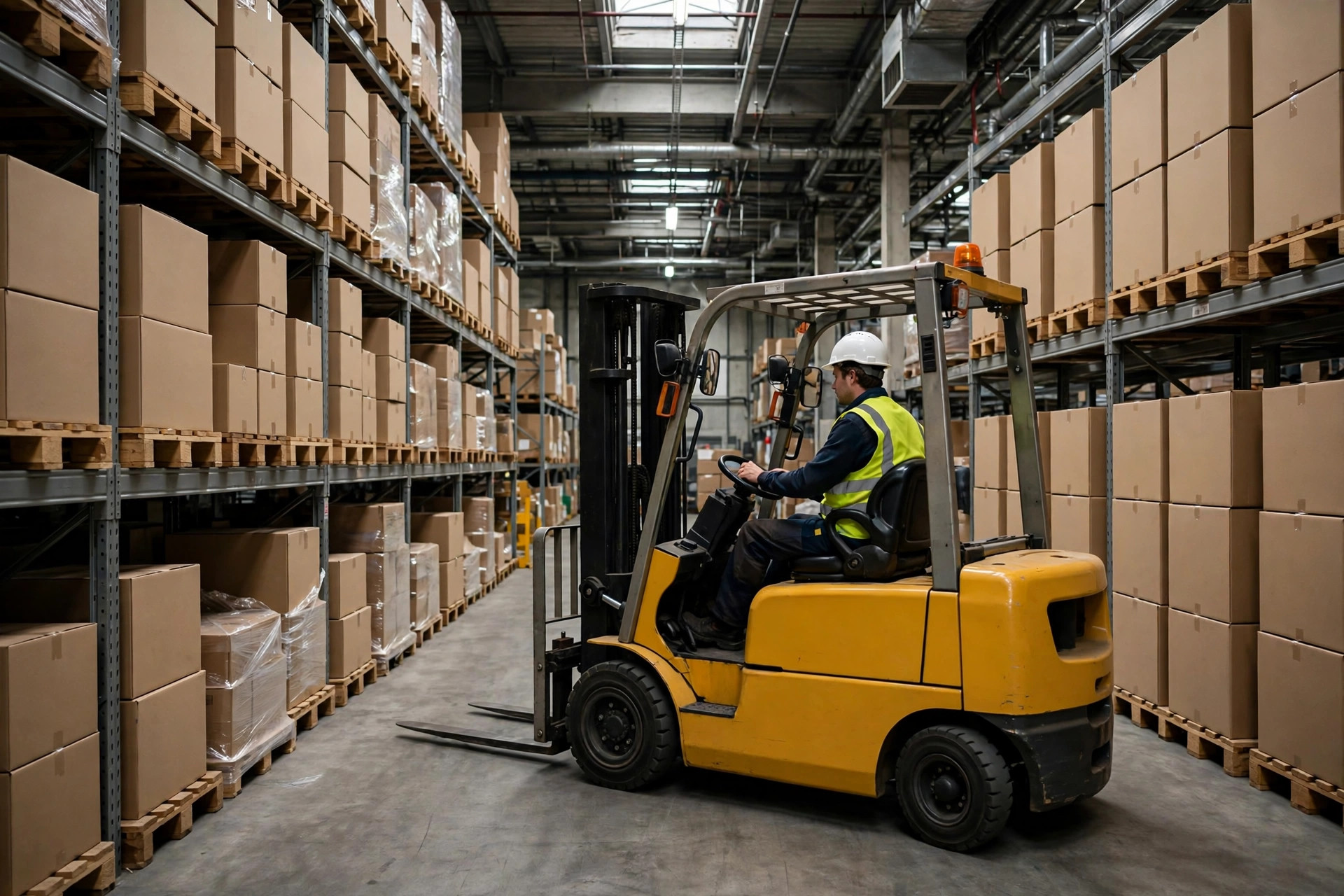
Forklift high-bay picking works like this: nobody goes up. A reach truck raises its forks to 9–13 meters, pulls the full pallet down, the picker breaks bulk at the floor, and the pallet goes back up. One word for the upside: fast. A full pallet in and out takes minutes, and the pick fee is cheap.
The problem is inside that "fast." Above 5 meters, the driver can't see the fork tips — they're aligning with the pallet openings by feel. Under time pressure, a hard turn or a rushed approach sets the whole pallet swaying, and cartons start walking off the edge. After our incident, the driver admitted he'd been juggling 30-plus wave batches and never had time to re-align.
The fee structure is the real trap. On the 3PL rate card, forklift full-pallet picks look cheapest — about $8 per pallet at our warehouse (our rate card; yours will differ). But here's the damage math: the warehouse reimburses landed cost, while you absorb the lost margin, the stockout, the delayed FBA inbound. One drop wipes out months of "cheap pick fee" savings.
Person-to-Goods Picking at Height: Slower, but Drops Less
The other approach sends the person up. A man-up order picker carries the operator on a platform — with the pallet — right to the rack face, and they pick piece by piece. Platforms reach 10–12 meters. The operator sees every carton, every tear, every loose stack, up close.
The payoff is fewer damage claims. Late 2024 I switched to a 3PL that does all split-case picking man-up. In three months, damage claims dropped from 4–5 per month to under one. The price: pick fees went from about $1.20 to about $1.60 per line (again, our rate card).
The catch is speed. Riding up and down, creeping the platform down the aisle — a pick run takes 2–3x longer than a forklift full-pallet pull (our measured numbers). During peak, pick throughput decides whether your orders ship on time. Slow is itself a cost.
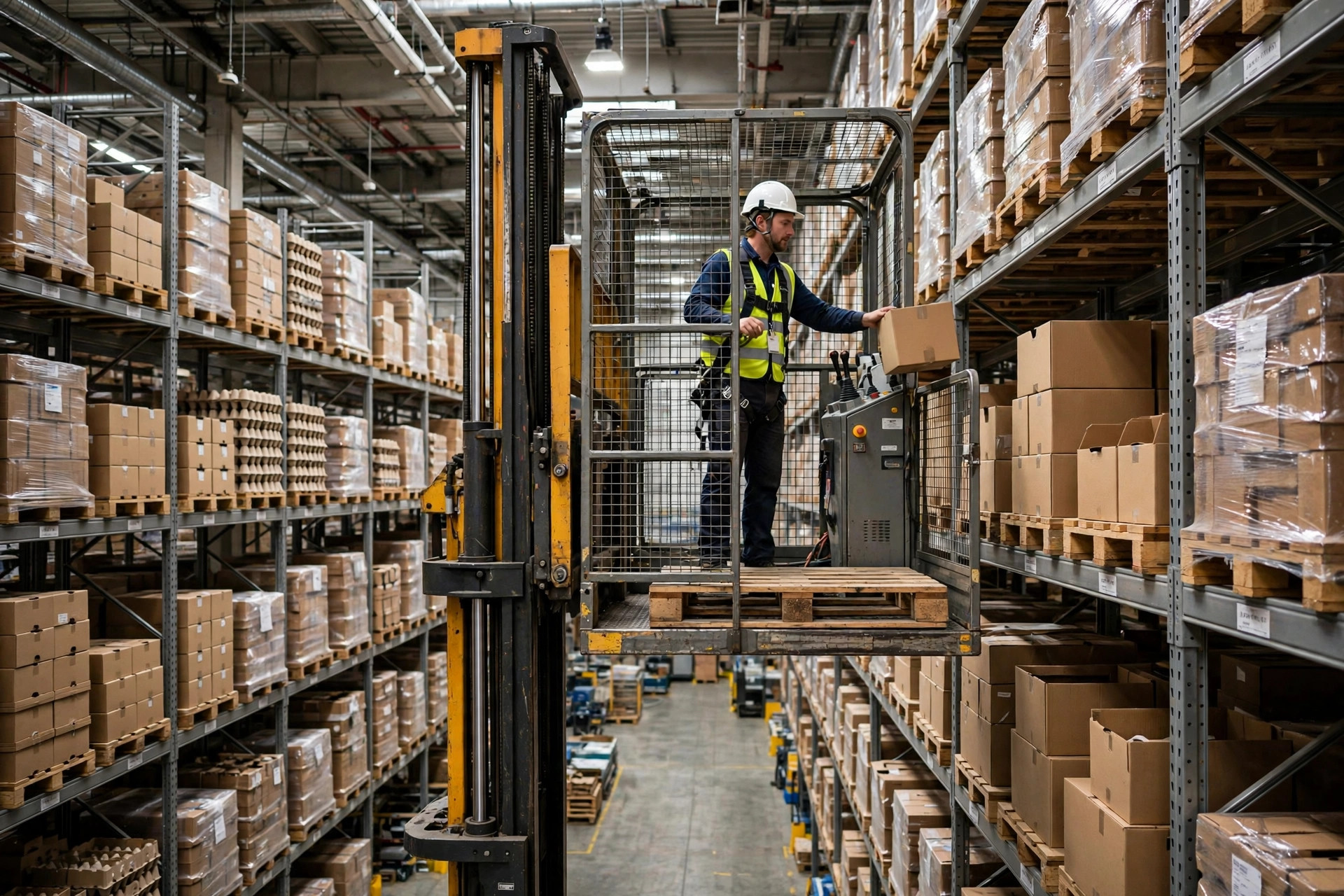
One equipment detail worth knowing: an order picker's capacity collapses with height. A truck rated 1,200 kg might carry that at 3 meters but only 400 kg at 9.5 meters. Heavy cartons don't belong up high anyway — man-up or not.
The High-Bay Picking Decision: Run the Trade-off
I made myself a decision table. Two dimensions: SKU value and outbound pattern.
| Product type | Outbound pattern | Pick method | Why |
|---|---|---|---|
| Low value, full-pallet out | Full case / full pallet | Forklift pallet pull | Fast, cheap; a dropped carton doesn't hurt |
| High value, split-case | Dropship / multi-SKU small orders | Man-up order picker | One drop costs more than a year of fee difference |
| Heavy (15 kg+ per carton) | Any | Keep it low, hand-pick | High-bay picker capacity can't handle it safely |
| Seasonal winners | Peak full-pallet out | Forklift + reinforced packaging | Peak is a speed game; spend extra on packaging as insurance |
Here's the counterintuitive part: most people think the scariest thing in high-bay picking is a falling carton. For a seller, the expensive one is the carton that doesn't fall — it gets speared. A fork tip punches through the side, the outer box looks fine, the product inside is cracked. The customer discovers it at unboxing: one-star review plus return, plus FBA's pile of handling fees. Add return shipping and ranking damage, and a speared carton often costs far more than a visibly dropped one — and the warehouse won't cover any of it.
Three Questions for the 3PL Contract
Standard 3PL contracts handle damage something like this: "reimbursed at landed cost, capped at X times monthly storage fees." Before you sign, ask three questions:
- Reimbursed at what value — landed cost or retail? Who eats the difference?
- What's the reporting window? Clauses that void claims after 48 hours are everywhere.
- For high-bay picks, does the warehouse commit to extra safety steps — re-aligning above 5 meters, adding a spotter during peak?
Ask all three and you can tell a solid 3PL from a shaky one in one conversation.
This one I've personally tested and it works: layer your SKUs by value — high-value SKUs at hand-pick level, low-value ones up high for forklift pulls, and never put heavy cartons in the bays. Rack height is your cost line.
By Ah K, E-commerce Seller (5 yrs)