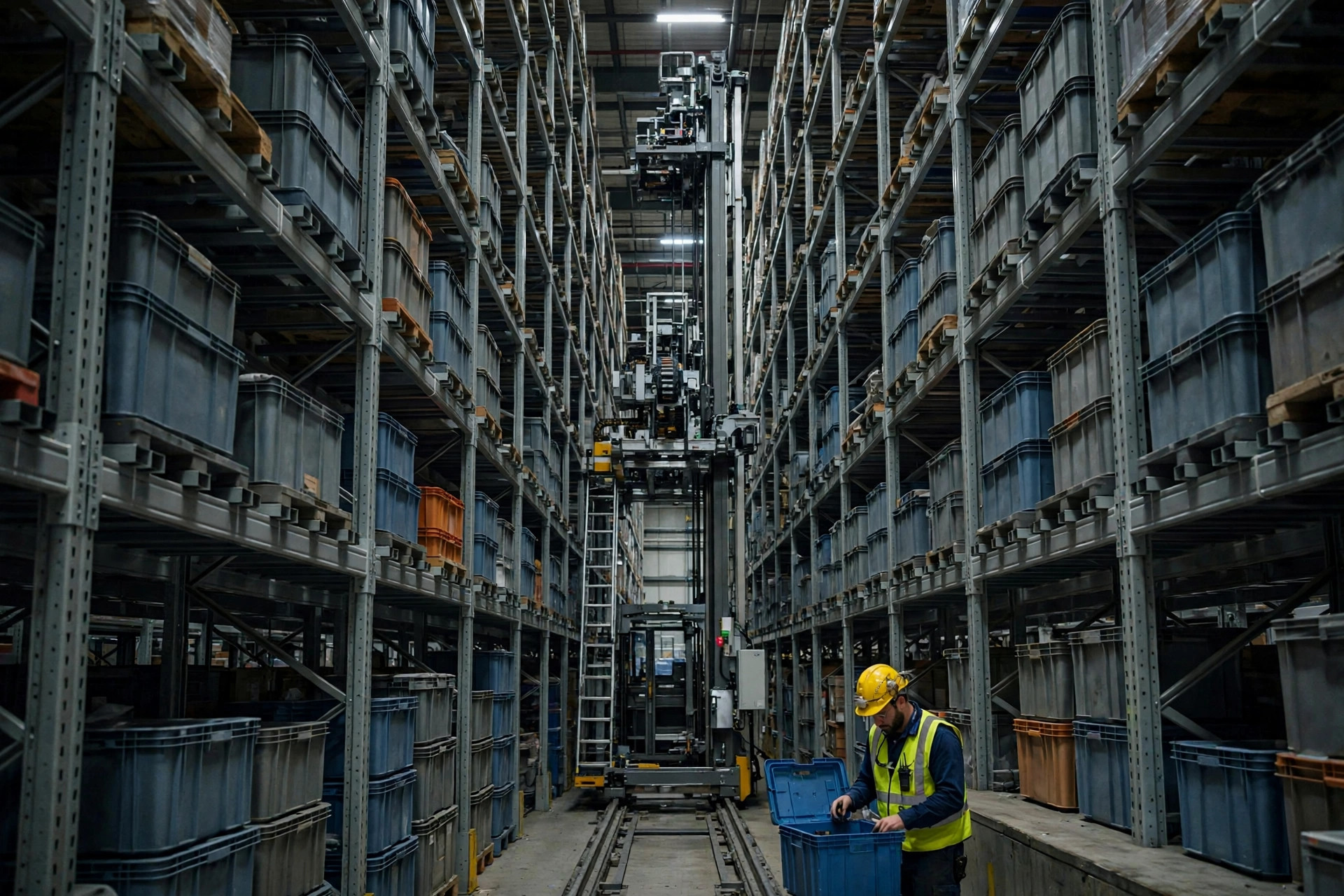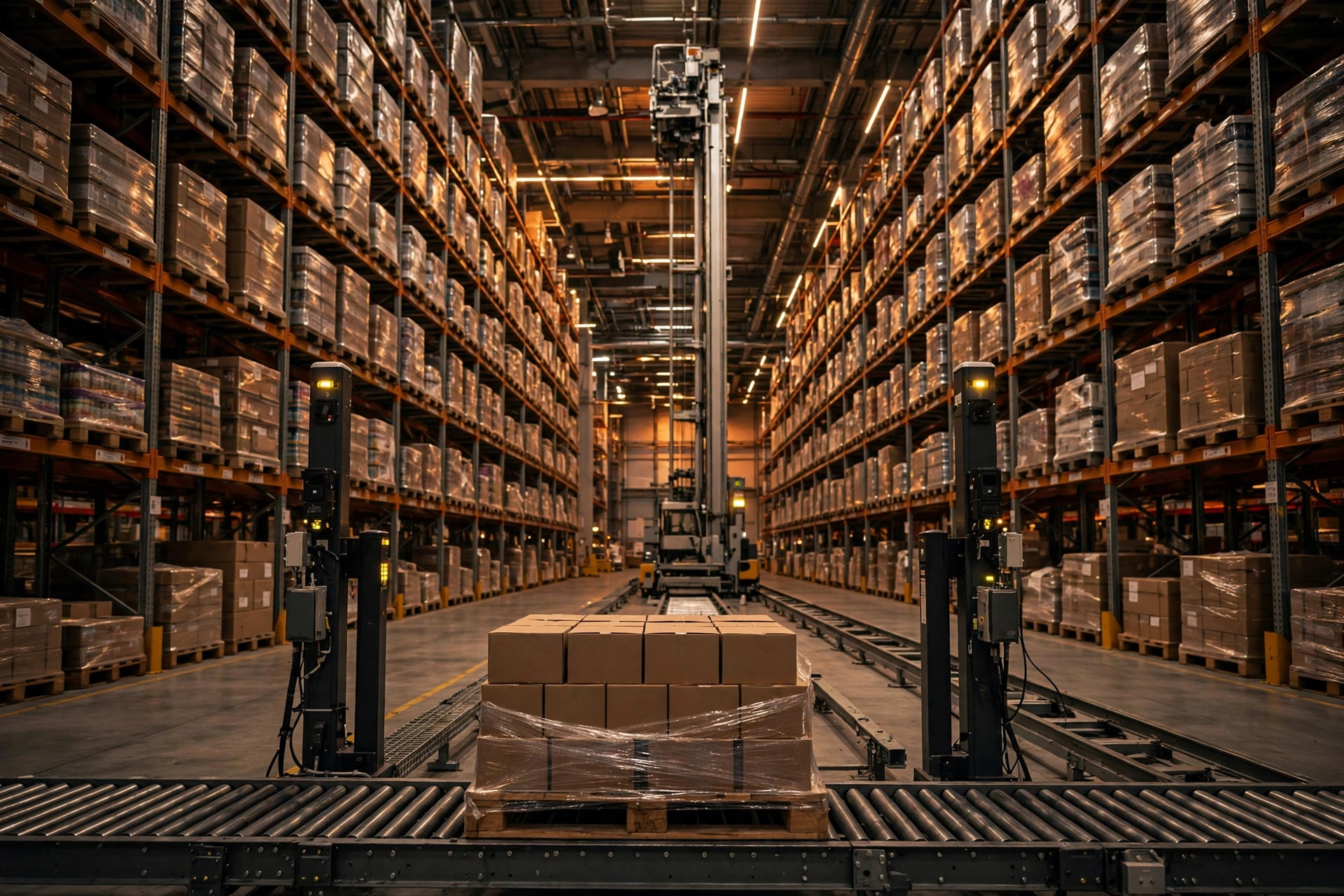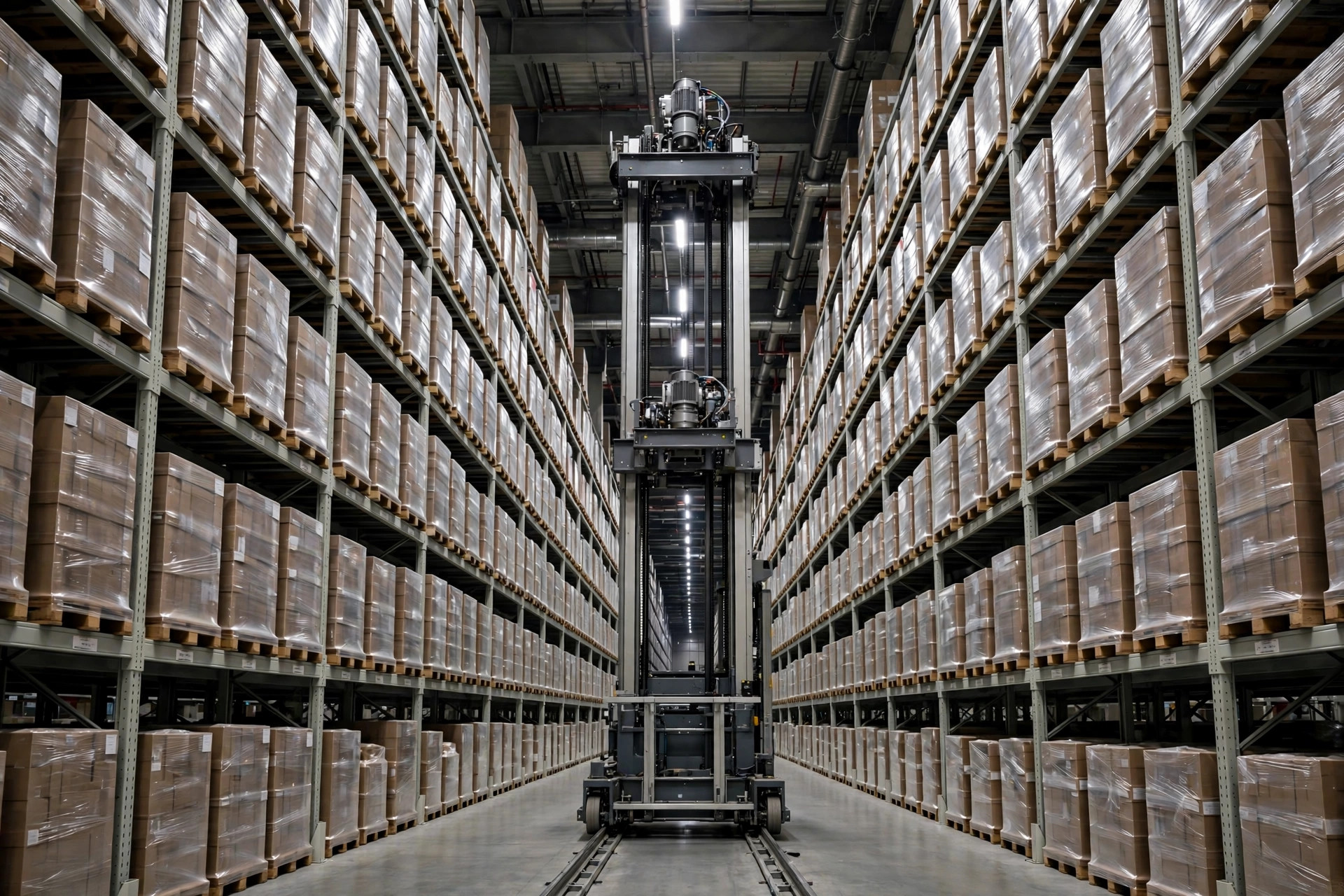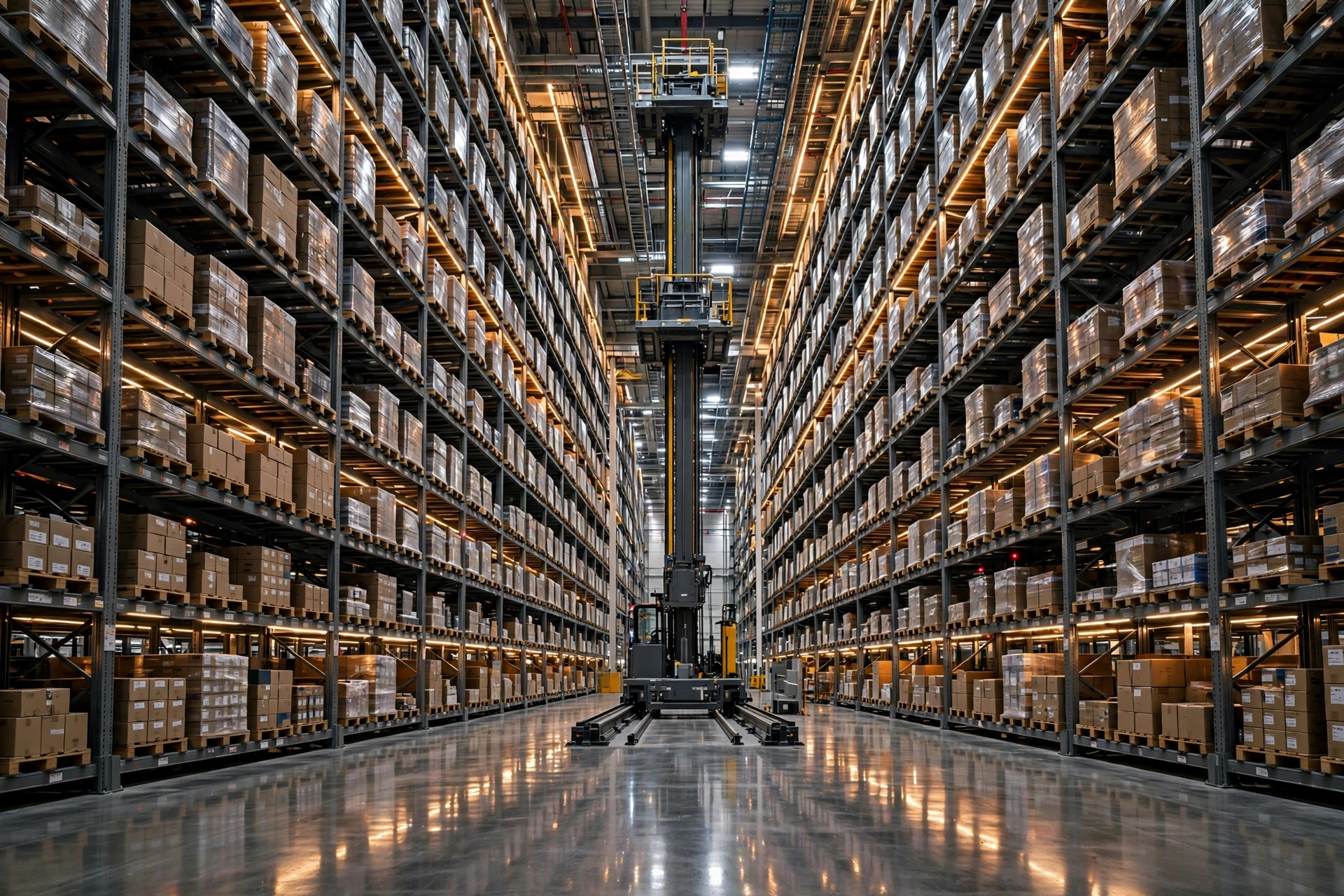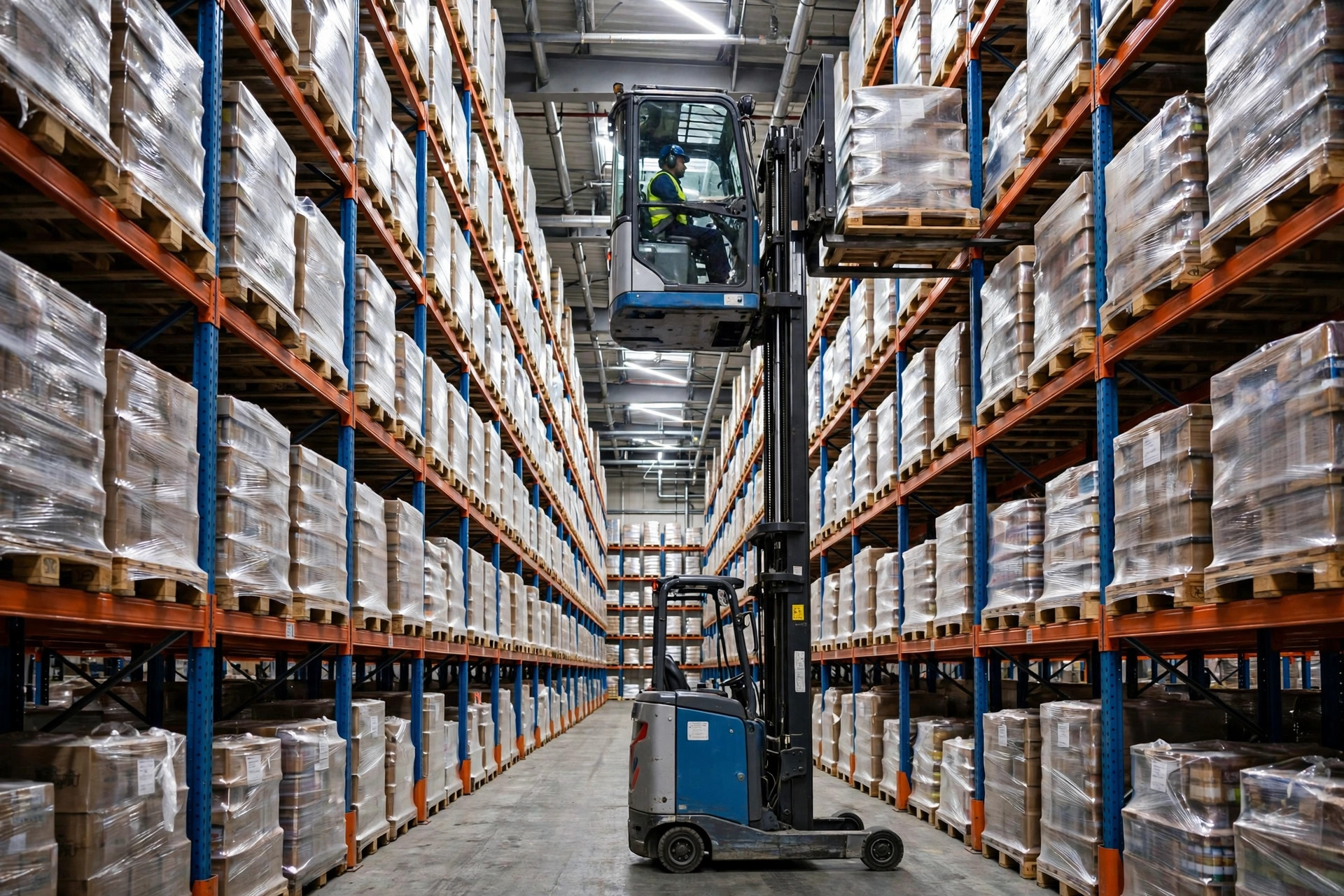
Let me run the numbers first, because that's where every VNA conversation should start. Take a 100,000-square-foot warehouse running conventional selective racking with counterbalance forklifts. The aisles are 12 feet wide, which means roughly a third of your floor space is empty air — space you've paid for but can never store anything in. Switch to very narrow aisle (VNA) racking: aisles shrink to about 1.6 meters, the racks climb several levels higher, and the same building holds 30 to 40 percent more pallets. That's a well-documented range, not vendor hype. I've walked multiple clients through this exact math over the past few years, and the reaction is always the same — eyes light up. No relocation, no building expansion, a third more pallet positions on the same slab. It sounds like free capacity. And every time, I have to follow it with cold water: that extra 30 to 40 percent is bought, not found, and buying it wrong hurts more than just leasing a second building. VNA sits in the middle ground between heavy-duty selective racking and a fully automated ASRS — partway between "forklifts and people" and "cranes and software." For the right operation it's brilliant. For the wrong one it's an expensive trap.
Let's get the definition straight, because VNA gets confused with several adjacent concepts. The racking itself is nothing exotic — it's just taller selective pallet racking, with 100 percent selectivity, every pallet position independently accessible, first-in-first-out by default. The magic is in the truck and the aisle. A counterbalance forklift needs about 12 feet of aisle to turn; a reach truck needs around 8 feet. A VNA turret truck never turns in the aisle at all. Its forks rotate a full 180 degrees, so the truck drives straight down the aisle and serves racking on both sides without maneuvering — which is why the aisle only needs to be 1.6 to 2.0 meters wide, barely wider than the truck itself. Most turret trucks are "man-up" machines: the operator cabin rises with the forks, so the driver works at height, eye-level with the pallet position, with lift heights reaching 12 to 18 meters. The aisles typically get a guidance system — rails embedded in the floor, buried wire, or magnetic navigation — that steers the truck in a dead-straight line, so the operator focuses on lifting and placement, not steering. That guidance is also why VNA is brutally demanding about floor flatness, which I'll come back to.
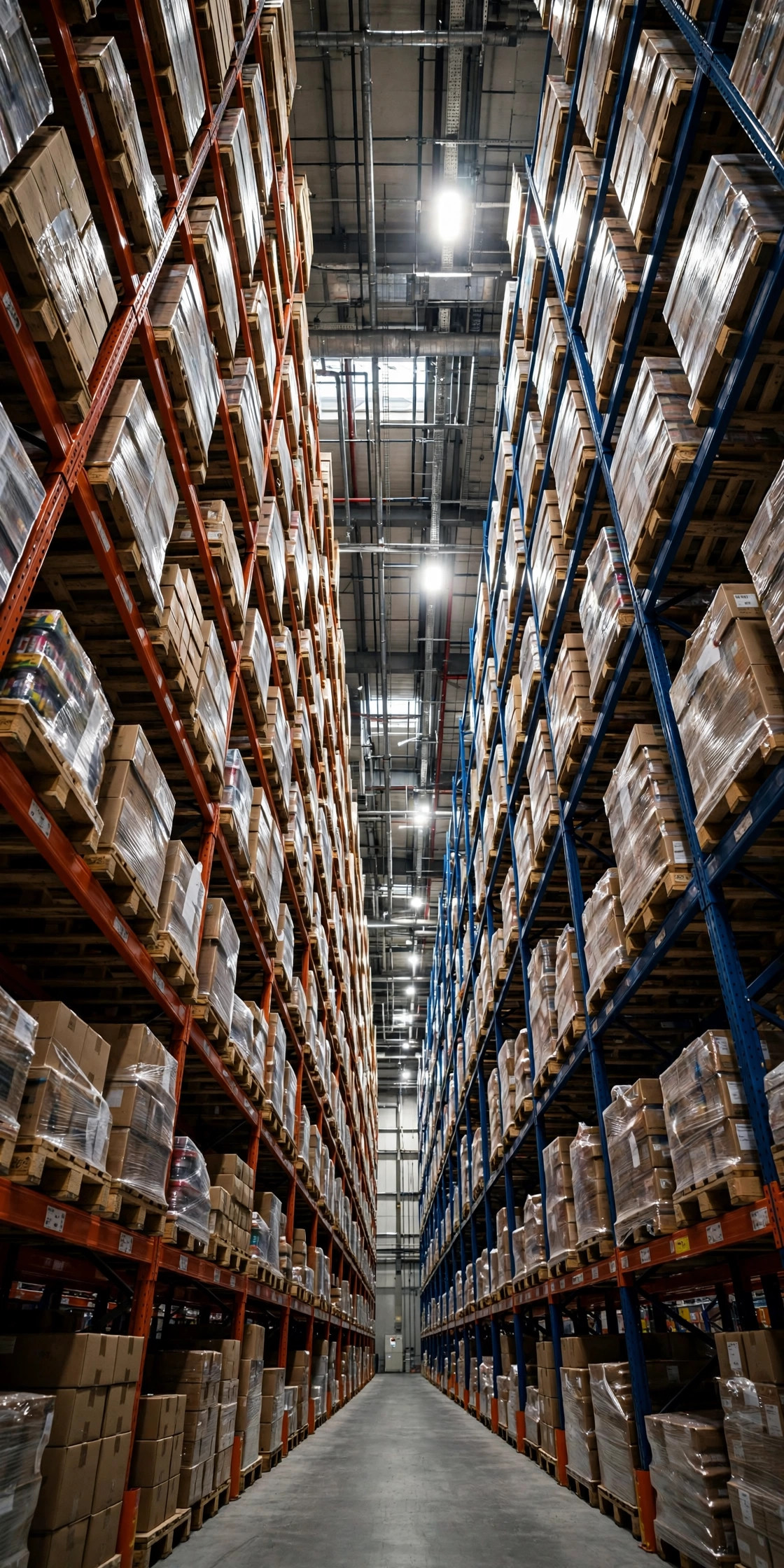
When you squeeze the aisle down to 1.6 meters, does the space you save actually pay for what you spend?
This is the calculation that matters, and I'd urge anyone considering VNA to do it themselves before talking to equipment vendors. The capacity gain comes from two sources. First, narrower aisles mean more rack rows fit in the same building width. Industry planning data puts it concretely: 1,000 pallet positions need roughly 10,500 square feet under a conventional layout, but only about 6,000 square feet with a narrow-aisle layout — a 40 percent footprint saving, or equivalently 40 percent more pallets in the same space. Second, height: a counterbalance truck stacks about four levels high; a turret truck reaches seven, eight, or more. Combined, "30 to 40 percent more in the same building" is the conservative version — well-executed projects push toward half again as much.
But the costs are real, and several of them don't show up on the equipment quote. The first is the floor. A turret truck running in a 1.6-meter aisle at 15 meters of lift height depends entirely on floor flatness for stability. Most existing slabs don't meet the spec. Grinding, leveling, or replacing the floor is a major capital item — and it's sunk cost that doesn't move with you if you relocate. The second is the truck itself. A three-way turret truck costs several times what a standard forklift costs, plus the guidance system, and a single aisle typically needs multiple trucks. The third is labor. VNA operators aren't interchangeable forklift drivers — man-up work at height demands real skill and temperament, training takes longer, wages run higher, and turnover creates a permanent training bill. I visited a 3PL in Ontario back in 2021 with a beautiful VNA installation — first-class racking, first-class trucks — that couldn't keep its driver roster stable. During peak season they could only staff two of three trucks, so the extra capacity sat there while inbound and outbound backed up behind a labor bottleneck. The owner told me he wished he'd spent the money on his WMS and process instead. My verdict: don't evaluate VNA on capacity alone. Amortize the floor, the trucks, and the labor premium over five years, then compare against the cost of simply leasing more space. In high-rent markets like Southern California the math often works; where rent is cheap, it usually doesn't.
Three warehouse profiles where VNA pays off, and two where you should skip it or go straight to ASRS
First, the good fits. One: operations with many SKUs, modest depth per SKU, and a genuine need for 100 percent selectivity — auto parts, pharmaceuticals, the slow-mover zones of e-commerce fulfillment. VNA keeps the same pick logic as selective racking; your WMS slotting barely changes. That's the "gentle" part compared to an ASRS, which rewrites your processes. Two: buildings with clear height to spare but no room to expand. Plenty of newer US facilities offer 32 feet of clear height while conventional racking uses barely half of it — VNA harvests that wasted vertical cube directly. Three: companies that want to move toward automation but can't fund a full ASRS today. VNA racking and aisle layouts are largely compatible with future automation — adding stacker cranes or unmanned trucks later doesn't require redoing the civil works. It's a middle path you can retreat from or advance along.
Now the bad fits. First, high-velocity operations with very high daily pallet throughput — fast-moving consumer goods distribution, for example. A turret truck is still a human-driven machine with a hard ceiling on cycles per hour per aisle. Past a certain throughput, labor becomes the bottleneck no matter how dense your storage is, and you'd be better served going straight to ASRS or pairing shuttle systems with conventional racking. Second, older buildings with poor floors where the owner won't pay for floor remediation. Running VNA on an out-of-spec floor means swaying racks, missed placements, and genuine safety risk at height — the floor money is non-negotiable, and skipping it is planting a landmine. There's also a common misapplication worth naming: operations with very few SKUs moving in full-pallet bulk — beverages, paper products. Drive-in racking or even floor stacking beats VNA on density per square foot there, at a fraction of the cost.
Here's what I'd actually do tomorrow if VNA were on my shortlist. Two things, before any vendor quote. First, pull a year of inbound and outbound data and run an ABC analysis by SKU — if fast movers occupy more than half your pallet positions, VNA is probably wrong for you; go look at ASRS or shuttle-based designs instead. Second, get a floor-flatness survey done on your existing slab and read the report before anything else. If the floor fails spec and you're not willing to pay for remediation, the VNA conversation is over. Neither step costs much, and together they dodge the two most expensive mistakes in VNA selection.