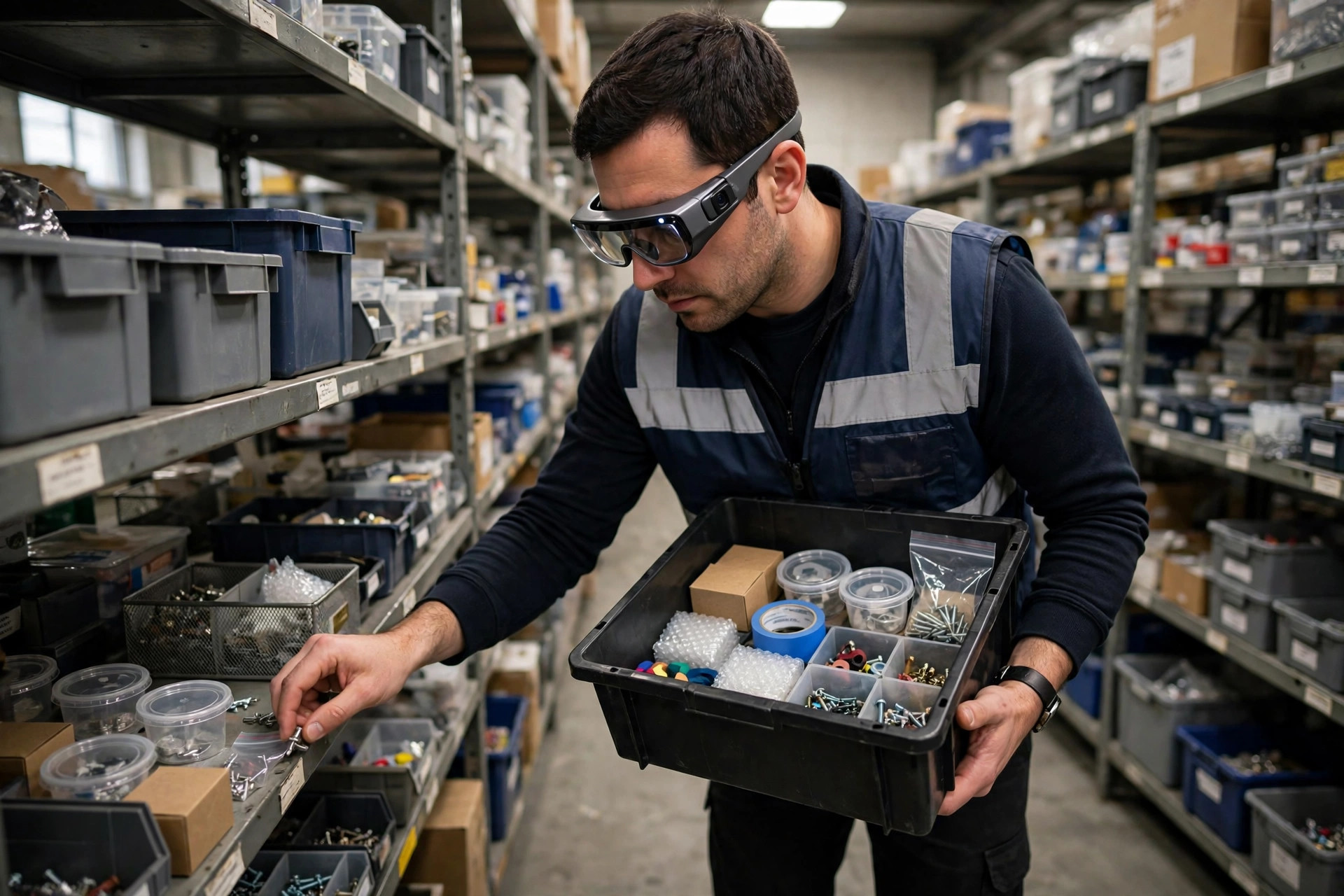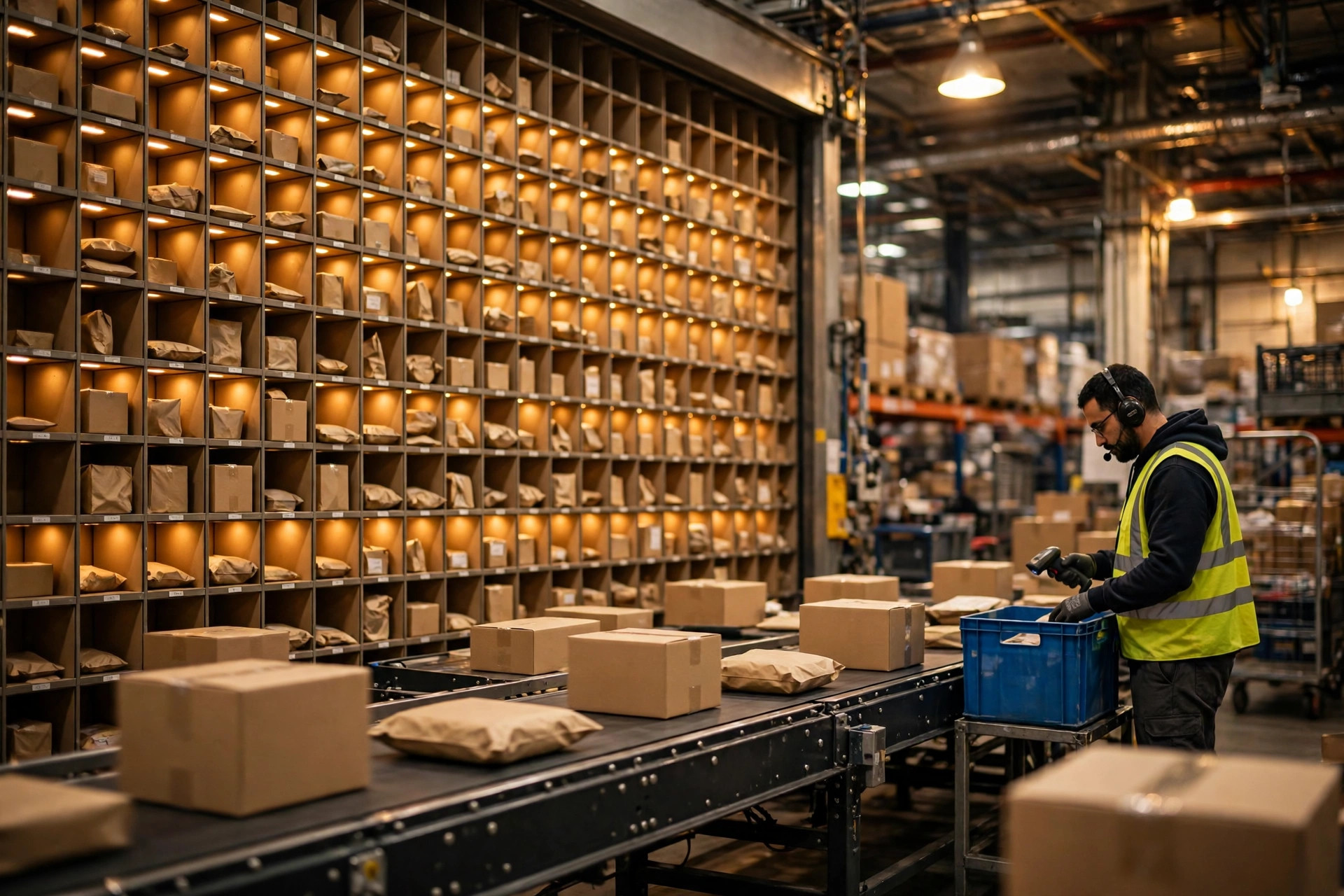
Let me tell you something I saw last fall — my first time watching vision picking with AR glasses. I was waiting to load at an auto parts warehouse out in Ontario, California — two or three thousand square meters, racks packed tight with little stuff: screws, clips, seals, oil filters in a dozen sizes that all look the same if you squint. My truck was parked at the dock, dispatch was calling every ten minutes, and the load was already running late. So I stood at the dock door and watched the folks inside work.
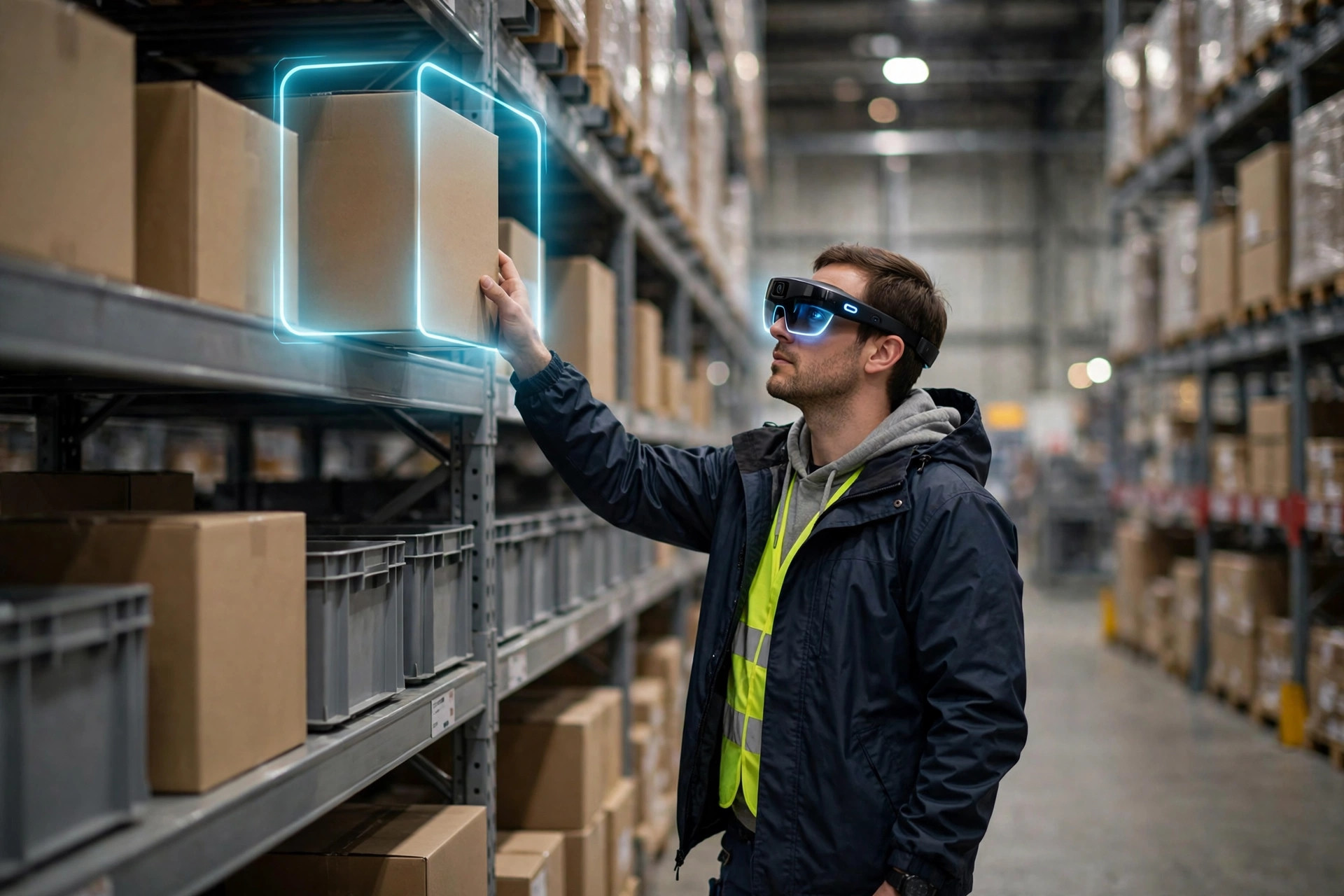
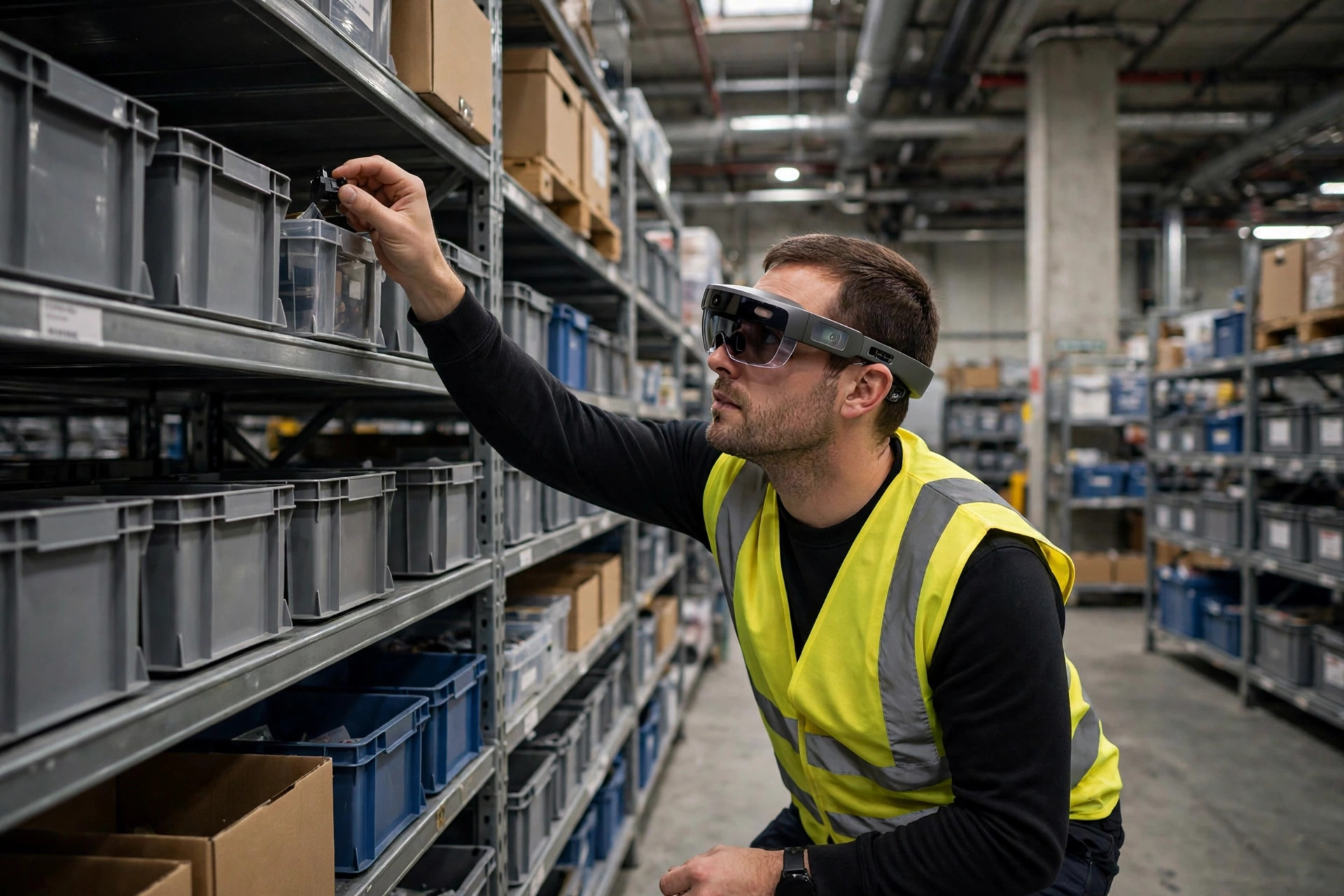
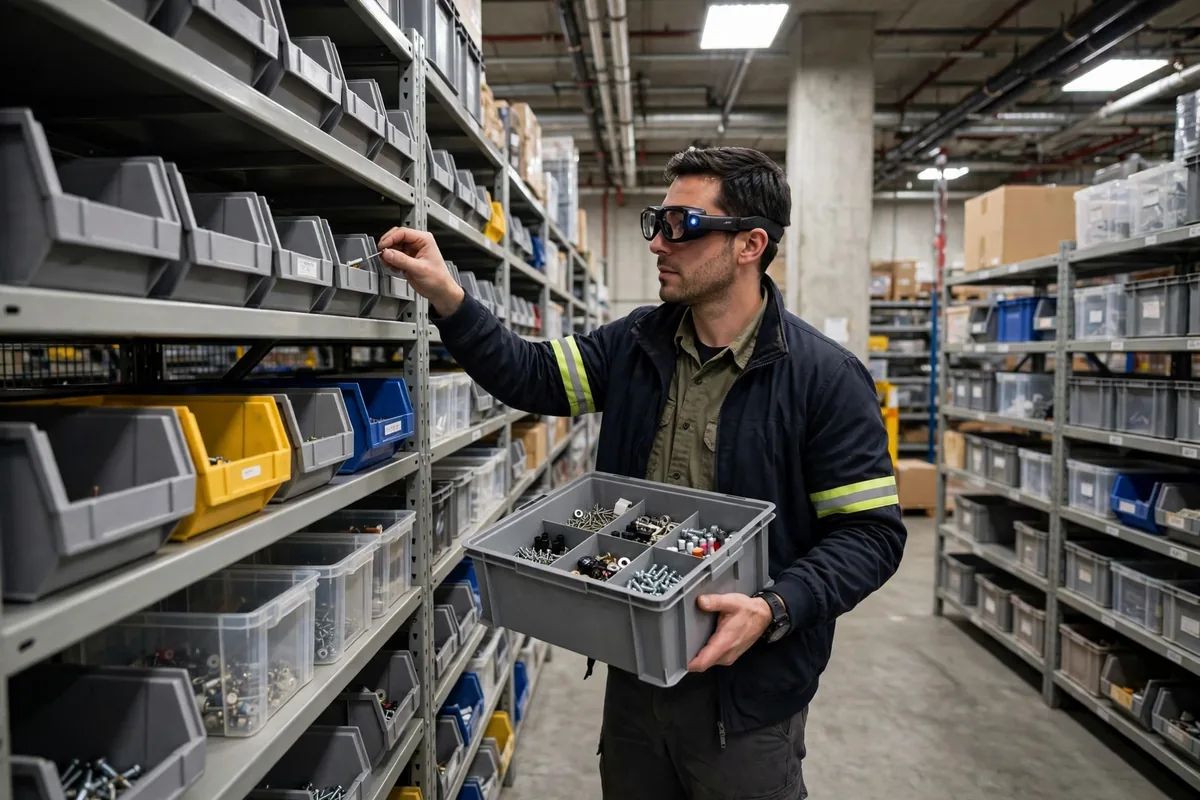
One of the pickers was wearing a pair of funny-looking glasses. Dark frames, and there was a faint glow on the lenses. He'd walk up to a rack, glance up, and a little box would light up right in front of his eyes. He'd reach out, grab the part, scan it, drop it in the tote, and move on. No paper list. No looking back for a light. No stopping to squint at a part number.
I've been driving trucks for fifteen years, and I've spent half my working life waiting at warehouse docks. I'd seen paper picking and pick-to-light, but never a man picking orders wearing glasses that told him what to grab. I got talking to the shift lead while I waited. He gave a tired laugh and said something I still remember: "It's faster, sure. But one pair of those glasses costs more than I make in a month. Every time one breaks, it hurts."
So What Is Vision Picking with AR Glasses, Anyway
Plain talk: you put on glasses that show pick information right in front of your eyes. The system projects the item, the location, and the quantity onto the lens. You look where it tells you to look, and your hand goes where your eyes go. No flipping between a list, a rack, and a part.
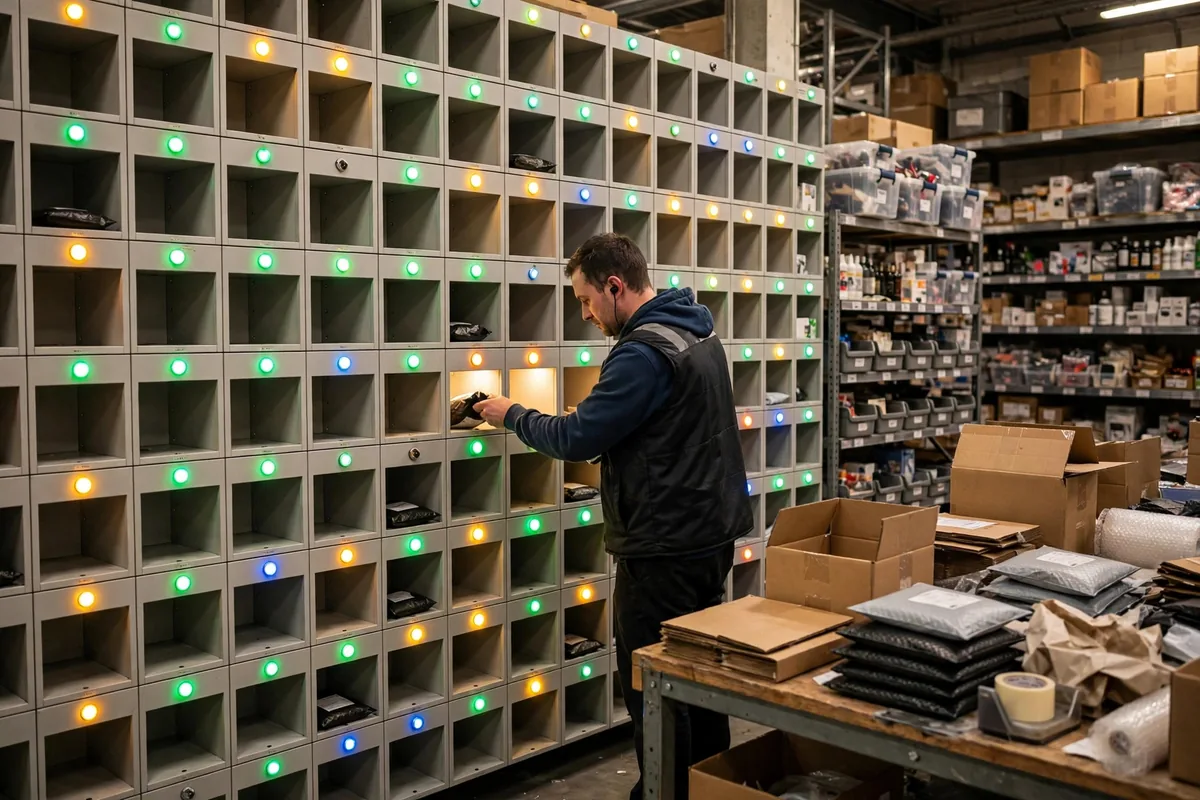
After all these years of dealing with warehouses, here's what I've learned: picking isn't hard because of the walking. It's hard because of the looking and the checking. With paper, your eyes jump back and forth — list, rack, part, list again. When you've got thousands of SKUs and half of them look alike, that's where mistakes happen. Pick-to-light is better — a light tells you where to go — but a light can't tell you the difference between the part in your hand and the one sitting right next to it.
That's the whole point of the glasses. They pin the information to your field of view. And that matters most in a small-batch, high-mix warehouse, where one order might be two or three pieces, but those pieces come from thousands of possible SKUs. That's exactly where a new hire gets tripped up: telling look-alike parts apart.
Now, I'm not here to sell you the thing. The glasses get heavy on your nose after a few hours. They get warm. The battery doesn't last a full shift. And when the signal drops, you're back to standing there holding an expensive paperweight.
The Math: When Does Vision Picking with AR Glasses Pay for a Small Warehouse?
I size up warehouse spending the same way I size up a trucking route: don't ask first what it saves you. Ask first what it stops you from losing.
Here's a story from about two years ago, at a small hardware warehouse outside Houston. I was picking up an order of maybe a dozen small pieces. The picker was working off paper, and one part number was off by a single digit. Wrong piece, same box. Nobody caught it until it reached the customer, and the customer's line stopped waiting for the right part. The shipper had to send me back out on a second run. Fuel, time, the customer's penalty — that one wrong piece cost many times what the piece itself was worth. In a small-batch, high-mix warehouse, one wrong pick costs far more than it does in a high-volume warehouse.
So here's how I'd do the math. Every number in the table below is a made-up example for one imaginary small warehouse, just to show which way the trade-off points — not real data from a real warehouse.
| Picking method | Hypothetical ramp-up time | Hypothetical new-hire error rate | Hypothetical cost per order (indexed) | Best fit |
|---|---|---|---|---|
| Paper lists | About 2 weeks | About 2–3% | 100 (baseline) | Few SKUs, steady orders, experienced crew |
| Pick-to-light | About 1 week | About 1% | About 110–120 | Mid-range SKUs, fixed locations |
| Vision picking with AR glasses | About 2–3 days | About 0.5% | About 130–160 (including hardware amortization) | Thousands of SKUs, many look-alikes, high turnover |
See the point? The most valuable thing about AR glasses isn't speed. It's that a new hire on day three picks almost as accurately as someone who's been there three months. For a small warehouse where people come and go, that's worth more than shaving a few seconds off each pick.
And here's the counterintuitive part — the bit most people get backwards. Everyone assumes the bigger your order volume, the more AR glasses are worth it. I'd say it's the opposite. The line that decides whether vision picking pays off in a small-batch, high-mix warehouse isn't order volume. It's SKU count and how similar your parts look. If you've got a few hundred SKUs and every part looks different, AR glasses are an expensive novelty. If you've got thousands of SKUs, look-alike parts stacked side by side, and one wrong pick means an emergency re-shipment, that's where AR can pay for itself first. Low volume isn't the problem. Lots of similar SKUs plus costly mistakes — that's the problem.
One more cost people forget: the glasses themselves, spare batteries, repairs, system integration, training. The shift lead wasn't joking — these things are pricey, and every drop or loss is real money. If your warehouse can't even afford a spare pair, one broken headset can shut down a whole picking line. Think that through before you buy.
Who Should Stay Away — and Who Should Try It
Let me tell you, after fifteen years on the road, I judge a warehouse by three things: the freight, the orders, and the people.
First, stay away if your SKU count is low, your parts all look different, and your crew has been there for years. Paper plus experienced hands is already good enough. Spend the money on something that matters — straightening out your locations, getting your ABC classification done.
Second, stay away if your warehouse has dead Wi-Fi zones, tall dark racks, or a lot of dust. AR glasses live or die on positioning and a clear display. Lose the signal or fog up the lens, and your pickers will be slower than with paper. Fix the network and the lighting first.
Third — this is who should try it — warehouses with thousands of SKUs, lots of look-alikes, high turnover, and expensive mistakes. Auto parts, hardware, electronic components: a few pieces per order, and every piece has to be right. But don't roll it out across the whole warehouse at once. Take one line, ten or so people, run it for a month, and judge it on error rates and re-shipments — not on what the salesperson told you. And if you trial it: rent before you buy, keep a spare pair on hand, and listen to the pickers — if the glasses hurt or the view is unclear, stop and adjust. The equipment serves the people, not the other way around.
There's one more thing I learned from driving nights. The hardest time in a warehouse is the second half of the night shift, when tired eyes start making mistakes. That's when AR glasses can help — the information is right in front of you, no squinting at a list under dim lights. But at night, glare on the lens and small labels buried deep on a dark shelf are a genuine problem too. So don't just trial it in daylight. Run it at night as well. Working fine at noon doesn't mean it works at 2 a.m.
At the end of the day, vision picking with AR glasses isn't magic. It's a tool that helps people make fewer mistakes. For a small-batch, high-mix warehouse, whether it's worth it comes down to three questions: Do you have enough SKUs? Can you afford to get a pick wrong? Is your crew stable? If two out of three point to yes, it's worth a serious conversation; if none do, get the basics right first.
There's an old saying among drivers: a good saddle is only good if it fits the road you're riding. Fancy glasses are the same. They have to fit your warehouse's road.
By Shifu Zhao, Trucking Veteran (15 yrs)