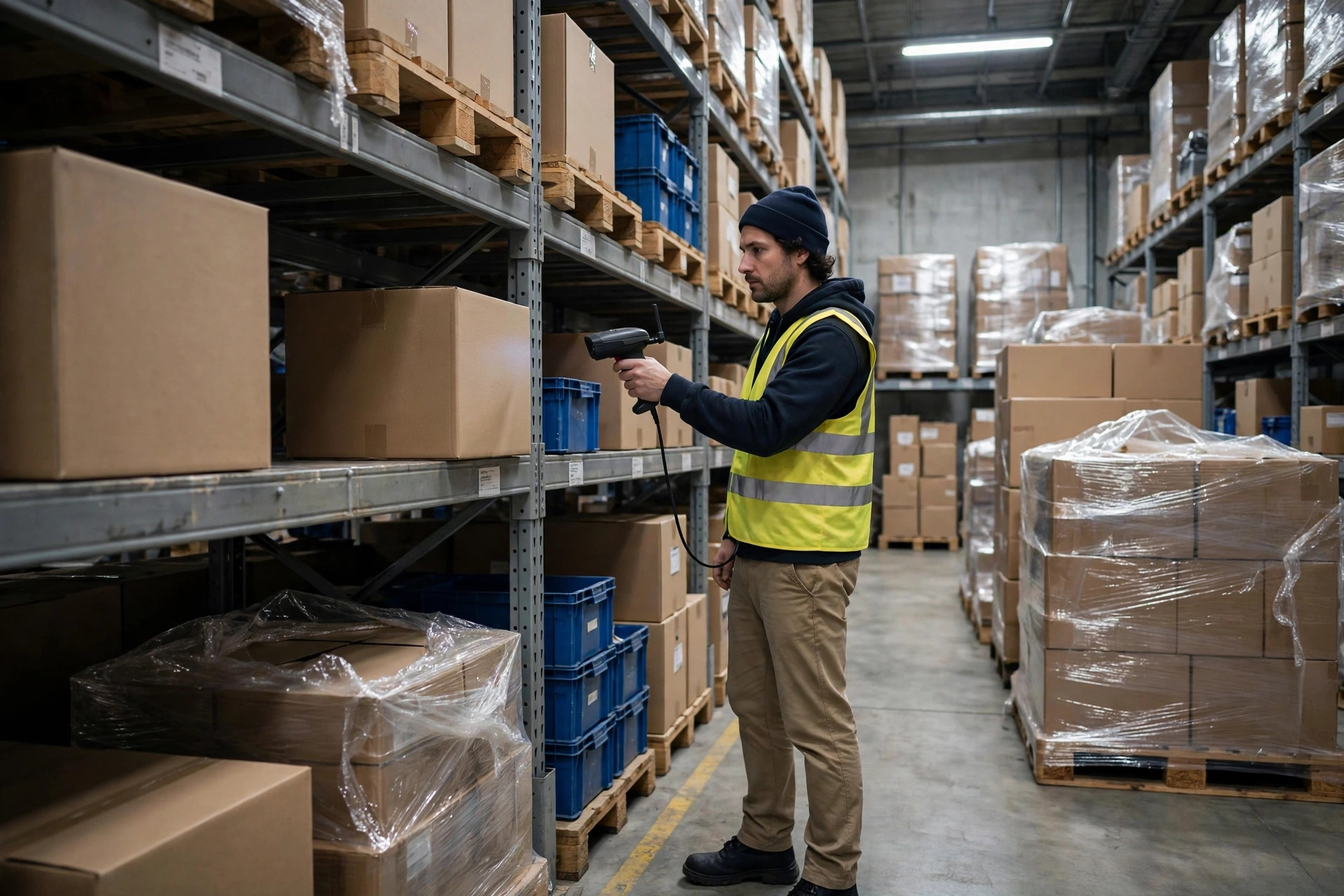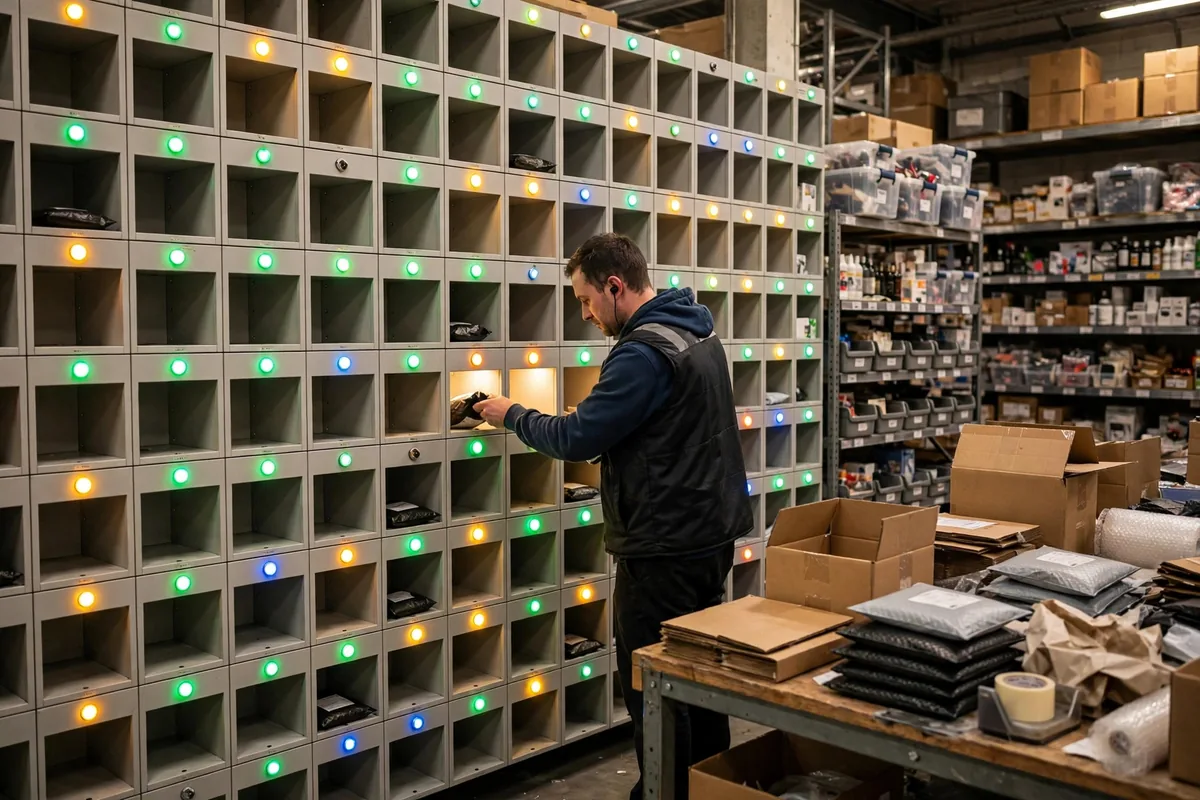
We have a client in Dongguan who came to us about vision picking for his small home-appliance parts business across borders. The warehouse is not big, but it holds more than eight thousand SKUs. Four hundred orders a day, two or three items per order, and almost every item is different. Pickers used handheld scanners, and they still had to squint at the shelf to tell one screw specification from another — one digit off, one color shade off, and the order went out wrong. The owner said to us, plainly: “I don't mind spending money. I mind spending money and still shipping the wrong item.” That sentence is still my starting point for judging it. It was never really about picking faster. It is about whether you can still pick accurately when there are too many varieties for anyone to memorize.
Vision Picking Fixes Recognition First, Speed Second
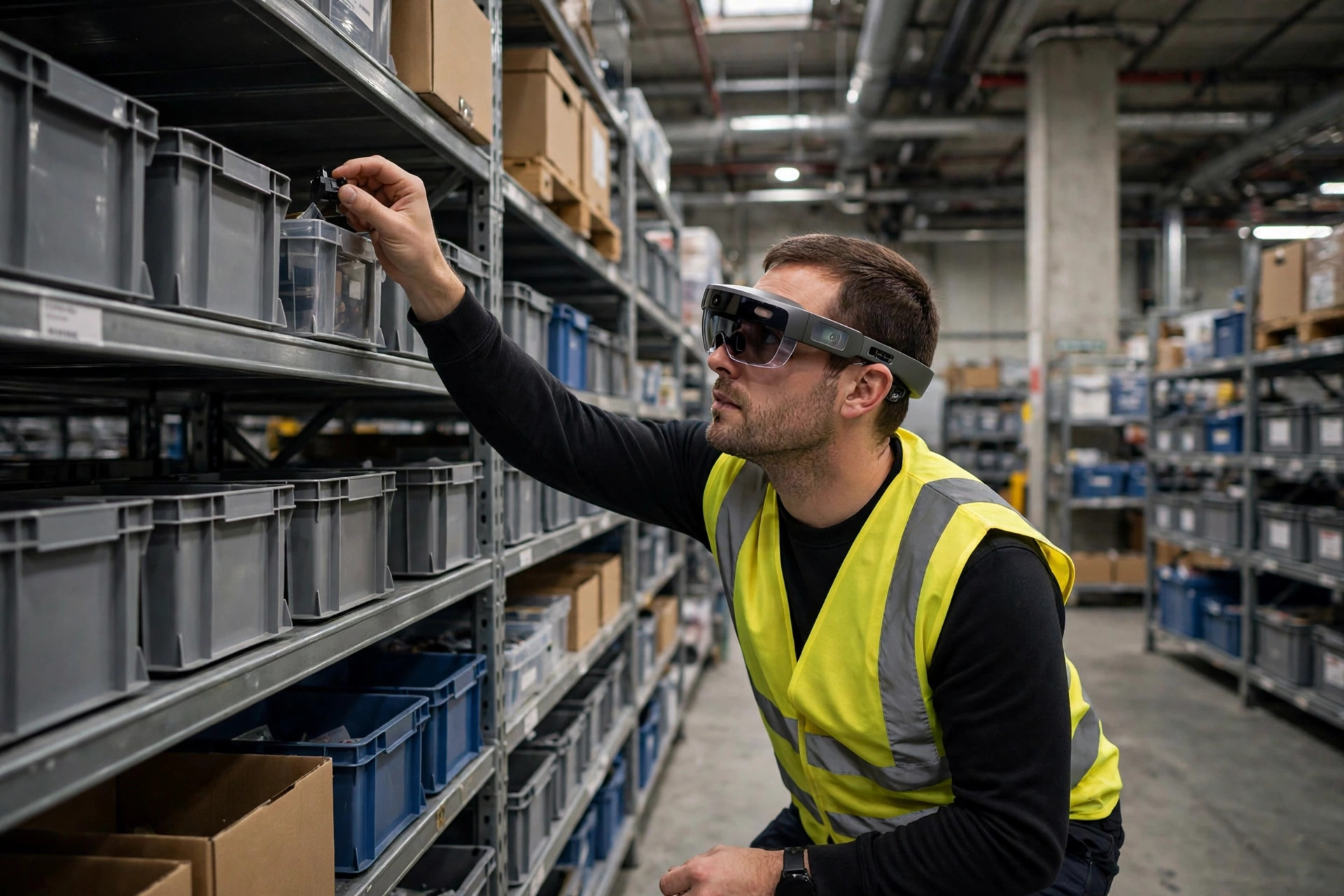
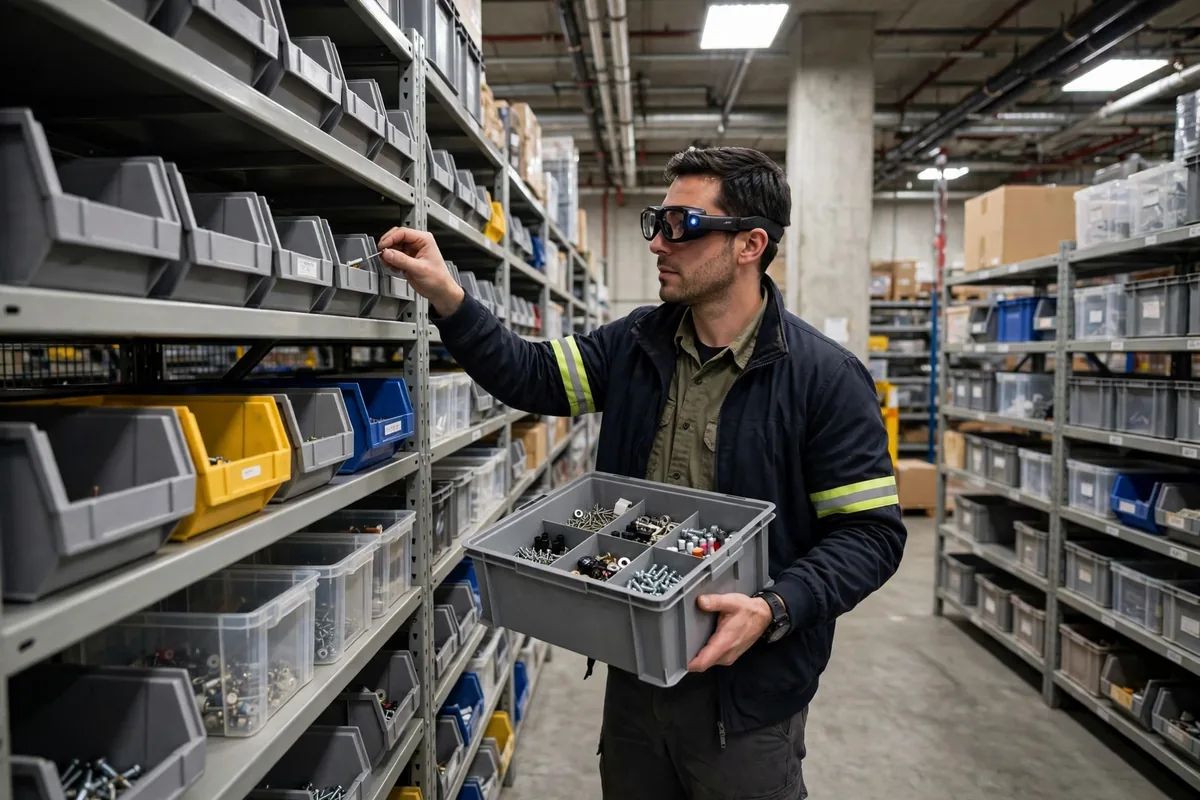
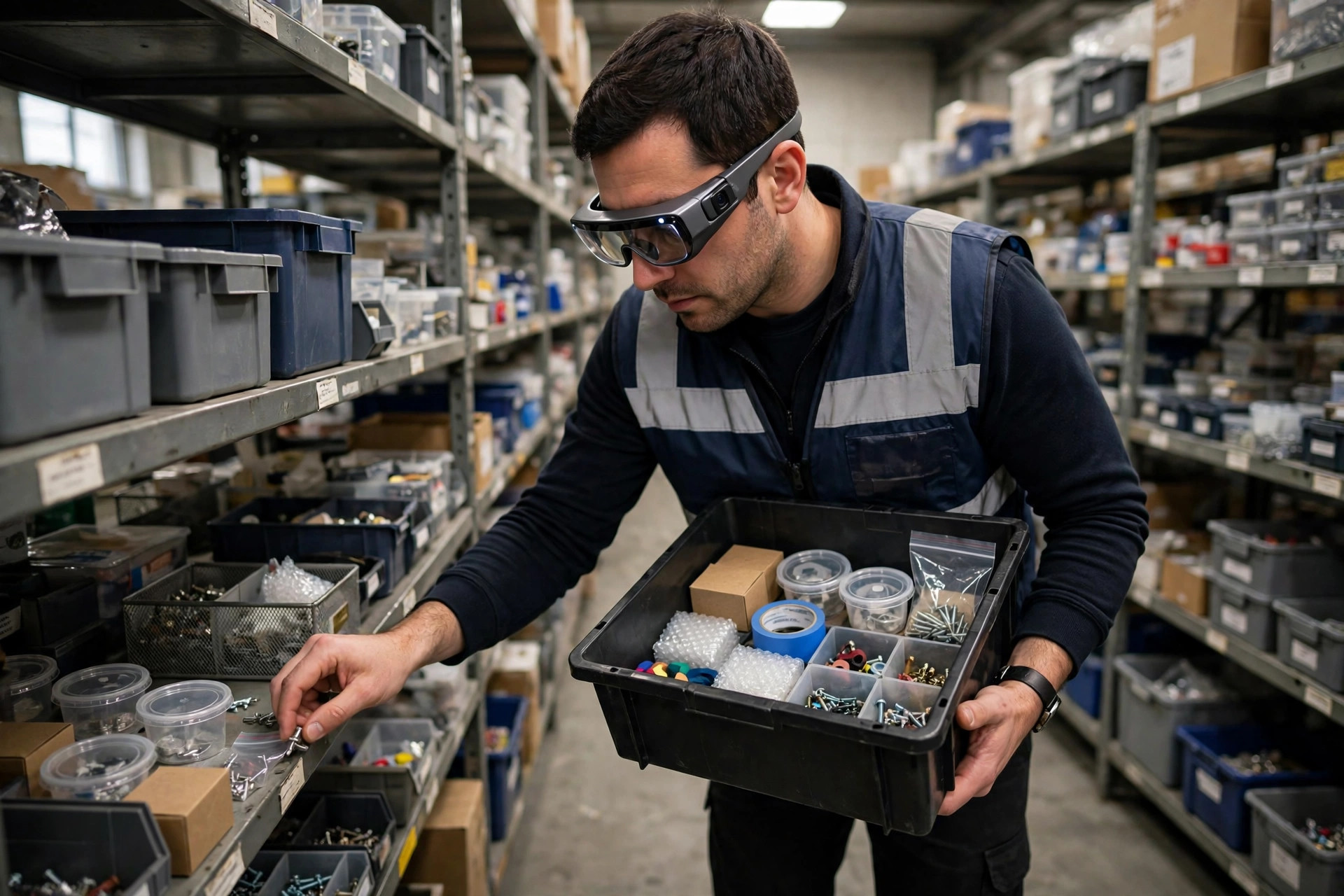
The system, in plain terms, overlays the picking instruction onto what the worker actually sees. The AR glasses highlight the target location, show the quantity, and move on once the pick is confirmed. With paper lists or handheld scanners, the sequence is read the order, find the product, then check it. With it, the eye lands where the hand needs to go. That change in sequence cuts training time first. New hires no longer need to memorize location codes or what each product looks like. Our Dongguan client used to need two weeks to train a reliable picker; with glasses, a new hire could work independently in three days. During peak season, when temporary labor is the biggest headache, that difference matters more than any speed statistic on a sales deck.
Here is the part vendors are less eager to volunteer: the training time you save depends entirely on your location and product data being clean. If shelf labels are wrong, or the product photo in the system is three years old, the glasses will highlight the wrong thing with great confidence. Before any pilot, spend a week auditing locations. That money cannot be skipped. Skip it, and everything after it is rework.
AR Glasses in a Small-Batch Warehouse: Do the Math Honestly
A second client, a beauty retailer in Hangzhou, had fewer SKUs — around three thousand — and fewer daily orders, but a higher average order value and a much higher cost of getting an order wrong. They worked out that their paper-based error rate sat around six per thousand orders, and each wrong shipment cost roughly a tenth of the order value once return shipping, reshipping, customer service time, and marketplace penalties were added up. After a two-month pilot, the error rate fell below two per thousand. That looks impressive on its own. But once hardware, software subscriptions, implementation, and maintenance were spread across each order, the pilot period actually cost more per order than the old method. The turning point came only when volume doubled: the money saved on errors finally outweighed the fixed cost.
So for a small-batch warehouse, the calculation is not “the error rate fell by a few points.” It is three lines moving together:
| Factor | Paper / handheld scanner | Vision picking with AR glasses |
|---|---|---|
| Time to train a new picker | One to two weeks | Two to three days |
| Typical error rate | Higher, and rising with variety | Clearly lower, especially for long-tail SKUs |
| Fixed investment | Low | Hardware, software, and implementation |
| As volume grows | Labor cost rises roughly in line with volume | Fixed cost is spread thinner, and the savings compound |
The counterintuitive part is this: more variety does not automatically mean the glasses are a better fit. If your volume is small and many SKUs move only once or twice a year, the glasses spend more time sitting idle than working, and the math does not close. The profile that genuinely fits is a warehouse that ticks at least three of four boxes: many varieties, mid-range volume or above, a high cost of shipping the wrong item, and fast staff turnover. If you only tick one, fix your location management and your checking process first. That may deliver more improvement for far less money.
Three Pilot Pitfalls That Never Appear in the Demo
The first pitfall is light. Warehouses with skylights get harsh sunlight at certain hours, and some AR displays wash out; a highlight box over a pale package becomes hard to read. Never run a pilot only on a cloudy day. Test the brightest and darkest hours of the day, and require both to pass. The second is battery life and comfort. A headset rated for four hours may not survive a full shift of continuous recognition, and swapping batteries or wearers mid-shift has to be part of the process. Some people feel dizzy after half an hour, and workers who wear prescription glasses need clip-on lenses. None of this appears in a demo, but all of it shows up as turnover after go-live. The third is Wi-Fi. The system leans heavily on warehouse wireless, and the far end of an aisle, the cold storage doorway, and the back of a tall rack are exactly where signals die. Walk the floor with the device before the pilot, and test every dead zone.
I put all three on the pilot scorecard, alongside error rate and speed, with the right to pause expansion if any of them stays below standard. Good vendors actually prefer a customer like this. Standards stated up front mean fewer arguments at delivery.
Negotiation Advice: Get Three Things in Writing Before You Sign
These projects rarely fall apart over whether the glasses are comfortable. They fall apart over acceptance criteria and follow-on fees. In the pilot contract, pin down three questions. First, what exactly counts as success — error rate, picking speed, or training time — with numbers in the contract and a stated remedy if the numbers are missed. Second, who builds and maintains the product recognition models, and whether modeling for new products is included in the subscription. Many quotes cover only the first batch of models; later products are charged per item, and if you do not ask, you have opened a blank check. Third, what happens when a device breaks, gets lost, or walks out with a departing employee: deposits, repair turnaround, and how many spare units are included.
Pricing models deserve their own round of negotiation. The common three are per-user monthly subscription, hardware purchase plus an annual service fee, and tiered per-order pricing. Small-batch warehouses are most easily caught by per-user subscriptions: you pay the same in the slow season with fewer people, and you pay extra for temporary staff in peak season. It looks flexible and can cost more by year-end. Keep your pilot data — real order volume and real headcount — and compare all three models against it, in both peak and off-peak months, before signing long term. Also check whether software upgrades and new features are included in the subscription, and for how many years. A first-year price that jumps in year two is not a bargain.
Start with one product category and one aisle for six to eight weeks, and keep a control group working the old way in the same period. Without a control group, “it feels better” is not something you can take to your boss. And if a vendor refuses a pilot, ask why. A vendor confident in the product will not refuse one.
Next time you negotiate a contract, remember to ask these three questions: Are the acceptance metrics written down? Who pays for modeling new products? How are damaged devices and spares handled? Get those three answered clearly, and such a project at least will not lose on the contract before it starts.
By Susan, 3PL Sales Director