Let me give you the uncomfortable conclusion first: AR glasses for vision picking can pay back faster in a small warehouse than in a big one. Think of it this way — the technology doesn't save muscle, it saves searching. And searching is exactly where a small, high-mix warehouse bleeds the most time.
What AR Glasses Actually Do in Vision Picking
The principle in one sentence: your pick list gets drawn directly onto your eyes.
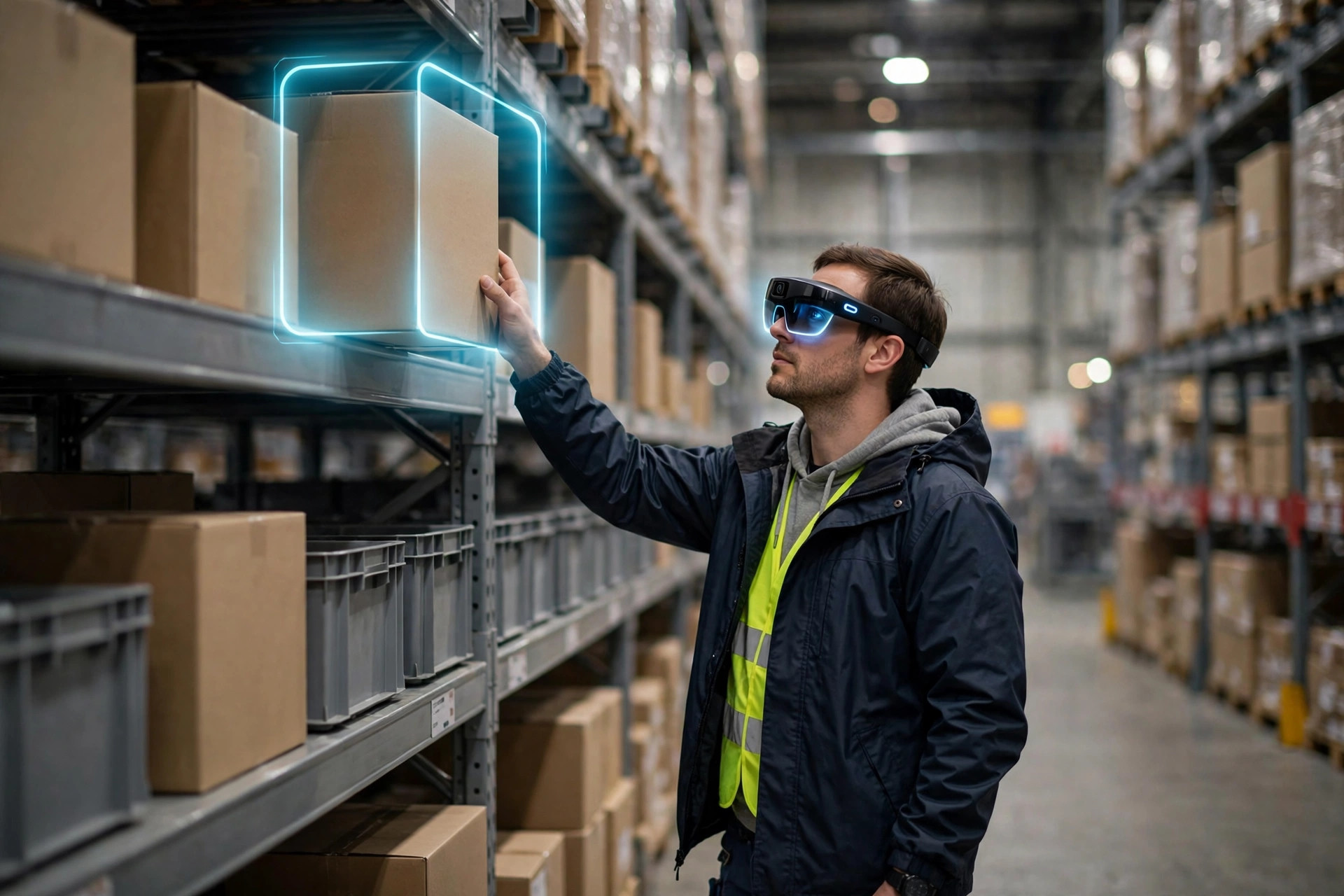
Put on the glasses and three things appear: an arrow to the next location, the highlighted target item, and the quantity plus a confirm button floating within reach. Grab the item, the camera scans the barcode, you confirm, and the next task pops up — like a video game's quest marker. No looking down at paper, no freeing a hand for a scanner; the instructions follow your eyes.
Three pieces make it work: indoor positioning (where you are), WMS dispatch (what to grab), and image recognition (did you grab right). The first piece kills projects: accuracy decides whether guidance is right — off by 30 centimeters in a dense pick zone means pointing at the wrong slot.
Three Real Pilots, Hard Numbers First
Three pilots that actually ran:
Pilot one: DHL with Ricoh in the Netherlands. Vision picking delivered roughly a 25% productivity gain: in three weeks, 10 pickers pulled 20,000+ items and completed 9,000 orders, with errors dropping noticeably. That 25% came from a live operation, not a lab.
Pilot two: Active Ants in the Netherlands, using Google Glass. Picking ran about 15% faster with roughly 12% fewer errors — smaller than DHL, same direction: faster and more accurate.
Pilot three: a German logistics operator, studied academically. The math: roughly €2,700–3,400 saved per pick station per year. But the same paper landed a punch: worker acceptance is the real bottleneck — shared-glasses hygiene and long-wear comfort.
One-line summary: a 15–25% productivity lift is credible, error reduction is the bonus, but whether people will actually wear the thing is the hidden variable that decides everything. Any vendor pitching the productivity number without talking about worker acceptance — close the slide deck.
The Counterintuitive Part: Big Warehouses May Not Win, Small Ones Might Pay Back First
The most valuable judgment in the piece:
AR glasses shave off the fragmented time spent finding and confirming. They do nothing for walking time. Think GPS, not vehicle — the best navigation doesn't shorten the road itself.
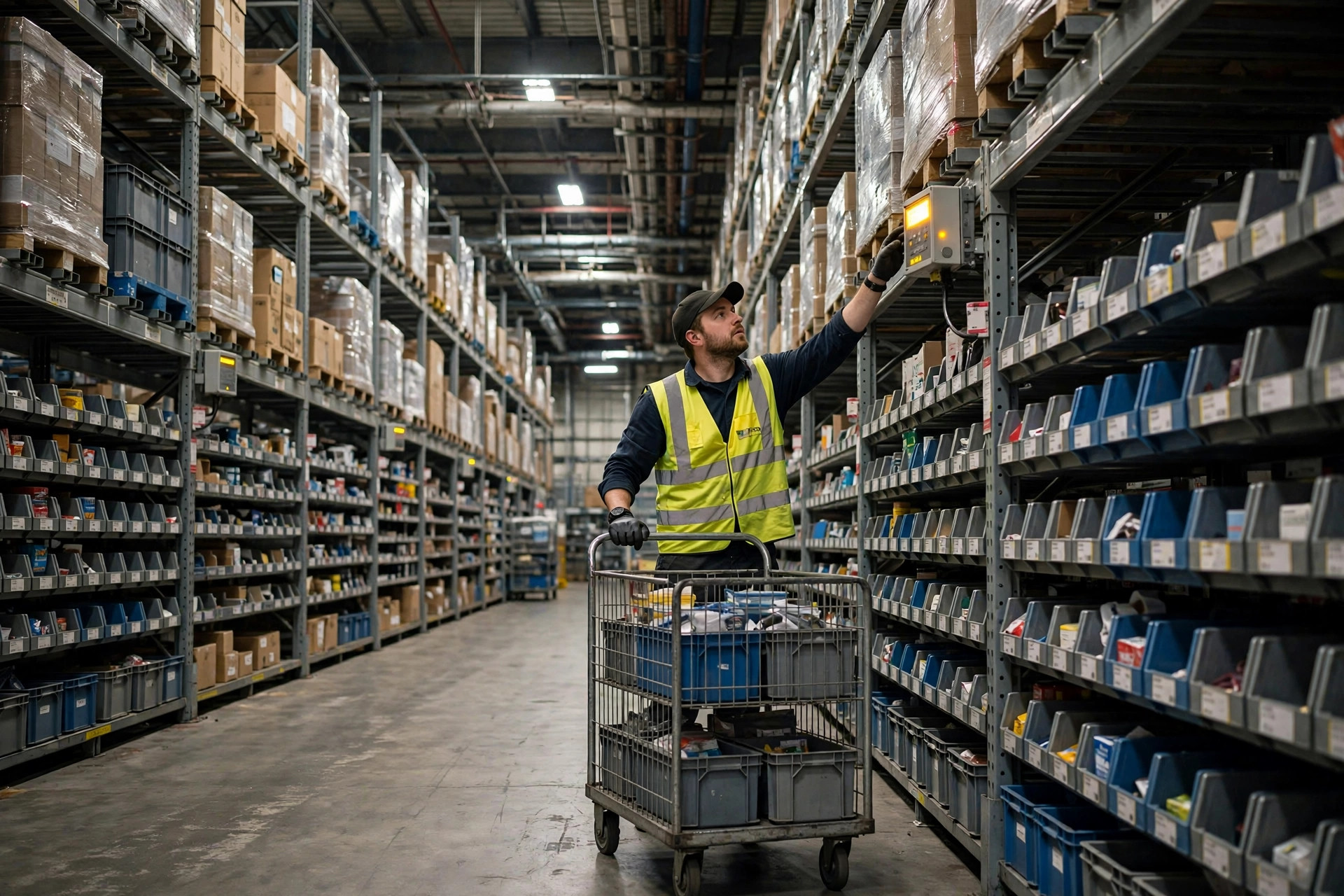
In a big warehouse, walking often eats more than half of picking labor — wide aisles, long routes, double-digit kilometers a day. Cutting search time 25% might only move total labor time 8–10%.
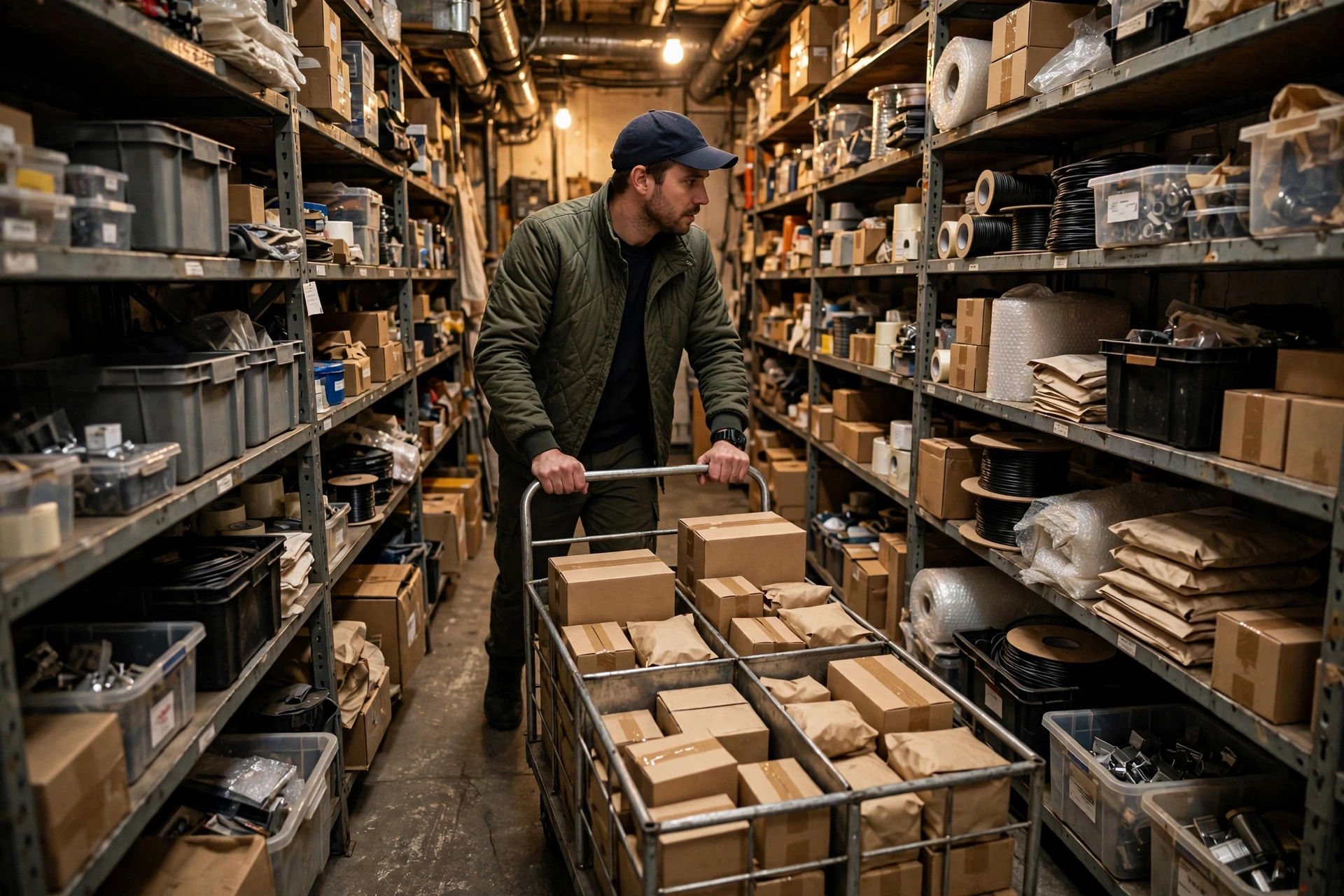
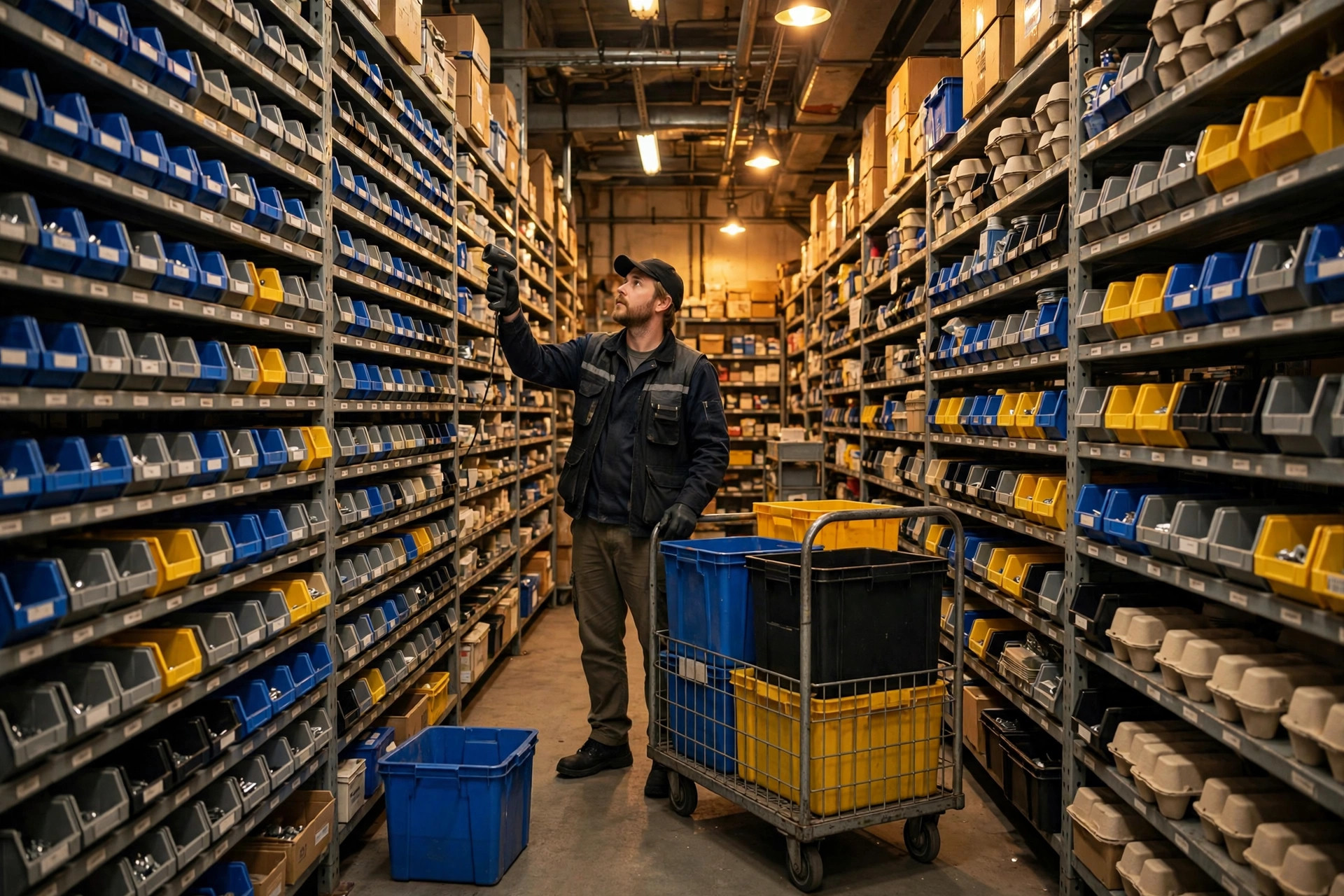
A small, high-mix warehouse is the mirror image: thousands of SKUs, one-line-one-piece orders, and pickers keep asking "this slot or the next one?" in front of hundreds of look-alike bins. Search-and-confirm routinely eats 30–40% of picking time; AR shaves a quarter off, and total labor time drops 8–12% — same magnitude, possibly better.
So the answer to "is AR picking worth it small warehouse" is: the small warehouse is exactly where the question matters most. The big-brand pilot numbers are shiny, but those are their warehouses. If searching dominates your hours, AR's return profile is stronger. A small operation running AR isn't playing dress-up — the structure fits.
The Full Math for an 8-Picker Small Warehouse
Opinions without math are noise. AR vision vs. voice vs. paper for an 8-picker high-mix shop — conservative order-of-magnitude figures; I don't trust numbers quoted to the single digit:
| Paper picking | Voice picking | AR glasses (vision picking) | |
|---|---|---|---|
| Hardware per picker | near zero | Headset + terminal, hundreds of dollars | Glasses from a few thousand each, premium units into five figures |
| Year-1 total, 8 pickers | negligible | low (tens of thousands) | medium-high (tens to low hundreds of thousands, incl. software integration) |
| Productivity lift vs. paper | baseline | 10–15% | 15–25% |
| Error reduction | baseline | significant | significant, plus image evidence per pick |
| Training to full speed | half a day | 1–2 days | 2–3 days (adapting to wear + visual interaction) |
| WMS requirement | none | voice interface or middleware | AR application layer; the more open your WMS API, the cheaper |
| Payback (8-picker shop) | — | usually under a year | 1–2 years; faster when search dominates |
See the pattern? The glasses cost multiples of a voice setup — justified and not. Justified: hands-free plus visual confirmation genuinely beats "listening to instructions" — the eye locates faster than the ear, that's physiology. Not justified: in many quotes, half the money is "custom development" plus "implementation" — and with a closed WMS API, that line can eat half your budget.
One scenario — fictional but realistic: a US Midwest auto-parts distributor, 8 pickers, 10,000+ SKUs, a dozen-plus lines per order. Errors clustered on look-alike parts — returns and rework cost a few thousand a month. After AR glasses, search time dropped roughly a fifth, mispicks roughly a tenth. The owner's line: "The glasses weren't the expensive part. The expensive part was finally seeing where we'd been bleeding." Crude, but it nails AR's real value: not just speed — an image record of every pick, so mispick disputes have evidence for the first time.
The Selection Line: Four Green Lights, Four Red Lights
Go when: order lines are many and SKUs scattered, pickers doing hundreds of "finds" a day; search-plus-confirm takes over 30% of picking labor time — AR's sweet spot; errors are expensive (auto parts, medical devices, precision components), where one mispick costs far more than a few saved seconds; your WMS has an open API or an AR ecosystem, so integration stays affordable.
Don't go when: mostly big, heavy goods — perfect pointing can't shortcut the lifting; fewer than a few hundred SKUs with veteran pickers who know every slot blindfolded — a solution looking for a problem; freezers, heavy dust, or high vibration, where glasses die young and recognition degrades; brutal staff turnover — you train people and they leave.
One fake use case I have to call out: "Our slotting is a mess; we want AR glasses to fix it." Wake up — AR is a GPS, not a demolition crew. If your slots are chaos, the glasses just point precisely at the wrong location. Get slot accuracy above 98% first, then talk AR. Non-negotiable.
AR Glasses Maintenance Traps: Affordable to Buy, Hard to Keep Worn
This is where AR projects die:
Trap one: battery. Mainstream glasses run 4–6 hours continuous. An 8-hour shift means a mid-shift swap or two pairs in rotation — and the swap breaks picking rhythm, a cost most buyers never budget.
Trap two: comfort. Twenty minutes and eight hours are two different products. Past 100 grams, the nose bridge complains after four hours, and pickers quietly take them off. The best technology is worth zero unworn.
Trap three: hygiene. Sharing one pair across shifts means sweat, grease, scratched lenses — the German paper flagged exactly this. One pair per person (doubling cost) or disposable covers plus a strict cleaning routine. No middle option.
Trap four: software integration. The glasses are just a display; the AR application layer behind them does the work — syncing WMS tasks, sending confirmations back. With a closed WMS, custom development can cost more than the hardware. One question for the integrator: "Have you integrated with my WMS before?" If not, double their implementation line before judging the quote.
Trap five: worker pushback. Cameras and positioning — a picker's first thought is "is this surveilling me?" Skip the up-front data policy talk — pick confirmations only, no behavior monitoring — and people will "forget to charge" them during the pilot. Technical problems are solvable; trust problems are fatal if ignored.
Is It Worth It? Watch This One Number
Time to land it: go measure what share of your picking labor time is "searching + confirming."
Above 30%, AR glasses deserve a serious conversation, payback most likely in 1–2 years. Below 20%, fix slotting and travel paths first — AR is a fake need. Don't let the 25% figure hypnotize you — that's a cut in search time, not total labor hours. Always do the math against your own denominator.
Is the money worth it? Watch that one number.
By Da Liu, Automation Engineer