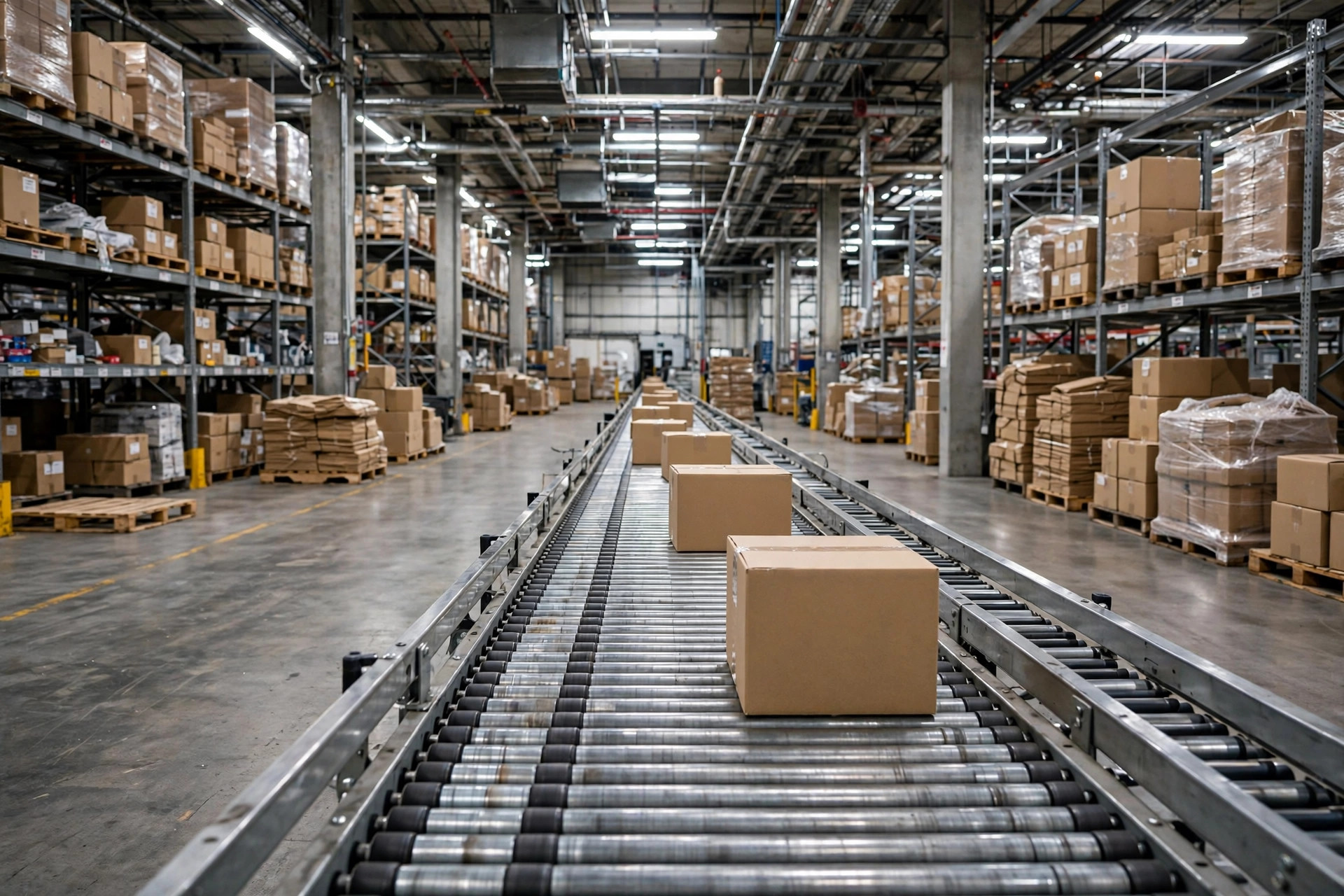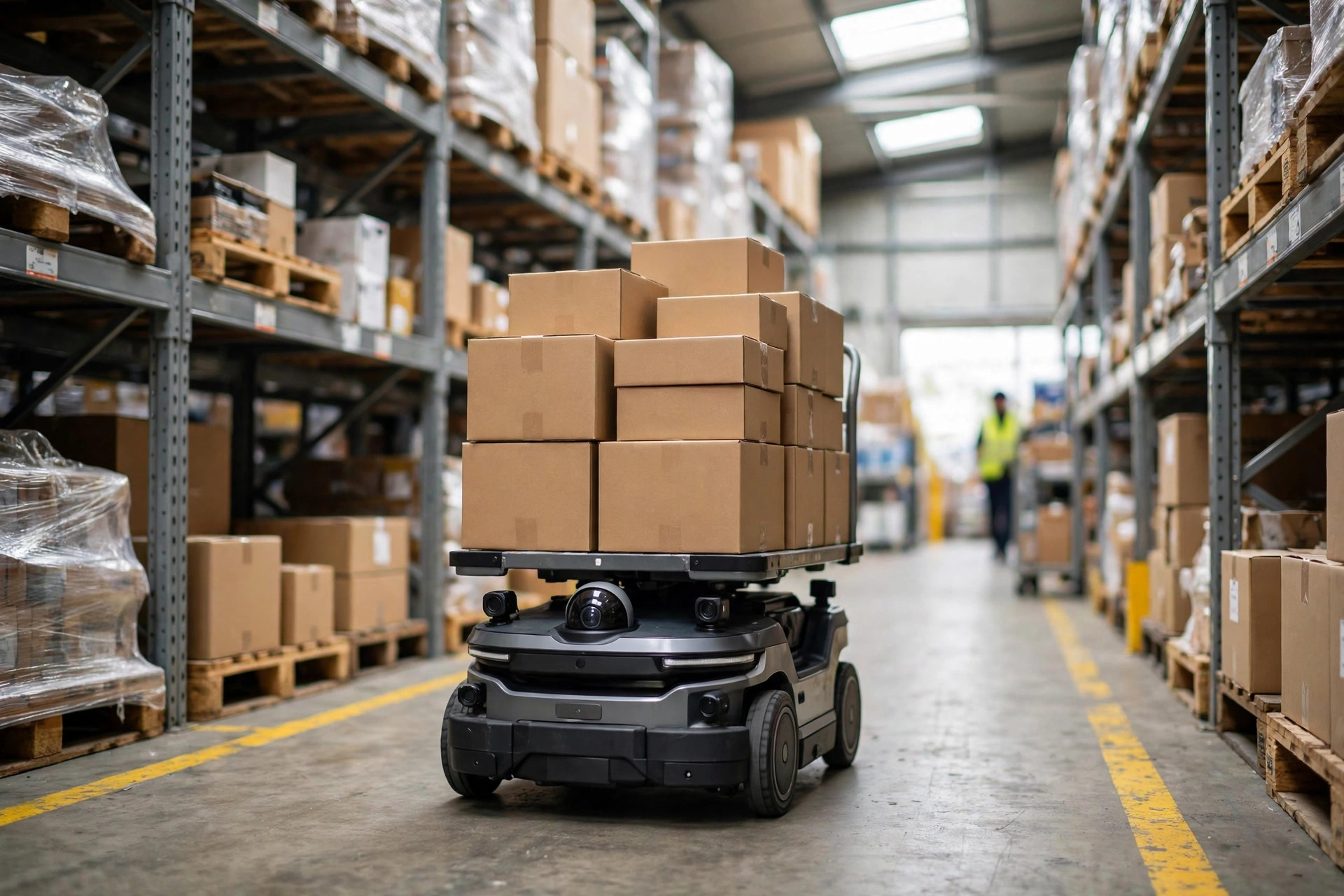
Here's an unpopular verdict to start with: in a lot of small warehouses, picking productivity isn't held back by people or software. It's held back by the pick cart they've been pushing for three years.
I've seen too many operations spend six figures on a WMS and handheld scanners, while pickers run around with a flat, divider-less cart — five orders' worth of product piled on one deck, separated by memory. By the fourth order, nobody remembers where the first order's items are. It's like putting a GPS and a speedometer on a bicycle with flat tires: the data flow can be perfect, but if the physical world is a mess, throughput stays flat.
Small high-mix warehouses — a few hundred orders a day, thousands of SKUs — are the natural battleground for the pick cart. These operations can't justify put walls or pick-to-light, so the cart IS the picking system. There are three mainstream options, and they work on fundamentally different principles. Pick the wrong one and you've spent money for nothing.
Three pick carts, three different principles
Flat pick carts. Essentially "a wheeled deck with dividers." Think of a cafeteria tray: compartments keep the dishes from mixing. Add adjustable dividers or order bags to a pick cart and each compartment holds one order — physical separation is the cheapest error-proofing there is. Pros: cheap (a few hundred yuan or tens of dollars), light, tight turning radius. Cons: everything is exposed; loss prevention and mix-up control depend entirely on picker discipline.
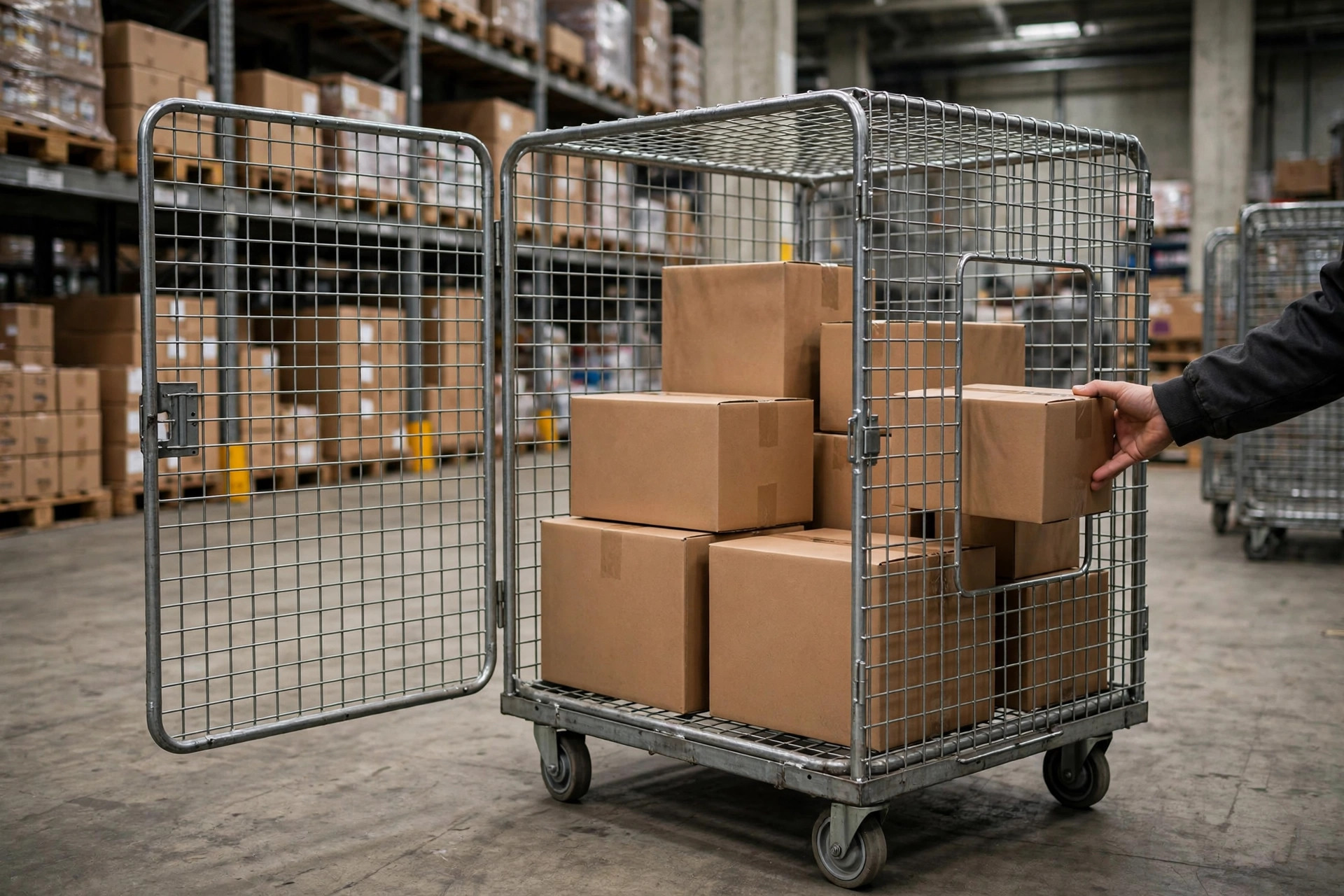
Cage trolleys. Essentially "a wheeled wire cage" — mesh panels on four sides plus a lockable door. Think of the difference between an open shelf and a parcel locker: the shelf is faster to grab from, the locker prevents loss. A cage trolley doesn't guard against outsiders; it guards against "nobody can prove what happened." Product goes in, the door locks, and from the pick zone to the pack station the chain of custody is unambiguous. High-value, fragile, or theft-prone goods belong in one. Period.
Retrofitted pick carts. A flat cart upgraded with a scale, a scanner mount, and totes. It's the bicycle with a speedometer and a cargo rack: the picker scans each item and weighs it, and the system knows what that item should weigh for that order. Mismatch, instant alert. Verification moves upstream into the pick itself instead of waiting for a second check at pack-out.
None of the three is "better" — it's about fit. The most absurd thing I've seen: a vendor pitching a "smart pick cart" — screen, navigation, voice prompts, tens of thousands per unit — to a 500-order-a-day warehouse. The pickers know every location by heart; the navigation screen is decoration, the voice prompts are a headache. Three months later the screens never lit up again. That's a textbook fake need: cool technology, zero fit with the operation.
The selection thresholds: match the cart to the volume
The threshold isn't warehouse square footage. It's two numbers: daily order volume, and how many orders fit on one cart.
Under ~300 orders a day, mostly small items: a flat pick cart with dividers is the value king. One cart carries 4–6 orders, dividers keep them apart, and mis-picks drop immediately. At this volume, a cage trolley's advantages can't pay off — few goods, short travel, low loss probability. Spending one to two thousand on a cage is overkill.
300–800 orders a day, with high-value categories creeping in (electronics, cosmetics, small appliances): split the flow. Regular orders stay on flat pick carts; high-value orders go in cage trolleys. Here the cage trolley plays the role of a safe, not the main transport.
Above ~800 orders a day, or a SKU mix heavy on fragile and valuable items: cage trolleys should become the default. One cage carries 10–20 orders per trip, locked the whole way, opened and verified at pack-out. At this volume, the cost of mix-ups and losses on open flat carts exceeds the price of the cages themselves.
One hard threshold: item value. For any order with items worth more than roughly $30 a piece, my rule is simple — cage trolley or a retrofitted cart with verification, no exceptions. One lost item's customer-service cost buys several carts.
Run the numbers: what the cart costs vs what errors cost
| Flat pick cart | Cage trolley | Retrofitted cart | |
|---|---|---|---|
| Unit cost | Tens of dollars | A few hundred dollars | A few hundred dollars (scale + mount included) |
| Orders per trip | 4–8 | 10–20 | 4–8 |
| Mix-up prevention | Dividers (a $10 add-on) | Natural compartments + lockable | Scan + weight double-check |
| Loss prevention | Weak | Strong (lockable door) | Medium (traceable record) |
| Maintenance pain points | Loose dividers, wheels | Caster bearings, door hinges | Scale battery, mount loosening |
Here's how the math works in practice. In October 2024, a 3PL in Guangzhou's Baiyun district — 400+ orders a day, 3,000+ SKUs of small cross-border appliances — had pickers running flat carts with no dividers, 5–8 orders per cart separated purely by memory. We rode along with a stopwatch one morning: 4 mis-picks out of 37 orders, one of which shipped wrong and came back — return shipping plus labor cost them well over a hundred yuan on that single order. They then spent about 200 yuan on adjustable dividers and order bags. Mis-picks dropped to essentially zero. A 200-yuan fix for a problem that had been burning thousands a month in after-sales cost.
Cage trolleys tell a similar story. In March 2025, a general-merchandise warehouse in Yiwu — 700 orders a day — was picking Bluetooth earbuds (small, valuable) on open flat carts. Every month a few units went missing and nobody could say where: lost at pick, lost in transit, lost at pack-out. After switching to cage trolleys with locking doors, shrinkage went to zero within a month. A cage trolley doesn't stop honest mistakes from becoming mysteries: once product is inside and the door locks, custody is clear.
The retrofitted cart's math is the most interesting. An apparel warehouse in Dongguan added scales and scanner mounts to flat carts — pickers scan and weigh each item, and the system knows the standard weight per item. Off by 50 grams, instant alert. The retrofit cost a couple thousand yuan per cart. Within three months, wrong-item and short-shipment complaints fell dramatically. Moving verification upstream converts recurring pack-out labor cost into a one-time hardware cost.
Now the counterintuitive part: plenty of warehouses spend fortunes on software while their picking errors come down to "the cart has no dividers" — a problem a $10 divider insert solves. Software manages data; the cart manages the physical world. If the physical world has no compartments, perfect data doesn't help — the WMS can tell you order A's items go in compartment three, but your cart doesn't have a compartment three.
The maintenance traps: buying the cart is just the start
Flat carts: the divider clips are the weak point. They loosen within a few months, and a loose divider is the same as no divider. Order a spare set of dividers when you buy the cart — don't wait until they break.
Cage trolleys: the casters are the weak point. Warehouse floors are dusty, bearings collect grit, and a cage that pushes like a sled ends up abandoned in a corner while pickers complain. Get casters with dust covers and grease them quarterly — put it on the equipment checklist, or the purchase is wasted.
Retrofitted carts: the scale is the diva. Battery life, sensor drift — and an inaccurate scale is worse than no scale, because a wrong verification is a pass issued to an error. Calibrate with a standard weight every morning before shift start. Thirty seconds. Don't skip it.
So, is the money worth it? Watch this one number: error cost per thousand orders. A cage trolley costs a few hundred dollars; spread over hundreds of thousands of orders a year, that's pennies per order. One mis-shipped order's after-sales cost buys several carts. Take last month's after-sales spend, divide by order count, and compare it against the cart's per-order cost. The answer will be obvious.
By Da Liu, Automation Engineer