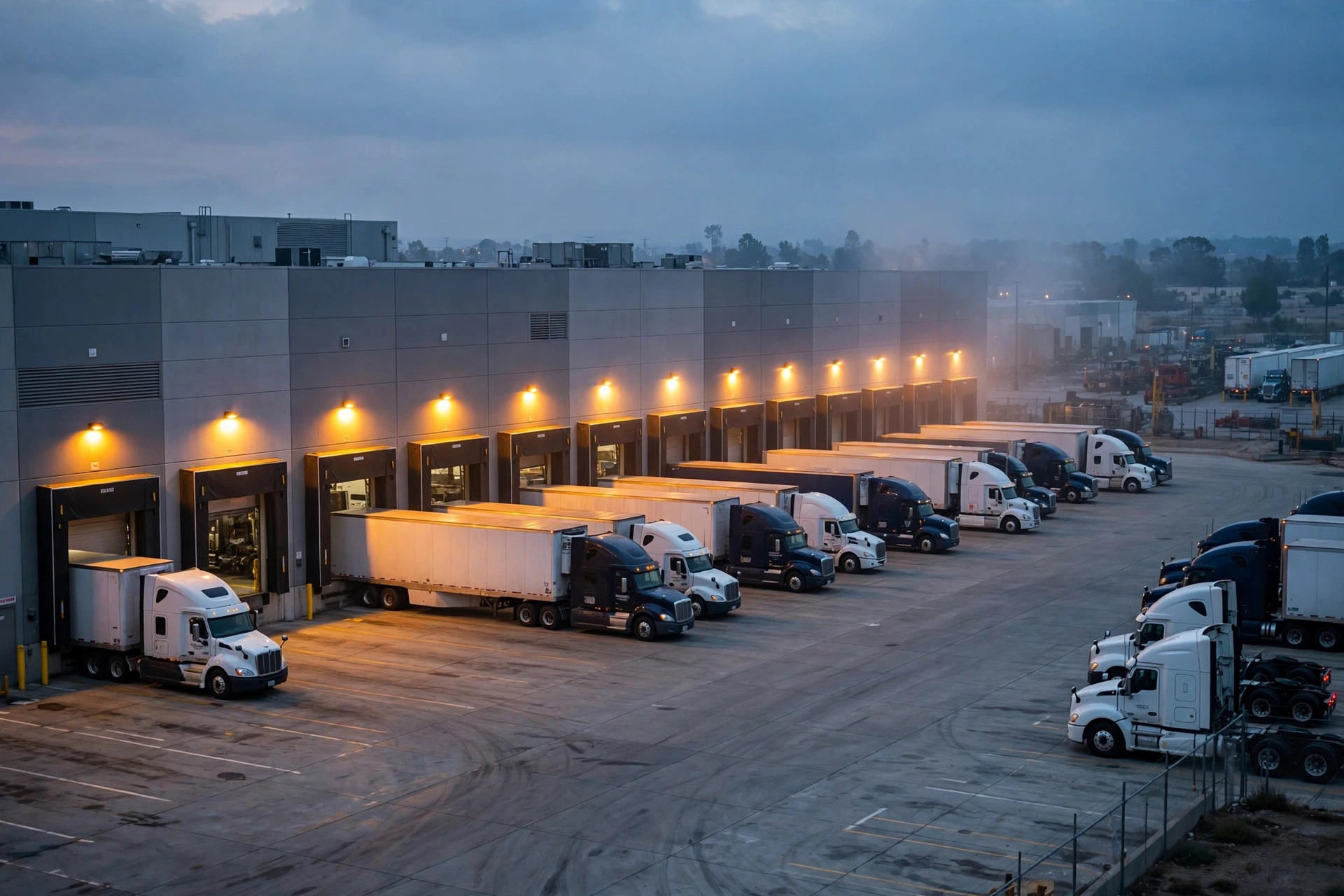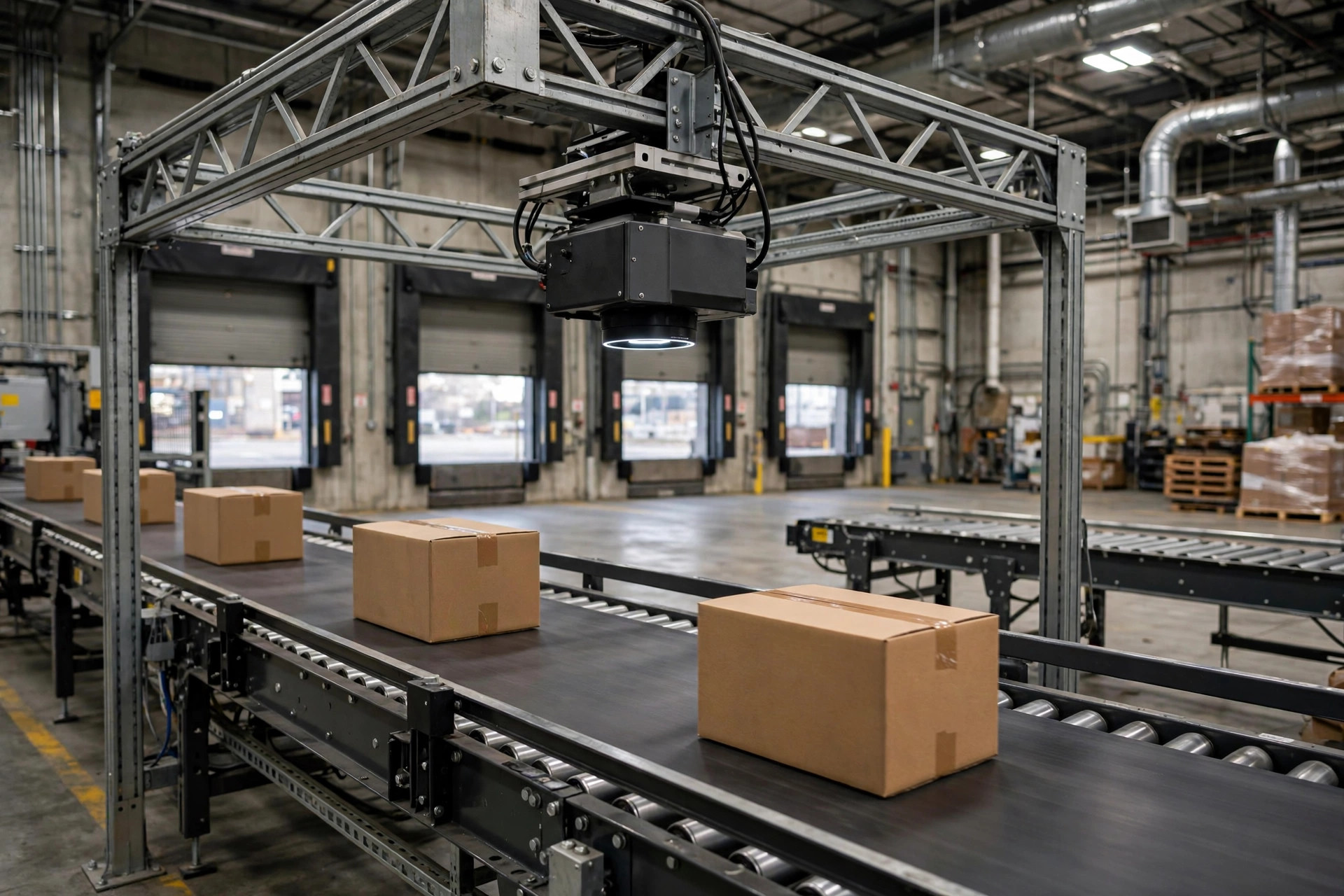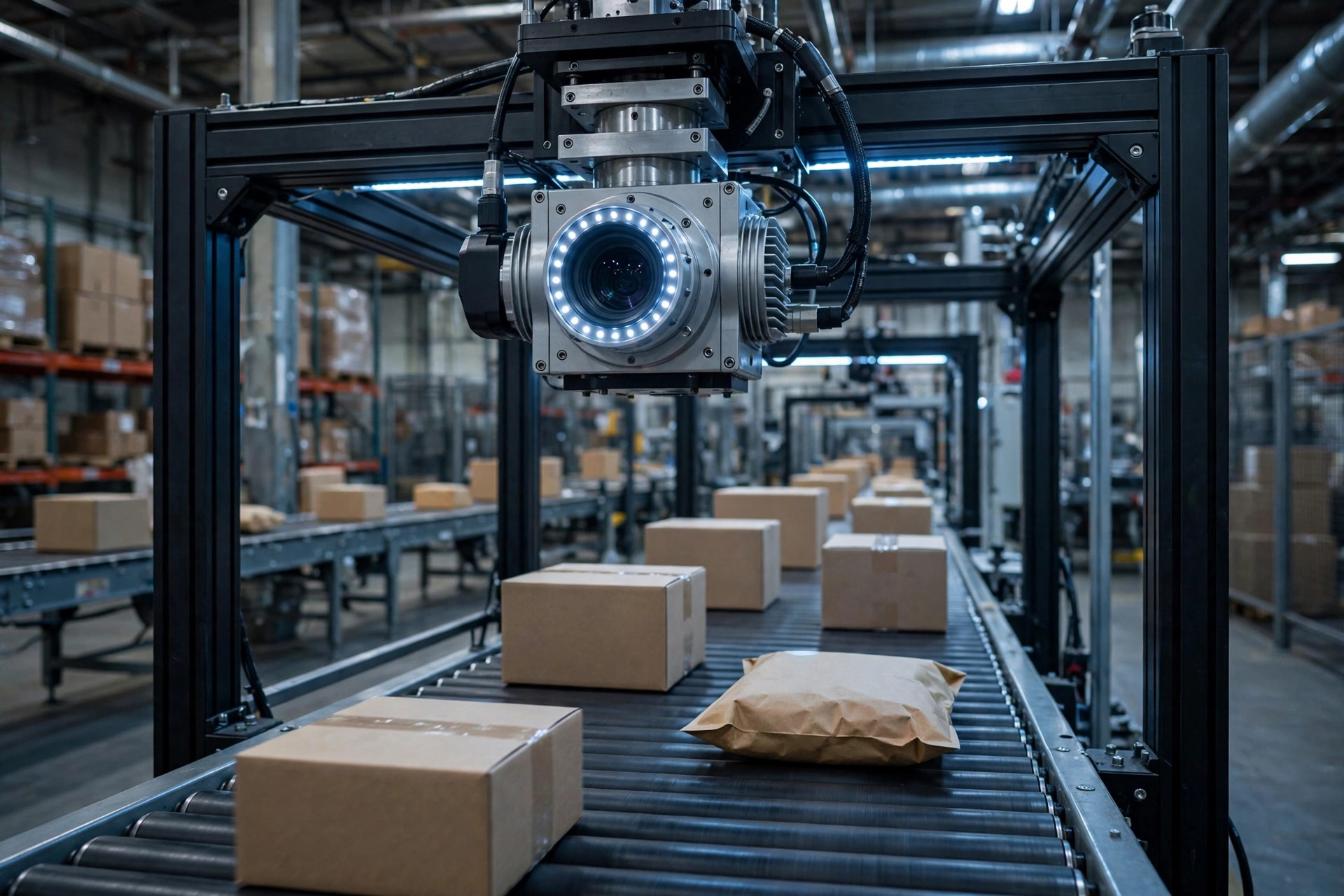
Same cameras, same warehouse. Counting empty pallets: 99% accuracy. Counting shrink-wrapped mixed pallets: 83%. That 16-point gap is nothing but floor-level detail. I ran this pilot at a third-party logistics warehouse in Ontario, California, in the fall of 2025 — roughly 130,000 square feet, mostly consumer goods and auto parts. The vendor promised "98%+ accuracy." I only trust numbers I measured myself.
Where the accuracy cliff is
First, the test protocol, so nobody quote-mines my numbers. We counted pallet units — not cases, not SKUs. Overhead cameras snapped a frame every 30 minutes, the model output a pallet count, and my two-person crew verified pallet by pallet with numbered stickers for 14 straight days. That sticker-and-clipboard routine was the ground truth.
Empty pallets, stacks under six feet, decent daylight: 99.1% accuracy. In that scenario, vision counting genuinely replaces manual walk-throughs.
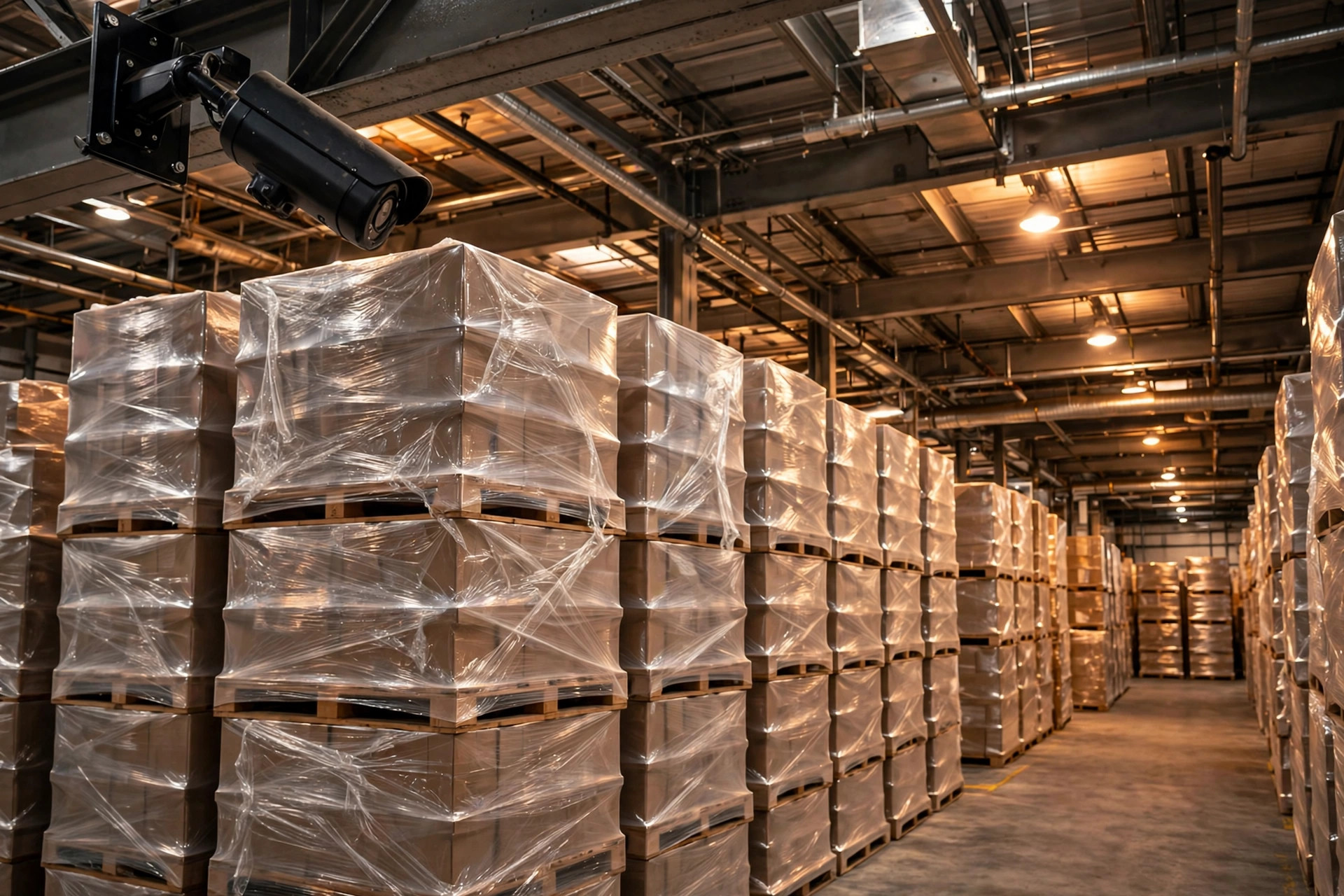
Move the same setup to the finished-goods area and the numbers fell apart: pallets wrapped in three layers of stretch film, stacks over eight feet, half-pallets of returns mixed in. Accuracy dropped to 83.4%. The model merged two adjacent pallets into one and read glare spots on the film as pallet edges. The errors were systematic, not noise.
So "98% accuracy" is a meaningless claim on its own. Ask: what lighting, what stack height, wrapped or not. Any accuracy promise that doesn't name those three conditions is marketing copy.
The five variables that actually eat accuracy
Lighting. In aisles near the windows, the late-afternoon sun throws long shadows across the floor, and the model misses pallet feet inside the dark zones. The fix was supplemental lighting — about $200 per industrial floodlight, far cheaper than upgrading the model. Fix the physics before you blame the algorithm.
Stack height. Six feet is the dividing line. Above that, the overhead camera angle hides the gaps between layers and the model can't count them. We simply excluded high-bay areas over eight feet from the vision scope. Admitting what it can't do beats forcing it and reconciling errors all day.
Stretch-film glare. The most underestimated one. Film produces mirror-like reflections under the high-bay lights, and the bright spots look like pallet board edges to the model. Roughly a third of our miscounts came from this. Tilting the cameras from a straight 90-degree top-down to about 75 degrees shifted the reflection zone and cut false positives roughly in half.
Occlusion. A forklift parked in the aisle, a half-open fire door, empty cartons staged by the rack — anything in the way hides pallets. Vision counting demands better housekeeping than manual counting, because a person walks around the obstacle and a camera doesn't. Our biggest workload in the first two weeks wasn't tuning the model. It was clearing aisles.
Mixed SKUs. Two different products on one pallet doesn't hurt pallet counting. But two pallets of different SKUs pushed tight together with no gap get merged into one. There's no algorithmic fix — it's a housekeeping rule: keep at least four inches between pallets. Vision counting, in the end, enforces warehouse fundamentals.
One more setting people overlook: frame rate. We started with continuous recording and generated terabytes of video per week across four cameras — storage and processing costs climbing for no reason. Switching to one frame every 30 minutes cut data volume to about one percent with no measurable accuracy loss. Pallets don't grow legs. Don't let the word "real-time" dictate your architecture; decide what refresh rate the business actually needs.
The math against manual cycle counts
Manual counting of that finished-goods area: six people, four hours, at the going Southern California warehouse rate of about $22 an hour — roughly $530 per count. Twice a month, that's about $12,700 a year, before you count the disruption of pausing outbound flow.
The vision setup: four industrial cameras at about $400 each installed, plus a software subscription of roughly $6,000 a year. Year one lands around $7,600; from year two it's just over $6,000 annually. Payback in about a year and a half, on paper.
But that's the wrong comparison. Manual counting is expensive and 100% accurate — a person standing in front of a pallet doesn't miscount pallets. Vision counting is 99% in good conditions and 83% in bad ones. It will never be 100%. The right question isn't "which is cheaper," it's "what precision does counting actually need."
My call: vision counting is a high-frequency rough sweep. Scan daily, flag the zones where counts don't reconcile, and send people to those zones for a precise count. Use vision as radar, not as the accountant. Anyone selling cameras as a full replacement for manual counting is early.
For context, I also evaluated drone-based counting. A drone flies the whole building in about 40 minutes — genuinely flexible. But battery life, indoor obstacle avoidance, and the fact that every flight needs an operator are ongoing costs. Fixed cameras run around the clock at zero marginal cost; their weakness is fixed sight lines and blind spots. My ranking: fixed cameras over the high-velocity zones first, drones as a quarterly full-count supplement. They're complements, not substitutes.
Designing a pilot that doesn't blow up
First, don't roll out building-wide on day one. Pick one medium-velocity aisle: a dead aisle won't surface problems, and the busiest aisle has forklifts blocking the lens all day, which is pure noise.
Second, ground truth must be independent. Letting the vendor report their own accuracy is letting the student grade their own exam. My method: print numbered stickers before the pilot, have a two-person crew tag and log every pallet, for two weeks. The stickers cost under $50 and were the most valuable line item in the whole pilot.
Third, budget for failure. Our first pilot actually failed: the cameras were mounted above a forklift intersection, and floor vibration traveled up the mounts. The image shook constantly and daily counts swung by 20%. We fixed it with independent ceiling mounts away from the vibration source. You won't learn that mounting location is an accuracy variable until it bites you once.
Fourth, write the exit criteria before you start. Under what conditions do you scale, and under what conditions do you kill it. Mine: if good-condition zones fall below 97%, or if poor-condition zones stay below 90% after remediation (supplemental lighting, aisle clearing), the project stops. Criteria on paper beat arguments in meetings.
Camera selection itself doesn't need agonizing: 5 megapixels minimum, power-over-Ethernet so one cable handles power and data, focal length matched to mounting height and coverage width. The $400-installed tier we used is plenty. Spend the money on lighting and mounts, not on chasing 4K — counting pallets doesn't need cinema resolution.
My overall take is cautiously optimistic: vision counting turns cycle counting from a monthly production into a daily routine — but only if you accept a few points of permanent error and commit to fixing the floor to earn them back. The technology is the easy part. The hard part is admitting the floor isn't ready for the technology, and then doing the work.
One piece of advice: spend two weeks getting the pilot aisle's housekeeping right before you talk about camera accuracy. Get the order backwards and the money is gone.