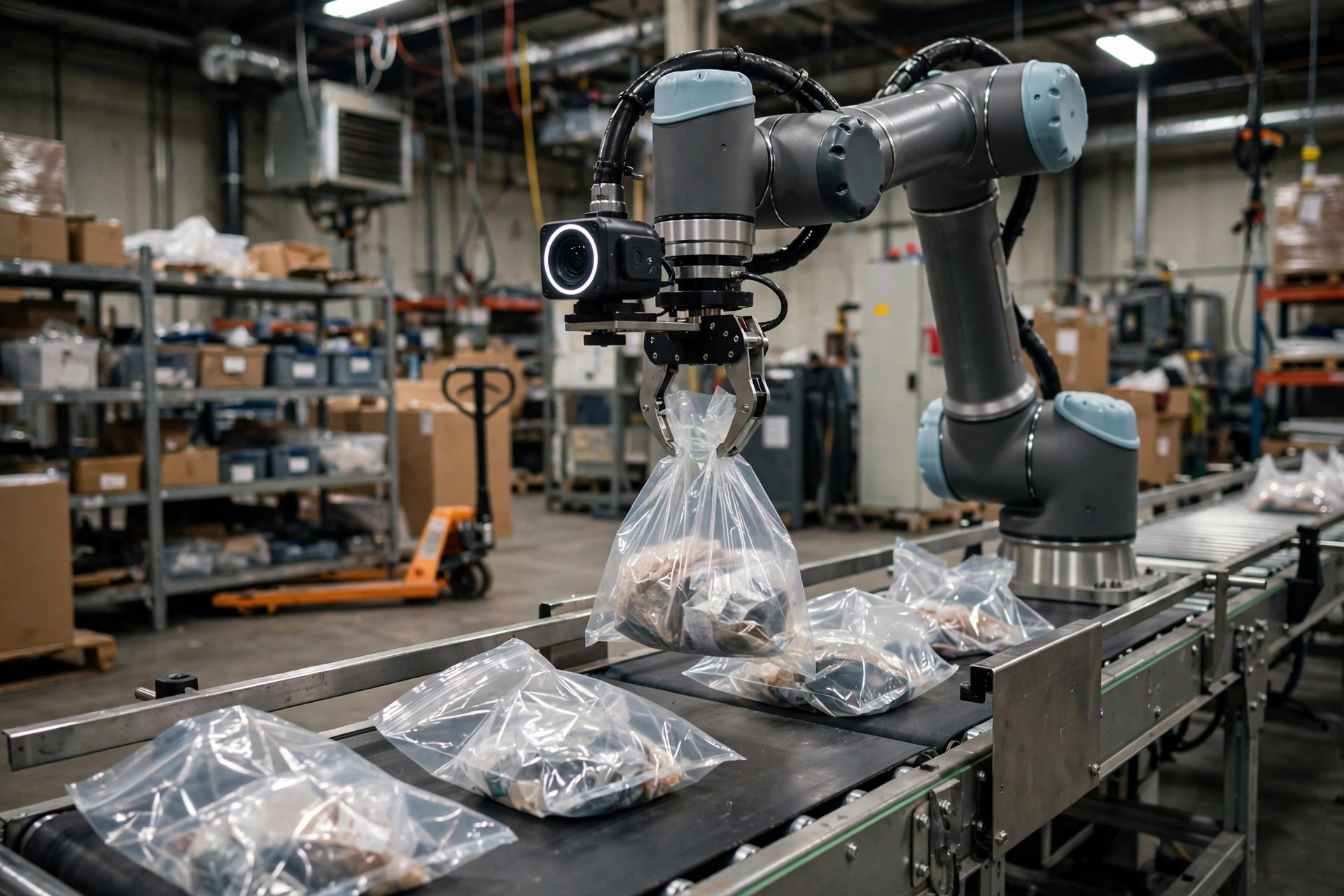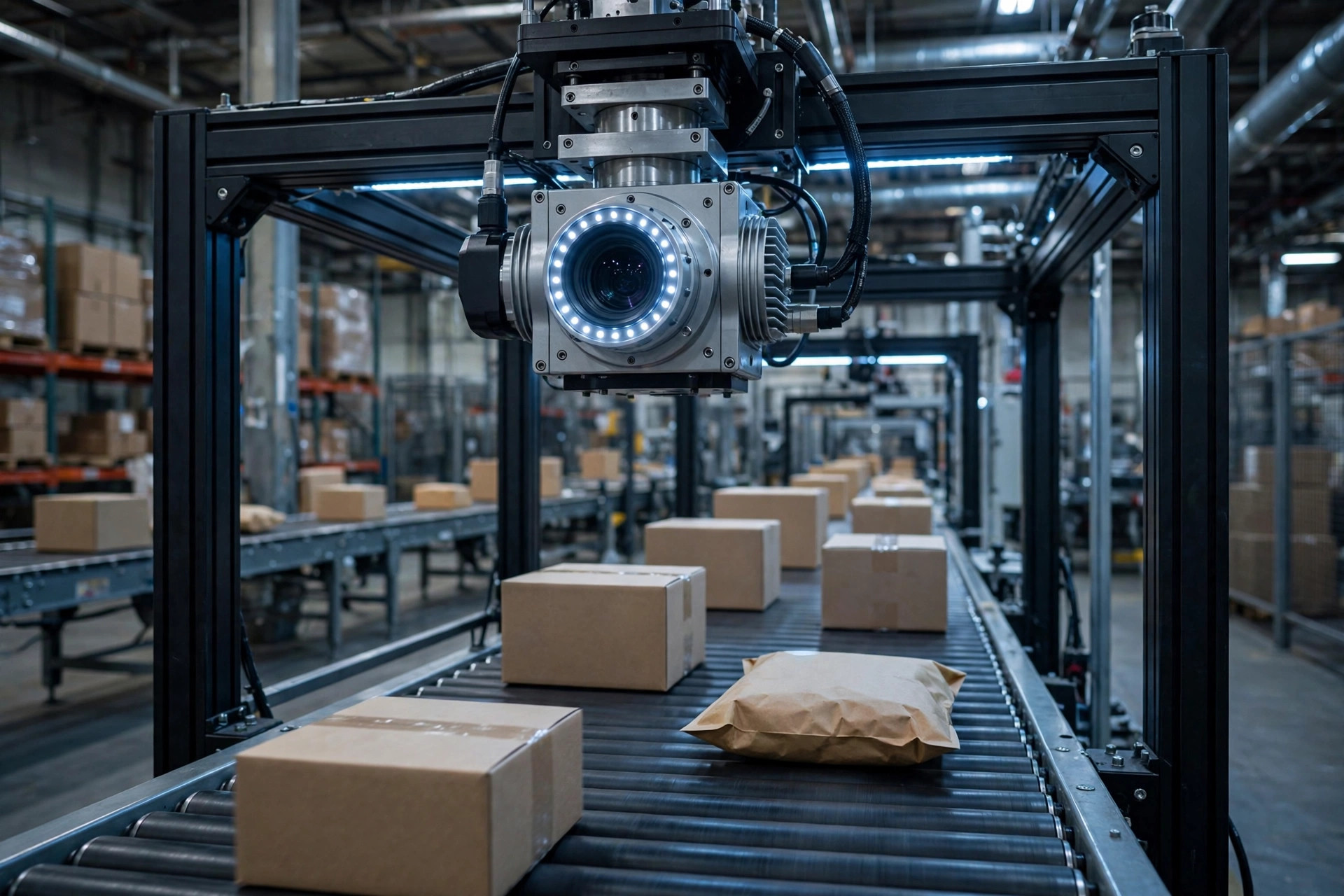
"This damn AI was scary-accurate when we installed it. Six months later it's half-asleep." That was my friend last month, word for word, ranting about AI model drift in his 3PL warehouse. Their vision sorting cameras started at 98% recognition. Now they're at 91%. The sorters curse at it daily, and the manual recheck station they once removed is back — with two extra people.
I know this story too well. The AI image-check tool I use for my own store (checking whether product images comply with marketplace rules) has been getting dumber the exact same way.
The technical term is model drift. In human language: the AI didn't get stupid — the world it sees changed, and it's still living in the past. Today: how to spot it, how to fix it, and how much money it's quietly stealing from you.
My own faceplant: the platform changed the rules, my AI was still living last year
Late 2024, I started using an AI image-check tool for main-image compliance — if you sell on marketplaces, you know, one bad image can throttle a listing or take it down. At first it was beautiful: 200 images, 3 mistakes. Saved me hours.
Then Q2 2025, everything flipped. The platform tweaked several image rules, and we launched summer products — light-colored packaging that reflected the studio lights, and the AI flagged every reflective label as "image contains watermark." In one week it missed a dozen-plus violating images, and one listing nearly got taken down. I stayed up all night rechecking everything by hand.
The postmortem was one sentence: the rules changed, the products changed, and the model was still living last year. That's textbook model drift — the training data was photos of the old world, production is the new world. Of course it's wrong.
The warehouse version: 98% to 91% in three months
My friend's 3PL warehouse in Dongguan (20,000 sqm) put in vision sorting in March 2025: cameras read shipping labels, auto-divert into chutes. Launch day: 98.2%. Beautiful. By September: 91.4%. The sorting supervisor's face was whiter than the labels.
They pulled in an engineer for a week. The root cause was three things, all "the world changed":
One, they replaced the light tubes. New color temperature, and every label looked a different color through the camera's eyes. Two, peak season brought a new carton supplier — the new labels had a yellowish background that never appeared in the training set. Three, a batch of small items arrived, stacked differently, half the labels buried — the model had never seen that arrangement in training.
See? Not one of these was "the model broke." All of it was the environment changing. Yelling at the AI is useless. First ask what changed in the warehouse in the last six months — that sentence is worth money, write it down.
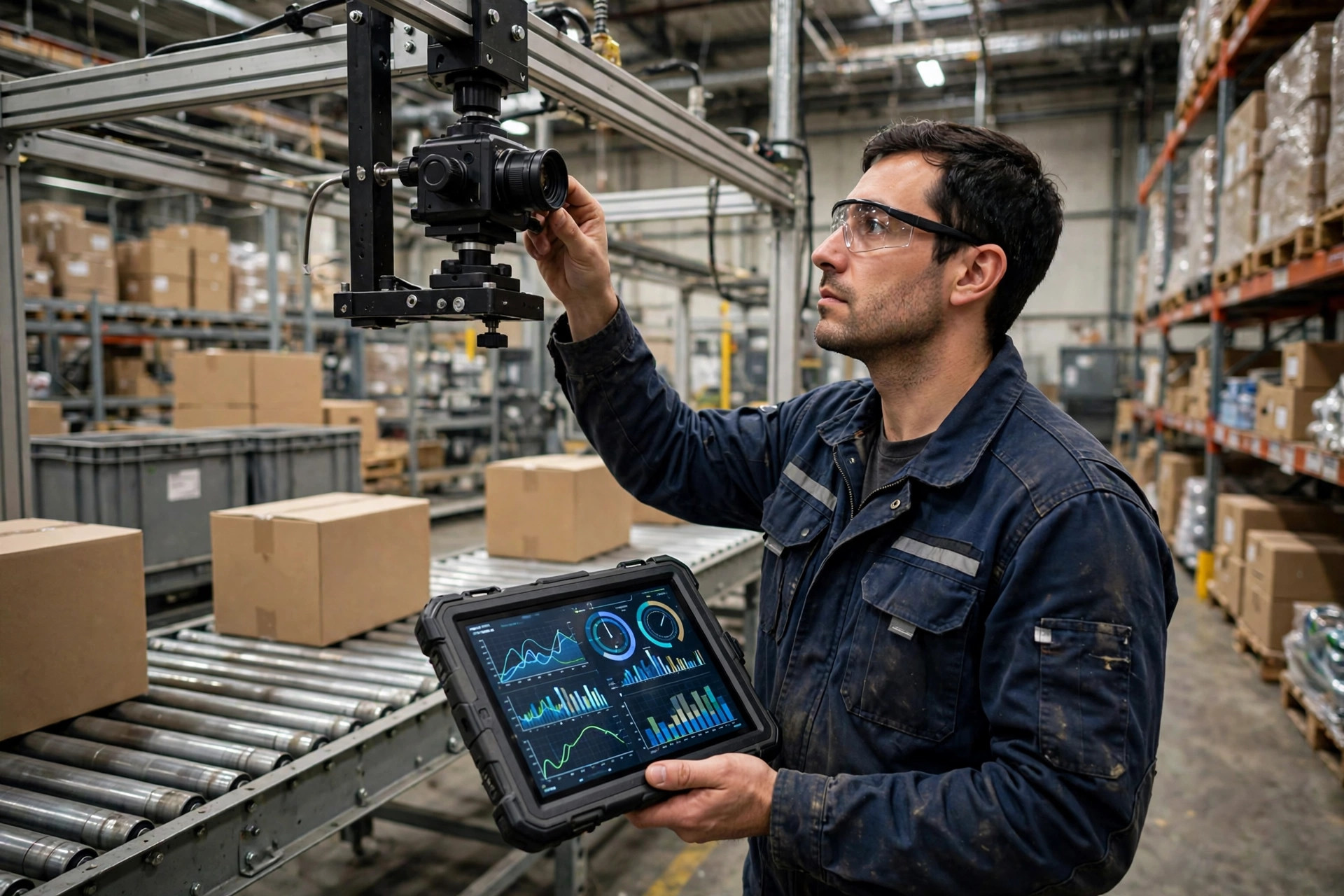
Let's do the math: how much is drift stealing from you
A lot of people think "a few points of accuracy, whatever." Let me translate it into money, using my friend's warehouse:
| Metric | At launch | After drift |
|---|---|---|
| Recognition accuracy | 98.2% | 91.4% |
| Daily sort volume | 30,000 parcels | 30,000 parcels |
| Daily manual rechecks | ~540 parcels | ~2,580 parcels |
| Recheck labor | 1 person, part-time | 3 people, full-time |
Two extra people. That's about $2,200 a month in labor, over $25,000 a year — and that doesn't count mis-sort payouts or customer complaints. Now, what does one retraining cost? Label 500 new samples, two people for two days, plus training compute — a few hundred bucks. Do that math and the lesson is obvious: the later you catch it, the more you bleed.
Detect, diagnose, act: the three-step model drift playbook
Forget the fancy MLOps platforms (big-company toys, we small players can't afford them). Three down-to-earth steps, personally tested:
Step 1: Detect. Don't watch accuracy — watch money. Accuracy sliding from 98% to 95% is invisible to you, but the money is already leaking. So watch three numbers: weekly manual recheck volume, exception parcel count, mis-sort payouts. My crude rule: randomly hand-check 100 items every week, compute the real accuracy, plot it in Excel; if recheck volume climbs more than 15% for two weeks straight, sound the alarm. The line doesn't lie. I do this for my own store now: every Monday morning, my ops person hand-checks 100 AI-reviewed images, ten minutes, under 3 mistakes we ignore it, over 5 we investigate same-day. That's how we caught the summer packaging reflection problem two weeks early this June — way before any platform warning.
Step 2: Diagnose. Did the data change, or did the model just get old? Look at what the mistakes have in common. If every miss is the same product type, the same shift, the same batch of packaging — the data changed (environment or goods). If the misses are scattered across everything — the model aged out as a whole and needs major surgery. My friend's case took ten minutes to pinpoint: every miss was the new supplier's cartons. Didn't even need the engineer.
Step 3: Act. Match the treatment to the severity — don't just hit "retrain."
| Drift level | Symptom | Treatment |
|---|---|---|
| Mild (within 2 points) | Occasional misses | Fine-tune with a few hundred new samples |
| Moderate (2–5 points) | One product type keeps missing | Targeted retraining + refreshed training set |
| Severe (over 5 points) | Misses everywhere | Stop the line: fix the environment first (lighting, camera angle), then retrain |
| Recurring | Drops again soon after retraining | Stop training — call the vendor, it's probably a solution-design problem |
Note the third row: if drift keeps recurring, fix the environment before you train the model. If the lighting is wrong, training a hundred times just teaches the AI to recognize the wrong lighting. The more you train, the dumber it gets.
One more thing: not every "going blind" is drift
Don't rush to retrain. Once my friend's warehouse dropped 4 points overnight — full panic — and the engineer walked in, looked up, and found a layer of dust on the camera lens. Wiped it, accuracy came right back. Another time it was an aging network switch dropping frames — the AI was getting corrupted images, and no model on earth could read those.
So before diagnosing, run the elimination triple-check: is the lens dirty, are the lights on, is the network dropping packets? Hardware problems take ten minutes to fix — don't spend two weeks retraining for nothing. Real AI model drift is chronic, a little worse every week. A cliff-edge drop is almost always hardware or the environment acting up.
Three counterintuitive truths, myth-busting edition
First: the model isn't "broken," the world changed. Everyone who yells at the AI first is looking in the wrong direction. Ask what changed in the warehouse in the last half year: lights, cartons, product mix, stacking, whether a forklift ever knocked the camera crooked (don't laugh, it happens).
Second: retraining more often is not better. Some vendors want to retrain you weekly to look attentive. Nonsense. If your labeling quality is bad, you're feeding the model noise — the more you train, the dumber it gets. Data quality always beats training frequency. Five hundred well-labeled samples beat five thousand sloppy ones.
Third: never outsource labeling to people who don't know warehouses. Bad labels are more poisonous than no labels. I've seen an outsourced team label every "creased label" as "missing label" — the model learned it, started alarming on every crease, false positives doubled. Whoever labels must understand warehouses, or at minimum understand what they're looking at in each photo.
Pitfall alerts: get these three into the contract
Last, some contract wisdom, all paid for in blood:
One, keep versioned copies of the training data. The original training set, what samples each retraining added — version all of it. Otherwise the vendor's team turns over and nobody can even tell you what the thing was trained on.
Two, write down who owns drift and what retraining costs. If the environment shifts a little within six months of go-live, is retraining free? How much? Don't wait until you're at 91% to negotiate — by then you have zero leverage.
Three, set a tripwire. Something like: accuracy drops below 93%, vendor on-site within 48 hours. In black and white. Beats any verbal promise.
An AI is like an employee: hire it and ignore it, and it's useless in six months. Regular "performance reviews plus training" keeps it sharp. A hundred hand-checks a week and a line in Excel — crude, but this trick genuinely works for me. At least next time it starts going blind, you'll know first, instead of finding out when the sorters start cursing.
Oh, and when retraining day actually comes: back up the old model first. If the new one is somehow dumber, you can roll back. Sounds obvious — but I've watched someone train without a backup. When it blew up, all they could do was stare.
Tried it myself — it works.
By Ah K, E-commerce Seller (5 yrs)