Here is my verdict up front: in the Vietnam seafood export cold chain warehouse business, the game is not won by the biggest freezer. It is won by whoever survives the half hour when the chain breaks. I have seen too many shipments leave the processing plant in perfect shape, only to arrive at a US port with the ice half melted, the buyer docking the price, and a whole container of profit gone with the meltwater. This business has two faces: temperature and time. Control both, and the shipment stands a chance. Lose either one, and no paperwork will save it.
A Vietnam seafood export cold chain warehouse is the most underestimated link in that chain. People treat it as a parking lot: goods arrive, get frozen, get loaded, job done. That is not how it works. Between the Mekong Delta plant and the port, the warehouse has to do three jobs at once: pre-cool fast, pick by order, and keep a temperature record for every single pallet. If any one of those slips, the sailing schedule, the customs check, and the buyer's inspection all slip with it.
The Vietnam Seafood Export Cold Chain Warehouse Lesson: The Shrimp That Almost Cost a Season
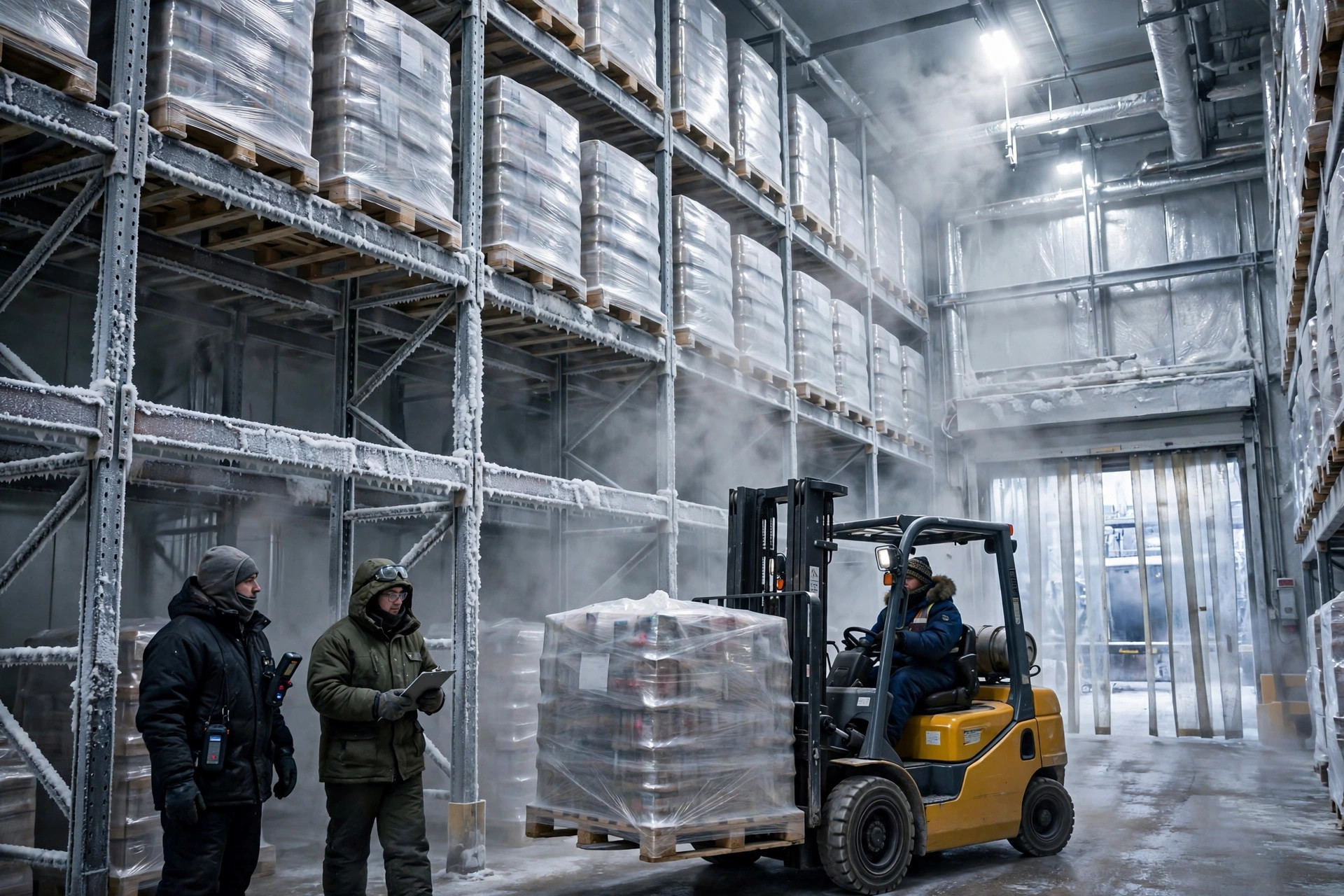
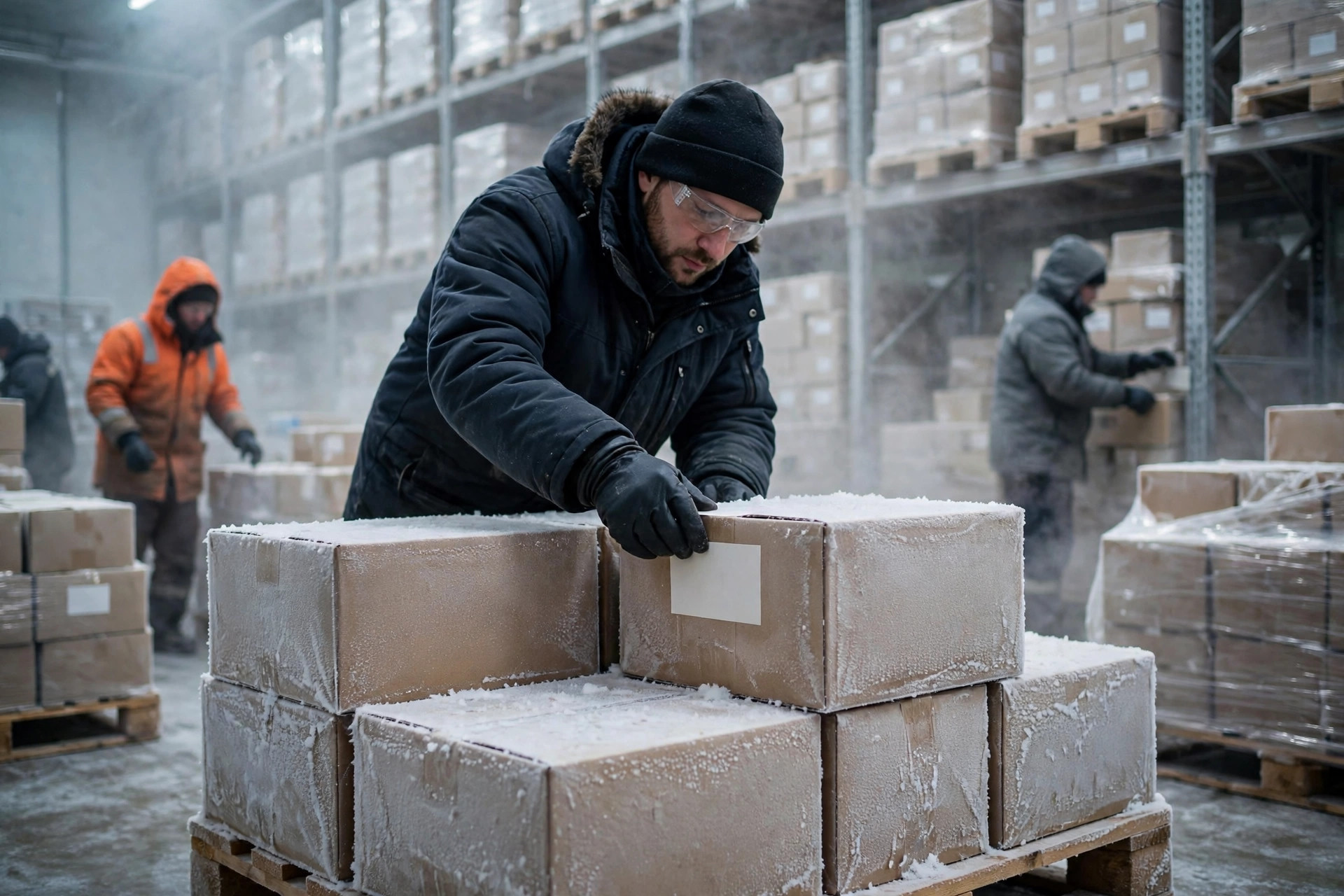
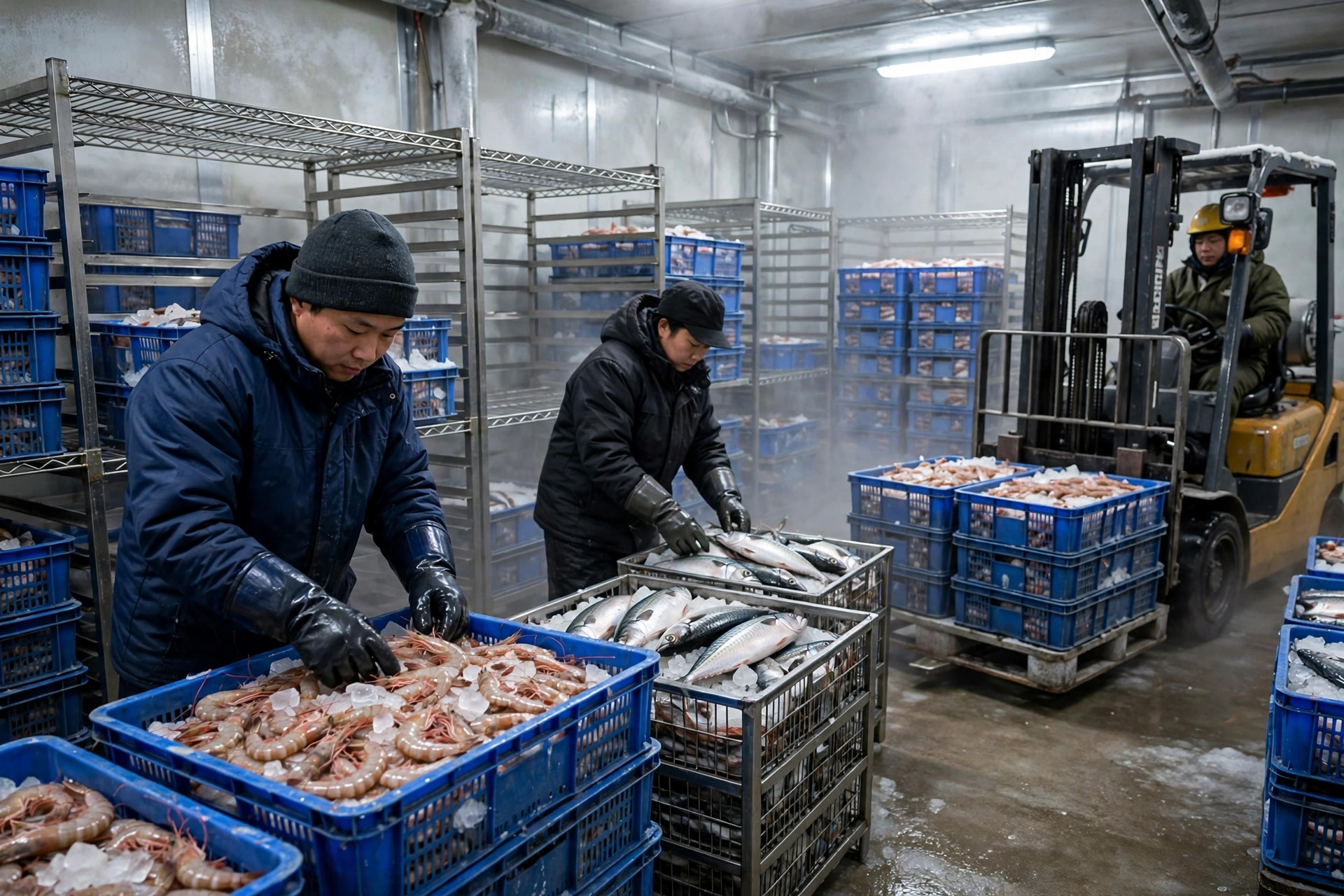
In the summer of 2023, I visited a processor in Can Tho putting out about 40 tons of shrimp a day. The plant was clean, the crew sharp, and the problem sat right at the shipping door. Shrimp came off the line at around 8 degrees Celsius, went straight onto pallets, and rolled into a cold store set at minus 18. Sounds fine, right? It was not. The pallets were stacked too tight for air to move, and the shrimp in the middle had not frozen through after three days. At loading time the outer cartons were rock hard and the inner ones were still soft, and the temperature logger showed the core temperature had never hit target.
The buyer took a 12 percent price cut to accept that container. For that plant, it wiped out roughly two weeks of margin. The fix was almost embarrassingly simple: restack with air channels, drop two cartons per pallet, and stretch pre-cooling from 12 hours to 18. The extra cost ran under 200 dollars per container, and they have not taken another deduction since. Put plainly, in cold chain work, the small money you save is usually where the big money gets lost.
A second story comes from a cold chain warehouse near Ho Chi Minh City. During the 2024 peak season, an exporter rushed partially pre-cooled basa fillets into a reefer, reasoning that a 20-plus-day ocean voyage would finish the freezing on the way. It did not. A reefer is built to hold temperature, not to freeze product, and the fillets arrived in Los Angeles showing signs of thawing and refreezing. The buyer rejected the container outright. I will not quote the loss figure, but it was enough for that company to remember the lesson for good: a shipping container is not a cold store, so do not use transport equipment as processing equipment.
Where the Money Really Goes in the Vietnam Seafood Export Cold Chain Warehouse
Let me lay out the cost structure I worked through with an exporter shipping about 300 containers a year. Treat the shares as structure, not as quotes, because rates move:
| Cost item | Rough share | Where it blows up |
|---|---|---|
| Plant pre-cooling and cold storage | About 25% | Tight stacking, squeezed pre-cooling time |
| Port warehouse transfer and loading | About 20% | Temperature swings while waiting for a vessel, doors cycling open |
| Reefer ocean freight | About 40% | Sailing delays, reefer breakdowns |
| Destination inspection and loss | About 15% | Missing documents, gaps in the temperature record |
The warehouse slice looks small, but it is the only place where you can kill most of the downstream risk before it boards the ship. Ship product that is not fully pre-cooled, and you are exporting the problem. Ship it with a gap in the temperature record, and you arrive in the US with no evidence when the buyer disputes quality.
Here is the counterintuitive part: exporters who squeeze warehouse fees hardest often pay the most. They pick the cheapest cold store, save a little on storage, and then lose many times that on a single deduction. The money worth spending is on temperature loggers, on the labor to stack with air channels, and on one person with the authority to say, "This container does not ship today because the temperature is not there." In cold chain, the most expensive thing is not electricity. It is the attitude of "let it slide this once."
A No-Break Checklist for the Vietnam Seafood Export Cold Chain Warehouse
I keep coming back to a short list that has held up across plants and warehouses. First, measure core temperature before dispatch, sampling at least 3 pallets per lot, and let that data travel with the goods, because US buyers increasingly ask for it. Second, at warehouse receiving, check the temperature record before you admire the appearance, in that order, because good-looking product with a temperature excursion is still a time bomb. Third, rehearse a 48-hour port delay before loading: cold store temperature, reefer temperature, and logger data all have to agree before anyone signs the release.
One more detail trips up newcomers: the loading dock. Many warehouses have no cold canopy, so pallets come out of a minus-18 store into 30-plus-degree heat and sit there for two or three hours waiting for a truck, frosting, thawing, and refreezing at the surface. The Ho Chi Minh City warehouse I mentioned added a simple canopy and a hard rule: any pallet out of the store for more than 40 minutes without loading goes back for a temperature recheck. It sounds fussy. Over one peak season, their complaints fell sharply. Cold chain, in the end, is not decided by how expensive your equipment is. It is decided by whether anyone enforces the fussy rules.
And never mix lots from different plants on one pallet to save a little handling time. It looks efficient until one lot goes wrong and the whole pallet becomes unexplainable, with no clean lot split when the buyer claims. We now stack every partial lot separately, with its own lot code, even if it wastes a pallet position. A wasted pallet position is cheap. An unprovable claim is not.
So here is my closing advice, and it is a question, not a slogan: before you talk price with a Vietnam seafood export cold chain warehouse, ask three things. If pre-cooling fails, does the shipment still go? If the temperature record breaks, who owns it? If the vessel is delayed, where does the product go? If the warehouse cannot answer all three, do not sign, no matter how low the quote looks. Keep the chain unbroken, and the business stays unbroken with it.
By Lao Mi, Supply Chain Veteran (20 yrs)