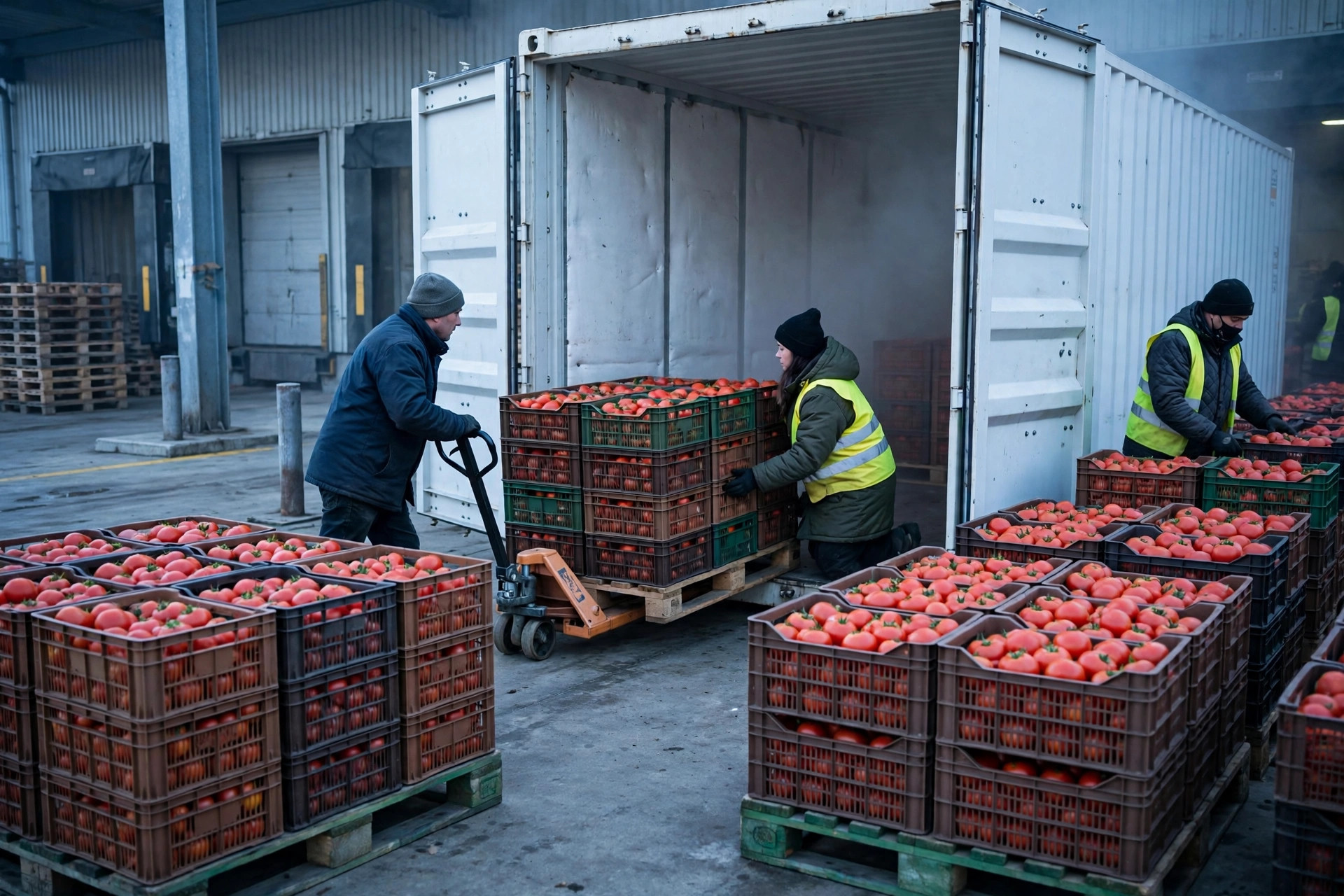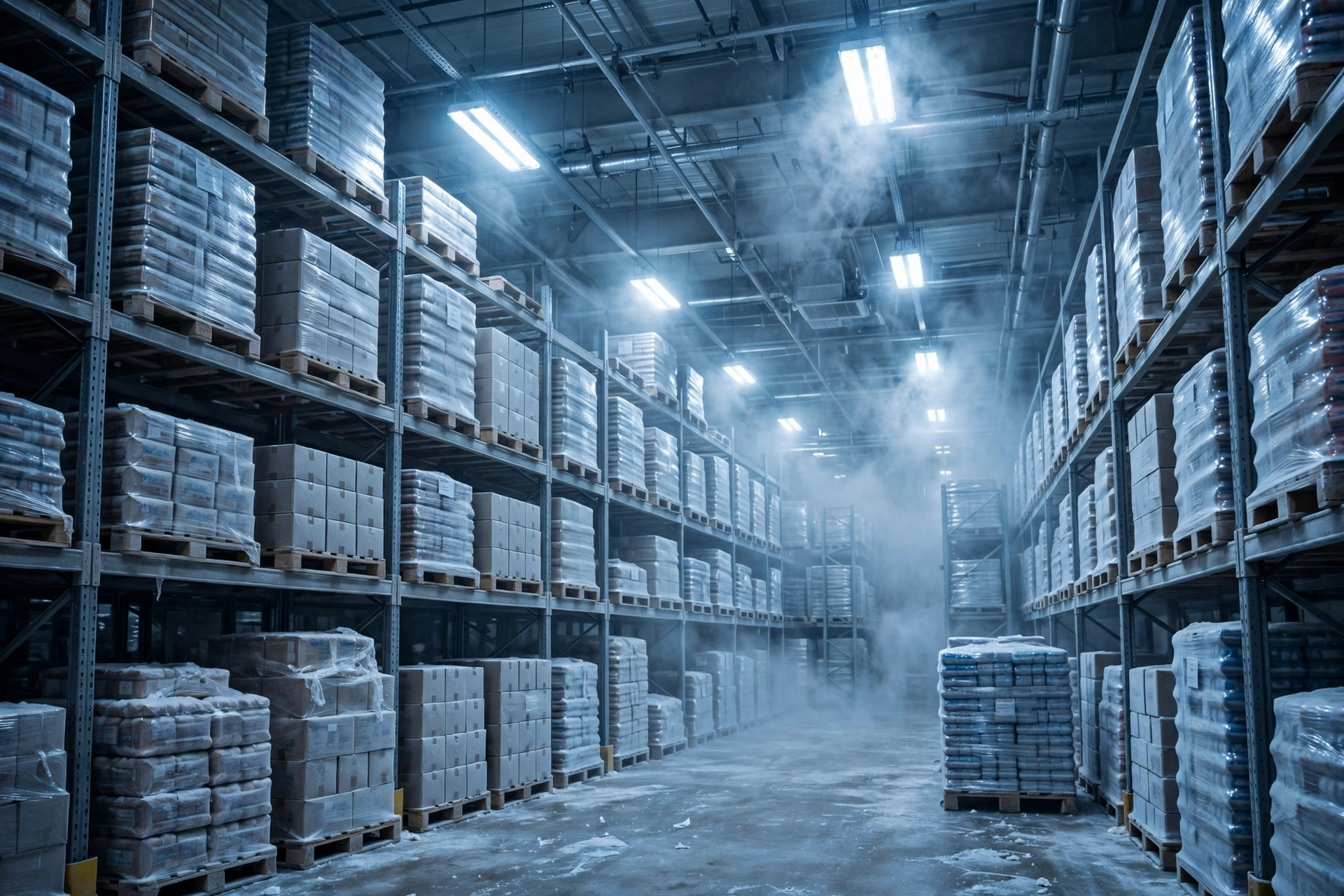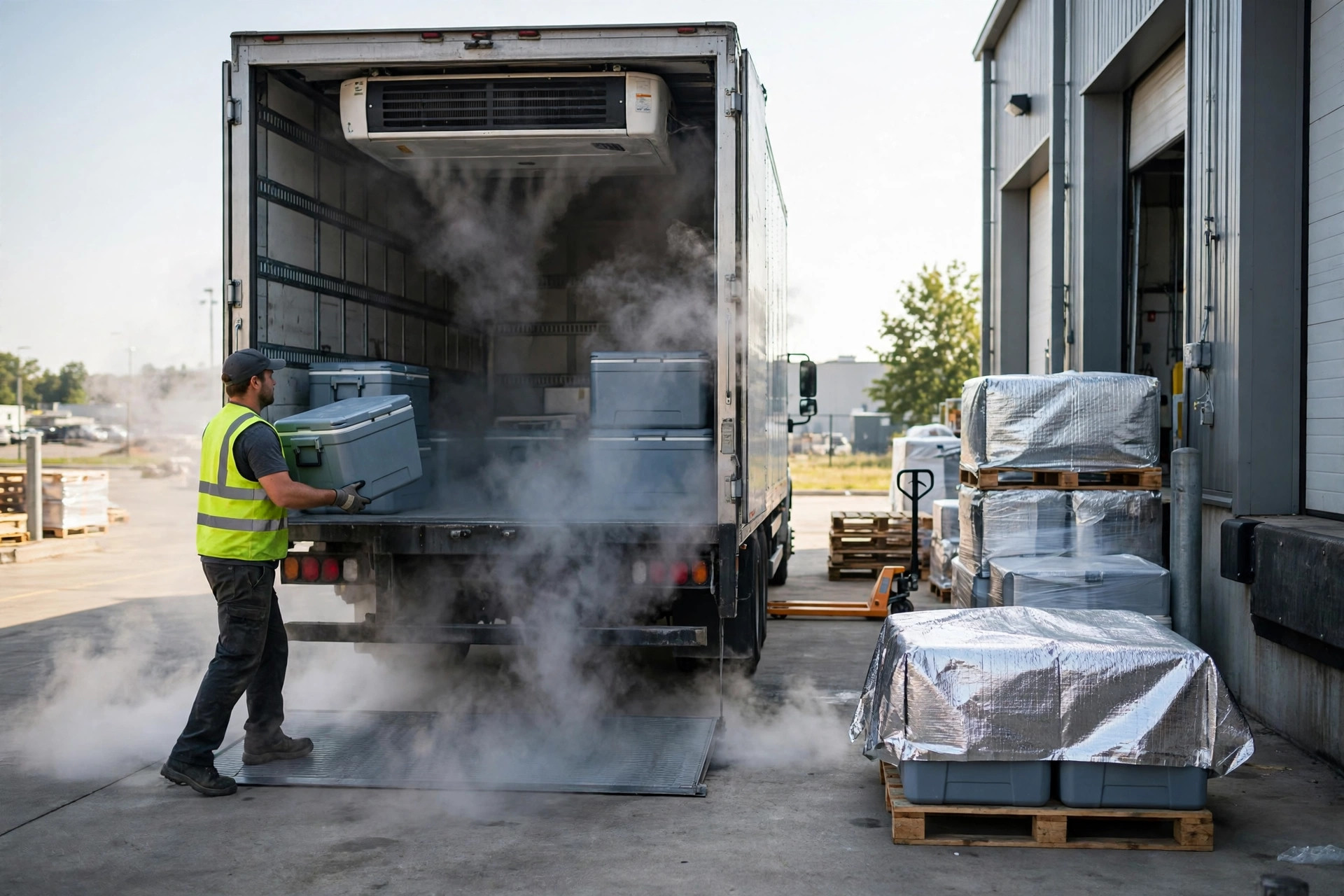
Let me be straight with you, folks. At 4 a.m., the inspection hall at the Mohan railway port shines brighter than daylight.
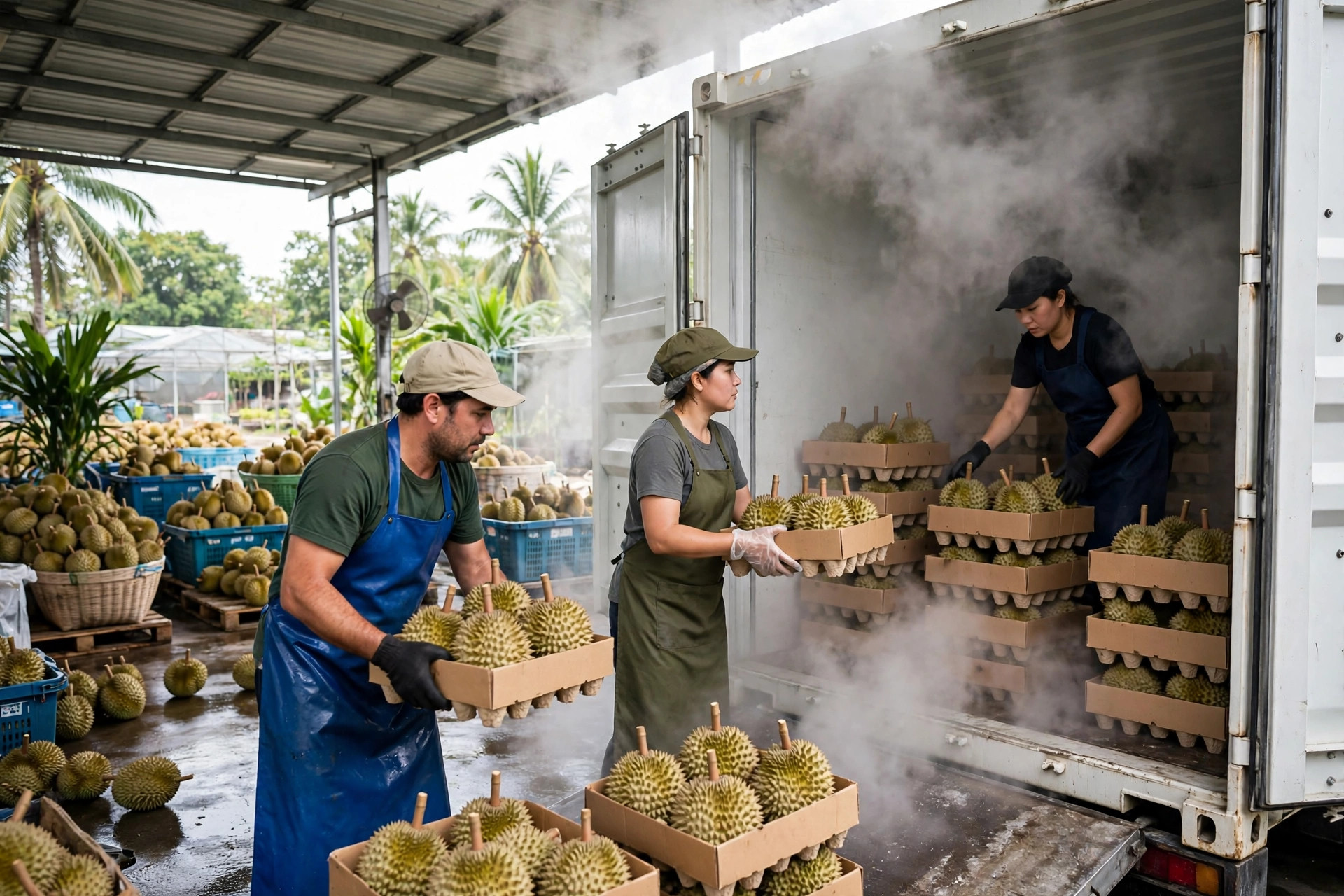
This past May, I rode along with one link in the Thailand durian export cold chain — a container of Monthong durians from an orchard in Chanthaburi, Thailand. The doors swung open, cold air burst out — 13.2°C on my temperature gun. The Thai driver gave me a thumbs up. From the moment those fruits left the orchard to the moment they entered China, the cold chain never broke once.
Three years ago, I wouldn't have dared dream of this. Back then we shipped by road, and whether a container of durians survived to Kunming was pure luck. Today I'll walk you through the full math of the Thailand durian export cold chain, from orchard to port.
How the Problem Found Us: A Broken Thailand Durian Cold Chain Cost Us a Container
Let me start with a painful one. During the 2023 durian season, we had a container — over 2,000 cartons of Monthong — coming in by road through Mohan. The port was jammed, and our reefer truck sat in the queue for three days. To save diesel, the driver switched off the refrigeration unit at night. "It's just a few hours," he figured.
When customs opened the container for inspection, dozens of cartons near the doors had blackened skins and weeping flesh. The container was worth over 400,000 yuan. By the time it reached Kunming for sorting, the spoilage rate was nearly 30%. The buyer docked our payment. We worked a whole season for nothing.
That container taught me the core truth of this business: the cold chain's worst enemy isn't slow transit — it's a broken chain. The temperature logger's curve doesn't lie. One spike above 20°C lasting more than 4 hours, and that container's shelf life drops by at least 30%. The diesel the driver saved was nothing next to the rotten fruit.
There's another trap: people think cold chain means "the colder the better." Wrong! Durian is a tropical fruit — it gets chilling injury. Set the reefer below 10°C and the skins develop black spots while the flesh turns hard and flavorless. We learned that the hard way too — a mis-set unit at 8°C, and half the container arrived looking frostbitten. Now it's iron law: reefers at 13°C, fruit pre-cooled to a pulp temperature of 13–15°C before loading.
Three Routes for Thailand's Durian Cold Chain Exports — Why Rail Beat Road
Thai durians reach China by three main routes: road, sea, and rail. We've run all three. Here's the honest math.
| Route | Transit time (orchard to Kunming/Guangzhou) | Cost | Spoilage | Best for |
|---|---|---|---|---|
| Road (Mohan / Youyiguan) | 3–5 days normally, a lottery when ports jam | Flexible, cheap for consolidated loads | Port queues mean broken chains; worst spoilage in peak season | Small lots, urgent loose cargo |
| Sea (Laem Chabang → Qinzhou/Guangzhou) | 7–12 days | Cheapest per container | Long transit, reefer unattended at sea, medium risk | Big volumes, time-insensitive cargo |
| China-Laos Railway "Lancang-Mekong Express" | Under 3 days orchard-to-Kunming, rail leg just 26 hours | About 15% cheaper than road (per CRCT Kunming branch) | Spoilage rate down ~10% vs road | Peak-season bulk shipments, first choice |
Let me put numbers on it. The railway's reefer block trains depart from Laem Chabang Port in Thailand, transfer bogies at Vientiane in Laos, clear customs at the Mohan railway port, and run straight through to Kunming and Chongqing. The rail leg takes just 26 hours to reach Wangjiaying West Station in Kunming (per on-the-ground reporting), with the full journey clocking in under three days. Costs run about 15% below road transport, with fresh-fruit spoilage down roughly 10% — that's the public statement from the deputy GM of CRCT's Kunming branch, not something I made up.
For comparison: the old road route took 7–9 days, cost about 50,000 yuan per container, and spoilage started at 10% (per a Sichuan importer with a decade in the trade). Rail gets you to Chengdu in as little as 72 hours at half the cost, with spoilage near zero.
Some context on what this corridor carries: per Thailand's Ministry of Commerce 2022 figures, China takes over 96% of Thailand's durian exports by volume, worth US$3.09 billion. China is Thailand's durian lifeline. And in the first eight months of 2026, tropical fruits including durian, mangosteen, and longan imported via the China-Laos Railway were worth 5.26 billion yuan, up 12.3% year-on-year (Kunming Customs).
Our Locked-In Playbook: Four Steps, Orchard to Port, Never Break the Chain
After being schooled by rotten fruit, we nailed our process down to four steps. None may be skipped.
Step one: pre-cool at the orchard — pulp temperature is the boss. Durians come off the tree with pulp near 30°C. Pack them like that and you've built a steamer. Our rule: pre-cool at the packing plant until pulp hits 13–15°C before any carton gets packed. Gun the pulp, not the skin — skin temperature lies.
Step two: pre-cool the empty reefer, lock 13°C. When the empty box arrives at the plant, run it cold for 2 hours until the interior hits 13°C, then load. Unit set to 13°C, temperature logger rides along. Any driver who dares switch off the unit mid-route gets blacklisted. Forever.
Step three: use the "railway express clearance," get documents right the first time. Kunming Customs now offers advance declaration and a railway express lane — file everything ahead, and at Mohan they just verify seal and container numbers. Clearance dropped from 40 hours at the start to 2–5 hours. But only if your paperwork is perfect the first time: phytosanitary certificate, certificate of origin, packing list. One mismatch and you're detained. What this step saves isn't freight money — it's the life of your cold chain.
Step four: distribute immediately on arrival in Kunming, no warehousing. At Wangjiaying West, part of the cargo re-books straight onto rail for Chengdu, Chongqing, and Zhengzhou; the rest goes to a nearby logistics base for inspection and transfer to road. Our principle: out of Kunming within 48 hours of entry. Every extra day a durian sits in Kunming is a day off its shelf life.
The Counterintuitive Part: Those Two Hours of Inspection Are Deadlier Than 26 Hours on Rails
Here's the counterintuitive judgment every insider knows and outsiders miss: the most dangerous link in the whole cold chain isn't transport — it's the inspection unsealing.
Twenty-six hours on the railway, steady at 13°C, rock solid. But port inspection means opening the doors. Customs looks at the goods, takes samples — doors open, cold air escapes, and interior temperature can jump to 18°C in 20 minutes. So our standing rule with the customs broker: reefer keeps running during inspection, doors shut and re-cooled immediately after, logger recording throughout. Any container whose temperature curve spikes during the inspection window, and we switch brokers for the next shipment.
One more counterintuitive point: don't worship the phrase "end-to-end cold chain" — count the breaks. Some logistics firms advertise full cold chain while switching trucks three times and re-stuffing containers twice. Every re-stuff is a break. The only honest metric is the temperature logger's curve: how many times did it cross 15°C from start to finish? More than twice — blacklist that carrier.
Three Cold-Chain Warnings for Thailand Durian Exporters
First, 13°C is the durian's lifeline, not a suggestion. Set it high and it rots; set it low and it chills. Pre-cooling, stuffing, transit, inspection — watch that number at every step. A temperature logger costs a few hundred yuan. A container costs hundreds of thousands. Don't be cheap on the wrong thing.
Second, rail in peak season, road in the off season. May through August is durian high season — road ports will jam, and jams mean broken chains. Rail block trains need advance booking, but the schedule holds. Use road's flexibility when volumes are thin.
Third, getting documents right the first time matters ten times more than saving 500 yuan on freight. One day detained at the port is one more day of cold-chain risk. Find a reliable broker, get the phytosanitary and origin certificates clean. Small money, big outcome.
The straight truth: in the Thai durian business, the final competition isn't about who sources cheapest — it's about whose cold chain never breaks. Thousands of kilometers from orchard to port: temperature unbroken, money unbroken. Break the chain once, lose money once. Do it a few times and you're out of the game.
Peak season is coming again, folks. Book your rail slots early and watch those temperatures like a hawk. May your spoilage be low and your profits high this year.
By Chen Feng, Warehouse Operations Manager