Vietnam electronics export warehouse logistics has one brutal truth I learned the expensive way: the goods can pass inspection at the factory gate and still arrive at your customer as scrap. Last year a batch of display modules left Bac Ninh looking perfect. By the time the buyer opened the cartons in the US, a third of the modules had fogged edges. They docked my final payment on the spot. That was the day I stopped treating the warehouse leg as an afterthought.
I have sold cross-border e-commerce for five years and run the Vietnam lane for three. I have stood in factory warehouses around Bac Ninh and Thai Nguyen, and in export warehouses near Haiphong Port. Precision cargo fears two things: damp and shock. Northern Vietnam has a long, sticky rainy season. A warehouse can smell damp, a carton goes soft overnight, and one rough forklift move can loosen a ribbon cable. The platform does not care. The bad review lands anyway.
Vietnam Customs figures put 2025 exports of computers and electronic products at $107.75 billion, up 48.4% year on year, with the United States as the largest market. At that scale, one small warehouse mistake turns into a painful loss.
My first expensive lesson was moisture. A batch of display modules sat in a factory warehouse in Bac Ninh, stacked against a wall. The wall sweated. The bottom cartons drank the damp straight through the cardboard. From the outside, nothing looked wrong. Open the boxes and the moisture bags were not sealed properly, and the module edges had already started to oxidize. I lost more than $20,000 on that shipment. Since then, my first receiving check is never the count. It is the damp: is the floor raised, is there a gap from the wall, is there a humidity meter in the room, and does anyone actually read it?
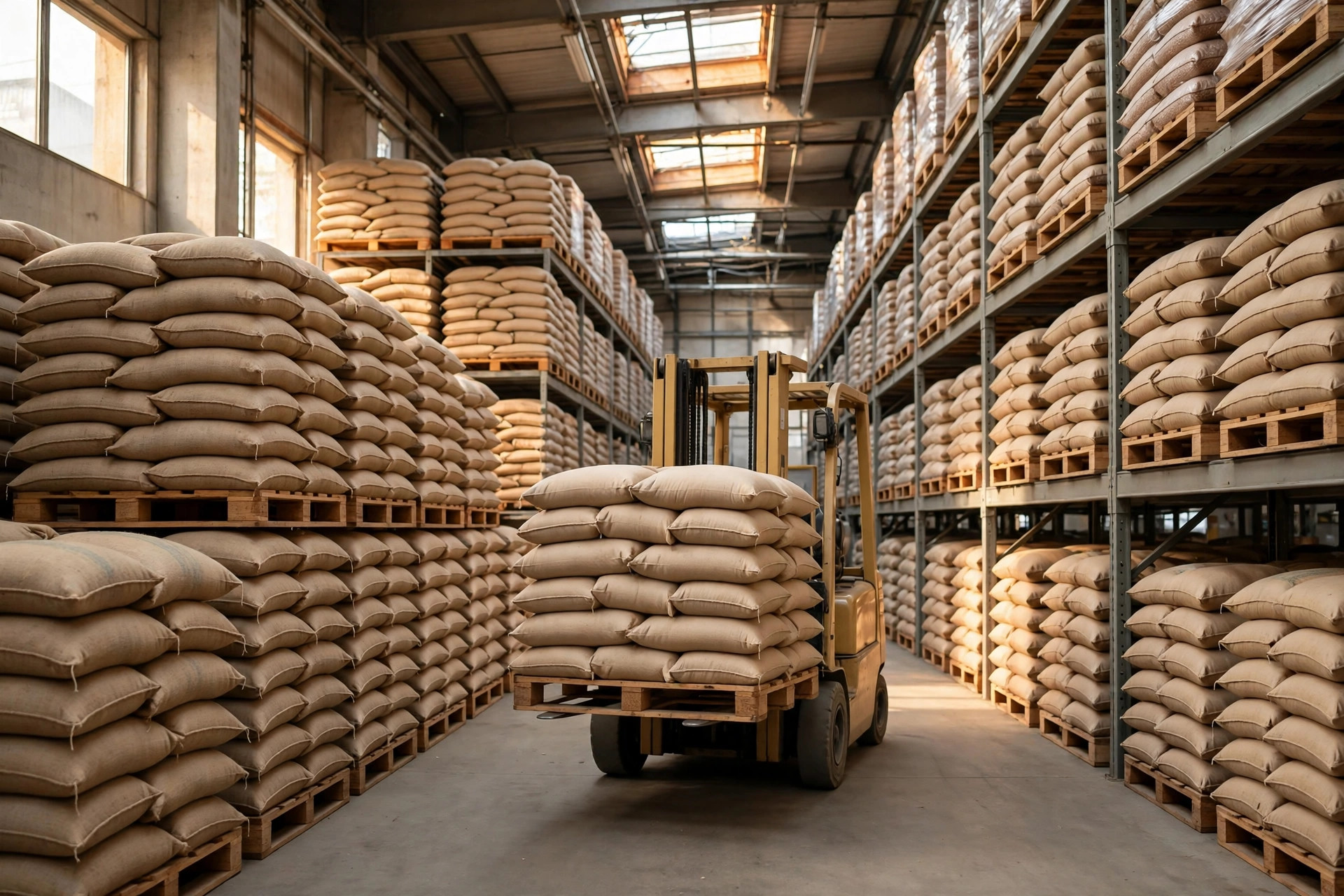
The next warehouse I used did it differently. Every inbound delivery got an opening inspection: check the moisture-bag seal, check that enough desiccant went in. Precision items went into their own zone, on pallets, at least half a metre from the wall. Humidity got logged morning and evening, and the dehumidifier went on when the reading crept up. The rent was a little higher. Over a year, my damage rate fell to a level I could live with. The extra rent did not even cover a fraction of one return shipment.
The second lesson came from consolidation. Precision cargo should never ride under heavy cargo in the same container. Once, my cartons shared a box with hardware, and the other shipper stacked heavy cases right on top of mine. At Haiphong, the container doors opened and my carton corners were crushed, with a few circuit boards cracked inside. These days I have one rule for shared containers: precision cargo goes on top, nothing heavy sits on it, and there is a cushioning layer in between. I agree the loading plan with the forwarder in advance and keep photos on file.
Vietnam Electronics Export Warehouse Logistics: What Moisture and Shock Protection Really Costs
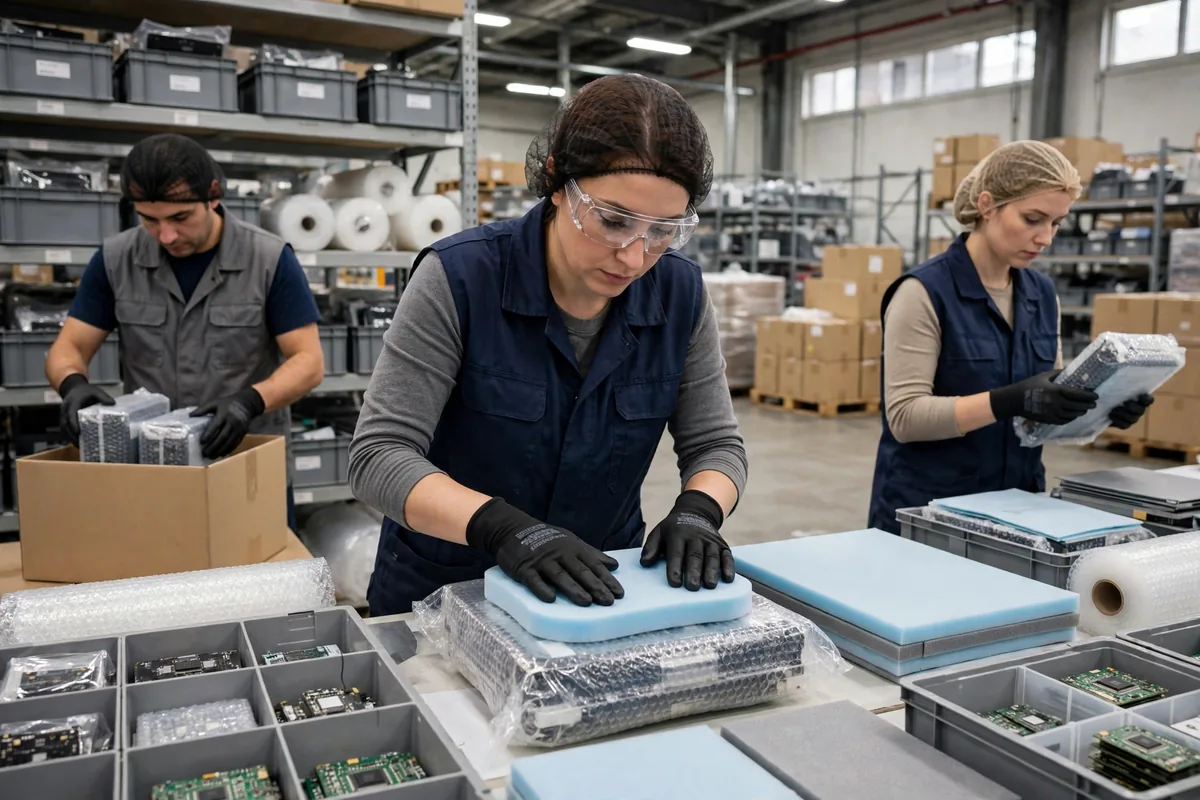
Most sellers price this lane by warehouse rent plus freight. I price it differently. Moisture bags, desiccant, cushioning, corner protectors, pallets — those small items add a little cost per shipment. Skip them and the bill can be an entire shipment rejected by the customer. I sort packaging into three tiers: standard consumer electronics get a moisture bag plus desiccant, screens and modules get an extra layer of bubble wrap and hard corner protectors, and bare boards and connectors get anti-static bags on top. The tiers are not for show. They tell anyone in the warehouse at a glance whether a carton can be stacked or pressed.
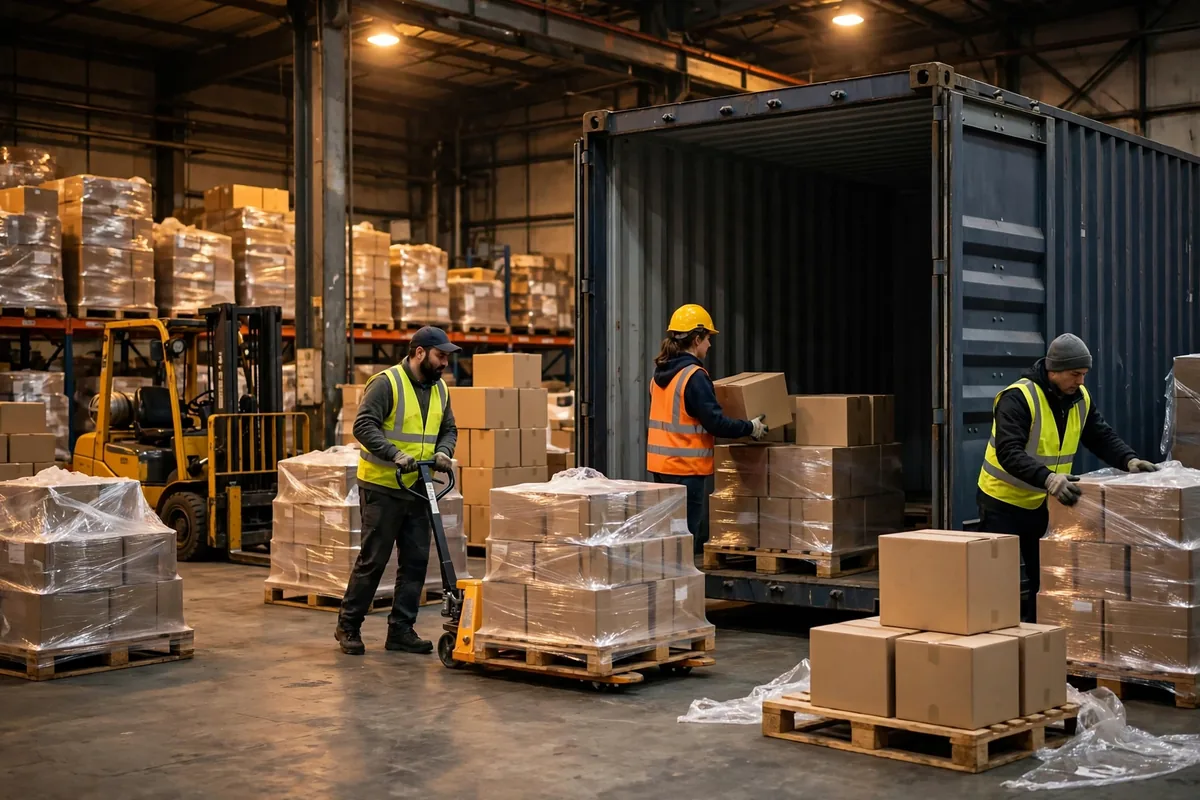
Handling inside the warehouse hurts precision goods more than the road does. I once watched a worker drag a carton of modules off a pallet. The corner hit the floor, and something inside made a cracking sound. After that, my handover sheet says it plainly: two people carry precision cartons, forklifts lift pallets and never spear cartons, and stacking stays at three layers or fewer. The warehouse team thought I was fussy at first. Two months later they were used to it, and their own damage claims had dropped too.
Here is the comparison I use myself. The figures are a hypothetical worked example for one 40-foot container with cargo worth around $100,000, so you can adapt it to your own shipment:
| Approach | Extra packaging and warehouse cost per shipment (hypothetical example) | What it can save |
|---|---|---|
| Bare cartons, no moisture or shock protection | $0 | One damp or crushed load can mean rework or a rejected shipment |
| Standard moisture bag plus desiccant | A few hundred dollars | Blocks most rainy-season damp |
| Tiered packaging for precision items plus pallet separation | Around $1,000 | Damage drops sharply, and so do customer complaints |
| Tiered packaging plus an agreed loading plan with photos | A little more staff time | If cargo gets crushed, the photos settle the argument |
The point is simple: moisture and shock protection is insurance, not cost. The premium looks like extra spending until the day it pays out.
Vietnam Electronics Export Warehouse Logistics: Getting the Stocking Rhythm Right
The easiest place to wreck this lane is the stocking rhythm. The factory says next week, the shipping line says there is space this week, and the platform is screaming for replenishment. Squeeze those three together and sellers push unchecked goods straight into the export warehouse. I did it once to catch a sailing. We skipped the sampling check, and two cartons arrived at the destination port with the wrong labels. The buyer refused them, and relabelling took another week.
Now I have a hard rule: work backwards from the sailing date and keep three days of buffer. My person inspects the goods at the factory warehouse the day before dispatch, and we sample again at the export warehouse near Haiphong. Only after both checks pass do we release the container for loading. A sailing can wait for the next vessel. A mislabelled shipment at the customer has no next vessel to save it.
Safety stock needs the same discipline. Do not set it from sales alone; watch the factory production schedule. In peak season, northern Vietnamese electronics plants run full, and an order can slip by ten days or two weeks without anyone lying to you. I keep roughly four weeks of sales as safety stock, plus another week in peak season. I did not invent that number. I set it after two stockouts cost me more than the extra week of inventory ever would.
The port leg belongs in the same plan. Haiphong is northern Vietnam's main seaport, and public reports put its 2025 container throughput above 8.3 million TEU, ranked 26th among the world's top 100 container ports. Cargo from Bac Ninh travels overland to the deep-water terminal area at Lach Huyen, and in peak season, picking up and returning containers both mean queues. I leave real time for the handover and send the loading photos and seal number to the customer and forwarder the same day. A shipment is only truly handed over once the box is inside the terminal.
Here is the counterintuitive part most people refuse to believe: the most expensive line in this lane is often not freight, it is rework. Freight goes up and down in plain sight. Rework leaks away quietly — unpacking, retesting, relabelling, repacking. One reworked shipment can cost more in labour and lost time than the ocean freight itself. I would rather spend half a day inspecting at the factory warehouse than a week reworking at the destination port. The inspection is money you can see. The rework is money you bleed without noticing.
A few warnings, because I have paid for each of them. Choose a factory warehouse by its damp control and handling, not by its rent. Agree the loading plan before consolidation, and take photos. Put every agreement with the warehouse and forwarder in the handover sheet, not in a chat message. In the rainy season, use more desiccant rather than less. Check labels twice, never trust one pass.
Three years on this lane turned every loss into a rule. Get moisture and shock protection right, keep buffer in the stocking rhythm, and keep evidence for every loading. That covers most of what can go wrong with precision cargo going overseas. I tested this approach myself, and it works. Use it, and you can skip at least some of the tuition I already paid.
By Ah K, E-commerce Seller (5 yrs)