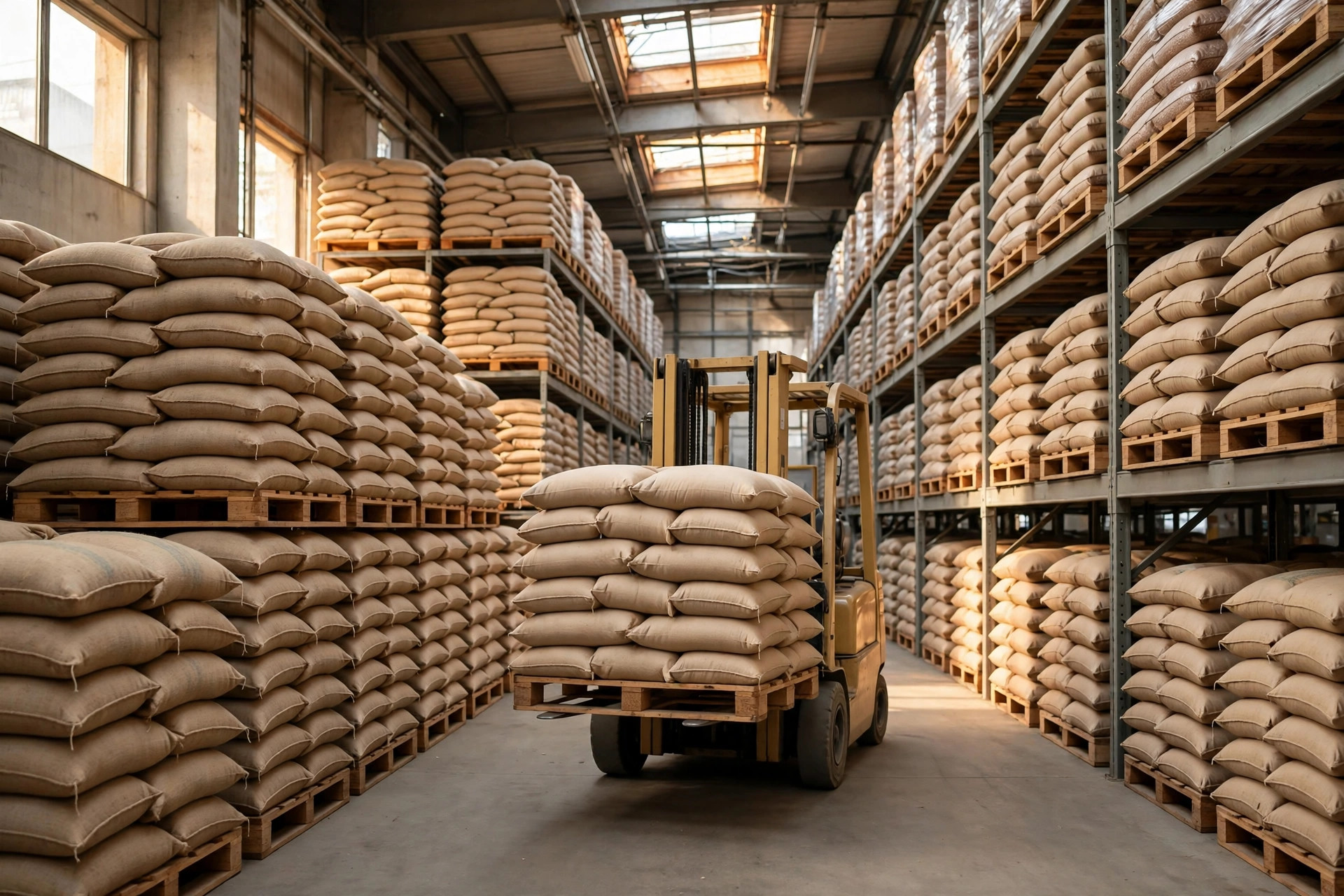
California almond export warehouse logistics looks like easy money until the warehouse bill shows up. I have sold cross-border for five years, and tree nuts were one of my first categories — also the one that taught me the most expensive lessons. A container of shelled almonds carries serious value, and every weak link between the orchard and the port eats straight into it.
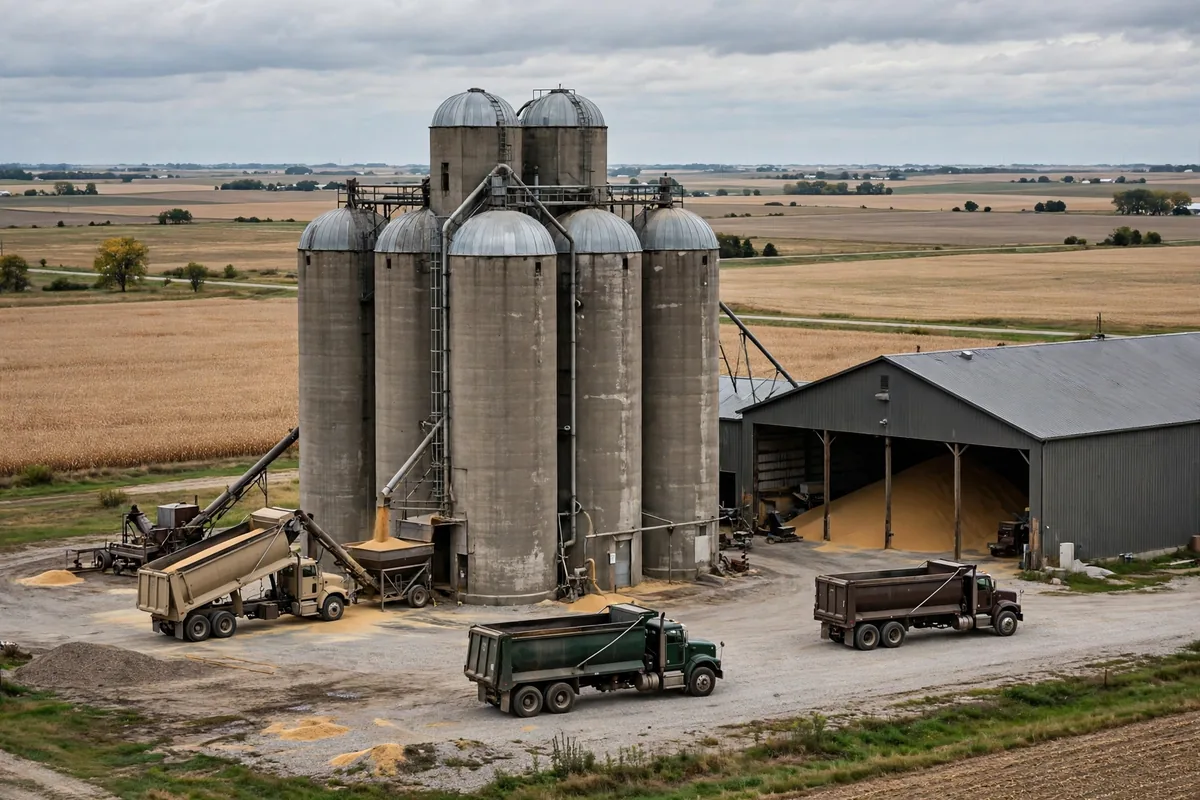
California almond export warehouse logistics is a chain where I have tripped over nearly every link. The USDA's May 2026 forecast put California's crop at 2.70 billion pounds, about 1% below 2025. That is a lot of nuts, and almost all of it grows in the Central Valley, so when warehouse and port schedules slip, everyone feels it at once. In 2024, California almond exports hit $4.95 billion, the state's top farm export, and roughly two-thirds of the crop ships overseas. India is the biggest buyer, taking about 21% of US almond exports in the 2024/25 season. Big market, strict rules.
California Almond Export Warehouse Logistics Starts With Moisture
Moisture is enemy number one. The Almond Board of California draws the line clearly: kernels need to stay below 6% moisture for stable long-term storage, in-hull nuts below 9%, hulls below 12%. Once kernel moisture passes 11%, the molds that produce aflatoxin grow fast, and the whole lot risks rejection. Relative humidity above 65% inside storage is already past the recommended ceiling.
I learned this the expensive way. In October 2024, a lot of shelled Nonpareil kernels left a huller near Fresno testing at 5.4% moisture. Solid numbers. Then the lot sat three extra weeks in a Central Valley warehouse while autumn rain rolled in, and one dehumidifier died without anyone noticing. The retest before load-out found pockets above 7%. That shipment ended up sold domestically at a discount, and the loss came to nearly $20,000 on a single lot (illustrative scenario). Since then my rule is simple: test moisture at intake, retest at load-out, spot-check every week in between, and write every reading on a sheet nobody gets to skip.
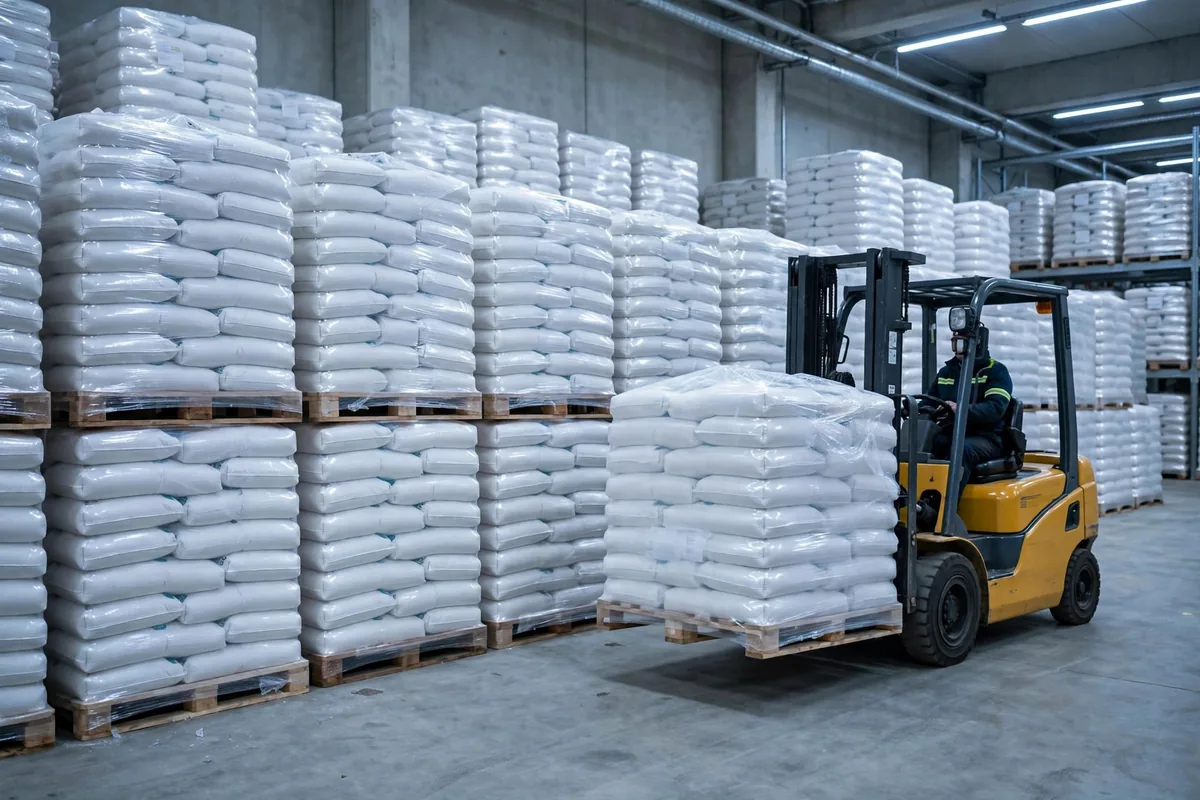
Cheap prevention beats expensive rework. Keep stacks half a meter off the walls, pallets raised off the floor, a few reliable dehumidifiers running, and check the hygrometer twice a day in the rainy season. A container rejected for mold at destination means return freight, destruction, or a claim — each one costs more than a room full of dehumidifiers.
One detail most newcomers miss: sample the worst spot, not the easiest one. The Almond Board's advice is to sample nuts from the north side of the canopy, near the trunk, where moisture typically runs about 2% higher. Same logic in the warehouse. Do not just test the face of the stack. Test the core, the wall side, and the bottom layer — those three spots are where moisture hides. My sampling sheet lists all three as mandatory. Plenty of warehouses test the surface only, get pretty numbers, and find out at destination that the core tells a different story.
The Pest Bill: You Cannot Skip It, and You Cannot Ignore It Either
The second enemy is insects, mainly navel orangeworm. It keeps feeding and breeding inside stockpiled almonds, damage grows the longer the nuts sit, and it raises aflatoxin risk along the way. The Almond Board's guidance is blunt: fumigate stockpiles, commonly with aluminum phosphide, follow the label, seal the tarp properly, vent afterward, and check insect activity a week later to confirm the treatment worked.
New sellers often treat fumigation as an optional cost. Compare it against the alternative: a container flagged for live insects at destination, held for fumigation or sent back, with demurrage, storage, and a customer claim piling up. India removed its retaliatory tariffs on US almonds in September 2023, so the duty door opened wider — but destination inspection did not get any friendlier. A held container at Nhava Sheva burns money by the day.
My process bakes fumigation in. Before intake, I ask the processor for fumigation records. No record, no intake without a fumigation booking the same day. The warehouse runs a monthly pest check, sticky traps and lure counts photographed and filed. Fumigation is not one-and-done; the longer the storage cycle, the more the rechecks matter. And remember to vent after fumigation. A sealed stack that is not aired properly leaves residual odor that changes the flavor, and a buyer can smell it the moment the box opens. Venting time goes on the same sheet as the fumigation date.
California Almond Export Warehouse Logistics: Consolidation to Oakland and Three Numbers to Price
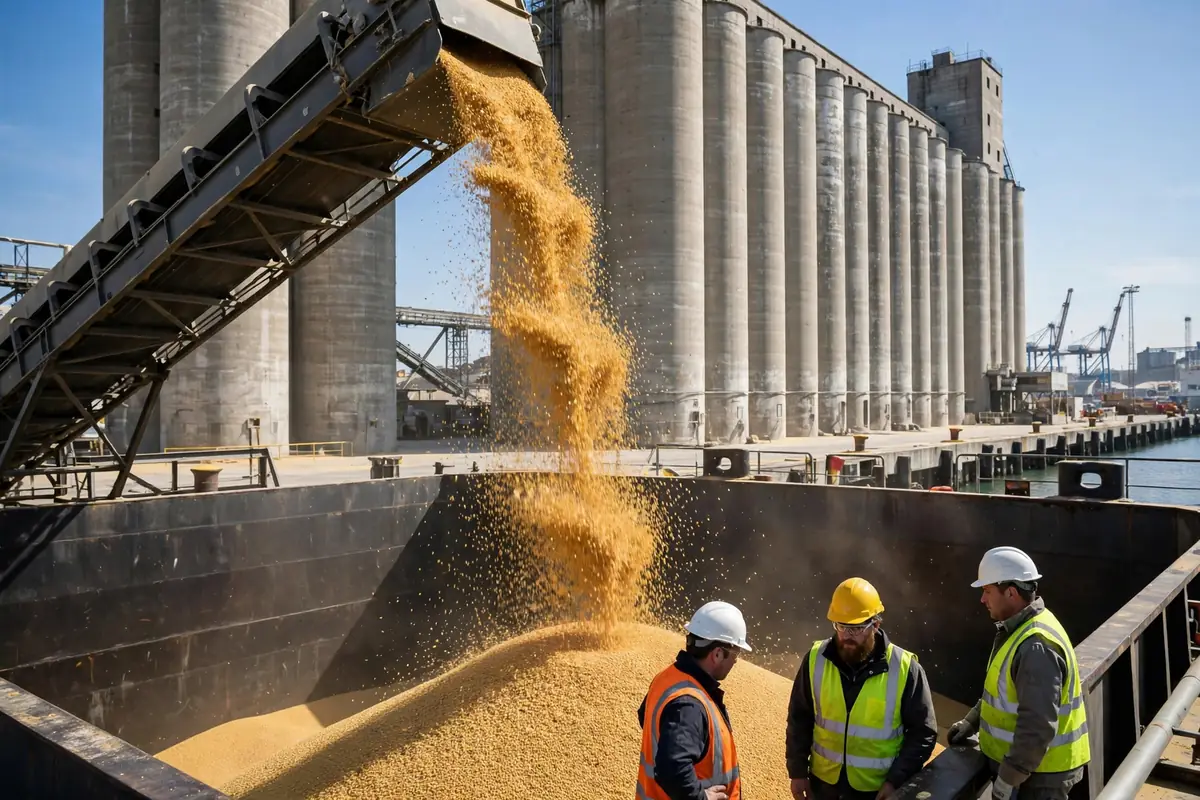
Once the goods are ready, the last leg of California almond export warehouse logistics is consolidation and loading. The Port of Oakland is the main gateway for California almonds: in 2025, nuts moved through Oakland at nearly 90,000 TEU, the port's second-largest export commodity group, and Oakland handled about 74% of US waterborne almond exports. It sits close to the Central Valley, and that short inland leg is real money saved. Most of my shipments go through Oakland for exactly that reason.
Consolidation versus a full container is a math problem, and here is how I run it (hypothetical example):
| Option | Fits when | Cost feel | Biggest trap | | LCL consolidation | Less than one full container | Cheaper per share | Waiting for the box, mixed cargo, paperwork fights | | Full container | One container or more | Lower per-unit cost, schedule under your control | Forcing a full load ties up cash | | LCL plus overseas warehouse | Steady repeat volume | Heavy upfront commitment | Wrong stocking call, rent eats the margin |
Take a 20-ton lot of shelled kernels bound for India (hypothetical example): LCL runs maybe 10% higher per ton on ocean freight and port charges than a full box, but holding stock an extra two weeks to fill a container costs more in rent and tied-up cash than the LCL premium saves. If you do not have the volume, do not force a full container. Waiting two or three days for an LCL sailing beats sitting on stock for two weeks.
The contract matters too. An LCL agreement should spell out three things: how cargo damage liability is split, who pays storage when a sailing slips, and who pays to reissue documents when a document is wrong. I have watched shippers argue after a problem with nothing in writing, and winning the argument still meant nobody got paid. One page, three clauses, signed before loading. The cheapest consolidation quote is usually cheap because those clauses are vague, and you only find out where the money went when something breaks.
One more detail that sinks shipments: almonds pick up odors and moisture from whatever shares the box. Before loading, ask what else is in the container. Anything fragrant or damp is a hard no. On loading day I ask the warehouse for three photos: the empty container inside, the half-loaded container, and the seal number after closing. The seal number goes to the customer the same day. If the seal does not match at destination, responsibility is clear in minutes. And the documents — product name, grade, net weight, production date — one wrong letter can hold a container, so I check them line by line before departure. Ten minutes of checking saves ten days of waiting.
Ship schedules belong in the same calculation. Oakland sailings are not daily, and missing a cut-off in peak season can mean waiting days for the next vessel while rent and cash costs keep running. I plan backward: fix the sailing first, then the loading day, then the warehouse retest day, all three dates on one sheet. If the retest fails, do not rush the cargo onto the ship. Change the sailing. A sailing can be changed; a rejected container at destination cannot be undone.
That is the whole playbook, and I have tested every line of it myself: moisture, fumigation, and consolidation, each as a checklist on the warehouse wall, run at intake, at load-out, and at stuffing. Almond exporting is not a game for the boldest. It belongs to whoever fills the holes in their process first.
By Ah K, E-commerce Seller (5 yrs)