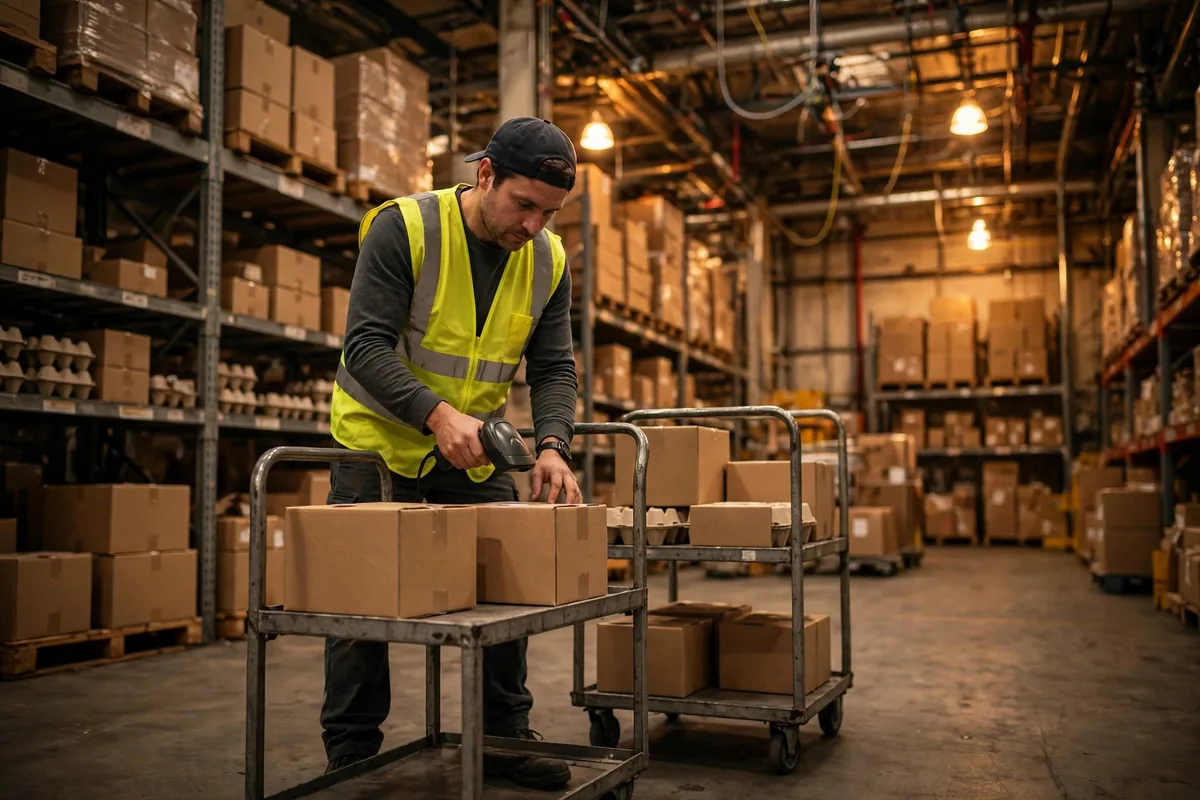
The week after Black Friday last year, our returns corner was so full you could not walk through it. One earbud seller sent back more than 200 units in a single week, boxes stacked higher than I am, storage fees ticking every day, and the seller dropping three question marks in a row in our chat, asking whether any of it could still sell. My only thought was: we are a small warehouse, we cannot afford to burn money like this. A returned item either turns back into cash fast or gets out of the way fast. Sitting there, it is just a loss.
The National Retail Federation and Happy Returns put the 2025 US online return rate at 19.3% of online sales. Roughly one in five online orders comes back. Processing a return is not cheap either. Industry playbooks put the receiving, inspection, and restocking work at about $10 to $25 per return. The goods coming back is only the start. The expensive part is what you do with them after they land. That is the question at the heart of overseas warehouse return refurbishment resale vs scrap: which returns are worth saving, and which go straight to disposal?
Grade First, Then Decide What to Refurbish
Our rule now is simple: nothing gets touched before it gets graded. Four grades, written on the wall, same for everyone:
| Grade | Condition | Disposition |
|---|---|---|
| A | Unopened, packaging intact | Back on the shelf as new |
| B | Opened, lightly used, no real damage | Clean, rebox, sell as open-box |
| C | Faulty but fixable | Repair queue, sell at a discount |
| D | Broken, incomplete, or out of warranty | Scrap or clearance |
It looks crude, but grading has saved me the most money. Before we graded, workers handled each return by feel. Something that looked fine got wiped down and shelved as new, and then a customer received a "new" item with scratches on it. Bad review, second return, one item costing us twice. Now the grade is the grade. A B-grade item is a B-grade item. It never gets to pretend it is an A.
Here is the counterintuitive part: the categories with the worst return rates are often the most worth refurbishing. Small electronics like earbuds and massage guns come back mostly because the customer ordered the wrong model or changed their mind in the first week. The device itself is fine. A new box turns it into an open-box unit that sells at 60 to 80% of the original price. The sturdy-looking stuff is the trap. A vacuum cleaner over $100 usually comes back because it is genuinely broken, and fixing it costs real money and floor space.
That earbud batch last year went exactly through the grades. Of the 200-plus units, about 60 were grade A and went straight back on the shelf. Around 100 were grade B: new packaging, open-box label, listed at 30% off, and about 80% of them sold within three weeks. Forty-odd grade C units went to our repair partner for battery swaps and sold at half price. The last dozen or so were beyond saving and went to disposal. The seller told me later that the refurbished sales roughly covered the whole batch's return processing cost.
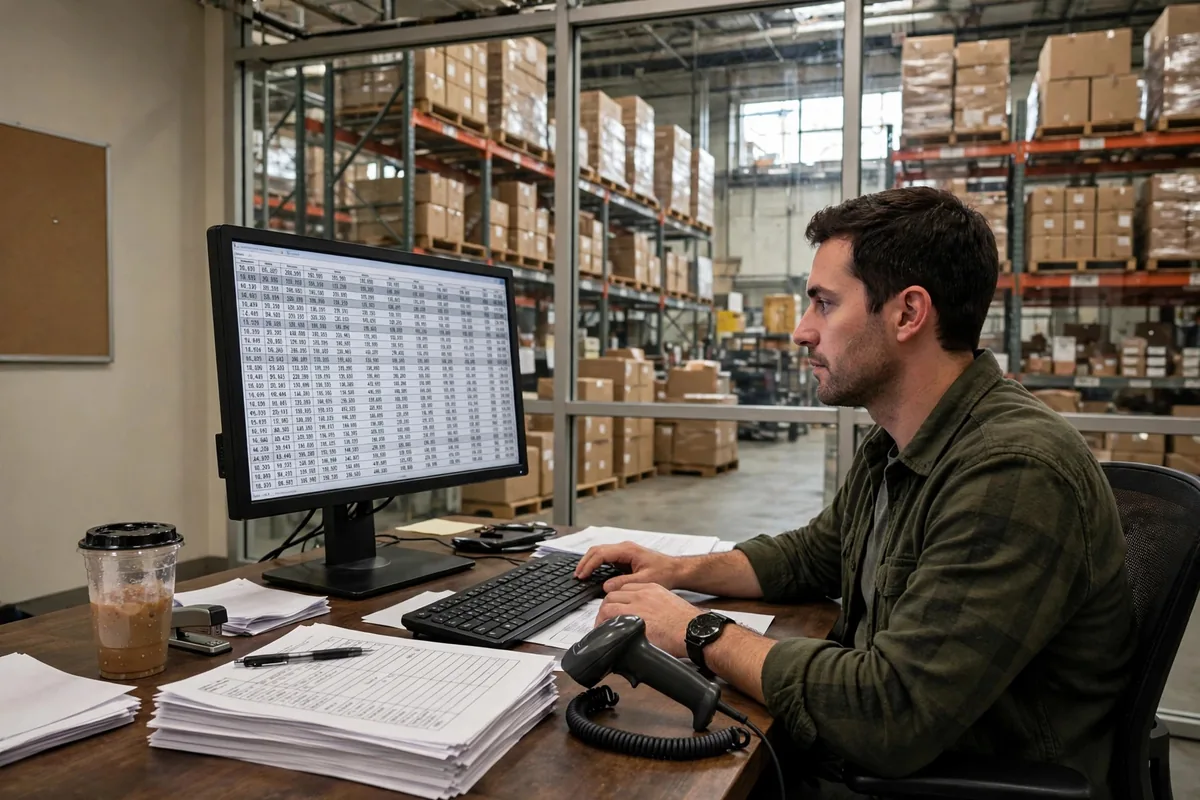
Grading needs proof, not memory. We photograph three things for every inspected unit: the outer packaging, the item itself, and the serial number. The photos travel with the item's record, so when the seller or a platform asks, we have evidence. A power-on test is mandatory. Earbuds switch on, massage guns run for a few seconds, and anything that fails drops a grade on the spot. No passing by feel. When we relist a B-grade unit, the listing says open-box and the price is an open-box price. The cost of one bad review is always higher than whatever you save by cutting corners.
Refurbishment Math: Run the Numbers Before You Pick Up a Tool
Once grading is done, whether a B- or C-grade item is worth touching comes down to arithmetic. Every decision in overseas warehouse return refurbishment resale vs scrap starts with the grade, because a wrong grade poisons everything after it. My formula is embarrassingly simple: resale price after refurbishment, minus refurbishment cost, minus the storage cost of keeping it around. Positive, we do it. Negative, we leave it alone.
Take those earbuds as a worked example — this is a hypothetical example. The earbuds sold for $40 new. As open-box at 30% off, they sell for $28. Refurbishment costs $8 per unit, labor, parts, and new packaging included. $28 minus $8 is $20 of net recovery per unit. Disposal costs about $1 per unit and recovers nothing. So refurbishing a B-grade earbud nets $20, scrapping it loses $1. That math does not need a second look.
Swap the product and the answer flips. Another hypothetical example: a $12 phone case comes back. New packaging, wiping off fingerprints, relabeling — $4 a unit. Open-box, it sells for $7 at best, leaving $3. That $3 only exists if someone has free hands. In peak season, when picking cannot keep up, a worker spending twenty minutes refurbishing a phone case is three normal orders not shipped. At that point I would rather clear the whole batch of cases at a low price and put the hands back on outbound work. Whether refurbishment pays never depends on one item's math alone. It depends on what your people are busy doing.
I also hold one hard line: if refurbishment costs more than half of what the item can sell for, we do not repair it. An item that sells for $30 after repair and costs $18 to fix is a bad bet, because if it fails final inspection, that $18 is gone. Sell it cheap or scrap it. Do not fight it.
Repair itself is a judgment call. We are too small to keep a repair technician on staff, so grade C items go to a partner repair shop that charges per unit. No headcount to carry, but the schedule is not mine. Three to five days in the slow season, two weeks in peak. Overseas warehouse return refurbishment, done at our scale, is really a rhythm game: in the slow season, refurbishment is filler work for idle hands; in peak season, hands are outbound capacity and refurbishment waits. Now we refurbish in bulk during slow months. In peak season we only process grades A and B, and grade C waits sealed until things calm down. Goods sitting on a shelf for two weeks cost storage fees. Workers tied up refurbishing cost the whole warehouse its outbound volume. Those are two different bills, and you have to count them separately. When a seller pushes me, I just show them the math. Most of them get it immediately.
Scrapping: When Refurbishment Loses to Disposal
Grade D goods are the easiest to dispose of carelessly, and that is exactly where trouble starts. Anything with a battery cannot go out with regular trash. Lithium batteries follow local hazardous-waste rules, go to a licensed recycler, and come back with a destruction certificate. The seller wants that certificate. A platform audit wants it too. A disposal without proof is the same as no disposal at all.
Apparel returns are a different trap. A dress seller once sent back more than 300 dresses, tags still on, just creased and smelling faintly of perfume. My team asked whether we should wash them and resell. I said hold on and test twenty first: dry cleaning each one cost more than the dress's clearance price, and the smell might not even come out. The whole batch went out at 30% off, unwashed. Not every dirty item is worth cleaning. When the wash costs more than the item, selling it dirty is the better deal.
So my rules are three: grade before you touch anything, because a wrong grade poisons everything after it; run the numbers before you save anything, and if the math does not work, let it go; and keep proof for every disposal, because compliance is not negotiable. Overseas warehouse return refurbishment resale vs scrap, stripped down, is just squeezing money out of every square foot and every working hour in a small warehouse. The items you save are money. The items you scrap are lessons. The items sitting untouched in a corner are neither, just cost.
Small warehouses have their own way of surviving. A big warehouse can afford a dedicated refurbishment team. We cannot, so we grade ruthlessly and count carefully, protect outbound work in peak season, and refurbish slowly when things are quiet. You cannot control how many returns show up, but you can control whether each one gets saved or scrapped.
By Xiao Ma, Small Warehouse Owner