Last fall, my 30,000-square-foot warehouse needed 40 more pallet positions. The quote for new racking nearly made me spit coffee all over my keyboard — there was no way our little operation could burn that kind of money. So I turned to the used racking market, figuring one company's shutdown is another man's treasure hunt. My first trip to inspect a batch almost cost me dearly.
Here's our small-warehouse predicament. When big companies expand, there's a process: budgets, approvals, committees. When we expand, the boss (that's me) loses sleep, wakes up, slaps his thigh and says: do it! But the money is what it is — one bay of new racking, purchased and installed, costs me two months' rent. Peak season was around the corner, freight had nowhere to go, and customers don't wait.
Used Racking Is Deep Water: My First Inspection Almost Cost Me Tuition
In October 2024, I found a listing online: a shuttered e-commerce warehouse in the Inland Empire selling racking. "Ninety percent new, ready to use right after teardown," the seller said, priced under seventy percent of new. I was hooked. I drove 40 minutes out there, flashlight in hand — laugh all you want, that's my entire "professional equipment" for buying secondhand gear.
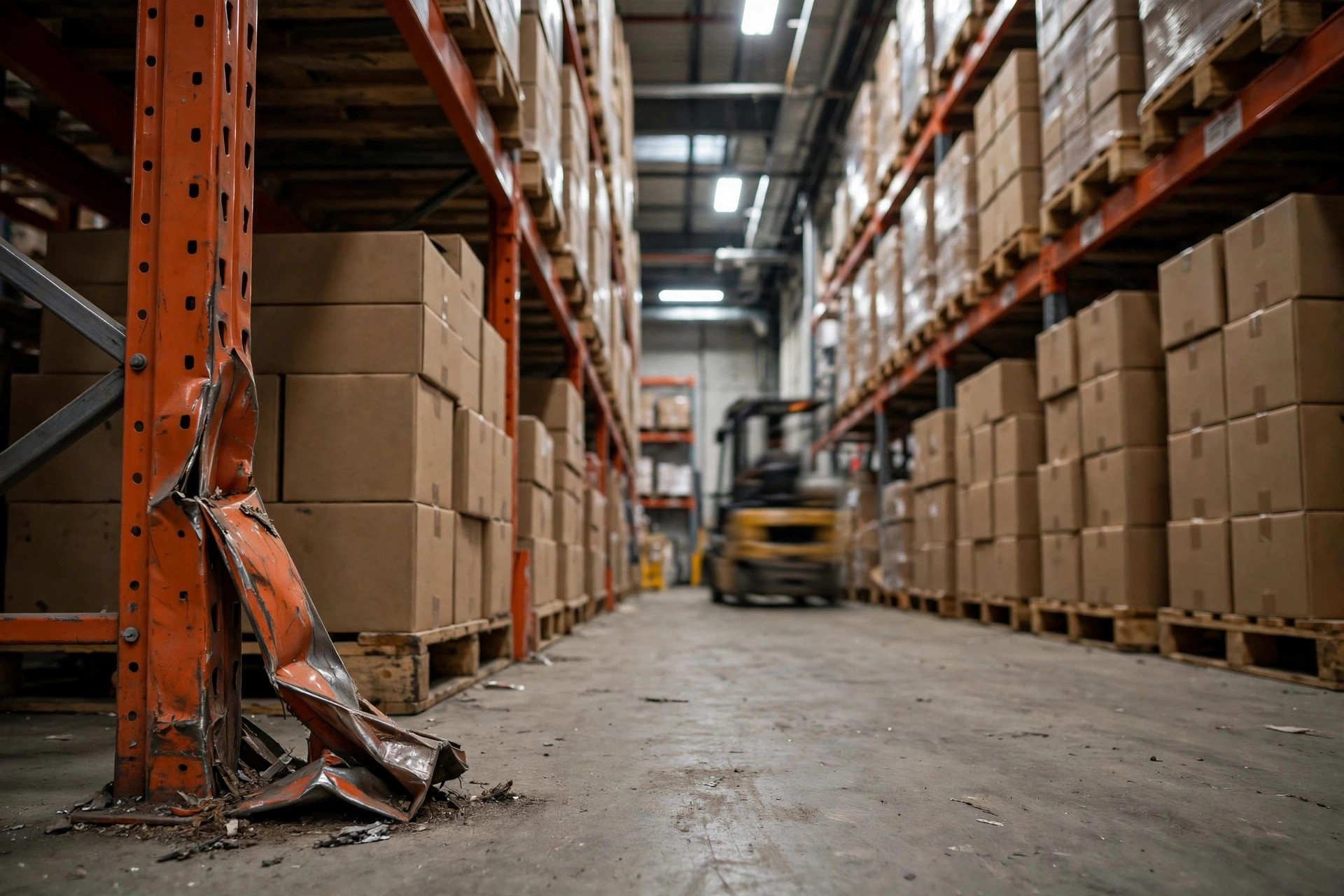
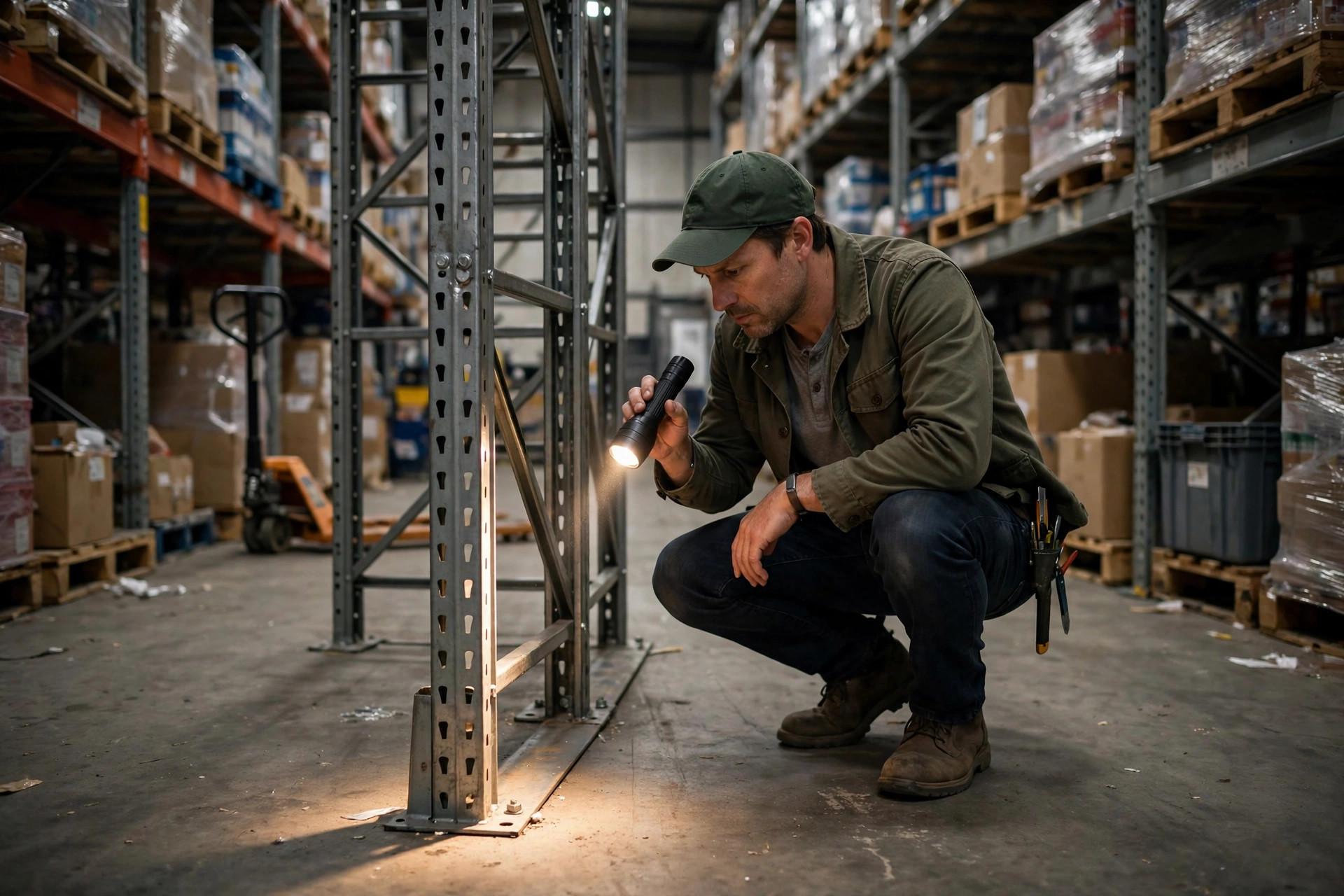
The racking looked great at first glance, shiny orange paint everywhere. Then I crouched down and shone my flashlight sideways along the bottom of an upright — my stomach dropped. Several uprights had forklift dents at the base, and on the worst one the bolt holes were visibly deformed. The seller waved it off: "Doesn't affect usability." I said, "Buddy, the upright carries the load. A bent base is like running a marathon on a broken leg."
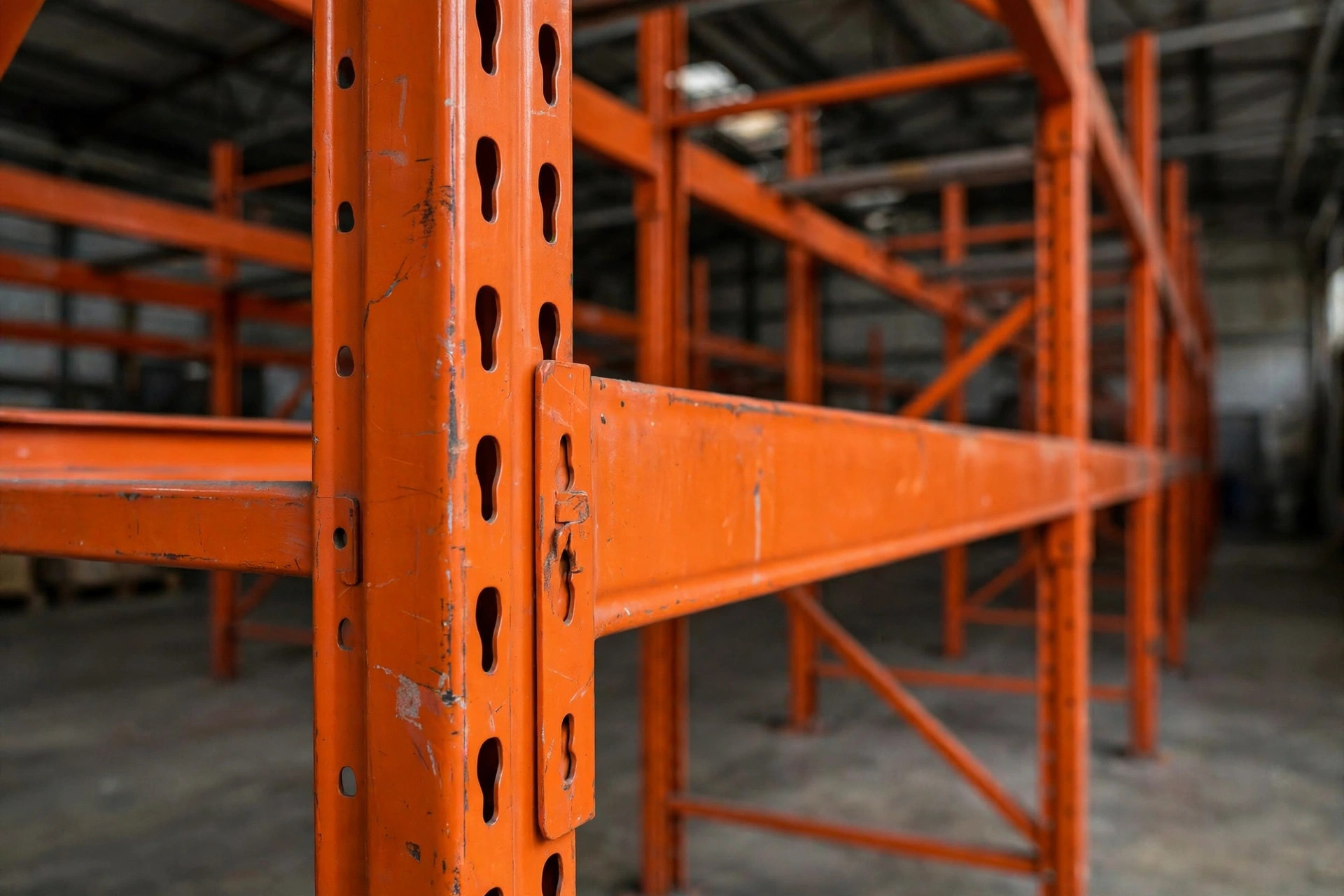
Looking up, nearly a third of the beam connectors were missing, and safety pins were few and far between. The real deal-breaker: not a single load capacity plaque on the entire batch. I asked how much weight each level could hold. "We used to put two tons on it, no problem," he said. Buddy, "used to" is the most worthless phrase in warehousing. Without the plaque, would I dare load freight on it? If something collapses, the insurance company asks about that plaque first.
I drove home empty-handed. The seller later dropped the price to half of new and asked again. I still said no. Some money saved is money earned; some money saved is money lost. That batch was the latter.
Doing the Math: How Much Does Used Racking Really Save?
I did eventually score a good batch (more on that later), but first, the math. Used racking on the market typically goes for fifty to seventy percent of equivalent new racking — that's the range I've observed over the past couple of years. Treat actual quotes as final, and please don't wave my article at a seller during negotiation; they'll laugh at you.
But you can't just compare the racking price. Using total new-racking cost as 100 units, here's what used really lands at:
| Where the money goes | Buying new | Buying used |
|---|---|---|
| The racking itself | 100 units | 50–70 units |
| Teardown, transport, install | Mostly bundled in the quote | Out of your pocket, about 15–25 units |
| Replacing missing parts (connectors, pins, plaques) | 0 | 5–15 units |
| Rework risk | Low | Incompatible parts = teardown and redo, a day of labor down the drain |
All in, the used batch lands at roughly seventy to ninety percent of new. Still a saving, but not the "half-price steal" of your dreams. And here's the counterintuitive part: the most expensive part of used racking is never the racking itself — it's discovering mid-install that parts aren't compatible, tearing it all down, and redoing two days of work. The crew charges by the day regardless, bays sit empty during peak season, and the orders you lose cost far more than the racking ever did.
My Buddy's Train Wreck: The Freshly Repainted "Like-New" Batch
In early 2025, a friend of mine — runs an auto-parts warehouse in the Inland Empire, even smaller than mine — bought a batch of secondhand racking online. The photos were gorgeous, glossy as a new car, priced around half of new. He thought he'd struck gold. When it arrived, the paint was fresh. Beautiful.
Three months later he called me, voice shaking. A chip of paint had flaked off a beam, revealing rust eating through underneath. A closer look found rust patches inside several uprights — the batch had clearly sat in a damp environment, and the seller had sprayed a coat of paint over the rust. Invisible until it wasn't. Worse, the batch mixed two brands, with connector hole spacing off by a few millimeters. The installers had hammered them in; a few months later two beams worked loose and came down with a crash at midnight, nearly hitting the night-shift guy on rounds.
He ended up tearing the whole batch out, selling it for scrap, and buying new. All told, he spent more than new would have cost, plus three months of his life. He told me: "Ma, this tuition cost more than business school."
So memorize two rules: never touch racking with a murky history — if the seller can't tell you who owned it or what it stored, walk away. And reject freshly repainted batches outright — nobody repaints decent secondhand racking for fun. The shinier the paint, the more suspicious you should be.
My Redneck Inspection Checklist: 5 Checkpoints
Big companies buy equipment with engineers and third-party inspectors. We small warehouses have neither — but we have redneck methods. These five checkpoints were bought with tuition from two batches of racking. Fail any one of them, and keep your wallet shut.
One: are the uprights dented? Here's how: bring a flashlight, crouch down, and shine it sideways along the bottom 12 inches of each upright — that's forklifts' favorite target. Look for dents, twists, deformed holes. Light scratches are fine, chipped paint is fine, but any dent, twist, or stretched hole means that upright is dead. One or two bad ones in a batch can be tossed; if more than ten percent are damaged, reject the whole lot.
Two: are beam connectors and safety pins complete? Wiggle every beam connector — it should spring back. Safety pins (the little clips that keep beams from popping out) — not one may be missing. They're cheap to buy individually, but a batch missing many tells you the seller never cared about this stuff.
Three: are the load plaques still there? Every bay should carry a plaque stating the rated load per level. Racking without plaques is racking I won't use — you have no idea what it was designed to hold, and loading freight on it is gambling. Lost plaques can be reordered from the manufacturer, but you need the brand and model. Can't get them? Don't buy.
Four: are the parts compatible? This is the sneakiest trap. Different brands have slightly different connector shapes and hole spacing — a few millimeters off, hammered in, fine today, loose in three months. Bring two of your existing beams to the inspection and test-fit them. If they don't click in or they wobble, walk away. Never believe "they're all pretty much the same, it'll work" — when it comes to load-bearing, "pretty much" is where accidents live.
Five: when do you need an engineer? My redneck rule: if the racking is taller than two stories (about 20 feet), or you're storing pallets over a ton each, pay a structural engineer to take a look. That fee is pocket change next to the cost of a collapse. Exact thresholds vary by local code, so go by local requirements and the engineer's word — don't guess it yourself.
The batch I actually bought? November 2024, through a friend's introduction: 30 bays from a relocating food warehouse. Same brand, all plaques present, uprights with only light scratches, priced around sixty percent of new (actual quotes may vary). I ran all five checkpoints, took the whole afternoon. Nearly a year in, zero issues — the savings covered an extra month of payroll.
Starting a small warehouse means spending money where it counts. Whether this particular knife cuts depends not on luck but on whether you know how to inspect it. Don't envy the big companies' processes — our redneck methods, done carefully, keep us just as safe.
Small warehouses have their own way of surviving.
By Xiao Ma, Small Warehouse Owner