This guide to buying used conveyor and sortation equipment opens the way I always open: with a number. A new 300-meter belt conveyor sortation system lands somewhere in the RMB 2–3 million range. The same specification, used, gets listed at RMB 600–900k. Looks like a 70% discount. Feels like found money.
Then the second question: how many invoices are hiding behind that 600–900k? That is the real exam in this business.
The opening math: is that 70% discount real?
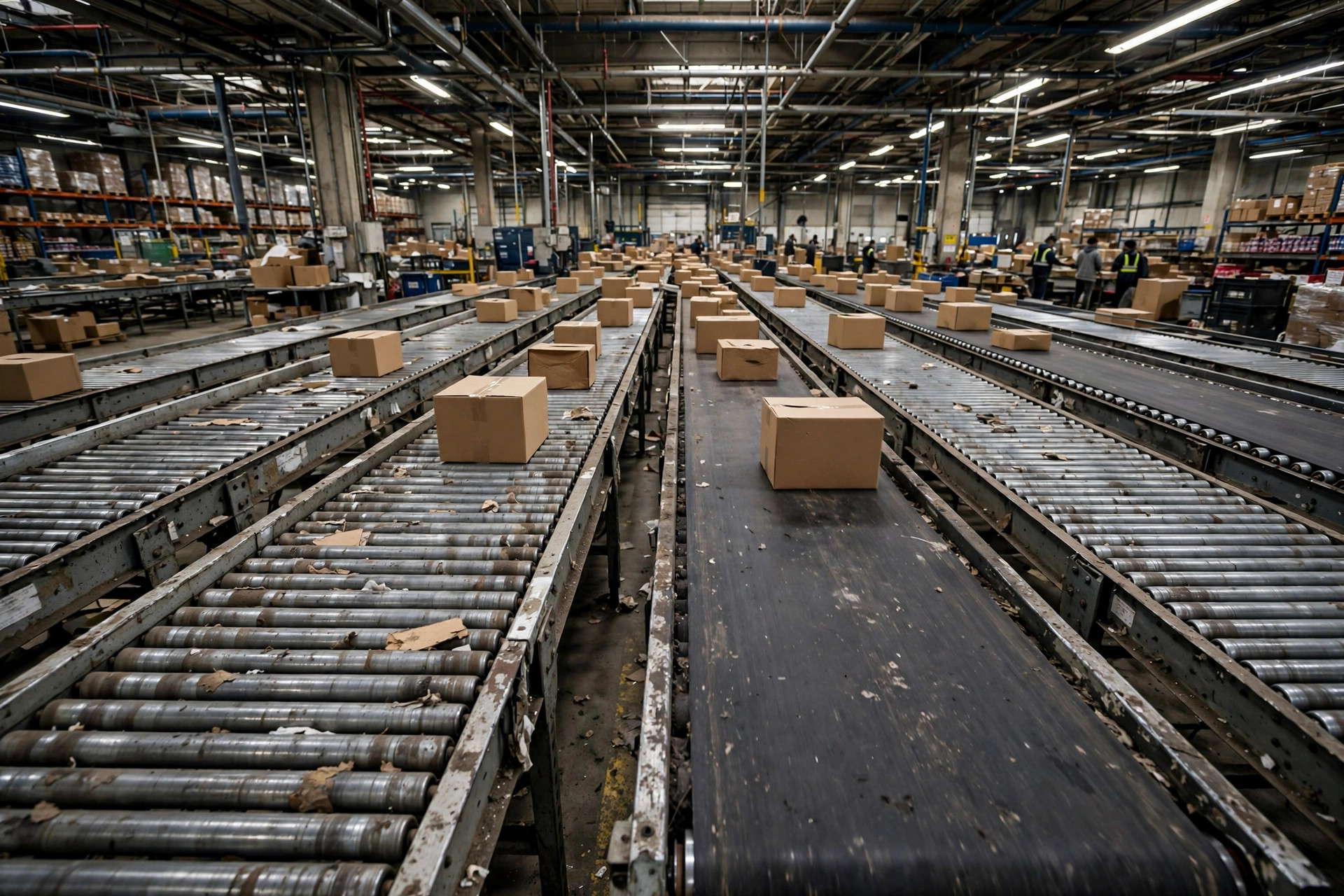
Let me break down a real case from 2024 — an e-commerce warehouse near Ningbo, China. The owner, Mr. Wang, bought a used cross-belt sorter (a ~240-meter loop with 80 divert chutes) for RMB 680k. The seller said it was "running fine when decommissioned." Costs he didn't itemize up front: dismantling and transport RMB 120k, reinstallation and commissioning RMB 180k, control software license transfer RMB 90k, six replacement gearmotors and 40 meters of belt before go-live RMB 150k, and first-year spares and repairs another RMB 110k.
Add it up: 680+120+180+90+150+110 = RMB 1.33 million. The equivalent new system was quoted at RMB 2.6 million. The used deal's true landed cost was 51% of new. He saved money — but not 70%, closer to 50%.
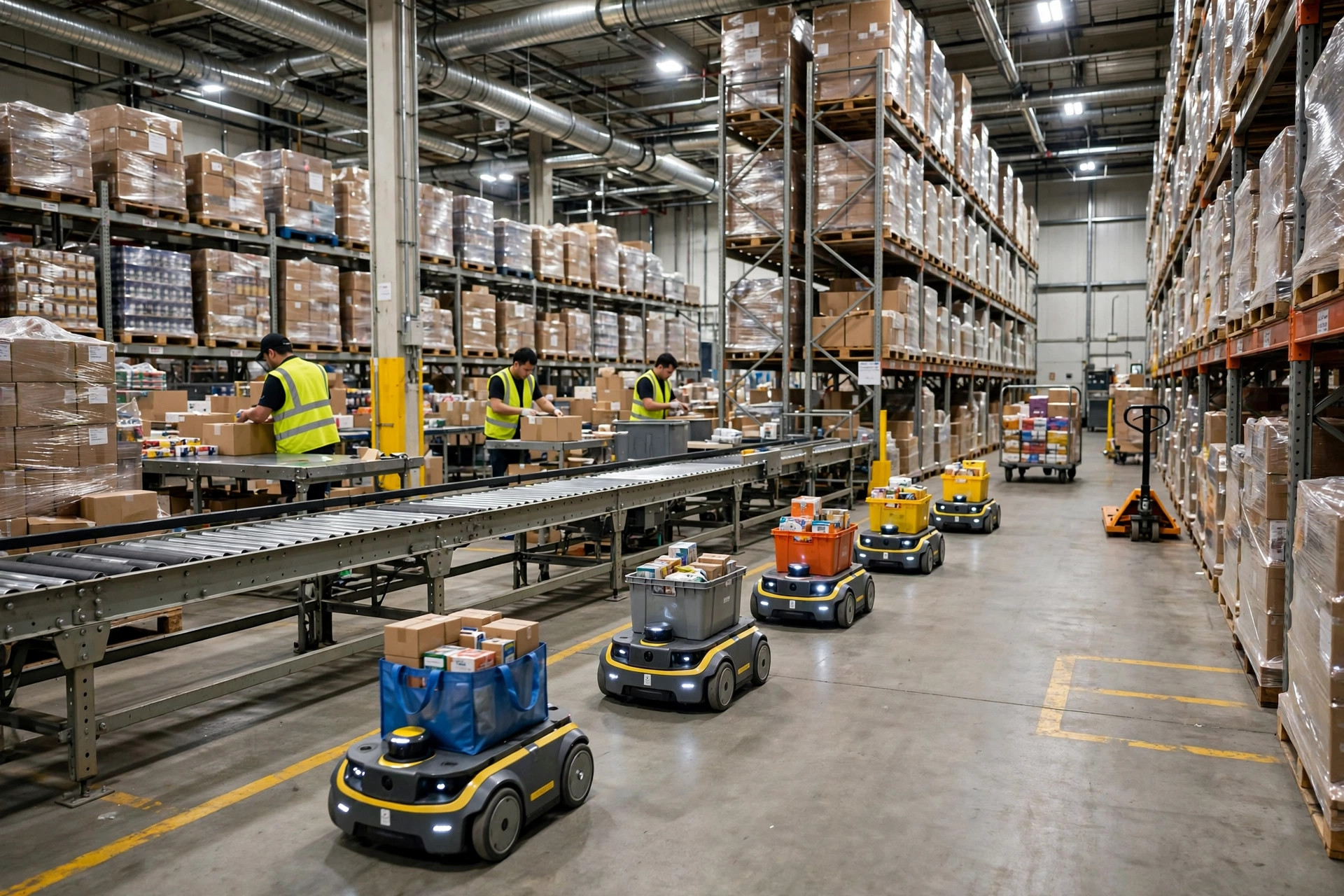
Now a 2023 case from a 3PL in Shenzhen: twelve used AMRs, 1-ton lift type, at RMB 48k per unit against a new-unit band of RMB 120–150k. The killer was the batteries. Lithium cycle life was spent; eight months in, five units couldn't finish a shift, and replacement battery packs were quoted at RMB 29k per unit. Fleet dispatch software re-integration added another RMB 70k. Final tally for twelve units: roughly RMB 1.05 million, against ~RMB 1.5 million for new. A 30% saving on paper — but seventeen unplanned stoppages in two years, plus lost orders and manual cover shifts that never got properly costed. Was that money well spent? I'll let you be the judge.
Half the conclusion, up front: the purchase price of used equipment is only the down payment. The landed cost is the real price. Any buying guide that talks about the sticker price without the total cost is a scam.
Tips for buying used conveyor and sortation equipment: a five-step inspection
I inspect used equipment with a fixed procedure. "Looks okay" is not a conclusion:
Step one — demand operating records, not stories. Ask the seller for runtime logs or maintenance records from before decommissioning. If they can't produce them, price it as "unknown full-life condition" and start negotiations at 20% off the ask.
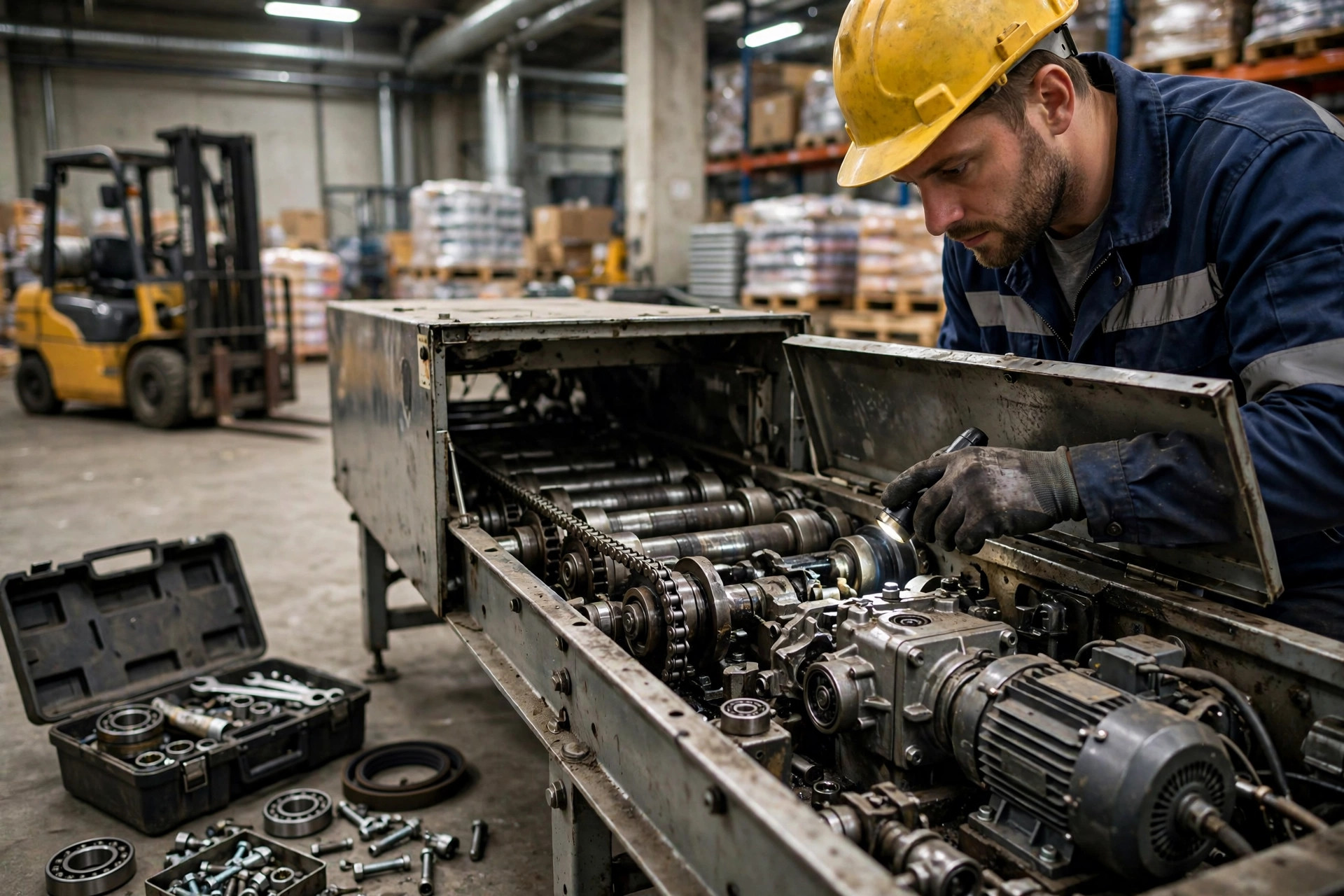
Step two — check the three killers: motors and gearboxes, the control cabinet (PLC plus drives), and batteries (AMR-specific). For conveyors, focus on roller and belt wear; for sorters, check divert structures for deformation. Replacement costs are your negotiation anchors: a single gearmotor runs from a few thousand RMB upward, and an AMR battery pack is 30–60% of the unit's used price. Get the anchor wrong and everything after it is wrong.
Step three — confirm software and licenses. Whether the PLC program and the WCS/dispatch software licenses are transferable is the biggest hidden trap in used automation. Perpetual licenses negotiate fine; subscription or per-node licensing lets the vendor bill you every year with one sentence. Write into the contract: who pays for the license transfer, and what happens if the transfer fails.
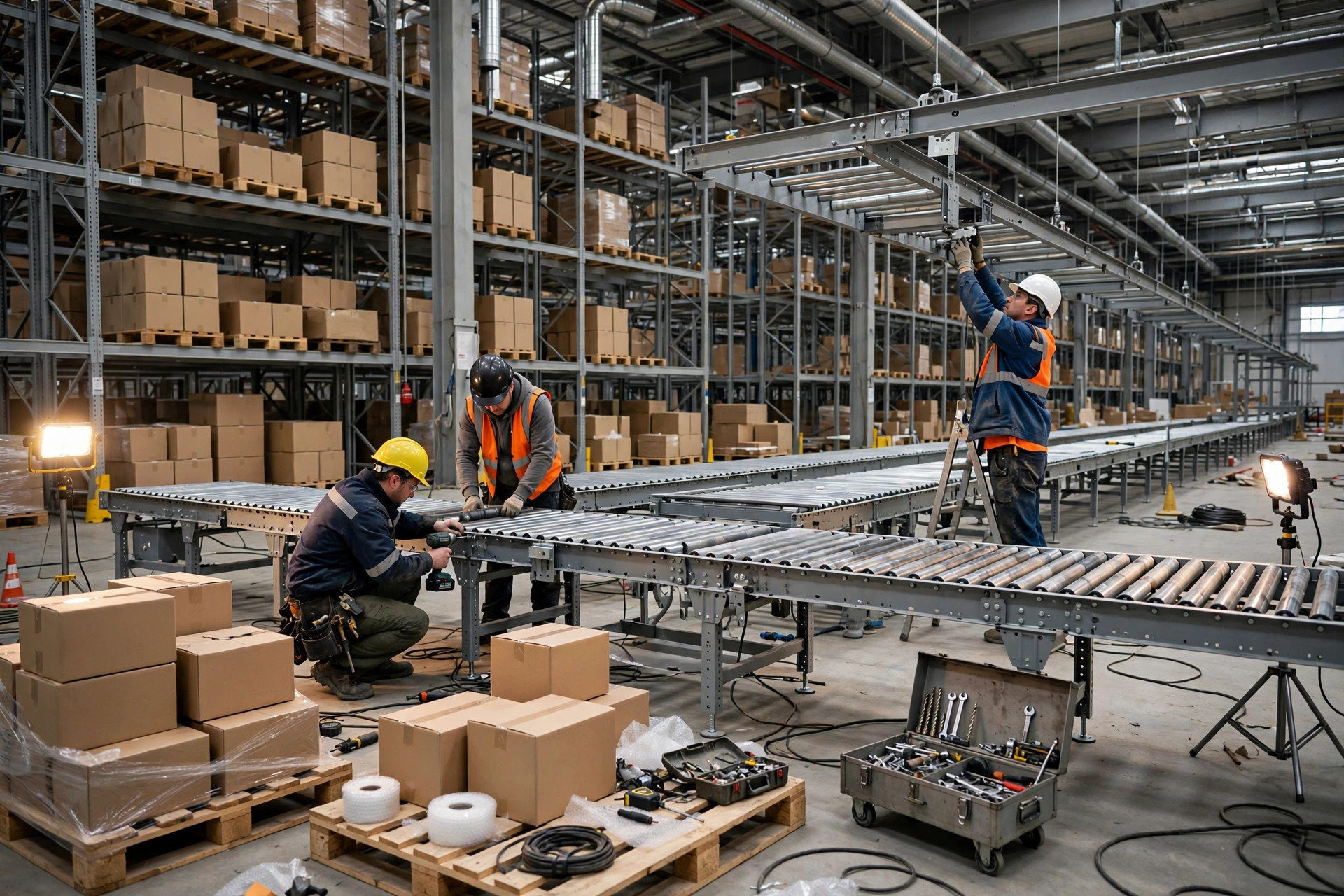
Step four — cost the teardown and transport. For conveyor systems, dismantling, shipping, and reinstallation typically runs 30–60% of the purchase price. A seller 50 km away and a seller 1,000 km away are two completely different deals. A quote without a teardown-and-transport line item is not a quote.
Step five — spare parts availability. Never touch a discontinued model, even at 30% off. One five-minute phone call to the OEM's parts department — "do you still supply parts for this model?" — can save you hundreds of thousands.
Different machines, different weak spots
The three main used-equipment categories have completely different risk profiles. Treating them the same is how buyers get burned:
| Equipment | Relatively safe used | Fatal weak spot | My stance |
|---|---|---|---|
| Conveyors (roller/belt) | Simple steel structures that barely fail | Batch motor/gearbox aging, full belt replacement | The best used buy — but negotiate on a "re-core" budget |
| Cross-belt / sliding-shoe sorters | Mechanical structures are durable | Old control system versions, discontinued spares | Only mainstream OEM models from the last ~8 years |
| AMRs / AGVs | Mechanical chassis | Batteries, navigation sensors, software licenses | Batteries must be runtime-tested; deduct replacement cost from the price first |
One-line summary: the simpler the structure, the safer the used buy. The higher the software and battery share, the riskier.
Three-year TCO: run the math to year three
Comparing sticker prices is self-deception. Here is the Ningbo case stretched into a three-year total cost of ownership:
| Cost item (3 years) | New | Used (true landed) |
|---|---|---|
| Equipment purchase | RMB 2.6M | RMB 680k |
| Teardown, transport, install, commission | included in landed price | RMB 300k |
| Software license / transfer | included | RMB 90k |
| Refurbishment replacements | 0 | RMB 150k |
| 3-year spares and maintenance | ~RMB 180k | ~RMB 330k |
| Downtime risk reserve | low | RMB 100k |
| 3-year TCO | ~RMB 2.78M | ~RMB 1.65M |
The used route saves about 40%. That's the truth: 70% off the sticker, 40% off the total. If you can live with that gap, keep negotiating.
Buying used conveyor and sortation equipment: how to set your walk-away price
I negotiate with one framework — call it the "three ledgers":
Ledger one — the benchmark. Get the new-system landed price for the same specification (equipment plus installation, commissioning, and first-year maintenance) in writing first. That's the ceiling. No ceiling, no negotiation.
Ledger two — the true-up. Used purchase price plus teardown/transport plus refurbishment plus software licenses plus a one-year spares reserve equals the landed cost. Run this ledger and at least half of all "bargains" reveal themselves.
Ledger three — risk pricing. Discontinued model, unclear license transfer, no operating records from the seller: knock 10–15% off the price for each one that applies. That's not lowballing; that's pricing risk.
One hard line: if the landed cost exceeds 70% of the new-system price, walk away. Saving less than 30% while taking on 100% of the used-equipment risk is a bad trade. Most advice on buying used conveyor and sortation equipment stops at haggling tricks; it never reaches the landed cost — which is exactly why this guide did the math first.
The contrarian take: the real killer in used automation is never the machine itself — it's "cheap old hardware plus expensive re-integration." I've seen too many projects where the equipment was a steal and the integrator charged new-project rates for installation and commissioning, ending up more expensive than buying new. Negotiate the integration quote before the equipment price. Get the order backwards and you lose.
Where to source, ranked by reliability: trade-in inventory from OEMs and integrators (comes with inspection reports, priciest but safest); whole-site auctions from closing or relocating warehouses (cheapest, sold as-is, inspect it yourself); used-equipment dealers (they take a margin — demand test-run videos and operating records). And lock three clauses into the contract: the as-is scope boundaries, who owns the license transfer, and a warranty period (even just three months).
The verdict: one calculable formula
Worth it or not, run this formula:
Used purchase price ≤ 40% of new-system landed price, AND (teardown/transport + refurbishment + software licenses + one year of spares) ≤ 50% of the price gap, AND spares are not discontinued, AND licenses are transferable — all four conditions met, then sign.
Miss one condition, walk away. The used market never runs out of inventory. What it runs out of is buyers who can do the math — and that discipline is the whole game of buying used conveyor and sortation equipment.
By Lao Zhou, Logistics Cost Analyst