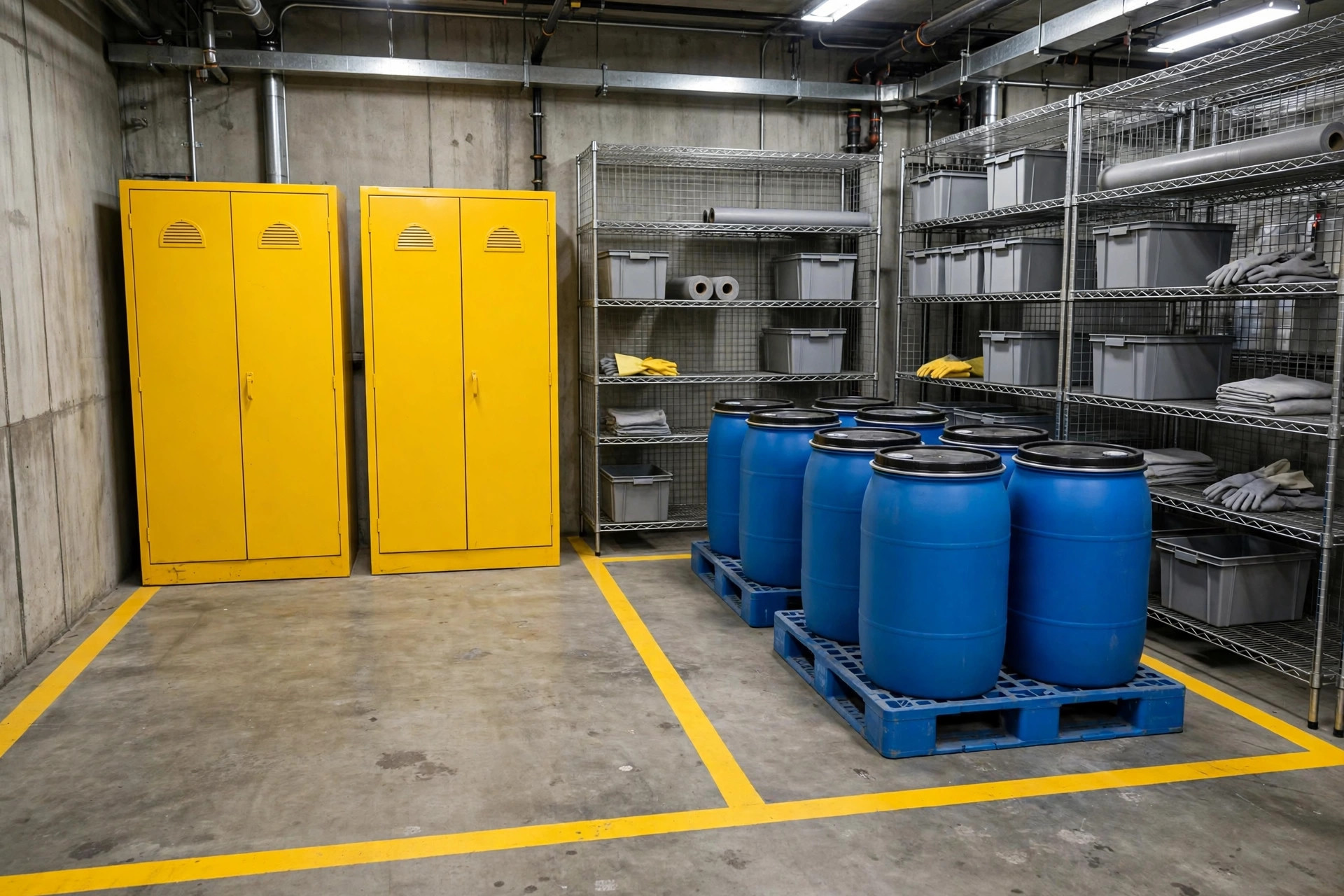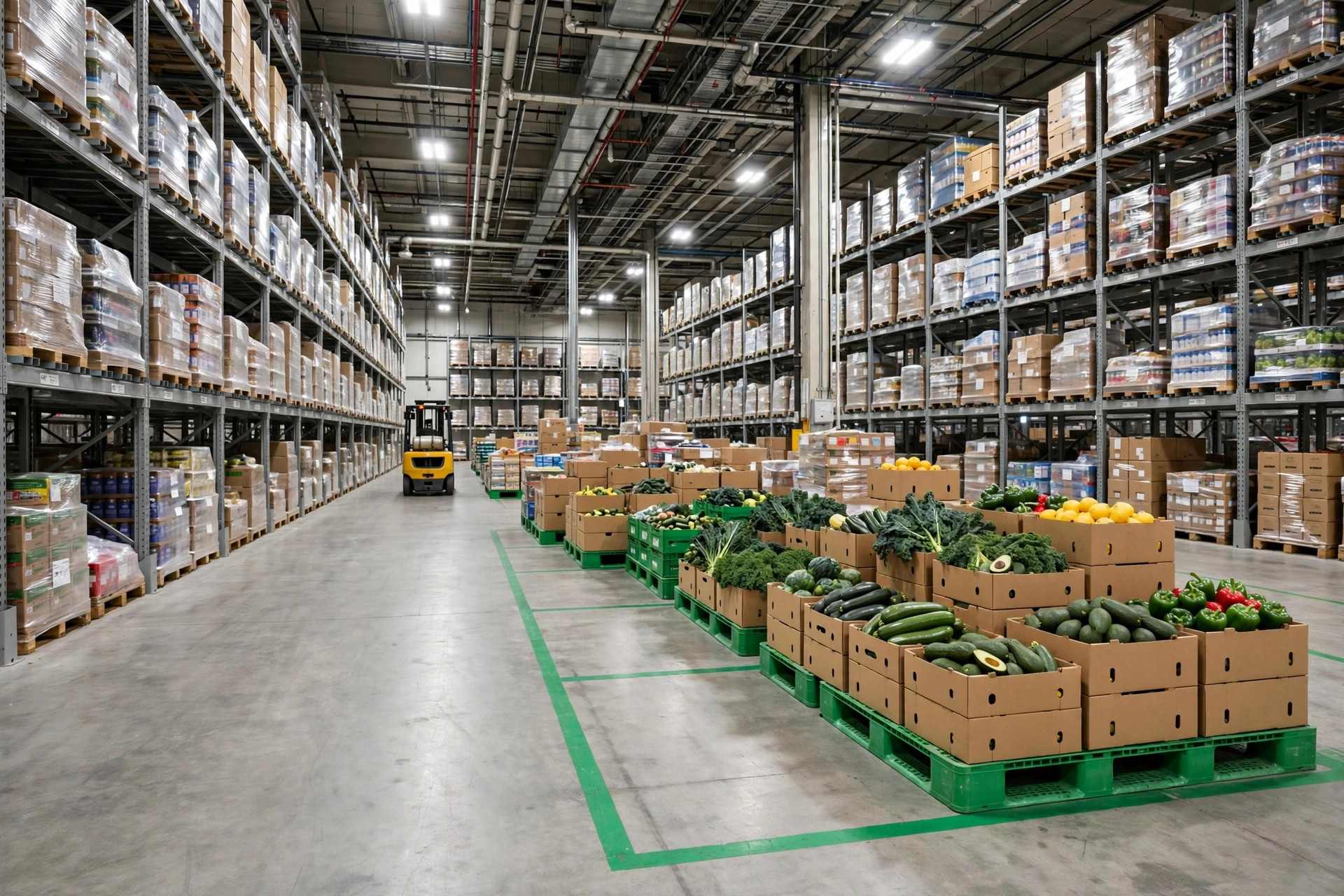
Let me tell you about a 4 a.m. delivery I made a few years back. I had a full load of organic spinach out of Salinas, California, and rolled into the distribution center before dawn. Doors open, dock plate down, I was ready to unload — and the receiving clerk waved me off. "Driver, this one's organic. You gotta wait for our organic inspector." I'd been hauling freight for over a decade at that point, and it was the first time I'd ever heard that unloading required a specialist. I waited over an hour.
That's when I learned that USDA organic warehouse certification runs on a completely different playbook from the moment the trailer doors swing open. Fifteen years of watching warehouses from the driver's seat — here's the straight talk on certification, segregation, records, and cross-contamination.
USDA Organic Warehouse Certification Starts at Receiving, Not Unloading
A regular warehouse receives freight by counting cases and matching the bill of lading. An organic-certified warehouse starts by checking identity: Is the organic certificate current? Does the paperwork say "organic"? Do the lot numbers on the boxes match the paperwork?
I've watched a load die on that first step. A couple of years ago in California's Central Valley, I hauled organic lettuce into a DC, and the receiving clerk found an old conventional lettuce label stuck to the side of one pallet — one label, half peeled off. The whole trailer, twenty-some pallets, got rejected for re-sorting. I deadheaded out, the shipper ate the shortage claim. The receiving supervisor told me: "Driver, it's nothing personal. An inspector sees that, it's a noncompliance on my record."
That's the whole game: the organic chain cannot break. From farm to truck to warehouse, every handoff has to prove the product stayed organic. The regulation calls it commingling prevention (§205.272) — plain English: organic and conventional must never mix, and organic product must never touch prohibited substances. Non-retail containers have to carry the organic identity and a lot number (§205.307) so a problem can be traced back.
The truck is part of that chain. Mixing organic and conventional on one trailer isn't flat-out forbidden, but you'd better have measures to show. My rule: avoid it when I can; when I can't, organic rides in the nose, conventional in the tail, and the loading order goes on the BOL.
Segregation: Warehouses Fail on the Details, Not the Concept
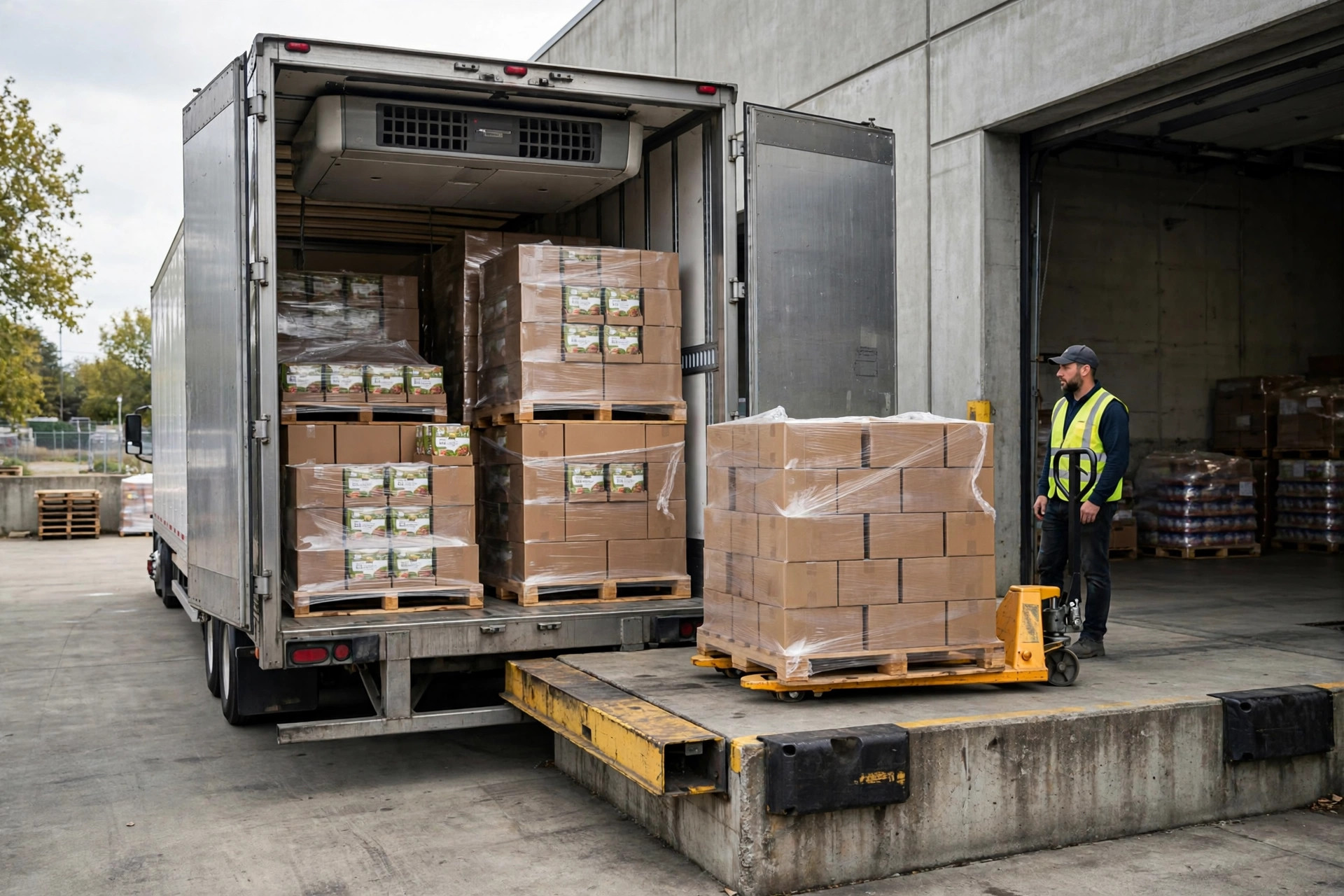
Most people think segregation means "organic goes here, conventional goes there." Fifteen years of watching from the cab: it is never that simple. The good warehouses have real physical separation — dedicated racking zones, color-coded pallets, sometimes separate forklifts. The sloppy ones? Organic nuts on the top rack, conventional flour below. One inspector's question shut the whole place down: "A flour bag rips, dust drifts up — does that count as contact?" The manager had no answer.
And here's the pitfall nine out of ten warehouses never see coming: pest control. Every warehouse fights bugs and rodents. A regular warehouse calls the exterminator and that's that. An organic warehouse can't do that. The regulation requires a tiered approach (§205.271): sanitation first, approved substances only as a last resort, with your organic plan updated to show how product stays clear of treatments.
True story. A Texas food DC had its pest contractor fog the conventional zone while organic product sat two rack rows away. The customer asked one question: "Where's your treatment record, and how did you prevent drift?" The warehouse had nothing. The load got rejected — tens of thousands of dollars gone. Now they sheet the organic zone before every treatment and file the logs separately.
See the pattern? Segregation isn't about boxes touching boxes. It's the invisible stuff: dust, chemical drift, the pallet that hauled conventional last week, grime on a forklift tire. Inspectors live for those edge cases.
USDA Organic Records: Five Years, Not One Page Missing
If segregation is the face of certification, records are the backbone. USDA's rule is black and white: records must be kept at least five years (§205.103), detailed enough for a stranger to audit. In, out, where it sat, temperatures, certificate copies, cleaning and treatment logs — all of it.
Let me put the math in front of you:
| Cost of compliance (ballpark) | Cost of one failure (ballpark) | |
|---|---|---|
| Zoned racking and signage | One-time, low thousands of dollars | — |
| Record system (paper or software) | A few thousand a year | — |
| Cooperating with the annual inspection | A day or two of downtime | — |
| A cited noncompliance | — | Corrective action plus re-inspection; one rejected load can run five figures |
| Organic identity questioned | — | Whole lot downgraded to conventional pricing, plus you lose the customer |
Compliance money is small and visible; failure money is big and hidden. And the inspector comes at least once a year — that's the law. Worst case I saw: a dead cooler probe left three months of blank temperature logs. The inspector wrote a major noncompliance; certification nearly got suspended.
So here's my advice: don't trust records to human memory — people forget, it's what we do. Automate what you can: temperature loggers, scan-based receiving, people as the final check. Organic certification doesn't test how careful you are. It tests whether your system keeps working when you're not in the room.
The Truck-to-Warehouse Handoff: Three Traps That Bite Hardest
Finally, the part I know cold — the handoff between drivers and warehouses — because transport is the thinnest page in most warehouses' organic plans. Three traps:
First, broken temperature records. For cold-chain organic, the temperature log is part of the whole record chain. I've seen drivers run the reefer but let the recorder battery die — four hours of no data. At receiving, the clerk sees the gap, and that load's organic identity is suddenly unprovable. Not that the product went bad — that you can't prove it didn't. My habit: check the recorder battery before loading, snap a photo for my own records.
Second, mixed loads with nothing written down. Organic and conventional on one trailer — loading order, what separated them, what came off first — all needs a record. The killer is when driver and warehouse each write their own version and they don't match. I write it on the BOL, the warehouse writes it on the receiving sheet, and the two match.
Third, trailer cleanliness. This one gets ignored the most. My last load was conventional — the trailer still smells like it — and now I'm loading organic straight in? No good. Before an organic load, the trailer gets swept, washed out when needed, and ideally there's a simple cleaning record: date, trailer number, what was done. Inspectors really do ask drivers for this. It's happened to me twice.
A Counterintuitive Call: The All-Organic Warehouse May Be Cheaper
Here's the contrarian take. Most people figure a dedicated organic warehouse is a luxury — higher rent, lower utilization — and that carving a zone inside a conventional warehouse saves money. Fifteen years of watching says the opposite: the mixed warehouse's savings are on paper; the dedicated warehouse's cost buys peace of mind.
Do the math on the mixed operation: zoned storage, double record systems, a full cross-contamination prevention program, and every year the inspector walks in staring at that "mixed" label. One commingling incident — a downgraded lot, a customer claim, certification risk — and none of those are small money. The all-organic warehouse? Simple process, simple records, the inspector finds little to write up, and drivers love it — no mixed loads, no loading-order debates.
That's not to say every warehouse should go all-organic. Low organic volume can't support it. It's a trade-off: steady, long-term organic business makes the dedicated facility cheaper over time; if organic is just a sideline, a zoned mixed operation works — but only if management treats it with zero tolerance, no wishful thinking.
Whether you even need certification depends on what your warehouse does to the product. Pure pass-through — sealed in and out, no repacking, no relabeling — can sometimes qualify for an exemption. But the moment you break a case, build a mixed pallet, or slap on a label, you're almost certainly in certification territory. The fine print shifts over time, so go by USDA and your certifying agent's latest requirements — don't take one trucker's word for it.
There's an old saying where I come from: a careful driver goes a million miles. Fifteen years on the road, I've watched too many warehouses crash on "let's keep it simple." In this business, simple is the most expensive choice there is.
By Shifu Zhao, Trucking Veteran (15 yrs)