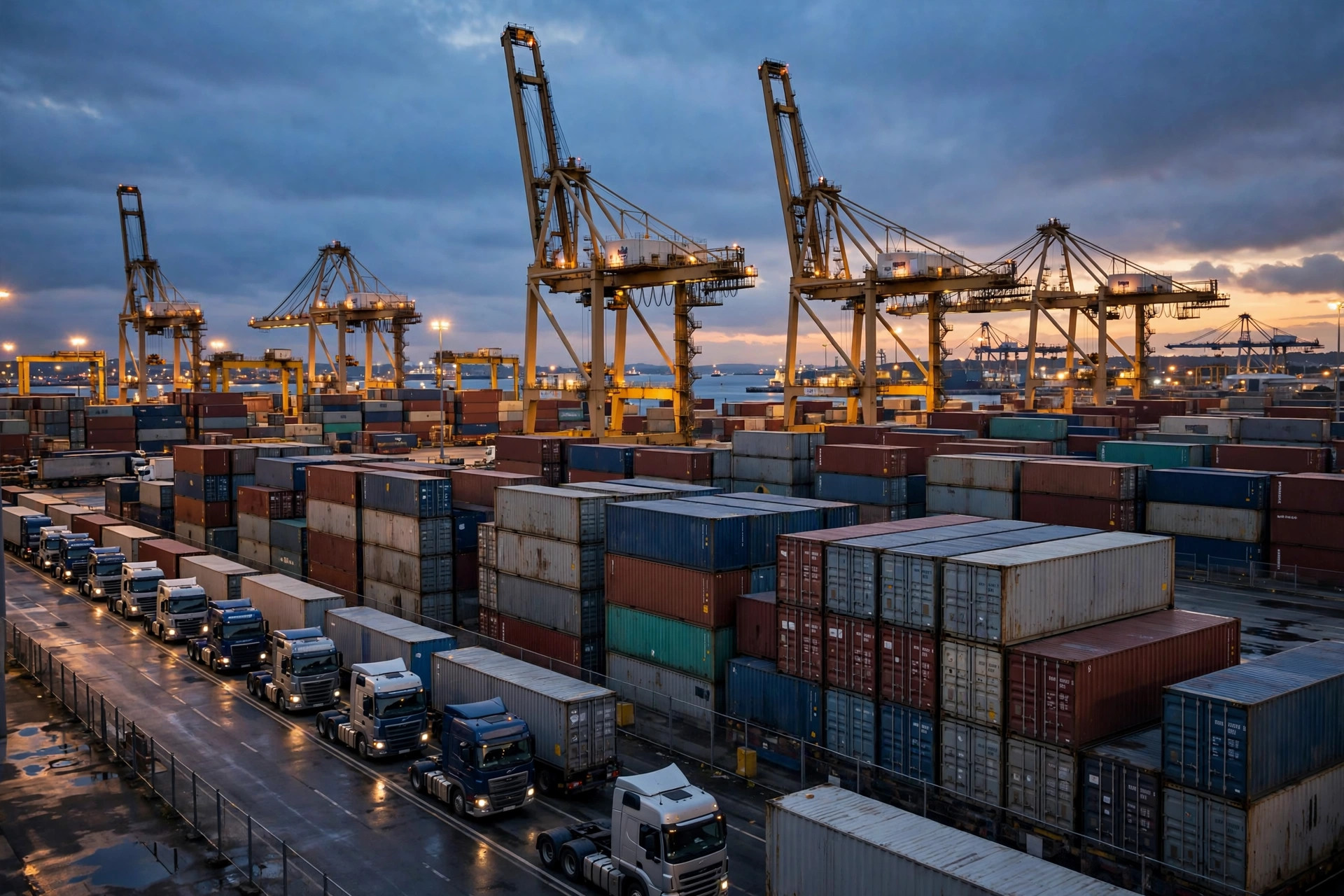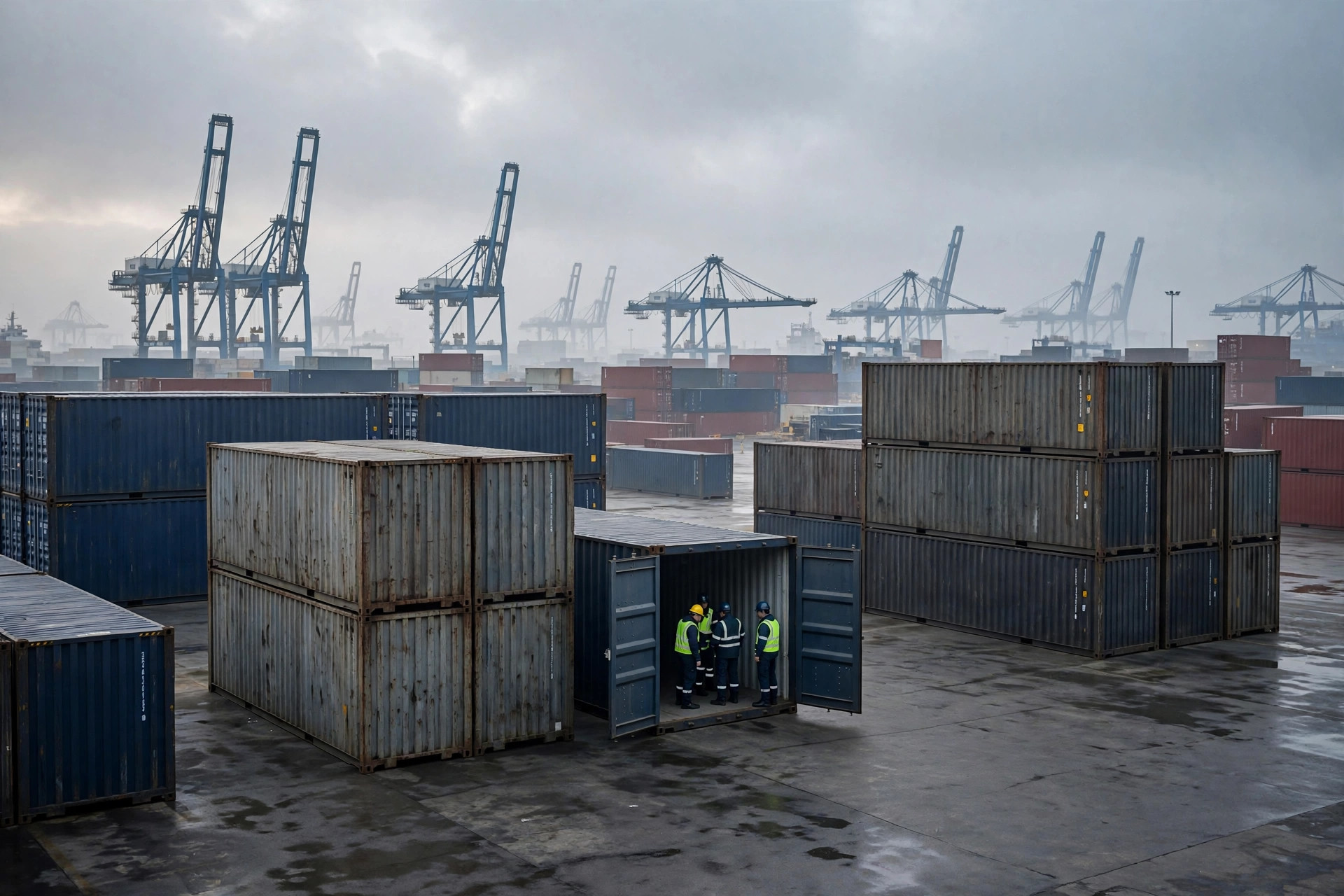
Food listed on an FDA import alert is detained at the U.S. port of entry without being opened and without being tested first. That is the Detention Without Physical Examination (DWPE) mechanism in action. Many warehouse managers assume the problem belongs to the importer and the customs broker. But compliance practice tells a different story: after a shipment is detained, the warehouse's storage records often become the decisive variable in whether the importer can petition for release.
What an import alert actually is
An FDA import alert is, at its core, an enforcement list. When a country, product category, or firm accumulates a pattern of violations — repeated microbiological findings in seafood, for example, or a foreign facility refusing an FDA inspection — FDA places the relevant party on the alert's Red List. From that point on, any shipment whose entry data matches the list is automatically detained at the port of entry, under authority granted by Section 801 of the Federal Food, Drug, and Cosmetic Act. Once an alert is in force, FDA no longer needs to prove that a particular shipment is violative; the burden of proof reverses and falls on the importer, who must present evidence that the product complies before it can enter commerce.
Alongside the Red List sits a Green List: firms under the same alert that have demonstrated compliance and are exempted from detention. The two lists together define the mechanism's entire logic. It is not spot-checking of individual shipments; it is systematic enforcement grounded in a history of violations.
Public alert activity shows food-related alerts concentrate in high-risk categories like seafood, infant formula, dried peppers, cheese, cantaloupes, and canned foods — long supply chains, elevated contamination risk, and a history of outbreaks. That distribution explains why warehouses get pulled in: for products most sensitive to storage conditions, the warehouse's temperature and segregation records carry the greatest evidentiary value.
The timeline after detention, and the path to release
After a shipment is detained, FDA issues a Notice of Detention and Hearing (FDA Form 2535) to the importer, who then has 10 working days to submit a hearing request or present evidence of compliance. If the evidence is accepted, the individual shipment can be released. Resolving the matter fundamentally, however, requires submitting a petition for removal from DWPE to FDA's Division of Import Operations.
Consider a composite example (drawn from public accounts, not a specific firm): in the first half of 2025, a California food importer's shipment of frozen shrimp from Southeast Asia was detained at the Port of Long Beach — the category had previously been Red-Listed over microbiological findings. The importer had 10 working days to respond to the detention notice while launching the longer removal petition in parallel. The individual release hinged on third-party laboratory test reports; the "storage conditions in the United States" portion of the petition, however, rested entirely on the continuous temperature records and lot-segregation proof supplied by its third-party cold storage warehouse. Without that segment, even the best-drafted legal argument is missing a leg.
According to FDA's public guidance on these petitions, the evidentiary standard can be summarized in two statements: first, demonstrate that the conditions giving rise to the violation have been resolved; second, give FDA confidence that future entries will comply. FDA's Regulatory Procedures Manual, Chapter 9, states the decision to remove a product or firm from DWPE should rest on evidence establishing that the conditions that gave rise to the appearance of a violation have been overcome and that the agency has confidence future shipments will comply with the FD&C Act.
What does the evidence package actually contain? FDA's published correspondence describes a package that includes complete documentation for at least five prior entries shipped to the U.S. and examined or analyzed as no longer violative — CBP Form 3461 or 7501, invoice, packing list, and bill of lading for each. Individual import alerts may also carry their own specific requirements, so the alert text itself must be read carefully before petitioning. In practice, the package typically also needs a narrative corrective-action summary explaining the root cause, the systemic changes made, and how those changes are sustained; version-controlled SOPs with training records; and an independent third-party audit report — FDA reviewers give substantially more weight to third-party findings than to internal audits. Always confirm current requirements on FDA's official site, as policies evolve.
Where the warehouse stands: not the importer, but the records are yours
Three legal lines need drawing. First, the importer of record is the party accountable to FDA; the Foreign Supplier Verification Program (FSVP) is the importer's statutory obligation, not the warehouse's. Second, the warehouse, as the party in physical custody, bears custodial responsibility for the goods while stored. Third, the "storage conditions while the goods were in the United States" segment of the petition's evidence chain can only be supplied by the warehouse.
This creates a structure many warehouses have not recognized: the petition must prove that "the problem has been resolved," and a substantial portion of that proof rests on warehouse records. If the alert was triggered by microbiological contamination, the petition needs to show the cold chain never broke — and only the warehouse holds that temperature data. If the alert involved lot confusion or broken traceability, the warehouse's lot-level receiving and shipping records are the most direct evidence available.
The counterintuitive judgment sits right here. Many warehouses assume that because detained goods sit in a bonded facility before customs clearance, "it has nothing to do with us" — so alert-listed goods end up commingled with regular inventory, temperature logs are taken once a day, and lots are tracked only to the pallet. Months later, when the importer's counsel comes with the petition checklist, the warehouse can produce little more than a handwritten temperature sheet and the claim that "this is how we've always stored it." What petition packages lack is almost never the lawyer's argument; it is verifiable records showing that "while the goods were in our hands, everything was in order." Warehouses with strong records see materially shorter release cycles for their clients; warehouses without them get dragged into prolonged back-and-forth — because the importer will, in turn, question whether the problem arose inside the warehouse itself.
Four things a warehouse can put to use immediately
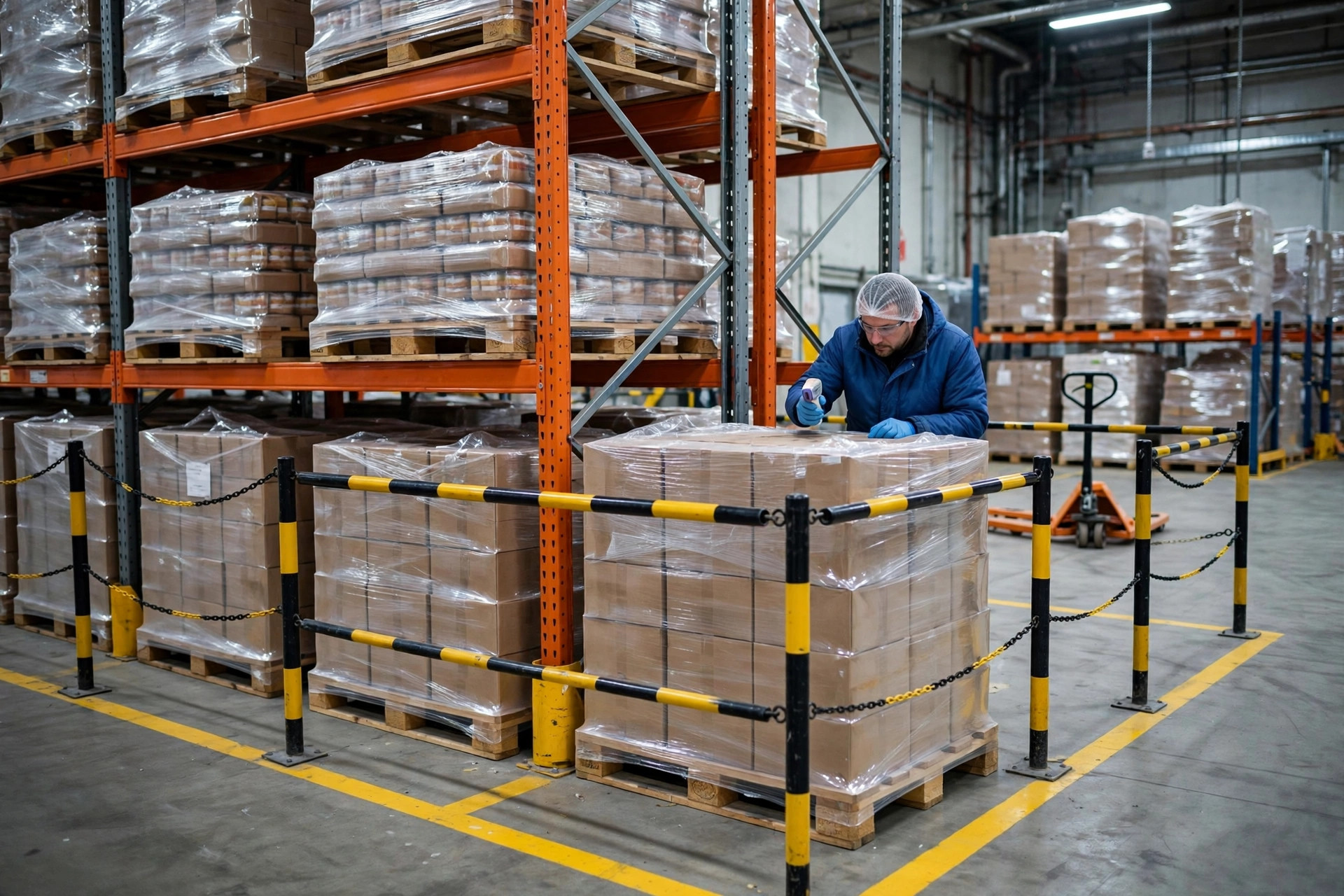
First, physical segregation. Goods subject to an alert detention — or goods in an alert-prone category — should be moved into a hold/quarantine area on arrival, separated by floor markings and physical barriers, with a dedicated status flag in the WMS. Segregation is not theater: the first thing FDA checks during a site visit is whether affected lots were commingled with regular stock — commingling alone can be read as inadequate corrective action.
Second, temperature and environmental records. For cold-chain foods, temperature data must be continuous, exportable, and include alarm history, at a sampling granularity that survives FDA scrutiny; for ambient foods, zone-level temperature and humidity records still matter. Critically, records must be tied to lots — "the zone was fine on Tuesday" is meaningless; what matters is the temperature curve of a specific lot in a specific location over a specific window.
Third, lot-level traceability. From the container number and seal number at receiving, through pallets and locations, to every outbound move, lots must be linked end to end. Many warehouses break the chain at the exact moment a pallet is broken down for case picking: full pallets in, loose cases out, with the correspondence left to the operator's memory. Alert-prone categories require documented traceability through the break-bulk step as well.
Fourth, a standing "petition support package" template. Keep the three record types above in a fixed format: segregation proof with photos and location maps, exported temperature curves, lot traceability tables, and records of cooperation with FDA site visits. When the importer's counsel needs to petition, a warehouse that can hand over this package within 48 hours has demonstrated a level of professionalism clients remember.
A trend worth watching
Stepping back, the import alert mechanism is evolving in two directions. On one side, alerts are increasingly triggered through data correlation — FDA cross-references inspection records, refusal histories, and outbreak investigations, which compresses the interval between a first violation and a listing. On the other side, the evidentiary bar for removal has not lowered; as processes digitize, expectations around record completeness only grow more granular.
For the warehousing industry, this points to a structural conclusion: compliance records are shifting from a cost line item for surviving inspections into a service line item clients will pay for. Warehouses that can deliver petition-grade evidence packages will command clear pricing power in the food import niche. The open question is how many warehouse operators have recognized the shift — and how many still treat temperature logs as paperwork to be filled in and filed away.
By Dr. Chen, Supply Chain Researcher