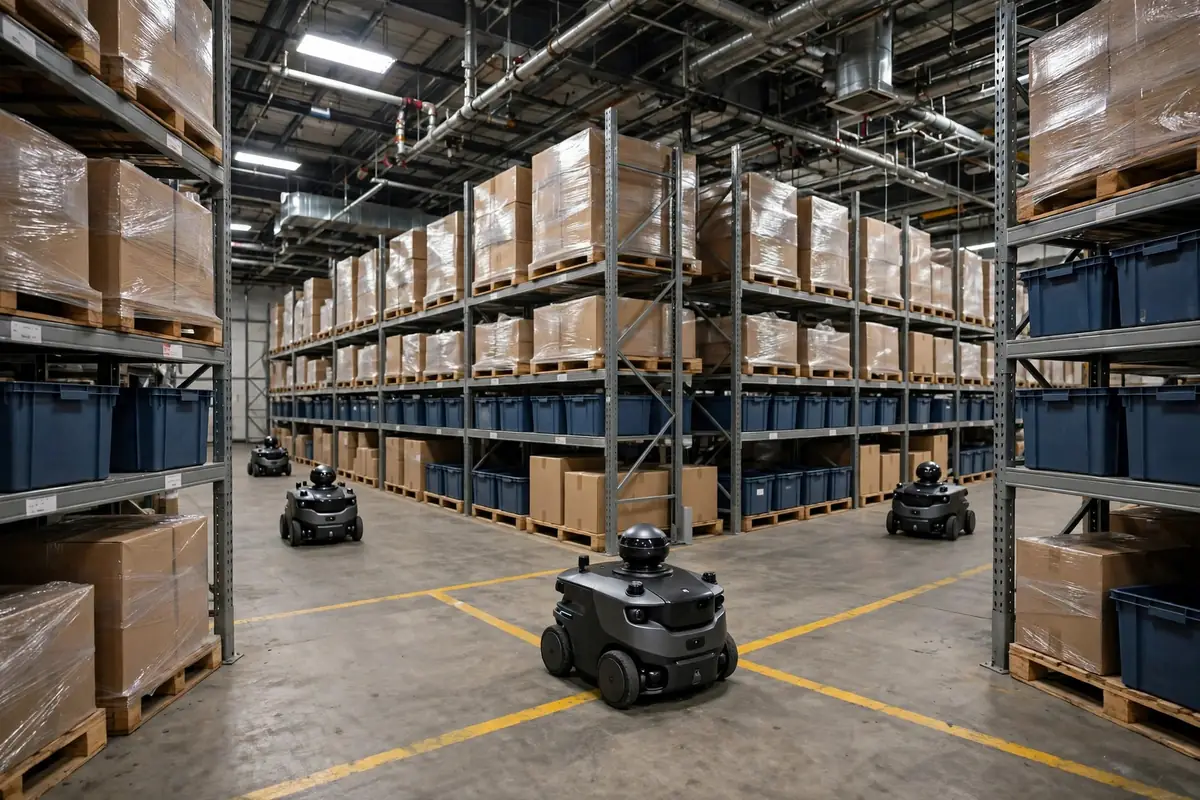
We had a client — a 3PL in Manchester — who signed for two conveyor lines and four AMRs in March 2025: an £860,000 order, 14-week delivery, every acceptance clause argued over line by line. Week 12, the client's compliance manager sent one email: please provide the UKCA certification documents, or the equipment cannot enter the warehouse. Our sales rep stared at it for a good minute. The kit had full CE marking and a complete EU file. How could it not count in Britain?
That order slipped nine weeks — extra certification, paperwork, another round of testing. The client docked 3% of the final payment and nearly gave next year's maintenance contract away. The client's words still stick with me: "When you sold us the equipment, why did nobody tell us CE and UKCA are two different things?"
That is the bill we are settling today. Anyone typing "ukca certification warehouse equipment uk" into a search box is really asking one question: what stands between my equipment and the UK market, what does it cost, and who pays?
CE Gets You Into Britain — Is UKCA Certification Dead?
Here is the fact most people get backwards. In August 2023 and January 2024, the UK government announced that goods meeting EU requirements — including CE-marked goods — would be recognised in Britain indefinitely. The Product Safety and Metrology etc. (Amendment) Regulations 2024 took effect on 1 October 2024, covering 21 sets of product regulations, machinery, EMC, low voltage and RoHS among them. A CE-marked conveyor line can enter the Great Britain market on its CE marking today.
So is UKCA finished? No. UKCA is still Britain's domestic conformity mark. The government removed the end date on CE recognition; it did not abolish UKCA. The policy can tighten for individual product categories — and from 20 January 2027, the EU Machinery Regulation (EU) 2023/1230 replaces the old Machinery Directive. Once the two regimes diverge, today's "CE is enough" may stop being true.
Then there is the layer that matters more than policy: your customer. Procurement teams at big British buyers routinely write "UKCA marking and UK Declaration of Conformity required" straight into the tender. Once it is in the tender, it is a contract question, not a policy question.
And there is a trap hiding in the map. UKCA covers Great Britain only — England, Scotland and Wales. Northern Ireland follows different rules. That Manchester client later opened a warehouse in Belfast, and our team sent the UKCA file up there as if it were the same market. It very nearly cost us a second delay. One country, two regimes on paper — price them separately from the start.
Here is the counterintuitive part: indefinite CE recognition made UKCA harder to sell, not easier. When clients knew it was mandatory, the cost went into the budget without a fight. Now they think "CE is enough," and every mention of UKCA sounds like an upsell. The expensive part was never the certification fee. It is the days your equipment sits in a port or a warehouse, unable to move because a document is missing.
UKCA Certification: Self-Declaration or Third Party?
Warehouse automation equipment entering the UK falls under the Supply of Machinery (Safety) Regulations 2008, carried over after Brexit. Most people searching for ukca certification warehouse equipment uk get stuck at this fork: do we need a third-party body or not? There are two routes, and the equipment decides.
Self-declaration covers most ordinary kit: conveyors, sorters, standard AMRs. If the machine is not on the high-risk list in Schedule 2, Part 4 of the Regulations, the manufacturer does its own conformity assessment, compiles the technical file, signs the UK Declaration of Conformity and affixes the UKCA mark. Simple on paper; the work is anything but — risk assessment, test reports, an English manual. Miss one and the whole exercise counts for nothing.
The third-party route is unavoidable when it applies. High-risk machinery, or kit using new technology the standards do not fully cover, needs a UK Approved Body to carry out type examination, and the body's number is printed alongside the UKCA mark. First-timers take note: an EU Notified Body's certificate does not count for UKCA.
On time and money, published industry guides give these ranges: testing typically £500 to £5,000 and above, machinery usually £1,500 to £5,000 and above, Approved Body involvement roughly £1,000 to £5,000 on top. A self-declared route takes about 4 to 8 weeks; with an Approved Body involved, 8 to 16 weeks.
| Item | Self-declaration | Third-party (Approved Body) |
|---|---|---|
| Fits | Standard conveyors, sorters, ordinary AMRs | High-risk machinery, new technology |
| Timeline | About 4–8 weeks | About 8–16 weeks |
| Cost range | Testing about £500–£5,000+ | Plus body fees about £1,000–£5,000+ |
| Paperwork | Manufacturer signs the UK Declaration of Conformity | Body issues a certificate; its number is printed with the mark |
| Risk | An incomplete technical file counts as nothing done | Scheduling slips easily cost a month |
(Figures above are published industry-guide ranges; confirm against the body's quotation. The worked example below uses illustrative/assumed scenario figures.)
Now the full bill. Take that £860,000 order and assume certification costs £8,000 — barely 0.9% of the equipment price. But if missing paperwork leaves the kit sitting in the client's warehouse for nine weeks, rent, idle labour and peak-season orders lost add up past £50,000. Figures are illustrative, but the ratio is the honest part: the fee is the small money. The delay is the big money.
There is also a cheaper path most sellers never mention: the Fast-Track UKCA scheme. Steps already taken toward CE marking count toward UKCA, so you do not test everything twice. Dual marking — CE plus UKCA — means one round of testing and two files, far cheaper than doing CE now and coming back for UKCA six months later. A client understands "one test, two markets" ten times faster than a lecture on regulations.
The Failures Happen in the Contract, Not in the Lab
We had another client, a Birmingham automated warehouse project in January 2026, supplied from China. CE file complete, UKCA done, everything in order — or so it looked. On acceptance day it stalled: the model number on the UK Declaration of Conformity differed from the machine's nameplate by a single letter. The manufacturer had changed a model suffix mid-production and nobody updated the file. Three weeks of corrections and re-issue.
That story carries the insider truth vendors learn the hard way: UKCA failures are paperwork failures eight times out of ten. Model number, serial number, standard number, the person who signed the declaration — one mismatch and the whole file is waste paper. Every one of those errors could have been caught half an hour before shipment.
Second insider point: the responsible person. UK law requires a named responsible person for each machine — someone who carries the can when something goes wrong. Most contracts never mention it, so when trouble lands, the manufacturer and the 3PL point at each other. My rule: the contract names three things in writing — who issues the UK Declaration of Conformity, who holds the technical file, and how long it is kept.
Third: change the hardware, redo the paperwork. Swap a motor, change a safety PLC, alter a guard, and the conformity assessment may no longer match the machine. Some manufacturers ship the change and assume "close enough." The client checks the file, the model does not match, the test report does not match, and it is another round of corrections. My rule is one question before any hardware change: does the technical file need updating? Ask it, save three weeks. For most people searching ukca certification warehouse equipment uk, this is the real question — not the regulation, but whether the paperwork will line up first time.
Next Time You Negotiate, Ask These Three Questions
First: is this equipment going to Great Britain or Northern Ireland? Two markets, two rulebooks — price and paperwork separately, before signing.
Second: who issues the UK Declaration of Conformity, and when do we get it? Put it in the contract annex: the declaration, a technical file summary, the English manual, a photo of the UKCA mark. Documents arrive before the goods do. No documents, no final payment.
Third: who pays the certification cost, and who carries the delay? Put the direct cost on the quotation, not buried under "miscellaneous." Write the delay clause plainly: storage and labour losses from late certification paperwork are charged by the day to the responsible party. The client hears that and relaxes.
UKCA, done properly, is not expensive. What is expensive is nobody doing the maths and nobody asking, until the equipment stands at the warehouse door and one piece of paper is suddenly worth £50,000. Next time you negotiate, ask these three questions.
By Susan, 3PL Sales Director